


Electric air compressors demand aggressive motor-starting power that easily trips breakers and stalls small engines if you misjudge the initial startup surge. An induction motor on a typical portable compressor can pull up to three times its standard running wattage the exact second the pressure switch kicks on against backpressure. Securing the best generator for air compressor setups requires accounting for these surge watts, isolating heavy ground vibration, and tracking maintenance on both machines. Heavy-duty jobsite equipment often pairs with a portable frame or a larger tow-behind diesel generator for remote pneumatic operations.
Keeping your power source running smoothly also means managing transport and harsh workshop environments. Rolling equipment across uneven garage floors or jobsite dirt gets easier with a dedicated dolly or a generator folding handles kit. Vibration mounts, clean paper air filters, reliable recoil pull starters, and digital run-time meters protect your investment against premature engine wear and dropped voltage. Matching the right mechanical supports with proper continuous and surge wattage ensures your air compressor pressurizes its tank without bogging down your generator.


Pros
- Completely wireless installation requires zero wiring or electrical connections to the generator engine
- Clear digital display tracks total hours down to 6-minute (0.1-hour) increments for timely oil changes
- Waterproof and shock-resistant casing holds up well against outdoor elements and engine heat
- Simple initial setup requires only snipping the rear wire loop to activate the internal battery
Cons
- Internal CR2430 battery is permanently sealed inside the housing and cannot be replaced once depleted
- Double-sided mounting tape is not included in the package, requiring separate adhesive if avoiding screws
- Requires careful placement on a sufficiently vibrating surface to ensure consistent hour tracking
The AIMILAR Vibration Hour Meter is a specialized maintenance accessory designed for portable gasoline generators, diesel engines, and small outdoor power equipment. Tracking cumulative run time is critical for gasoline generator ownership because engine oil changes, air filter cleanings, and valve inspections are scheduled strictly by operating hours rather than calendar days. Unlike conventional tachometers or inductive meters that require wrapping a pickup wire around a high-tension spark plug lead, this device operates entirely through internal vibration detection, offering an accessible maintenance logging solution for homeowners and jobsite crews.
The unit features a clear digital LCD screen that displays cumulative operating time up to 99,999 hours with 0.1-hour precision. During engine operation, the screen flashes to confirm active vibration sensing and run-time recording. Power is supplied by an internal, sealed CR2430 battery rated for more than two years of continuous operation, removing the need for an external 12-volt battery or connection to the generator's electrical panel. By capturing 6-minute (0.1-hour) increments, it provides sufficient resolution to track brief monthly exercise runs and extended outage run times alike.
Measuring 2.24 x 1.42 x 0.68 inches and weighing just 0.08 pounds (36 grams), the compact meter easily fits onto cramped generator frames, control consoles, or engine blower housings. Activation requires snipping a small wire loop on the back of the casing prior to mounting. The unit features a waterproof construction designed to endure rain, outdoor storage, and typical engine heat. Physical installation can be completed using the included mounting screws or aftermarket double-sided adhesive tape, with the manufacturer recommending a face-up orientation to ensure optimal vibration sensitivity.
For U.S. homeowners relying on gasoline generators for emergency storm backup or rural off-grid power, keeping an accurate service log often prevents premature engine failure. Portable generators lack the automated maintenance monitors found on permanently installed standby systems, making an add-on hour meter essential during extended utility outages. When a generator runs continuously through hurricane or winter storm aftermaths, knowing exactly when the engine crosses the standard 50-hour or 100-hour oil service threshold ensures reliable operation and protects vital internal components.
While the wireless design provides unmatched installation ease, the sealed housing means the internal CR2430 battery cannot be replaced when it eventually runs down after several years. Additionally, because the meter activates solely through mechanical movement, incorrect mounting location or insufficient vibration transfer from heavily dampened inverter generator housings may cause missed run-time recording. Double-sided tape is also omitted from the box, meaning buyers who prefer not to drill mounting holes into their generator frame or shroud must supply their own adhesive.
The AIMILAR Vibration Hour Meter is an ideal, budget-friendly accessory for owners of conventional open-frame gas generators, lawn tractors, and portable compressors who want hassle-free service tracking without electrical wiring. Homeowners, contractors, and emergency-preparedness planners looking to preserve engine longevity through timely oil changes will appreciate its straightforward set-and-forget design. However, users with ultra-quiet, dampened inverter generators or those requiring resettable trip timers and engine tachometer readings may prefer an inductive wire-wrapped hour meter instead.
Activating and installing the AIMILAR Vibration Hour Meter requires minimal mechanical preparation. Users must first snip the wire loop located on the back of the device to activate the internal battery circuit. Once activated, the display remains permanently powered, and the internal sensor begins counting operating time whenever it detects ongoing mechanical movement.
For optimal vibration detection, the manufacturer recommends mounting the unit face-up directly against a rigid surface such as an engine shroud, control console, or structural steel frame. While two mounting screws are provided in the package, users who prefer not to drill holes into equipment panels can secure the lightweight 0.08-pound meter with automotive-grade double-sided foam tape.
Tracking operating hours is essential for gasoline engine longevity, as most portable generator manufacturers recommend an initial break-in oil change after 5 to 20 hours of operation, followed by regular oil replacements every 50 to 100 hours. Utilizing a dedicated run-time meter eliminates guesswork during severe weather emergencies and protects critical small engines from oil breakdown and costly mechanical wear.



Pros
- Direct bolt-on replacement for common Harbor Freight Predator 420cc 13HP generator engines
- Complete assembly includes pre-strung pull cord, handle, reinforced spring, and pulley
- Eliminates the difficult and hazardous task of manually rewinding loose recoil springs
- Cross-compatible with both portable electric generators and matching 420cc truck bed air compressors
Cons
- Requires verifying exact 6.85-inch hole spacing to confirm fitment across different production batches
- Mounting bolts are not included, requiring reuse of your original engine shroud hardware
- Only resolves mechanical starting issues and cannot fix underlying fuel, compression, or spark problems
The RBVF Pull Start Recoil is a dedicated mechanical replacement assembly designed specifically for Harbor Freight Predator 13HP 420cc engines used in high-output portable generators. This part is engineered for homeowners, contractors, and emergency-preparedness planners who depend on Predator 7000, 7250, 8750, or 9000-watt generators for backup electrical power or jobsite operations. When an engine pull cord breaks or the internal spring loses tension, a generator cannot be started manually, making a reliable recoil replacement critical for maintaining storm readiness and routine power availability.
Physical fitment is the most critical specification for any generator starter assembly, and the RBVF unit matches the standard 13HP Predator mounting footprint. The manufacturer specifies a distance between adjacent mounting holes of 6.85 inches, with a diagonal distance across the center point measuring 7.87 inches. The assembly directly replaces OEM part numbers 60340, 60349, and 69736, along with models 68530, 68525, 66603, 69672, and 69674. It is also compatible with Harbor Freight 30-gallon 420cc truck bed air compressors sharing the same engine architecture, expanding its utility across common portable power and shop equipment.
Build construction focuses on durability under the high resistance typical of 420cc single-cylinder engines. The unit features a reinforced internal recoil spring paired with a toughened pulley mechanism designed to withstand aggressive pulls against heavy engine compression. Installing a fully pre-wound starter housing is substantially safer and faster than attempting to service individual recoil springs, which can uncoil unexpectedly and cause injury. The outer housing features a black finish designed to withstand standard outdoor exposure and engine vibration during continuous portable operation.
Installation is straightforward for DIY owners and requires basic hand tools to unbolt the damaged factory assembly from the engine blower housing. Prior to bolting the replacement down, users should inspect the starter cup on the engine flywheel to verify that the engagement pawls extend and catch smoothly. Regular inspection of the pull rope for fraying and storing the generator out of direct weather will help prevent moisture buildup inside the recoil housing, extending the lifespan of both the spring and cord.
Buyers should remain aware of practical limitations before purchase. While this assembly solves broken pull ropes, stuck pawls, and failed springs, it cannot fix internal engine compression resistance caused by hydrolock, tight valves, or poor lubrication, nor will it address ignition or fuel supply issues. In addition, mounting hardware is not listed as included in the package, so the original factory bolts must be retained and reused during installation. Verifying the hole-to-hole measurements on your specific machine is essential, as slight variations can occur across different model years.
Overall, the RBVF Recoil Pull Start assembly offers a cost-effective, dependable way to restore manual starting functionality to 420cc Predator portable generators and compatible equipment. It is best suited for budget-conscious homeowners and jobsite users looking to perform their own maintenance and avoid expensive equipment downtime. Those with smaller engine displacements or non-compatible shroud patterns should measure their equipment carefully to ensure proper starter alignment before ordering.
The RBVF Pull Start Recoil is engineered specifically for Harbor Freight Predator 13HP (420cc) horizontal shaft engines. It supports popular open-frame portable generator configurations delivering 7000, 7250, 8750, and 9000 peak or starting watts, including part numbers 60340, 60349, 69736, 68530, 68525, 66603, 69672, and 69674, as well as the 30-gallon truck bed air compressor.
To ensure proper installation, compare the existing mounting hole spacing on your generator fan shroud. The RBVF housing features a 6.85-inch distance between adjacent mounting holes and a 7.87-inch diagonal distance across the center point. Confirming these dimensions prior to purchase ensures seamless alignment with the factory flywheel starter cup.
Essential Guidance on Air Compressor Power and Maintenance
How many starting watts does an air compressor need from a generator?
An electric air compressor typically requires two to three times its rated running wattage to start up under head pressure. A standard 1.5 horsepower pancake compressor drawing 1,200 running watts usually spikes to 3,000 or 3,600 starting watts when the motor kicks on. If your portable generator lacks sufficient surge capacity, the voltage drops instantly, the engine stumbles, and the compressor thermal overload switch trips. Checking the peak motor amperage listed on your compressor nameplate prevents undersizing your power unit.
Why do anti-vibration rubber feet matter on generator and compressor equipment?
Industrial rubber isolator pads absorb mechanical vibrations that loosen structural hardware, fatigue steel tubing, and crack concrete shop floors. Both reciprocating piston compressors and single-cylinder gas engines vibrate intensely during continuous duty cycles, causing unanchored equipment to wander across smooth floors. Heavy-duty replacement rubber dampers with internal steel washers prevent bolt pull-through while dampening operating noise by several decibels. Isolating these vibrations protects delicate electrical components and carburetor linkages from ongoing stress.
How does an hour meter improve generator reliability for running pneumatic tools?
A vibration-activated hour meter provides accurate tracking of cumulative engine runtime for timely oil changes and air filter cleanings without complex wiring. Small engines that routinely power high-draw inductive loads operate under significant thermal stress, breaking down motor oil much faster than during light household usage. Mounting an hour meter directly to the generator frame or compressor housing allows you to follow maintenance schedules strictly. Staying ahead of fluid changes prevents cylinder scoring and maintains compression.
Can you run an air compressor through a household transfer switch during an emergency?
Yes, you can run a workshop air compressor through an interlock or transfer switch provided your generator wattage accommodates the startup draw. Connecting heavy shop tools through a safe generator to breaker panel connection prevents dangerous backfeeding into utility lines during an outage. You must calculate total concurrent loads to make sure cycling compressor motors do not overload shared circuits. For properties utilizing an automatic switch over generator, verify that the system manages peak motor loads without stalling.
Why are intake paper filter elements critical for compressor and generator longevity?
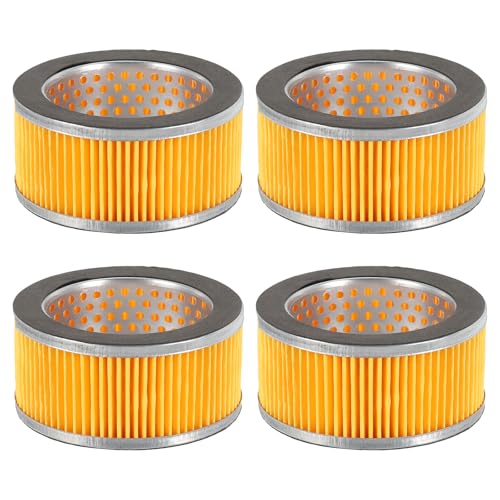
Intake paper air filter elements capture airborne dust, concrete debris, and ambient moisture before contaminants enter precision cylinders. Running pneumatic equipment or portable generators on dusty construction sites rapidly draws particulate into unshielded ports, degrading cylinder walls and valves. Routine replacement of metal-clad paper filter elements keeps operating noise down and preserves proper airflow. Maintaining clean air filtration sustains engine horsepower and allows compressor pump heads to reach target pressures quickly.
What causes recoil pull starters to fail on portable generators running heavy compressors?
Recoil starters fail primarily from cord fraying, broken internal springs, or cracked pulleys under repeated high-resistance pulling. Large 13HP 420cc engines used to run heavy compressors generate significant internal cylinder compression that stresses manual starter assemblies. Installing a reinforced recoil assembly with a heavy-duty spring restores smooth manual starting when electric starters fail. Dependable recoil mechanisms ensure quick restarts whenever remote jobs demand steady air tool power.







Write Your Review
No reviews yet. Be the first to share your experience!