


Running an onboard power plant keeps campsite appliances active, yet ground-level fumes often drift straight into open windows or patio awnings. Installing the best rv generator exhaust diverter directs noxious engine emissions up and over the vehicle roofline where prevailing winds safely disperse them. A quality generator exhaust venting system also isolates exhaust pipe vibrations from the RV chassis, creating a substantially quieter outdoor patio environment. Campers pairing these kits with a top generator for RV power avoid lingering soot marks and keep neighboring campsites free from heavy gas odors.
Directing fumes upward prevents dangerous carbon monoxide buildup from pooling around slide-outs, undercarriages, and adjacent camping tents. Most diverter assemblies rely on lightweight extension pipes, heat-resistant adapters, and suction-cup mounting stabilizers that secure firmly to exterior sidewalls without drilling. Based on product specifications and user feedback, verified adapter sizes ranging between 1 inch and 2 inches ensure reliable backpressure management for popular Cummins Onan, Generac, and portable units. Selecting durable, heat-safe components guarantees straightforward setup while safeguarding your living quarters throughout extended boondocking stays.

Pros
- Directs hazardous generator exhaust up and over the RV roofline away from windows and campsite gathering spaces
- Provides three tailpipe adapter sizes (1.25-inch, 1.4-inch, and 1.5-inch) to fit multiple generator brands
- Rubberized mounting straps absorb mechanical vibrations and help mute direct exhaust rattle against the coach
- Straightforward passive design requires no electrical connections or complex mechanical setup
Cons
- Must be completely disassembled and stowed away before driving or towing the recreational vehicle
- Requires maintaining adequate clearance between hot tailpipe components, the PVC pipe, and the RV sidewall to prevent heat damage
- Compatibility is restricted to generator tailpipes matching the three supplied adapter diameters
The Vahaha 44461 RV Generator Exhaust Venting Kit is a specialized backup-power accessory designed to improve campsite safety and comfort by redirecting generator exhaust fumes away from living areas. Rather than allowing exhaust gases to linger around patio mats, open coach windows, or slide-outs, this vertical extension system channels emissions directly above the RV roofline. It is engineered for motorhomes, fifth wheels, and travel trailers operating onboard or securely mounted generators from manufacturers such as Cummins Onan, Generac, Honda, and Yamaha.
Standard RV generator tailpipes vent horizontally near ground level, which frequently creates localized carbon monoxide and odor concerns for RV owners and adjacent campsites. The Vahaha 44461 kit addresses this challenge through an upward-venting vertical discharge path that releases fumes into open air currents above the vehicle. To support various exhaust pipe configurations, the package provides three distinct adapter rings measuring 1.25 inches, 1.4 inches, and 1.5 inches in diameter, allowing a tight connection to standard factory tailpipes without requiring custom welding.
The main vertical extension pipe is built from wear-resistant, anti-oxidation PVC tubing designed to handle outdoor exposure and airflow dispersal. Noise mitigation is achieved both by relocating the exhaust outlet high into the air and by isolating the pipe with heavy-duty rubberized straps. These rubber straps hold the vertical assembly firmly against the exterior RV wall while decoupling acoustic vibrations, preventing metal-on-fiberglass resonance from transmitting harsh engine humming into the vehicle interior.
Installation and daily handling are manageable for solo RVers because the system relies on a passive mechanical design with no moving parts or electrical hookups. At the campsite, users slide the appropriate adapter onto the existing generator exhaust pipe, assemble the vertical riser sections, and secure the column with the rubberized brackets. When preparing for road travel, the assembly unclips quickly and breaks down into compact pieces that store easily inside an RV basement compartment or exterior storage bay.
Despite its practical ventilation benefits, buyers must observe strict operational guidelines regarding high exhaust temperatures. Because combustion exhaust can reach elevated heat levels, the installer must ensure safe physical separation between the hot engine pipe, the PVC extension components, and the RV exterior siding to prevent heat distortion. Furthermore, this system is engineered exclusively for stationary use at the campsite and must always be removed prior to vehicle transit.
For RV owners who regularly dry camp, boondock on public lands, or attend crowded sporting tailgates, the Vahaha 44461 Generator Exhaust Venting Kit delivers an affordable, functional improvement to outdoor air quality. Provided your generator exhaust tip matches one of the three included adapter sizes and you maintain proper thermal clearances during setup, this kit offers a dependable way to keep your campsite environment cleaner and quieter.
Verifying exhaust diameter is the most critical step before purchasing the Vahaha 44461 venting kit. The system includes three specific tailpipe adapters measuring 1.25 inches, 1.4 inches, and 1.5 inches in diameter, which correspond to the exhaust tips found on many popular Cummins, Generac, Honda, and Yamaha RV-installed generator models. Measuring your existing tailpipe with a caliper prior to ordering ensures that one of the supplied adapters will create a snug, secure fit.
Thermal safety must remain the top priority during every installation. Because small-engine exhaust runs extremely hot, users must position the lower adapter connection so that radiant heat does not transfer directly to the vehicle sidewalls, moldings, or the PVC riser pipe. The vertical pipe should be oriented straight up along the coach exterior, securely latched with the rubberized vibration-dampening straps, and inspected periodically during generator runs to ensure clamps remain tight.

Pros
- Non-invasive suction mount design eliminates the need to drill mounting holes into RV exterior siding
- Adjustable metal band clamps fit common generator exhaust tube diameters between 3.07 and 3.98 inches
- Four-pack kit provides multiple contact points to reduce exhaust pipe sway caused by generator vibration or wind
- Lightweight 1.33-pound total package stores easily in standard RV basement compartments
Cons
- Requires clean, smooth, non-porous sidewalls to maintain a reliable suction grip
- Includes mounting hardware only; exhaust pipes, adapters, and diverter stacks must be purchased separately
- Suction seals may weaken over extended deployments due to extreme temperature shifts or adverse weather
The Zonon 4-Piece Metal Suction-Cup Mount Kit is an aftermarket hardware accessory engineered to stabilize RV generator exhaust extension pipes without damaging exterior vehicle panels. RVers, campers, and travel trailer owners who use elevated generator exhaust diverters often need a secure method to brace the vertical pipe against the vehicle body. This mounting kit provides a non-invasive, clamp-and-suction solution that bypasses the need for permanent screw holes or riveted brackets on finished camper sidewalls.
The package contains four individual suction cup bases paired with four adjustable metal throat bands designed to wrap around exhaust pipes. The suction cup brackets measure approximately 2.36 by 2.91 inches, providing a targeted footprint suitable for smooth motorhome sidewalls. The accompanying metal bands feature a width of 0.47 inches and adjust across a diameter range of 3.07 to 3.98 inches, accommodating standard aftermarket RV generator exhaust pipe dimensions.
Weighing roughly 1.33 pounds in total, the assembly combines metal bands with rubberized suction bases finished in black and silver. The adjustable band clamps allow users to tighten the stabilizer directly around the exhaust tubing to prevent lateral sway caused by light wind or generator vibration. By utilizing four separate mount assemblies, RV owners can distribute stabilization contact points along the length of an exhaust stack to help maintain proper vertical alignment during generator operation.
Setting up the Zonon stabilizer kit requires no specialized tools or drilling into fiberglass or aluminum siding. Users clean the mounting area, press the suction cup firmly against the exterior wall to engage the seal, and tighten the throat band around the exhaust diverter pipe. When packing up camp, releasing the suction tabs allows quick removal, making the kit easy to stow away in compact RV storage compartments alongside other campsite power accessories.
Suction cup mounts naturally require pristine, smooth surfaces to achieve maximum grip and may struggle on textured, dirty, or corrugated camper siding. Furthermore, suction cups can lose grip during severe temperature shifts, heavy precipitation, or high winds, requiring periodic checks during generator runtime. Buyers should also recognize that this set contains only mounting hardware; the actual exhaust pipe, diverter system, and adapter fittings must be supplied separately.
For RV owners who regularly route generator exhaust above roof level to redirect fumes away from campsite living areas, the Zonon 4-Piece Suction Mount Kit delivers practical utility at a minimal weight and footprint. It offers a convenient, non-permanent securing solution that protects vehicle resale value by avoiding drilled wall penetrations. Prospective buyers should measure their exhaust tube outer diameter to confirm it falls within the 3.07 to 3.98-inch clamping range before purchase.
The Zonon stabilizer kit is engineered to pair with standard RV generator exhaust extension systems featuring tube outer diameters between 3.07 and 3.98 inches. This diameter range accommodates typical aftermarket exhaust diverters used to channel fumes upward and away from neighboring campers.
Achieving optimal suction holding power requires a thoroughly cleaned, degreased, and smooth fiberglass or painted metal surface. Textured finishes, decals, or seams can compromise the airtight seal, so proper positioning on clear vehicle panels is critical before clamping the metal bands.
While this mounting system supports exhaust extension pipes, safe RV generator operation always requires caution regarding exhaust heat and carbon monoxide. Users should ensure exhaust extensions route fumes completely clear of RV slide-outs, windows, and roof vents, while maintaining working carbon monoxide detectors inside the camper.


Pros
- Routes exhaust gases up and over the RV roof, minimizing fumes at patio and ground level.
- Includes adapter fittings that accommodate exhaust pipe diameters from 1 inch to 2 inches.
- Breaks down to 46.5 inches and includes a dedicated storage bag for tight RV compartments.
- Lightweight build makes temporary campsite assembly straightforward.
Cons
- Requires careful standoff spacing to ensure high exhaust temperatures do not damage RV sidewalls.
- Must be detached and stowed before driving or moving the RV.
- Only compatible with tailpipes measuring between 1 inch and 2 inches in diameter.
The SHARRYPAPPU 44461 RV Generator Exhaust Venting System is an exterior exhaust redirection accessory designed specifically for motorhomes, travel trailers, and fifth wheels equipped with onboard generators. Its primary function is to capture exhaust gases at the generator tailpipe and vent them vertically above the RV roofline. This setup addresses a persistent challenge for dry campers, boondockers, and rally attendees who must run onboard power without bathing outdoor living spaces or neighboring RVs in low-hanging exhaust fumes.
Fitment flexibility centers on the included multi-size adapter kit, which accommodates standard generator tailpipe diameters ranging from 1 inch to 2 inches. Because onboard RV generator tailpipes vary widely by generator displacement and chassis builder, this adapter selection allows the SHARRYPAPPU 44461 system to connect securely to most standard installations. The stack channels the exhaust stream vertically, helping to avoid exhaust gas pooling beneath slide-outs, open windows, or awning areas when running power for air conditioning and onboard 120V systems.
Structural design focuses on a balance between thermal tolerance and lightweight handling. The manufacturer lists the system as utilizing heat-resistant, lightweight materials that tolerate the thermal output of standard RV generator exhaust. When assembled, the stack maintains vertical rigidity along the RV sidewall. Because exhaust gases reach high operational temperatures, the manufacturer emphasizes maintaining adequate physical clearance between the vertical pipe and the exterior RV wall to prevent heat transfer to exterior finishes or fiberglass surfaces.
Storage and portability are practical strengths for space-constrained RV basements and storage bays. The venting stack disassembles into sections with a stored length of 46.5 inches and packs into a dedicated carrying bag supplied in the box. Assembly at a campsite involves fitting the correct diameter adapter over the existing generator exhaust pipe, securing the vertical riser segments, aligning the standoff brackets for wall clearance, and consulting the included manual for proper alignment. The unit must always be dismantled and stowed before moving the vehicle.
While the SHARRYPAPPU 44461 effectively redirects exhaust upward, buyers must note several operating constraints. The system is strictly a stationary campsite accessory; driving with the chimney attached can cause severe mechanical damage to the RV or exhaust pipe. Additionally, RV owners with non-standard exhaust pipe diameters below 1 inch or exceeding 2 inches will require separate hardware. The system also does not replace the necessity of functioning carbon monoxide detectors inside the coach or eliminate all sound, as it primarily redirects air and thermal flow rather than functioning as an acoustic silencer.
The SHARRYPAPPU 44461 RV Generator Exhaust Venting System is a practical, functional accessory for RV travelers who frequently camp without shore power, attend group rallies, or boondock in close quarters. By redirecting generator exhaust above the roofline and offering broad 1-inch to 2-inch pipe compatibility, it helps maintain a cleaner ground-level atmosphere around patio areas. RV owners willing to follow proper clearance spacing during setup will find it a dependable addition to their off-grid power setup.
Proper installation of the SHARRYPAPPU 44461 exhaust venting system requires establishing sufficient standoff distance between the riser pipe and the RV sidewall. Because generator exhaust can reach elevated temperatures under electrical load, direct contact or insufficient spacing could damage vehicle paint, decals, or fiberglass siding.
Campers must ensure the included multi-size adapter fits snugly over the existing 1-inch to 2-inch tailpipe to prevent exhaust leakage at the connection base. The unit is designed exclusively for stationary use at campsites and must be fully removed and stowed in its dedicated bag before operating the RV on public roadways.

Pros
- Routes hazardous combustion fumes upward away from ground-level RV windows and neighboring campsites
- Integrated muffler helps dampen sharp generator exhaust noise
- Supplied with three adapter sizes (1.25, 1.4, and 1.5 inches) for broad compatibility
- Lightweight 9-pound design is easy to handle and stow in standard RV storage bays
Cons
- PVC construction requires verifying that exhaust tip temperatures remain within safe operational limits
- Must be disassembled and stored away before moving or towing the RV
- Will not fit exhaust pipes outside the 1- to 2-inch diameter range without separate hardware
The HRepair RV Generator Exhaust Kit is a vertical venting extension system designed as a direct replacement style for the Camco 44461 design. Weighing 9 pounds and measuring 120 inches (10 feet) in total assembled length, this accessory is engineered specifically for motorhome and travel trailer owners who operate onboard or mounted generators at campsites. By routing exhaust gases upward above the roofline, the system targets RV travelers, boondockers, and tailgaters looking to keep combustion fumes away from open windows, awnings, and outdoor living areas.
In terms of practical performance, the kit addresses two frequent campsite challenges: exhaust gas concentration and tailpipe noise. The 10-foot vertical stack channels hot engine emissions upward where ambient breezes can dilute and carry them away, preventing exhaust from settling near ground-level doors or air conditioner intakes. Additionally, the manufacturer integrates a built-in muffler section into the pipe design, which helps dampen direct tailpipe sound and creates a less disruptive acoustic footprint around the campsite.
The assembly is constructed from weather-resistant, oxidation-proof PVC engineered to withstand continuous outdoor exposure. While keeping overall weight down to an easily manageable 9 pounds, the components provide the necessary rigidity when secured against the RV sidewall. The package includes three separate adapters measuring 1.25 inches, 1.4 inches, and 1.5 inches, making the system adaptable to exhaust tailpipes between 1 and 2 inches commonly found on Cummins Onan, Generac, Honda, and Yamaha RV power plants.
Setup and everyday handling are straightforward, allowing users to slip the appropriate adapter over the generator exhaust pipe and secure the vertical run once parked. The segmented pipe structure simplifies end-of-trip breakdown so the kit can be packed into an exterior storage bay before traveling. Because fuel-burning generators must always be operated strictly outdoors in well-ventilated settings, this accessory serves as an added layer of outdoor fume management rather than a substitute for proper generator placement.
Buyers should keep several realistic limitations in mind prior to purchase. Because the piping uses PVC construction, users must ensure the generator exhaust temperature and clearance remain compatible during continuous heavy electrical loads. Additionally, the kit is strictly a stationary campsite accessory that cannot remain installed while driving or towing. Tailpipes smaller than 1 inch or larger than 2 inches will also require custom third-party adapters.
Overall, the HRepair RV Generator Exhaust Kit delivers practical value for RV owners seeking a cleaner, quieter campsite environment. If your RV generator tailpipe falls within the supported 1- to 2-inch diameter range and you frequently camp in close quarters or dry-camp off-grid, this 120-inch extension kit provides a reliable way to direct exhaust fumes safely overhead.
The HRepair exhaust extension kit is engineered to fit standard RV generator exhaust tailpipes measuring between 1 and 2 inches in outside diameter. To achieve broad fitment across diverse RV generator models, the package includes three distinct adapter bushings measuring 1.25 inches, 1.4 inches, and 1.5 inches. These fittings allow the system to connect with common generator units from manufacturers such as Cummins Onan, Generac, Honda, and Yamaha.
Installation is designed for tool-free or minimal-tool assembly at the campsite. Campers select the bushing that matches their generator tailpipe, seat the base securely, and align the 120-inch pipe vertically along the RV exterior. The extension must be detached and stowed in a storage compartment prior to highway travel, as it is engineered exclusively for stationary outdoor use.
Carbon monoxide and combustion exhaust gases present serious health risks whenever a fuel-powered generator operates near living quarters. By extending the exhaust path 120 inches upward toward the RV roofline, this kit allows fumes to disperse into open upper-air currents rather than lingering under slide-outs, open windows, or campsite canopies.
Alongside fume redirection, the system features an integrated muffler that dampens the harsh, direct exhaust pulse of small displacement generator engines. While it does not silence the mechanical engine block itself, dampening the tailpipe report significantly softens perceived noise levels for both your campsite and neighboring RVers.
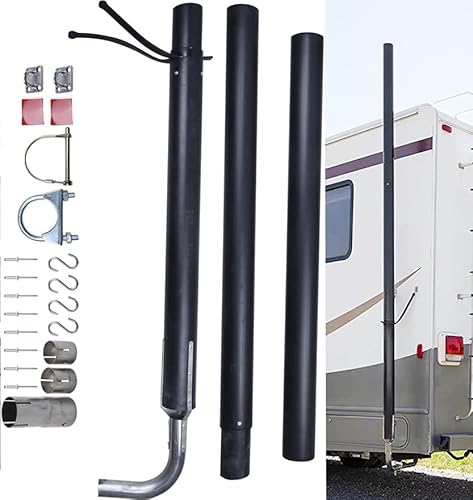
Pros
- Directs hazardous generator exhaust fumes 136 inches upward, away from outdoor living areas and entryways
- Comes equipped with three versatile adapter sleeves (1.25-inch, 1.4-inch, and 1.5-inch) to match common RV tailpipes
- Lightweight 3.87-pound construction makes assembly, disassembly, and exterior compartment storage easy
- Helps dampen perceived exhaust noise at ground level during extended generator runs
Cons
- Requires manual measurement of your generator exhaust pipe outer diameter prior to ordering to ensure a proper fit
- Contains PVC upper sections that rely on proper ambient airflow and must be installed strictly according to instructions to prevent heat issues
- Designed specifically for stationary RV tailpipes and is not suitable for unadapted freestanding portable generators
The SONTIAN 44461 RV Generator Exhaust Venting System is a specialized aftermarket accessory designed for motorhomes, fifth wheels, and travel trailers equipped with onboard auxiliary generators. Measuring 136 inches in total assembled length, this system is primarily built for RV owners, dry campers, festival-goers, and tailgaters who run their generators in close proximity to other vehicles or occupied outdoor areas. Its core purpose is to redirect engine exhaust gases away from ground level, venting emissions safely above the roofline of the recreational vehicle.
In standard RV setups, generator exhaust exits through a short pipe beneath the coach chassis, where toxic carbon monoxide fumes can linger under awnings, enter open windows, or disturb neighboring campers. The SONTIAN 44461 addresses this challenge by establishing an upward pathway for combustion gases. The vertical design also functions as an anechoic stack, dampening low-frequency exhaust rumble to provide a noticeably quieter perimeter around the campsite without restricting engine exhaust flow.
Construction of the 3.87-pound system pairs durable metal hardware at the base with high-quality, heat-resistant PVC tubing along the vertical riser. The kit includes the complete 44461 venting stack along with three precision adapters measuring 1.25 inches, 1.4 inches, and 1.5 inches in diameter. This selection matches the most common exhaust pipe sizes found on standard RV-installed generators. The metal connection secures to the existing tailpipe, while the modular upper tubes assemble smoothly along the RV exterior sidewall.
Setup is designed for straightforward, tool-free deployment once the vehicle mounting hardware is initially positioned. The operator slides the appropriately sized adapter over the generator tailpipe, couples the lower exhaust fitting, and locks the vertical stack into place against the coach side. Disassembly takes only a few minutes before hitting the road, and the segmented pipe pieces pack away flat inside standard RV basement storage bays. Routine maintenance involves checking the pipe sections for carbon buildup and ensuring the mounting brackets remain secure.
While this venting system significantly enhances outdoor air quality and comfort, buyers must keep realistic operational limitations in mind. The kit is engineered specifically for stationary RV tailpipes matching the included 1.25-inch, 1.4-inch, or 1.5-inch dimensions; it will not fit non-standard exhaust extensions or bare portable open-frame generators without custom fabrication. Additionally, users must never operate this system while the RV is in motion, and venting exhaust above the roofline does not replace the critical need for functioning interior carbon monoxide detectors.
Overall, the SONTIAN 44461 Exhaust Venting System delivers practical value and peace of mind for RVers who rely on generator power while boondocking or tailgating. By channeling fumes and exhaust harshness high into the air, it keeps outdoor gatherings cleaner and prevents campground conflicts. Before purchasing, verify your generator tailpipe outer diameter and ensure your RV exterior wall offers an unobstructed vertical path to the roof.
Proper fitment is critical when choosing an RV generator exhaust extension. The SONTIAN 44461 kit includes three adapter sleeves with internal diameters of 1.25 inches, 1.4 inches, and 1.5 inches, covering the vast majority of onboard Cummins Onan and similar RV generator tailpipes. Buyers should measure the outer diameter of their existing exhaust pipe with calipers before purchasing to ensure one of these three adapters provides a snug match.
Installation is engineered to be tool-free during everyday campground setup. The metal base adapter clamps securely to the vehicle exhaust pipe, establishing an airtight lower seal that channels hot gases into the vertical stack. The upper riser sections assemble sequentially and are held against the RV sidewall using exterior mounting brackets, preventing the 136-inch pipe from swaying in light breezes.
Because the vertical assembly uses lightweight PVC components above the metal coupler, proper alignment is essential. The design incorporates ambient air intake gaps at the base that draw cooler outside air into the stack alongside the exhaust stream, protecting the upper piping from extreme heat buildup. Always verify that nothing obstructs the top outlet and that it extends safely past the vehicle roofline.
Carbon monoxide safety is paramount whenever operating an engine-driven generator on a recreational vehicle. Standard ground-level exhaust pipes discharge dangerous fumes directly into the living perimeter, where they can seep into bedroom windows, slide-out seals, or an adjacent camper awning. The SONTIAN 44461 elevates emissions 136 inches, allowing prevailing winds above the roofline to disperse combustion gases safely into the atmosphere.
Beyond health and safety, this exhaust kit is an important courtesy upgrade for crowded camping environments. Many organized RV rallies, NASCAR infields, and competitive tailgating venues explicitly require upward-venting exhaust systems to prevent fumes from bothering adjacent sites. The anechoic baffling in the pipe also softens the repetitive exhaust pulse, significantly reducing ground-level noise.
While this venting kit dramatically reduces ground-level fume exposure, it should always be treated as part of a comprehensive safety strategy. RV owners must regularly test all interior 12-volt and battery-operated carbon monoxide alarms, avoid parking directly under overhanging trees that could trap rising exhaust, and ensure the generator is fully shut down before breaking camp.

Pros
- Direct replacement fit for part number 44461 on standard RV exhaust layouts
- Helps protect cabin occupants by routing combustion gases away from living quarters
- Integrated buffering reduces pipe vibration and mechanical exhaust rattle
- Substantial dimensions provide adequate reach to clear vehicle trim and slide-outs
Cons
- Designed specifically for RV exhaust systems and is not compatible with standalone portable generators without custom adapters
- Redirects sound path and dampens rattle but does not eliminate engine mechanical noise at the power unit
- Requires verification of existing tailpipe diameter and chassis clearance before installation
The SHUNTALL 44461 RV Generator Exhaust Venting System Extension Kit is an automotive and RV ventilation component engineered to channel onboard generator exhaust away from living quarters. Designed to replace part number 44461, this kit is positioned for motorhome owners, dry campers, and RV travelers who rely on built-in generators during off-grid stays. Routing emissions away from windows, ground-level seating areas, and slide-outs helps maintain breathable, comfortable surroundings around the coach.
In practical RV camping environments, an onboard generator exhaust pipe typically exits beneath the chassis, which can allow fumes to accumulate under awnings or seep into open windows. The SHUNTALL extension kit directs these exhaust gases upward and outward, improving air quality around the vehicle perimeter. The system also incorporates shock absorption and buffering properties that assist in dampening pipe vibration and stabilizing exhaust flow, which can contribute to smoother mechanical operation and a reduction in direct exhaust noise.
Measuring 47.91 inches long by 10.91 inches wide by 4.84 inches deep, this assembly provides substantial length to direct gases safely away from the vehicle body. Finished in black, the component is built to withstand roadway elements and heat exposure typical of motorhome ventilation systems. The manufacturer highlights an estimated service life of 3 to 5 years (or 60,000 to 100,000 kilometers), noting that environmental exposure, vehicle travel frequency, and operating conditions will influence replacement timing.
Installing this replacement part helps fix common exhaust degradation symptoms, including pipe rattling, cabin exhaust intrusion, and decreased engine efficiency caused by rusted or restricted tubing. RV owners should check existing mounting points, bracket clearances, and tailpipe outer diameters before installation to ensure a secure, airtight seal that prevents hot gas leakage.
While the SHUNTALL 44461 kit effectively channels exhaust gases and buffers pipe rattle, it is not a standalone silencer and will not eliminate mechanical generator motor hum. The product is also tailored for RV generator exhaust systems rather than freestanding, portable jobsite generators. Buyers must also inspect their rig routinely, as exhaust gaskets, clamps, and tubing will experience thermal expansion and road vibration that necessitate regular fastener checks.
For RV travelers and motorhome owners seeking an affordable direct replacement for worn 44461 exhaust hardware, the SHUNTALL Venting System Extension Kit offers a practical solution. It delivers reliable fume displacement, aids in campsite acoustic management, and helps protect passenger safety during generator operation. Verify your coach exhaust configuration prior to ordering to ensure immediate fitment and hassle-free installation.
Routing exhaust fumes safely away from motorhome living quarters is essential whenever running an onboard generator. Carbon monoxide and combustion byproducts naturally exit through the exhaust pipe, and ground-level discharge can easily collect under awnings, drift into open bedroom windows, or bother neighboring RVers. An extension venting system channels these hot gases away from ground level, significantly reducing the hazard of fumes penetrating the coach interior.
RV owners should treat exhaust hardware as a routine safety inspection item. The manufacturer suggests a replacement interval of roughly 3 to 5 years, depending on travel frequency and driving climate. Inspecting the piping for road damage, loose brackets, and rust spots ensures that your RV generator operates without creating safety risks or cabin air contamination during off-grid dry camping trips.
Frequently Asked Questions About RV Generator Exhaust Diverters
How does an RV generator exhaust diverter work?
An RV generator exhaust diverter connects directly to the tailpipe and channels combustion gases through a vertical riser tube above the coach roofline. The design draws outside air through the open bottom base via the venturi effect, which cools the rising gas and accelerates exhaust dispersion. This vertical airflow keeps dangerous carbon monoxide from gathering under RV slide-outs or entering open patio windows. Rubberized straps or suction-cup brackets secure the stack against the coach wall, dampening mechanical vibrations before they reach the cabin.
Will an exhaust extension pipe create harmful backpressure on the generator engine?
No, a properly sized diverter does not increase exhaust backpressure when installed with the correct diameter adapter. Standard kits like the 44461 design utilize an open-bottom coupling that leaves an air gap around the primary tailpipe rather than creating an airtight seal. This unrestricted opening allows normal exhaust velocity while drawing in fresh air to dilute heat along the vertical PVC or metal run. Verifying that your tailpipe matches the included 1.25-inch, 1.4-inch, or 1.5-inch adapters ensures unrestricted gas flow across all engine load levels.
Can you run an RV generator exhaust diverter while driving or moving the camper?
No, exhaust diverter extension kits are designed strictly for stationary campsite operation and must be dismantled before travel. Highway wind loads, low overpasses, and road vibrations can easily dislodge the vertical pipe or damage suction-cup mounts. Stowing the segmented pipes in an exterior compartment protects the hardware until you park at your destination. RV owners looking for quiet stationary power without exhaust considerations often complement their rig with an off-grid system like a wind turbine and generator setup during extended boondocking.
How does an exhaust diverter help reduce generator operating noise?
A roofline diverter reduces perceived noise by relocating the acoustic exhaust pulse several feet above ground level. Directing engine decibels upward allows ambient air and high roof clearances to absorb the sharp exhaust crack rather than reflecting it off pavement or adjacent RV sidewalls. Models equipped with rubber isolated mounts or built-in muffling sections further absorb mechanical rattle and exhaust drone. Campers who prioritize near-silent campsite operation alongside exhaust management also explore zero-emission solutions such as a portable solar generator for quiet power when low-draw electrical needs arise.
How far away from the RV sidewall should the vertical exhaust pipe remain?
The vertical exhaust pipe must maintain at least one to two inches of clearance from the exterior RV wall to prevent heat transfer. Although ambient air enters the base to cool the exhaust gas, prolonged engine operation under high air-conditioning loads raises pipe temperatures significantly. Using heavy-duty suction mounts and rigid bracket arms maintains an adequate air barrier against fiberglass panels and vinyl decals. Always inspect the stabilizer cups during initial setup to confirm a secure vacuum grip on smooth coach surfaces.






Write Your Review
No reviews yet. Be the first to share your experience!