


Mechanical rotation turns into usable electrical power through electromagnetic induction, yet the direction and stability of that current depend entirely on whether an alternating or direct current machine generates it. Understanding dc generator ac generator key differences applications helps equipment operators, students, and property owners choose the right electrical generation architecture for specific loads. While alternating current systems dominate utility power transmission and modern home backup equipment, direct current generation remains vital for specialized charging circuits, battery banks, and industrial controls. Exploring these mechanical and electrical distinctions clarifies why different power equipment relies on distinct alternators and dynamos.
Selecting the appropriate equipment requires knowing how current is collected, converted, and delivered to downstream appliances. For instance, comparing modern alternators against direct current sources often overlaps with learning about inverter and portable generator architecture, where alternating current is converted into direct current and then inverted back into clean alternating current. Physical maintenance tools and educational demonstration models also play an essential role in keeping hardware accessible and making electromagnetic theory visible. Reviewing both commercial components and demonstration platforms provides practical context for how these two generating methods perform in real-world scenarios.

Pros
- Directly replaces official Kohler part number GM82922 for exact enclosure latch fitment
- Supports dozens of popular Kohler composite standby generator models across multiple output sizes
- Eliminates the risk of damaging composite enclosure latches with improvised tools
- Sturdy metal design provides dependable, repeated mechanical operation
Cons
- Designed solely for composite enclosure latches and does not function as an electrical ignition key
- Does not include replacement lock cylinders or internal latch hardware
- Compatibility is limited to specific composite housing designs and will not fit traditional steel generator cabinets
The Universal Generator Parts replacement key is a dedicated service access tool engineered to match official Kohler part number GM82922. Built specifically for Kohler composite air-cooled standby generator systems, this key serves a vital mechanical function by unlocking enclosure hoods and side service panels. For homeowners managing emergency preparedness and service technicians performing seasonal tune-ups, maintaining access to the generator interior is mandatory for basic upkeep and troubleshooting.
Compatibility is a central strength of this replacement key. The manufacturer lists broad fitment across Kohler composite systems, including the 8RESV, 10RESV, 10RESVL, 12RESV, 12RESVL, 14RESA, 14RESAL, 20RESA, 20RESAL, 20RESC, 20RESCL, 14RCA, 14RCAL, 20RCA, and 20RCAL model lines. In addition to these Kohler residential standby platforms, the product data notes compatibility with select Onan and other generator housings that utilize this specialized latch design. Having the correct mechanical key ensures that enclosure latches turn smoothly without gouging or stripping the composite housing.
Routine generator maintenance requires dependable physical access before, during, and after severe weather events. Without a functioning enclosure key, homeowners cannot inspect oil levels, test starting batteries, replace spark plugs, or check control boards prior to an outage. Using improper tools such as screwdrivers or pliers often cracks plastic composite panels or ruins internal latch cams. This dedicated silver metal key fits cleanly into the latch slot, providing the necessary leverage to secure or open access panels quickly.
Ownership planning benefits from keeping duplicate service keys readily available. Standby generators frequently sit outdoors in utility areas, and original keys are easily misplaced over years of ownership. Storing a dedicated replacement key near the home transfer switch, inside an emergency preparedness binder, or in a technician tool pouch prevents lockouts when urgent maintenance is required. Its compact profile makes it easy to add to an existing key ring alongside generator shed or electrical panel keys.
Potential buyers must recognize the explicit boundaries of this tool. This product is strictly an enclosure latch access key and does not function as an electrical starter switch, ignition key, or battery disconnect tool. It does not repair seized latches, nor does it include a replacement cylinder or internal linkage. Furthermore, it is engineered for specific composite generator housings and will not match standard padlocks, steel commercial generator cabinets, or portable open-frame generator frames.
For owners of compatible Kohler composite generators who have lost their original access key, this replacement offers a practical and accurate solution. It eliminates the frustration of inaccessible maintenance compartments and ensures that essential inspection doors remain readily serviceable. Matching your specific Kohler or Onan model number against the documented compatibility list will confirm proper fitment before purchase.
The Universal Generator Parts GM82922 key is engineered specifically for Kohler composite enclosure systems. Confirmed Kohler models include 8RESV, 10RESV, 10RESVL, 12RESV, 12RESVL, 14RESA, 14RESAL, 20RESA, 20RESAL, 20RESC, 20RESCL, 14RCA, 14RCAL, 20RCA, and 20RCAL. These models represent air-cooled home standby generators manufactured with composite external housing panels.
The product description also identifies universal fitment for select Onan and alternative generator models requiring this specialized latch pattern. Buyers should inspect their current enclosure lock style and confirm that their generator utilizes part number GM82922 before purchasing, as standard tubular locks and traditional automotive-style ignition switches require entirely different key profiles.
Pros
- Direct fit for Kohler part number GM82922 across a wide selection of residential and commercial standby enclosures
- Chrome-plated zinc alloy build provides durable weather and corrosion resistance for outdoor installations
- Includes two keys so homeowners always have an accessible backup during severe weather emergencies
- Ergonomic head provides easy turning grip on outdoor cabinet latches
Cons
- Restricted exclusively to Kohler generator enclosures utilizing the GM82922 key profile and will not fit other brands
- Dual-purpose bottle opener cutout adds extra handle bulk for strictly industrial key organizers
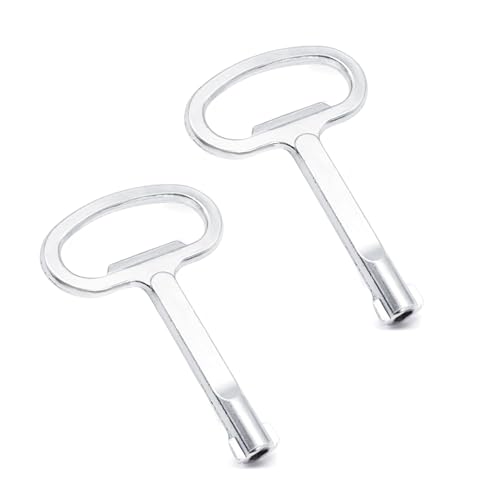
The Beienz GM82922 replacement key 2-pack is a dedicated generator maintenance accessory designed to unlock and secure Kohler home standby generator enclosures. Rather than generating power itself, this tool serves an essential support function for stationary backup systems, giving property owners and qualified technicians direct physical access to the engine compartment, maintenance access panels, digital controller, and onboard breakers. Having functional enclosure keys is critical for emergency preparedness, ensuring that severe weather or sudden utility grid failures do not leave you locked out of your home backup system.
Compatibility is the central specification for this replacement key, as it is manufactured to match Kohler original equipment part number GM82922. The manufacturer lists broad compatibility across popular Kohler air-cooled and liquid-cooled residential and light commercial standby models. Supported platforms include the 8RESV, 10RESV, 10RESVL, 12RESV, and 12RESVL compact series, the widely installed 14RESA, 14RESAL, 20RESA, 20RESAL, 20RESC, and 20RESCL units, as well as newer models such as the 14RCA, 14RCAL, 20RCA, 20RCAL, 24RCLA, 26RCA, 26RCAL, 30RCLA, 38RCLC, 48RCLC, and 60RCLB. Because lock profiles vary across generator manufacturers, buyers should verify their specific Kohler model number or check their unit documentation for key part GM82922 prior to purchase.
In terms of build quality and materials, the Beienz keys are fabricated from zinc alloy finished with a protective chrome plating. Outdoor home backup generators remain exposed to rain, snow, humidity, and temperature swings throughout the year, which can cause inferior metals to rust, seize, or shear inside lock cylinders. The chrome-plated zinc alloy construction resists atmospheric corrosion and mechanical wear, ensuring the key engages the latch smoothly even after extended storage. The handle features an ergonomic design that provides steady turning leverage against stiff cabinet cam locks, and the cutout doubles as a bottle opener for everyday convenience.
From an ownership and storm-readiness perspective, having a dedicated 2-pack of enclosure keys resolves a common failure point during extended blackouts. Routine generator maintenance requires opening the cabinet to check engine oil levels, test starting battery voltage, inspect air filters, or verify transfer switch controller readings. If original keys are misplaced or damaged over years of ownership, servicing the generator becomes difficult without forcing the latch. Storing one key inside an emergency preparedness binder and keeping the second key directly in a garage maintenance kit or on a service ring ensures instant access whenever preventative maintenance or urgent troubleshooting is required.
The primary limitation of this product is its narrow mechanical scope: it is engineered solely for Kohler enclosures requiring the GM82922 key profile and will not fit generator enclosures from Generac, Briggs & Stratton, Cummins, Champion, or portable generator lockboxes. Furthermore, it does not correct internal latch alignment issues or jammed lock cylinders resulting from enclosure settling. For homeowners, property managers, and field technicians maintaining compatible Kohler standby backup power systems, this 2-pack offers an affordable, durable, and practical replacement to maintain full operational access to essential home backup equipment.
This replacement key is engineered strictly for Kohler standby generators using the GM82922 latch keyway. Confirmed compatible models include 8RESV, 10RESV, 10RESVL, 12RESV, 12RESVL, 14RESA, 14RESAL, 20RESA, 20RESAL, 20RESC, 20RESCL, 14RCA, 14RCAL, 20RCA, 20RCAL, 24RCLA, 26RCA, 26RCAL, 30RCLA, 38RCLC, 48RCLC, and 60RCLB.
Before purchasing, homeowners should inspect their generator data plate or consult the original owner manual to ensure their enclosure uses part GM82922. It is not compatible with other generator brands or non-matching Kohler locking mechanisms.

Pros
- Fully exposed mechanical and electrical components make generator anatomy easy to identify and teach
- Hand-crank drive eliminates the need for external power sources, fuel, or batteries during lab lessons
- Y-connected load board and indicator lamps provide immediate visual feedback for AC and DC circuits
- Supports demonstrations of both basic electromagnetic induction and advanced three-phase load balancing
Cons
- Built strictly for educational demonstrations and cannot power household appliances or emergency loads
- Continuous electrical generation requires manual hand cranking, which limits runtime to brief instructional intervals
- Product data does not specify exact electrical output ratings such as continuous wattage, voltage, or amperage
The GCYXUC Three-Phase AC/DC Generator Model is an educational demonstration tool engineered for physics classrooms, STEM laboratories, and technical training environments. Unlike fuel-powered emergency backup generators designed to power residential appliances during utility outages, this manual apparatus serves as an instructional instrument. It is built specifically for teachers, students, and electrical engineering learners who need a visual, hands-on model to understand how mechanical rotational energy converts into electrical energy through electromagnetic induction.
In terms of operational performance, turning the integrated hand crank drives the generator rotor against its stationary windings to generate electrical output. The model features a Y-connected load board alongside a specialized terminal layout, allowing instructors to demonstrate both alternating current (AC) and direct current (DC) circuits. Connected indicator lamps illuminate to provide immediate visual confirmation of power delivery, while the terminal configuration supports practical demonstrations of three-phase generation, wiring relationships, and unbalanced-load principles according to the supplied wiring setups.
The physical construction prioritizes visual clarity through an open, exposed mechanical architecture. The stator windings, rotor, drive gear, bearing support, and connection terminals remain completely visible during operation, making it straightforward to identify core generator anatomy that is typically hidden inside enclosed industrial or residential housings. Its tabletop form factor is self-contained and suited for laboratory desks, lecture podiums, and workshop benches.
Setup and daily operation require no fuel, engine oil, or external electrical outlets. Users operate the unit entirely by hand, rotating the crank handle to generate experimental power across the exposed terminals and load board. Because it operates cleanly without toxic carbon monoxide emissions or combustion hazards, the apparatus is entirely safe for indoor classroom use. Maintaining the unit involves straightforward care such as keeping the exposed gears and coil assemblies clear of dust, debris, and physical impacts.
Buyers must recognize the clear limitations of this specialized instrument. This model is purely a scientific demonstration apparatus and cannot run household electronics, power tools, refrigerators, or medical equipment. Electrical output is limited to what an individual can manually produce via the hand crank, and the manufacturer provides no ratings for continuous running watts, starting surge capacity, or formal voltage regulation. Hand cranking also restricts operation to brief educational intervals rather than sustained runtime.
For science departments, high school physics teachers, vocational instructors, and STEM hobbyists seeking a functional visual aid to explain electromagnetic power generation, the GCYXUC Three-Phase Generator Model offers practical educational utility. Shoppers looking for storm preparedness equipment, RV campsite power, or household outage backup should bypass this training model and choose a conventional portable inverter or standby generator engineered for residential electrical loads.
The GCYXUC Three-Phase AC/DC Generator Model is tailored for educational curricula focusing on electromagnetic theory, multiphase power generation, and electrical circuit fundamentals. Instructors can utilize the exposed stator coils and rotor to explain Faraday's law of induction, demonstrating how relative motion between a magnetic field and conductive windings induces electromotive force.
The included Y-connected load board and terminal matrix enable students to construct and analyze distinct electrical configurations. Learners can observe the difference between single-phase and three-phase current flows, experiment with AC and DC outputs, and visualize the real-world effects of balanced versus unbalanced loads using the integrated indicator lamps without the hazards of high-voltage laboratory power supplies.

Pros
- Precise fit for Kohler part number GM82922 across RESV, RESA, RESC, RCA, and RCLC generator models
- Chrome-plated zinc alloy build provides solid corrosion resistance for outdoor installations
- Ensures critical access to generator control panels and maintenance points before severe weather hits
- Lightweight and practical design easily clips to an everyday keychain or service board
Cons
- Designed solely for compatible Kohler enclosures and will not fit other generator brands
- Key only; does not include replacement latches, lock cylinders, or mounting hardware
- Incompatible with older Kohler models or units utilizing non-GM82922 latch styles
The Beienz GM82922 Generator Key Replacement is an essential maintenance accessory designed specifically for securing and opening the exterior service panels on compatible Kohler home standby generators. For homeowners relying on an automatic stationary generator for emergency power, quick access to the internal maintenance compartment is crucial. This replacement key restores immediate entry to internal engine components, battery connections, control pads, and circuit breakers whenever routine service or urgent troubleshooting is required.
Compatibility is the primary consideration for any enclosure key, and this unit is matched to Kohler part number GM82922. The manufacturer lists broad compatibility across popular Kohler residential and light commercial standby units, including the 8RESV, 10RESV, 12RESV, 14RESA, 14RESAL, 20RESA, 20RESAL, 20RESC, 20RESCL, 14RCA, 20RCA, 26RCA, and larger RCL commercial lines such as the 38RCLC, 48RCLC, and 60RCLB. Because stationary standby generators rely on locked weather-protective housings to deter tampering and animal intrusion, having an exact-fit key ensures that protective latches turn smoothly without damaging the locking mechanism.
The build quality focuses on durability in harsh outdoor environments. Fabricated from solid zinc alloy and finished with a protective chrome plating, this key resists rust, oxidation, and surface corrosion caused by rain, humidity, or coastal air. Measuring approximately 1 by 1 by 1 inches and weighing just 0.07 pounds, it provides adequate leverage for quarter-turn latches while remaining easy to handle. The manufacturer also incorporated a functional bottle opener into the ergonomic grip, adding practical utility for property owners and service contractors working on outdoor power equipment.
From an ownership and storm-preparedness perspective, keeping a spare generator enclosure key is a smart, low-cost risk management step. During severe weather, grid failures, or scheduled generator exercise cycles, property owners must be able to inspect oil levels, reset fault codes, or engage manual transfer procedures without delay. Misplacing the original factory key can cause costly delays during an emergency. Adding this replacement key to a dedicated home emergency board or service ring ensures fast, reliable access to the generator panel when power reliability is on the line.
A realistic limitation of this product is its specialized scope. It is not an electric generator machine, nor is it a universal tool for all generator brands. It will not work on Generac, Cummins, Briggs & Stratton, or Champion enclosures, nor will it operate older Kohler models that utilize standard padlocks or distinct latch designs. Buyers should always confirm that their Kohler generator manual or existing latch hardware specifies part number GM82922 before purchasing.
The Beienz GM82922 is best suited for homeowners with compatible Kohler standby generators, facility managers, and electrical service technicians who need a reliable backup or replacement key. It provides an inexpensive, weather-resistant solution for keeping Kohler standby power equipment accessible and ready for routine maintenance and emergency power demands.
Maintaining a home standby generator requires regular access to the interior enclosure for routine engine maintenance, oil level checks, coolant inspection on liquid-cooled models, and battery terminal cleaning. Standby units operate outdoors in all weather conditions, making locked access doors necessary to keep out debris, pests, and unauthorized individuals while protecting sensitive digital controllers from the elements.
The Beienz key is engineered to operate the latches across Kohler RESV, RESA, RESC, RCA, and RCLC model series that specify part number GM82922. Verifying your specific generator model tag on the outer housing or reviewing the owner documentation is the best way to confirm that this key pattern matches your enclosure hardware. Keeping a secondary key in an accessible indoor emergency kit helps prevent lockouts during severe storms when fast access to the breaker or control pad is essential.
Examining AC and DC Generation Principles, Mechanical Differences, and Practical Applications
Electrical power generation relies on electromagnetic induction, where physical rotation through a magnetic field induces electrical current. While alternating current (AC) and direct current (DC) machines operate under this same physical law, they extract and deliver electrical energy in fundamentally different ways. An AC generator produces an alternating current waveform that reverses direction at regular intervals, whereas a DC generator utilizes mechanical rectification to deliver current flowing in a single direction. Understanding these structural and operational distinctions clarifies which generation architecture suits specific residential, mobile, industrial, or educational electrical demands.
Electromagnetic Induction and Waveform Characteristics
Every electromagnetic generator inherently produces an alternating voltage within its internal armature coils as the rotor turns past opposing magnetic poles. When an individual conductor sweeps past a north pole, current flows in one direction, and as it sweeps past a south pole, the induced voltage immediately reverses. In an AC generator, this natural reversal passes directly to the output terminals, creating a smooth sinusoidal alternating waveform that oscillates continuously between positive and negative peaks. This alternating wave cycles smoothly, allowing system voltage to be adjusted efficiently using stationary electromagnetic transformers.
A DC generator begins with the identical internal alternating voltage, but it alters the waveform before the electrical power leaves the machine casing. By utilizing a mechanical switching mechanism on the spinning shaft, the generator redirects current flow during each shaft rotation so that external current travels continuously along a single path. The resulting output does not swing across zero volts into negative territory, producing pulsating direct current instead. Multi-coil winding configurations and smoothing capacitors can flatten these pulses into a steady direct current stream required for battery storage and sensitive DC circuits.
Mechanical Construction: Commutators Versus Slip Rings
The primary physical distinction between these two systems is found at the interface between the rotating shaft and the stationary output terminals. An AC generator utilizes smooth, continuous metal slip rings that spin synchronously with the rotor assembly. Stationary carbon brushes ride against these polished rings to collect or supply electrical current without altering polarity. Because the slip rings provide an unbroken circular contact surface, mechanical friction remains moderate and electrical arcing is significantly reduced during regular operation.
In contrast, a DC generator replaces continuous slip rings with a cylindrical, segmented copper assembly known as a split-ring commutator. Each copper segment connects to an individual armature winding, and stationary carbon brushes make contact across the rotating segments to reverse electrical connections at the precise moment polarity changes. This rapid mechanical commutation rectifies internal alternating current into direct current before it exits the machine. However, the tiny insulation gaps between rotating commutator bars create physical friction, brush bounce, and electrical sparking that increase mechanical wear.
Modern commercial AC alternators frequently improve this mechanical layout by reversing rotor and stator functions. In this design, stationary stator windings generate the high-voltage alternating current output, while low-voltage excitation current feeds the rotating electromagnet. This configuration eliminates heavy output brushes entirely, allowing large quantities of electrical power to flow directly through solid stator connections. Direct current generators cannot adopt this brush-free arrangement without external semiconductor rectifiers, because mechanical commutation requires moving mechanical segments on the rotor shaft.
Grid Transmission and Transformer Compatibility
Alternating current became the global standard for commercial electricity distribution primarily because of its seamless relationship with magnetic transformers. Minimizing power transmission losses over long distances requires stepping voltages up to hundreds of thousands of volts, which reduces electrical current and corresponding heat dissipation along transmission cables. Once electrical power reaches regional substations and neighborhoods, transformers step the voltage back down to standard household operating levels, such as 120 volts and 240 volts. Direct current cannot interact with stationary electromagnetic transformers, which historically restricted early DC power distribution to localized areas.
Consulting an electrical load planning guide highlights how common household appliances depend entirely on stable AC voltage cycles to run electric motors, compressors, and resistive heating elements. Standard electrical distribution networks deliver alternating current at a fixed frequency, typically 60 hertz in the United States, providing predictable timing cycles for motorized loads. DC generators cannot directly drive standard AC induction motors without dedicated inverter electronics that reconstruct an alternating waveform. Because modern residential infrastructure is built around alternating current, AC generation remains the universal choice for whole-house backup and utility delivery.
Mechanical Wear and Long-Term Maintenance Requirements
Operational differences between AC and DC generators directly affect long-term maintenance requirements, component lifespan, and service intervals. In direct current machines, split-ring commutators experience relentless friction from spring-loaded carbon brushes riding over segmented copper bars. Over continuous operating hours, carbon dust and microscopic copper particles accumulate within the insulating slots, risking internal electrical shorts if neglected. Sparking along the brush edges can also pit and groove the commutator surface, eventually requiring precision machining on a lathe to restore concentricity.
Alternating current generators exhibit a much lower maintenance profile because they eliminate high-wear segmented commutators. In modern brushless alternators, the internal windings experience no direct physical brush contact, minimizing wear points to shaft bearings and cooling fan components. Units that do employ slip rings to deliver low-power rotor excitation experience smooth, continuous contact that produces negligible brush wear compared to commutators. This lower mechanical overhead makes AC alternators far more dependable for prolonged emergency power generation, where machines may operate continuously for several days during widespread grid outages.
Direct Current Applications in Industrial Systems and Battery Storage
Direct current generation remains essential across specific industrial processes where electrochemical reactions, heavy energy storage, and adjustable motor speeds are central. Electroplating operations, chemical refining facilities, and aluminum smelting processes require massive streams of continuous direct current that would otherwise demand expensive industrial rectifiers. Historical diesel-electric locomotives and heavy marine propulsion systems also utilized DC generators to power direct current traction motors, which provide outstanding torque control from a complete stop without complex variable-frequency drives.
Large-scale battery storage represents another major operational category where direct current generation delivers practical advantages. Remote telecommunication towers, off-grid research facilities, and backup battery banks store power exclusively as direct current. While solar panels provide direct current power during sunlight hours, dedicated DC engine dynamos are often deployed as reliable auxiliary power sources to recharge battery banks directly. Feeding direct current straight into commercial storage banks eliminates intermediate conversion stages, maximizing charging efficiency and simplifying off-grid power management.
Alternating Current Applications in Residential and RV Power
Alternating current generators dominate the consumer backup and commercial emergency power markets worldwide. During power outages caused by winter storms, hurricanes, or equipment failures, portable conventional generators and permanent standby units supply utility-grade alternating current to home breaker panels. Safe home backup requires pairing an AC generator with an approved manual or automatic transfer switch to prevent deadly electrical backfeeding into utility lines. Powering domestic refrigerators, well pumps, furnace blowers, and air conditioning units requires alternating current to match the internal electrical specifications of standard residential motors.
Mobile travel and camping power also rely extensively on alternating current generator technology to run modern recreation vehicles. Travelers frequently review a generator sizing guide for RV systems to ensure their mobile generator can start air conditioners, microwave ovens, and battery converters without overloading the circuit. Contemporary inverter generators utilize an internal alternator to generate high-frequency AC power, convert it into DC, and then invert it into clean, low-distortion alternating current. This sophisticated architecture protects microprocessor-controlled electronics, laptops, and smart entertainment systems while delivering practical mobile electricity.
Laboratory Models for Visualizing Generator Principles
Because commercial generators enclose their rotating components inside heavy protective housings, visualizing internal electromagnetic principles can be challenging for students and technicians. Specialized educational demonstration apparatus, such as the GCYXUC Three Phase AC/DC Generator Model, addresses this learning barrier by keeping mechanical and electrical parts completely visible. Operating the hand crank drives an internal rotor through exposed stator windings, demonstrating directly how rotational mechanical force transforms into electrical output. The clear view of drive gears, bearing supports, and rotor coils helps learners connect abstract electromagnetic theory with real mechanical hardware.
Demonstration models of this caliber feature flexible connection terminals and indicator lamps to support both AC and DC experimental circuit wiring. Utilizing the integrated Y-connected load board allows students to observe three-phase generation, line-to-neutral voltage relationships, and unbalanced load responses under controlled classroom conditions. By adjusting external wiring, operators can compare alternating current illumination patterns against direct current output circuits directly. These hands-on demonstrations provide engineering students, physics classes, and apprentice technicians with practical insight into how magnetic poles, coil orientation, and commutator designs dictate electrical output.
Enclosure Cabinet Hardware and Service Access Considerations
Permanent residential standby generators protect their alternating current alternators and internal combustion engines inside lockable composite or metal cabinets. These heavy-duty enclosures shield critical engine parts, control boards, and electrical terminals from driving rain, snow, debris, and unauthorized handling. Conducting routine inspections, such as checking engine oil levels, testing the starting battery, replacing spark plugs, or inspecting alternator cooling vents, requires secure access inside the cabinet. Dedicated access keys, such as the official GM82922 key pattern used on Kohler composite air-cooled generator cabinets, serve as an essential service tool for homeowners and authorized technicians.
Replacement keys produced by brands like Universal Generator Part and Beienz provide reliable access for popular Kohler residential models, including the 8RESV, 14RESA, 20RESA, 20RCA, and 26RCA series. Many aftermarket keys are manufactured from premium zinc alloy with chrome plating, helping the tool resist rust, moisture, and outdoor corrosion over long service periods. Certain replacement options, including Beienz key models, incorporate an ergonomic handle that doubles as a bottle opener, providing everyday utility alongside generator access. Keeping verified spare keys readily available ensures that maintenance personnel can unlock composite enclosure panels quickly during pre-storm preparation or urgent service calls.
Verifying part numbers against generator documentation before purchasing enclosure keys avoids latch damage and unexpected service delays. Kohler composite cabinets require the specific GM82922 key shape to operate the cam lock mechanism smoothly without binding. Homeowners and technicians should ensure that the generator master switch is placed in the off position before opening enclosure doors to prevent unexpected remote starts during maintenance. Maintaining reliable cabinet access allows property owners to service their standby power equipment properly, ensuring dependable automatic operation when municipal electrical service fails.
System Selection and Power Infrastructure Planning
Determining whether an AC alternator or a DC power source best aligns with your project depends on connected load specifications and installation requirements. If the goal is providing emergency home backup, jobsite power, or RV utility, an alternating current generator is the only practical choice. Household appliances, power tools, and residential distribution panels are engineered specifically to operate on 120-volt or 240-volt alternating current. Connecting an AC generator through a certified transfer switch or interlock kit guarantees compliance with local electrical safety standards and ensures dependable power delivery to essential household circuits.
Direct current power systems remain the preferred choice for dedicated battery banks, off-grid solar microgrids, marine DC bus bars, and technical training laboratories. Charging heavy storage batteries directly from a matched DC power source eliminates the thermal and electrical losses associated with intermediate rectification stages. Careful assessment of running wattage, motor startup surge demands, fuel availability, and necessary service access ensures that your chosen generator provides safe, efficient, and reliable power whenever you need it.





Write Your Review
No reviews yet. Be the first to share your experience!