


Severe storms frequently leave neighborhoods without electrical power, forcing homeowners to balance urgent household energy demands against hazardous outdoor weather conditions. Many property owners look for practical ways to protect their portable power equipment from rain, snow, and high winds while keeping vital home appliances running. This dilemma often leads owners to explore running generator in garage with exhaust hose kits to direct combustion fumes outside while keeping the machine protected within an enclosed space. Understanding the mechanical limitations and physical behavior of exhaust hardware is critical before attempting any backup power installation. Checking your setup early can help prevent sudden electrical disruptions, much like monitoring a generator overload warning light before critical circuits drop offline.
While commercial exhaust extensions and silencer attachments offer useful routing options for specific outdoor applications, combustion engines introduce extreme risks that simple piping cannot eliminate. Proper electrical preparation requires understanding how carbon monoxide spreads, how radiant engine heat behaves, and how air-cooled machinery functions under continuous electrical load. Safe operation also involves knowing proper shutdown procedures, such as shutting down a generator safely before inspecting fuel lines or exhaust connections. The following analysis explores the available exhaust hardware kits, their intended applications, and the vital safety boundaries every property owner must respect during an outage.

Pros
- Flexible corrugated steel bends easily to navigate cramped generator bays and tricky exterior obstacles
- Heavy-duty metal construction resists cracking under continuous engine heat and running vibration
- Supplied U-bolt clamp provides a snug mechanical grip between the flexible pipe and adapter stub
- Helps redirect hazardous engine emissions away from recreational spaces and RV perimeters
Cons
- Requires welding the metal adapter onto the factory generator muffler, requiring welding equipment or a muffler shop visit
- Does not permit operating combustion generators indoors or in enclosed garages due to carbon monoxide and fire risks
- Exhaust pipe edges are sharp and require protective work gloves during handling and assembly
The MorningRo Generator Exhaust Silencer Kit is a specialized exhaust extension assembly designed to route hot engine emissions away from portable generators and RV generator compartments. Built around a 3-foot flexible corrugated metal hose, this kit serves RV owners, campers, rural homeowners, and DIY fabricators looking to manage generator exhaust paths during storm outages or outdoor adventures. By routing the exhaust stream further away from immediate work areas or vehicle access doors, the kit helps maintain a cleaner, more manageable perimeter around your power equipment.
In terms of physical specifications and fitment, the kit includes a 3-foot (approximately 91.4 cm) flexible exhaust pipe, a metal exhaust stub adapter, and a 2.4 by 2.6-inch U-bolt clamp. The flexible pipe measures roughly 1.1 inches (2.8 cm) in diameter, paired with an approximate 1.5-inch (3.8 cm) connector diameter at the generator end and a 1-inch (2.5 cm) end connector. The corrugated pipe provides enough flexibility to twist and bend through narrow RV bays or around protective heat shields, giving users the freedom to orient exhaust gases downwind from campsite chairs or utility trailers.
Material durability is centered around high-grade, anti-corrosion metal engineered to withstand high exhaust gas temperatures and continuous vibration. Engine exhaust produces intense heat and rapid pulsing that can quickly degrade soft metals or improper ducting, but this corrugated steel pipe is built to stay intact without unraveling or fatigue cracking. In addition to funneling emissions, the extension design helps soften the sharp, direct acoustic punch of the engine exhaust outlet, yielding a somewhat less disruptive sound profile around the running unit.
Installation requires practical mechanical planning, as the metal adapter stub is designed to be welded directly onto your generator's original muffler outlet. Once the adapter stub is welded in place, the flexible corrugated pipe slides over the adapter and secures firmly with the included U-bolt clamp, eliminating the need to weld the flexible pipe itself. Users without welding equipment can have a local automotive exhaust repair shop attach the small stub in a few minutes. Protective work gloves are necessary during installation and setup, as cut corrugated metal edges can be sharp.
A critical safety limitation must be highlighted regarding generator operation and exhaust routing. Although manufacturer descriptions occasionally mention indoor applications, fuel-burning generators must never be operated inside a home, garage, basement, shed, or enclosed structure. Carbon monoxide is an odorless, lethal gas, and mechanical slip-fit exhaust joints or radiant pipe heat present serious poisoning and fire risks. This exhaust kit is strictly intended for outdoor use, such as venting an open RV generator compartment or directing fumes downwind from an outdoor work site.
For owners of portable or RV generators seeking an economical way to direct exhaust gases away from living areas, the MorningRo Exhaust Silencer Kit offers solid value. As long as buyers plan for the weld-on installation requirement and maintain strict outdoor safety practices, this flexible hardware bundle provides a durable, heat-resistant exhaust solution for storm readiness and camping setups.
The MorningRo Exhaust Extension Kit relies on a two-part installation process that combines permanent welding with a detachable mechanical clamp. The metal adapter stub must be welded directly to the generator original muffler discharge pipe to create a rigid, heat-sealed foundation. Buyers should verify their generator muffler tip outer diameter before purchase to ensure compatibility with the kit 1-inch to 1.5-inch connection dimensions.
Once the adapter stub is permanently attached to the generator muffler, the 3-foot corrugated steel flex hose slips over the stub and locks down using the included 2.4 x 2.6-inch U-bolt clamp. This setup allows the flexible hose to be removed or adjusted for transport without disturbing the welded base. Because the cut edges of corrugated steel can be abrasive, wearing heavy-duty work gloves during assembly is strongly advised.
Operating any combustion generator requires absolute diligence regarding carbon monoxide (CO) management. An exhaust extension hose directs hot exhaust gases away from immediate generator surroundings, but it does not make running a generator safe in a garage, basement, enclosed porch, or home. Even clamped exhaust joints can develop small leaks, and the high surface temperature of the flex pipe creates a potential fire hazard near building materials.
Always position your generator outdoors on a stable, level surface far away from open windows, doors, and fresh-air intake vents. The flexible 3-foot hose should be routed in the direction of prevailing winds, angling downward slightly when possible to prevent condensation from running back toward the engine muffler. Using battery-powered CO alarms inside your RV or home remains an essential safety practice whenever running backup power equipment.
Pros
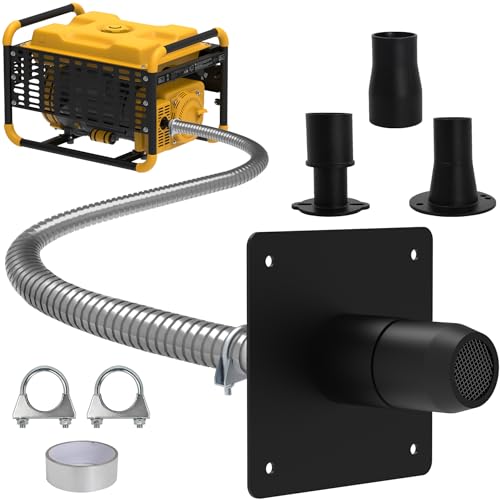
- All-in-one kit includes adapters, insulated wall thimble, clamps, high-temperature tape, and a cutting template.
- Heavy-duty stainless steel construction provides reliable weather and heat durability in outdoor environments.
- Significantly mitigates wall surface temperatures to protect outdoor wooden or metal generator sheds.
- Protective exhaust tip mesh prevents pest intrusion when the generator is not in operation.
Cons
- Requires cutting an exterior hole through your outdoor shed or enclosure wall for installation.
- Universal adapters may require fitment checks or minor adjustments to seat properly over certain irregular exhaust tips.
- Does not eliminate carbon monoxide danger or permit generator operation inside a home or garage.
The Eastrexon Generator Exhaust Extension Kit is a dedicated exhaust-routing and sound-dampening accessory engineered for portable and inverter generators placed inside outdoor sheds, detached outbuildings, or dedicated running enclosures. Many homeowners preparing for severe storm outages prefer placing their portable backup equipment inside detached utility sheds to shield the machinery from heavy rain, snow, and wind. This kit provides the necessary venting components to channel hazardous exhaust fumes outside while softening the loud acoustic tone typical of small utility engines.
Performance centers on exhaust heat management and noise mitigation. The manufacturer lists up to a 55 percent reduction in exhaust noise using the inline stainless steel silencer muffler, which helps attenuate the sharp exhaust crack of open-frame or portable inverter generators during long neighborhood blackouts. In addition, the 59-inch flexible corrugated stainless steel hose connects to an insulated through-wall mounting plate designed to reduce wall heat transfer by up to 75 percent. Safely transferring heat away from shed wall penetrations helps prevent charred siding, warped framing, or localized fire hazards during multi-hour runtimes.
Material durability is a clear strong point of the system, with both the silencer body and flexible corrugated exhaust hose manufactured from high-grade stainless steel. This metal selection resists oxidation, moisture, and coastal salt air while maintaining structural strength through repeated heating and cooling cycles. The exterior discharge pipe is equipped with a fine protective mesh screen, which acts as a barrier against mud daubers, wasps, spiders, and rodents that frequently nest inside open exhaust pipes between seasonal storms.
Installation is straightforward for handy homeowners using standard household tools. Eastrexon includes three distinct steel adapters engineered to slide over most standard portable generator exhaust ports, secured with heavy-duty mechanical clamps and high-temperature sealing tape. The manufacturer also supplies an insulated wall plate, heat-resistant installation gloves, and a pre-drilled wall cutting template to ensure accurate hole positioning on wooden, vinyl, or metal shed exteriors without guesswork.
Important limitations and critical safety protocols must be observed. Fuel-burning generators produce lethal carbon monoxide and must never be operated inside a home, basement, crawlspace, or attached garage, regardless of whether an exhaust extension kit is installed. This kit is intended strictly for detached, well-ventilated outdoor enclosures. Furthermore, while the three included adapters fit a wide variety of round exhaust outlets, certain generators with deeply recessed mufflers, unusual deflectors, or integrated spark arrestor caps may require removal of exterior shrouds or slight mechanical adaptation to achieve an airtight seal.
For homeowners, rural property owners, and DIYers operating a portable generator inside a dedicated outdoor utility building, the Eastrexon Exhaust Kit is a practical, value-oriented upgrade. It solves the critical challenges of hot exhaust management, directional fume venting, and moderate sound reduction in one comprehensive package. Verifying your generator exhaust outlet dimensions prior to purchase will ensure an easy, airtight setup before severe weather arrives.
The Eastrexon exhaust extension kit includes three distinct steel adapter fittings designed to clamp securely over common round exhaust outlets on portable and inverter generators. Before beginning installation, buyers should inspect their generator exhaust tip and spark arrestor screen to determine which adapter provides the tightest slip-fit connection.
The package contains a paper cutting template to guide the wall cutout, ensuring the insulated through-wall mounting plate sits flush against exterior siding. High-temperature sealing tape and dual heavy-duty clamps are included to seal adapter joints thoroughly, preventing exhaust leaks inside the enclosure while accommodating the gentle vibration of a running engine.
Safe generator operation requires absolute vigilance regarding carbon monoxide exposure, an odorless, invisible gas produced by all internal combustion engines. Exhaust extension kits are designed strictly for outdoor utility sheds or detached generator enclosures, and they must never be used to run a portable generator inside a home, basement, garage, breezeway, or any living space.
When venting an outdoor enclosure, ensure the exterior discharge pipe points away from nearby building windows, doors, soffit vents, and air conditioning intakes. Regularly inspect the flexible stainless steel hose, clamps, and high-temperature tape for signs of loosening, thermal degradation, or exhaust leakage to maintain safe, reliable operation throughout prolonged power outages.

Pros
- Fully welded internal seams provide dependable containment against dangerous exhaust fume leaks
- Supplied with slotted mounting plates and a heavy-duty galvanized U-bolt clamp for secure installation
- Double-layer sleeve configuration aids in isolating hot exhaust piping at the wall penetration point
- Compact and lightweight one-pound design simplifies positioning on shed and outbuilding walls
Cons
- Piping reaches high temperatures under load, requiring careful physical separation from combustible wall materials
- Requires separate purchase of 1-1/2-inch ID steel exhaust tubing and generator-specific muffler adapters
- Wall pass-through hardware alone does not eliminate the need for strict carbon monoxide and outdoor ventilation planning
The GenExhaust Universal Generator Exhaust System Double Layer Wall Attachment from Innovative Generator Solutions is a specialized hardware component designed for property owners running steel exhaust piping through a barrier wall. Specifically constructed for 1-1/2-inch inside diameter (ID) steel tubing, this pass-through sleeve is suited for emergency-preparedness planners, rural property owners, and DIY users who house their portable power equipment in dedicated, non-inhabited outbuildings or custom generator sheds.
Exhaust integrity is a primary consideration in any generator routing configuration, and this GenExhaust fitting addresses that requirement by welding all internal-facing seams completely around. This continuous welding helps minimize the risk of noxious exhaust gases escaping at the wall penetration joint. The supplied hardware includes interior-wall slotted mounting plates along with a galvanized U-bolt clamp, which secures the 1-1/2-inch steel tube firmly against vibration and movement during engine operation.
Physically, the assembly measures approximately 5.5 by 6.7 by 9.8 inches and weighs roughly 1 pound, making it straightforward to position and mount without requiring oversized framing modifications. The double-layer sleeve construction provides a perimeter boundary around the exhaust pipe, creating an essential physical barrier between the hot exhaust conduit and the structural wall penetration point.
When planning installation, buyers must account for the substantial thermal energy produced by small engines under electrical load. As noted by the manufacturer, exhaust pipe temperatures can become extremely hot depending on overall tubing length, generator engine displacement, and running electrical loads. Users must take deliberate structural measures to maintain adequate clearance and prevent direct contact with flammable, combustible, or non-heat-resistant wall materials.
This attachment acts solely as a structural wall penetration fitting and does not include the flexible or rigid steel exhaust tubing, exhaust adapters, or custom muffler fittings required to complete a full system. Furthermore, routing exhaust through an exterior wall never makes indoor generator operation safe; fuel-burning generators produce lethal carbon monoxide and must never be situated inside living quarters, attached garages, basements, or occupied spaces.
For property owners seeking a well-fabricated pass-through sleeve to discharge fumes safely through an outbuilding wall, the GenExhaust 1-1/2-inch Double Layer Wall Attachment provides a practical, weld-sealed solution. Verifying your exhaust tube outer diameter and maintaining safe clearances from combustible framing remain crucial steps before purchasing and installing this kit.
Thermal management is the most critical consideration when installing the GenExhaust double-layer wall attachment. The manufacturer cautions that the exhaust pipe can reach extreme temperatures based on the generator engine size, continuous electrical load, and overall pipe run. Installers must ensure that neither the pipe nor the pass-through bracket comes into direct contact with wood framing, vinyl siding, non-rated insulation, or other non-heat-resistant construction materials.
Ventilation and carbon monoxide precautions remain essential regardless of how well an exhaust extension is sealed. Directing generator exhaust out of a structure does not permit placing an operating engine inside a home, living area, basement, or attached garage. The exterior exhaust outlet must terminate outdoors, clear of doors, operable windows, soffits, and fresh-air intake vents to prevent deadly combustion gases from drifting back into occupied spaces.

Pros
- Safely vents generator fumes above the vehicle roofline and away from living areas
- Rubberized mounting straps absorb exhaust vibration and reduce ground-level noise
- Includes versatile adapters fitting tailpipes from 1 inch to 2 inches in diameter
- Weighs only 9 pounds and packs into a dedicated carrying bag for easy travel storage
Cons
- Designed strictly for stationary use and must be fully removed before driving or towing
- Tailored for onboard RV generator tailpipes rather than freestanding portable generators sitting on the ground
- Requires initial installation of mounting hardware on the vehicle exterior or ladder
The Camco Gen-Turi RV Generator Exhaust Venting System is a specialized safety accessory engineered for RV owners, motorhome campers, and tailgaters who operate onboard generators. Designed to redirect exhaust gas 120 inches upward and over the vehicle roofline, this system prevents fumes from gathering at ground level near RV entry doors, open windows, slide-out seams, and neighboring campsites. For anyone boondocking or dry camping in close proximity to other outdoor enthusiasts, this accessory solves the common problem of lingering exhaust odors and carbon monoxide accumulation around parked recreational vehicles.
In terms of functional performance, the Gen-Turi relies on natural draft and upward venting to safely disperse generator exhaust into the air above the living envelope. The venting pipe system acts as an exhaust riser without requiring any electrical connections, internal motors, or moving parts. Alongside fume redirection, the system noticeably lowers perceived generator volume by lifting the exhaust discharge away from ground level. Camco includes rubberized mounting straps that secure the pipe to the RV sidewall, dampening mechanical vibrations before they transfer into the vehicle frame.
Build quality emphasizes lightweight transport and broad tailpipe compatibility. The entire 120-inch assembly weighs only 9 pounds, ensuring minimal strain on the vehicle mounting points while remaining easy to handle during setup. Camco manufactures the Gen-Turi in the USA and includes multiple exhaust adapters engineered to fit most conventional RV generator tailpipes with outer diameters ranging from 1 inch to 2 inches. When packing up camp, the modular pipe sections disassemble smoothly to fit into the included compact storage bag.
Setup and everyday handling are straightforward once the initial base hardware is configured. Users attach the selected adapter to their RV generator tailpipe, connect the lower elbow, secure the stack sections, and fasten the rubberized support straps to the exterior wall or ladder mounts. Because the system requires no complex tools or electrical wiring, teardown takes only a few minutes when preparing to move camp. The storage footprint remains modest, allowing the carrying bag to tuck neatly into a standard RV basement compartment or trailer pass-through storage bay.
While the Camco Gen-Turi provides distinct safety and comfort benefits, buyers should note its specific operating limitations. This venting system is strictly intended for stationary RV use and must be completely disassembled before driving or towing the recreational vehicle. Additionally, it is tailored specifically for onboard RV generator tailpipes measuring between 1 inch and 2 inches, meaning it is not a direct fit for freestanding, open-frame portable generators sitting on the ground without custom modifications.
For RVers frequently camping off-grid, boondocking at public rallies, or running an onboard generator in tight campground stalls, the Camco Gen-Turi represents an exceptionally practical upgrade. By elevating noxious emissions above the roofline and muting exhaust vibration, it fosters a cleaner, safer, and noticeably quieter camping environment for both vehicle occupants and nearby neighbors.
The Camco Gen-Turi is engineered to fit the vast majority of factory and aftermarket onboard RV generator exhaust tailpipes. The kit includes specialized adapters accommodating exhaust pipe diameters from 1 inch to 2 inches, allowing compatibility with most standard motorhome and travel trailer generator installations.
Installation requires mounting the initial tailpipe adapter and attaching the rubberized support straps to the side of the vehicle using either eye-bolts or suction-cup mounts. Once the initial mounting brackets are established, attaching and detaching the 120-inch vertical stack takes only a few minutes whenever the RV is parked at a campsite.
Generator exhaust contains carbon monoxide, particulate matter, and offensive odors that can quickly seep into open RV windows or neighboring tents. By elevating the discharge point 10 feet above ground level, the Gen-Turi allows natural air currents to disperse toxic fumes safely above the campsite perimeter.
In addition to air quality improvements, elevating the exhaust outlet significantly reduces direct exhaust bark at ground level. The rubberized strap assembly isolates the vertical stack from the RV body, minimizing resonant buzzing and vibration to help maintain a quieter, more courteous campground atmosphere.
Exhaust Extension Hardware, Safety Realities, and Proper Generator Ventilation
Running a portable combustion generator inside an attached or detached garage with an exhaust hose is never safe and presents fatal hazards. Even though aftermarket exhaust adapters and flexible steel pipes are commercially available, these components cannot prevent deadly carbon monoxide leaks or severe structural heat buildup. Fuel-burning engines release high volumes of invisible, odorless toxic fumes that easily escape past hose clamps, muffler slip-joints, and engine seals. Understanding how this hardware actually functions helps clarify why exhaust kits belong in dedicated, isolated outdoor structures rather than attached residential garages.
The Lethal Mechanics of Carbon Monoxide and Exhaust Hose Leaks
Carbon monoxide is an invisible, odorless, and non-irritating toxic byproduct of incomplete fuel combustion that rapidly displaces oxygen in human blood. Flexible metal exhaust tubing, such as corrugated stainless steel, relies on mechanical slip joints, U-bolt clamps, or threaded fittings to connect to a small engine muffler. These connection points are rarely hermetically sealed against high-pressure exhaust pulses. Engine vibration and thermal cycling cause micro-gaps to expand along the pipe seams, allowing dangerous concentrations of toxic fumes to seep directly into the room.
The physical layout of a residential garage accelerates the accumulation of toxic gas even when external vent hoses are installed. Opening an overhead garage door by several inches or running an exhaust pipe through an open window alters indoor air pressure rather than clearing it. Wind blowing against the exterior wall can push exhaust back inside through the door gap, while household heating and ventilation systems draw contaminated garage air directly into family living spaces. Standard drywall paper and ceiling joists do not stop carbon monoxide penetration into upstairs bedrooms.
Relying on built-in carbon monoxide safety sensors on modern generators does not make indoor operation acceptable. Automatic shutoff mechanisms serve as emergency failsafes intended to halt the engine if exhaust concentrates outdoors near the unit. When a machine operates inside an enclosed space, deadly concentrations accumulate within seconds, long before an automated sensor can prevent toxic exposure. Safe backup power management requires keeping combustion exhaust completely isolated from any residential building envelope.
Thermal Radiation and Structural Fire Hazards in Confined Spaces
Small engine exhaust gases reach extreme temperatures that routinely exceed several hundred degrees during heavy electrical load conditions. Products like the GenExhaust Universal Generator Exhaust System incorporate double-layer wall attachments specifically because uninsulated steel pipes transfer dangerous levels of radiant heat. In a typical garage, wooden wall framing, sheetrock paper, and nearby utility shelving can rapidly dry out and ignite from sustained thermal exposure. Unprotected flexible exhaust hoses passing through wall cutouts present an immediate structural fire hazard during extended emergency runs.
Confined garages also tend to store volatile household materials that react dangerously to radiant exhaust components. Gasoline storage cans, lawn care equipment, propane cylinders, and aerosol containers are frequently kept in garage utility areas. Radiant heat radiating from a glowing generator muffler or corrugated pipe can raise local ambient temperatures near these containers to their flashpoints. Maintaining substantial physical clearance between hot exhaust hardware and all combustible items is an absolute requirement for fire prevention.
Insulated wall thimbles and multi-layer steel plates help manage thermal transfer, but they do not eliminate the heat shed directly from the engine block. The Eastrexon Generator Exhaust Extension Kit with 3 provides an insulated through-wall mounting plate designed to mitigate heat conduction through a structure wall. However, an engine block itself radiates significant warmth into surrounding air while generating electricity. Confining this heat within an enclosed room creates an intense thermal envelope that simple wall thimbles cannot disperse on their own.
Engine Airflow Restrictions, Recirculation, and Equipment Overheating
Portable generators rely almost universally on air-cooled engines that require continuous circulation of cool ambient air across their cylinder fins. When an engine runs inside a closed or partially enclosed space, it constantly ingests its own heated cooling exhaust. Ambient room temperatures spike quickly, drastically reducing the air density required for proper carburetor fuel mixing and efficient cooling. This heat recirculation degrades engine oil viscosity, accelerates internal component wear, and can trigger sudden thermal shutdown under load.
Operating an overheated engine also creates secondary operational complications such as vapor lock within the fuel delivery system. When fuel lines and carburetor bowls absorb excessive radiant heat, liquid gasoline boils before reaching the combustion chamber, starving the motor and causing sudden stalls. These disruptions undermine emergency power reliability when household appliances need steady electricity most. Understanding power continuity requires evaluating fuel consumption and running conditions, similar to examining propane generator runtime expectations before severe weather strikes.
Confined spaces also trap unburned hydrocarbon vapors that vent naturally from fuel tank caps and carburetor breathers. Unlike sealed automobile fuel systems, small portable power equipment relies on vented gas caps to balance internal tank pressure as fuel drains. In an enclosed garage with limited air exchange, these volatile fuel vapors hang in the air near hot engine components. A single electrical spark from an extension cord connection or an engine starter solenoid can ignite accumulated fuel fumes.
Legitimate Applications for Generator Exhaust Extension Kits
Aftermarket exhaust extension hardware serves specific, engineered purposes when applied outside of residential garages. Many homeowners construct dedicated, detached outdoor generator sheds situated well away from dwellings to dampen equipment noise and provide weather protection. These custom outdoor outbuildings feature active mechanical ventilation, louvers, high-volume intake fans, and metal wall thimbles to safely vent exhaust outside. In these specialized, detached setups, exhaust kits help route emissions through exterior shed walls while maintaining proper cross-ventilation.
Recreational vehicles represent another major practical use case for engineered exhaust redirection hardware. The Camco Gen-Turi RV Generator Exhaust Venting System is designed specifically for factory-installed RV generators operating in open-air campgrounds. This system attaches to an existing vehicle exhaust pipe and directs fumes ten feet upward, releasing exhaust above the RV roofline. By elevating the discharge point, the system prevents heavy fumes from collecting between parked trailers or entering open camper slide-out windows.
Alternative fuel conversions also demand careful exhaust management and structural planning. Property owners who explore converting a generator to alternative fuels like natural gas or propane still produce dangerous emissions that require open outdoor dispersion. Even though gaseous fuels produce fewer visible soot particles than standard gasoline, their exhaust streams contain high levels of lethal carbon monoxide. Dedicated exhaust hardware helps direct these gaseous exhaust streams away from outdoor seating areas and patio doors during outdoor operation.
Exhaust Hardware Components, Sizing, and Structural Mounting
Selecting exhaust components requires matching engine muffler designs with compatible adapter mechanisms. The MorningRo Generator Exhaust Silencer Kit utilizes a 1-inch weld-on adapter designed to attach directly to a factory muffler stub. This design offers a secure mechanical connection, but it requires metal welding tools or professional fabrication to ensure a rigid seal. In contrast, bolt-on or slip-fit adapters clamp over existing exhaust deflectors, making them simpler to install on standard open-frame portable units.
Flexible corrugated steel hose is the standard conduit material used to route exhaust gasses around structural obstacles. Corrugated construction allows the pipe to bend without kinking, isolating the structural wall from intense engine vibrations that would otherwise loosen fasteners. However, long runs of corrugated pipe introduce significant internal friction against passing exhaust pulses. If an exhaust hose is too narrow or features excessive sharp bends, it creates excessive engine backpressure that reduces power output and overheats exhaust valves.
Through-wall mounting plates and insulated pass-through thimbles are necessary whenever routing an exhaust line through an exterior wall. A heavy-duty wall attachment isolates the hot exhaust tube from exterior siding, building sheathing, and structural studs. The GenExhaust system uses welded internal seams and slotted mounting plates to maintain a durable structural anchor under continuous vibration. Proper installation requires heat-resistant gaskets and high-temperature silicone sealant to prevent exterior fumes from migrating back along the wall penetration.
Added silencer canisters and spark arrestor screens provide acoustic dampening and ember protection along the exhaust run. Supplemental silencers reduce sharp exhaust popping noises, creating a quieter exterior perimeter during long outage periods. When installing secondary silencer hardware, property owners must ensure internal spark arrestor screens remain accessible for routine carbon cleaning. A clogged exhaust screen increases exhaust backpressure, eventually choking the engine and causing rough idle or unburned fuel backfires.
Safe Outdoor Weather Protection and Generator Placement
Operating portable generators safely during storms requires robust outdoor placement rather than compromising with dangerous indoor compromises. Generators must always run outdoors on a firm, level surface positioned at least twenty feet away from all home doors, windows, and foundation vents. The exhaust stream must point downwind and away from adjacent occupied structures to prevent air currents from carrying fumes toward living areas. Positioning equipment far from home perimeters eliminates the carbon monoxide penetration risks associated with garages.
Protecting outdoor power equipment from torrential rain, sleet, and blowing snow is achievable through purpose-built running covers. High-quality generator running tents provide a protective fiberglass or vinyl canopy that shields sensitive electrical outlets while maintaining full open airflow around the engine and exhaust. These specialized covers allow the machine to operate safely in heavy precipitation without risking short circuits or electrical shock hazards. Unlike improvised tarps, certified running tents maintain necessary clearances around hot mufflers.
Power distribution from an outdoor generator into the home should rely on heavy-duty, outdoor-rated extension cords or a professionally installed transfer system. Connecting power cords directly to an outdoor power inlet box connected to an indoor manual transfer switch provides seamless electricity delivery without leaving garage doors cracked open. This configuration keeps the garage completely closed, preserving home security, retaining building heat, and blocking all hazardous exhaust fumes from entering the residence.
Practical Verification and Backup Power Safety Takeaways
Installing working carbon monoxide alarms on every level of the home and outside all sleeping areas provides essential life-safety protection during any power outage. Property owners should test battery backup systems on all alarms prior to severe storm seasons to verify continuous monitoring capability. Even when running backup equipment outdoors at proper distances, changing wind patterns can push trace fumes toward exterior walls. Dependable carbon monoxide detection offers early warning before gas concentrations reach hazardous thresholds inside the residence.
While commercial exhaust hoses, wall thimbles, and silencers provide valuable utility for outdoor sheds and recreational vehicles, they must never be used to run portable generators inside a garage. Maintaining an outdoor running location remains the only proven method to ensure safe combustion ventilation and continuous equipment cooling. Prioritizing correct equipment placement, weatherproof running covers, and direct cord management guarantees dependable backup electricity without endangering your household.







Write Your Review
No reviews yet. Be the first to share your experience!