


Grid instability during severe winter storms or hurricane seasons often forces property owners to evaluate fuel availability before disaster strikes. When local gas stations lose pumping power or face fuel shortages, homeowners naturally wonder whether their home backup systems can connect directly to residential utility fuel lines. Addressing the practical question of whether can generac run on natural gas requires distinguishing between dedicated multi-fuel portable equipment, home standby units, and standard single-fuel gasoline machinery. Relying on utility-supplied fuel lines provides an uninterrupted energy stream, eliminating the hassle of storing volatile liquid fuels in garages or sheds.
Selecting the right fuel strategy involves evaluating continuous running output, surge wattage headroom for motor inrush current, and total appliance demand. While examining various affordable backup generator choices for emergency resilience, buyers must understand that gaseous fuels change engine combustion dynamics. Factory-engineered multi-fuel models adjust air-fuel mixtures cleanly, whereas standard gasoline carburetors lack the internal regulators required to process dry gas safely. Making an informed equipment choice protects both household circuits and critical appliances from unexpected electrical drops.
Pros
- Direct tri-fuel capability enables running on natural gas or propane to avoid storing large volumes of treated gasoline
- High continuous output on all fuels, delivering 9,500W on gas, 8,550W on propane, and 7,000W on natural gas
- Factory-equipped 50A NEMA 14-50R outlet allows direct hookup to standard 50-amp generator power inlet boxes
- COsense automatic carbon monoxide shutdown adds a critical layer of operational safety around the unit exterior
Cons
- Substantial dry weight of 227 pounds makes vehicle loading or stair navigation challenging without assistance
- Continuous running wattage drops from 9,500 watts on gasoline down to 7,000 watts when fueled by natural gas
- Open-frame construction produces conventional utility noise levels that exceed fully enclosed inverter generators
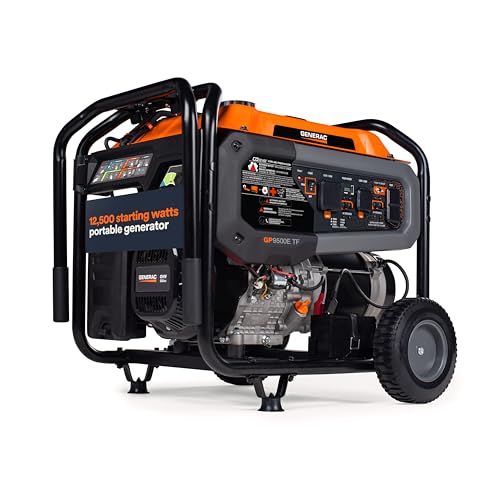
The Generac 12,500 Starting Watt Tri-Fuel Portable Generator is a high-capacity open-frame power station engineered for manual residential backup and heavy-duty jobsite service. Unlike permanently installed whole-house standby generators, this unit requires manual outdoor placement, manual fueling, and cable connection during an electrical blackout. It addresses the needs of storm-preparedness households, rural property owners, and suburban homeowners who want broad emergency coverage across multiple essential household circuits without the extensive capital expenditure of a stationary automatic standby system.
Electrical output and fuel flexibility form the core strength of this Generac generator. On standard unleaded gasoline, the engine generates 9,500 running watts and 12,500 starting watts, which is sufficient capacity to handle high-demand motor-driven loads such as well pumps, sump pumps, refrigeration equipment, and furnace blowers when properly managed. Switching to liquid propane delivers 8,550 continuous running watts, while tapping into a residential low-pressure natural gas supply provides 7,000 running watts. The fuel selector dial allows seamless switching between fuel sources without shutting down the engine, offering exceptional operational flexibility when regional fuel shortages limit gasoline availability.
Power distribution is centered on a thoughtfully arranged control panel featuring three primary output circuits. Homeowners connecting to a manual transfer switch or generator interlock panel have direct access to both a 120/240V 30-amp L14-30R twist-lock receptacle and a high-capacity 120/240V 50-amp NEMA 14-50R outlet, eliminating the need for awkward adapter cords when connecting to a 50-amp generator inlet box. The panel also includes a 120V 20A GFCI duplex outlet for powering standalone tools and extension cords. For operational safety, Generac integrates proprietary COsense technology that detects elevated carbon monoxide levels near the unit and automatically shuts off the engine to reduce the risk of toxic buildup.
Operational readiness is enhanced by an electric rocker switch that draws power from an included 12V 9Ah battery, eliminating the physical strain of pull-cord startups during stressful weather events. A traditional recoil pull starter remains permanently installed on the engine block as a reliable mechanical backup if the battery charge depletes during seasonal storage. The 7.5-gallon steel fuel tank delivers up to 14 hours of continuous operation at a 25 percent load, or roughly 10.5 hours at a 50 percent load. When supplied by a standard 20-pound propane cylinder, the unit provides approximately 6 hours of operation at a 25 percent load, while connection to an uninterrupted natural gas utility meter provides virtually indefinite runtime limited only by routine engine oil maintenance intervals.
Prospective buyers must evaluate several realistic limitations before making a purchase. Weighing 227 pounds dry, the machine requires deliberate effort to roll across uneven turf or gravel, despite the included 9.5-inch never-flat wheels and folding handle kit. Furthermore, prospective users relying on natural gas must account for the natural energy density drop, as continuous output decreases to 7,000 running watts. As an open-frame conventional generator, operating sound levels will be noticeably louder than enclosed recreational inverter units, and it lacks an automatic transfer switch mechanism, requiring the operator to manually wheel the unit outside, connect cables, and start the engine in any weather condition.
This Generac tri-fuel model is best suited for homeowners and rural property managers who want flexible, high-output emergency backup capable of running off an existing natural gas meter or propane storage tank. Buyers who require seamless, hands-off electrical transfer during an outage should look toward a permanently installed automatic home standby generator. However, for those seeking serious 120/240-volt multi-circuit backup versatility with a built-in 50-amp outlet, this unit offers robust capability and dependable performance.
Fuel flexibility on the Generac 12,500-watt generator ensures that homeowners are not entirely dependent on gas station availability during major storms. Running wattage scales logically across fuel types: gasoline delivers 9,500 running watts and 12,500 surge watts; liquid propane provides 8,550 running watts; and natural gas supplies 7,000 running watts. The included primary LP regulator hose enables direct connection to standard 20-pound propane tanks right out of the crate, while a dedicated natural gas supply line can be plumbed to the exterior of the home by a qualified professional.
The unit features a versatile outlet array designed specifically for large residential load transfer. The NEMA 14-50R 120/240V 50A outlet provides the throughput needed to feed an entire 50-amp manual transfer switch, distributing balanced power across multiple 120-volt and 240-volt branch circuits in the home electrical panel. For installations utilizing a 30-amp inlet, the onboard L14-30R twist-lock receptacle provides a secure connection that prevents accidental disconnection from engine vibration. All individual branch circuits are protected by push-button circuit breakers directly adjacent to the receptacles.
Safe deployment is critical when operating any high-output combustion generator during an emergency power outage. Fuel-burning engines generate hazardous carbon monoxide gas and must always be operated outdoors in a well-ventilated area, positioned well away from windows, exterior doors, soffits, and fresh-air intake vents. The onboard COsense carbon monoxide safety system serves as an automatic fail-safe shutoff, but it is never an excuse to run the generator inside a garage, basement, covered porch, or enclosed outbuilding.
Connecting this portable backup generator to residential wiring requires an approved code-compliant transfer method, such as a manual transfer switch or a breaker interlock kit with an exterior power inlet box. Backfeeding power through standard household wall outlets is illegal, dangerous to utility line workers, and a severe fire risk. Proper load calculation should always be conducted prior to storm season to ensure the total simultaneous starting and running draw of your prioritized appliances does not exceed the fuel-specific output rating of the generator.

Pros
- Generous 6,500 running watts and 8,125 starting watts provide strong capacity for essential household appliances.
- COsense automatic carbon monoxide shutdown adds a vital safety layer during outdoor emergency deployment.
- Up to 10.5 hours of operation at half load minimizes the need for frequent refueling overnight.
- Durable steel cradle, folding handle, and never-flat wheels simplify transport despite the machine's solid frame.
- Included extension cord and covered outlets provide out-of-the-box utility for storm readiness.
Cons
- Weighs 182 pounds, which makes loading into a vehicle or navigating stairs challenging without a ramp or second person.
- Operates strictly on gasoline, lacking multi-fuel flexibility for owners who prefer liquid propane or natural gas.
- The supplied product data does not list push-button electric start or remote start, requiring manual recoil starting.
The Generac 8,125 Starting Watt Portable Gas Generator is an open-frame conventional portable generator built to supply dependable temporary electrical power during utility failures, severe storm seasons, and outdoor projects. Centered on an overhead valve (OHV) engine and engineered as a portable backup solution rather than a permanently installed standby unit, this model suits homeowners, emergency-preparedness planners, and rural property owners who need significant electrical output without whole-house installation costs. With 6,500 running watts and 8,125 starting watts, it offers ample capacity to energize critical household appliances such as food refrigeration, sump pumps, and basic lighting through manual cord management or compatible transfer equipment.
Output performance is reinforced by Generac's PowerRush Advanced Technology, which boosts starting capacity over continuous rated wattage to accommodate high-demand motor startups. Because appliances with compressors and electric motors require an immediate surge of power to start up, the 8,125 starting watt rating helps prevent the engine from bogging down or stalling. Fuel delivery is supported by a large-capacity steel fuel tank with a built-in mechanical fuel gauge, providing up to 10.5 hours of runtime at a 50% electrical load. This extended duration offers peace of mind during overnight storm outages, although overall runtime will naturally decrease when powering continuous loads closer to the 6,500-watt ceiling.
System design balances outdoor durability with critical user protection features. A 1.25-inch diameter steel tube cradle shields the engine and alternator assemblies, while weather-resistant outlet covers protect the electrical receptacles from dust, yard debris, and outdoor elements. For life-safety defense, this generator features COsense carbon monoxide monitoring technology, which actively measures ambient CO accumulation and triggers an automatic engine shutoff if dangerous concentrations are detected. In addition, an integrated low-oil shutdown sensor cuts the ignition if lubricating oil levels drop dangerously low, preventing avoidable mechanical damage to the engine.
Deployment and routine maintenance are assisted by practical onboard controls and included hardware. A digital hour meter mounted on the front panel tracks cumulative run hours, providing a clear maintenance clock for scheduled oil changes and servicing. Moving the 182-pound unit across lawn or gravel is made manageable by heavy-duty never-flat wheels and an ergonomic fold-down transport handle. The generator also includes a heavy-duty extension cord right out of the box, allowing users to safely direct electricity into the home from a compliant outdoor position without purchasing extra cord sets immediately.
Despite its high continuous output, prospective buyers should take note of several functional tradeoffs. The 182-pound dry weight and substantial exterior frame mean that lifting the generator into an SUV or truck bed requires two capable adults or a set of loading ramps. The fuel system is also single-source, operating exclusively on standard gasoline rather than offering dual-fuel or tri-fuel versatility with propane or natural gas. Furthermore, because the supplied specifications do not indicate an electric-start switch or wireless remote, owners must rely on manual recoil starting, which demands physical effort during freezing weather or storm conditions.
Overall, this 6,500-watt Generac portable generator offers a capable, high-capacity backup solution for households seeking reliable manual emergency power during power outages. It fits suburban homeowners and storm-preparedness buyers who need dependable wattage to support key household circuits through manual extension cords or a properly wired generator inlet. Those desiring automatic operation, multi-fuel flexibility, push-button electric starting, or seamless whole-house backup should explore dual-fuel portable units or permanently installed automatic standby generators instead.
Operating a combustion-engine generator requires strict adherence to outdoor placement protocols, and the integrated COsense technology provides critical supplemental protection. The onboard sensor continuously tracks carbon monoxide concentrations near the machine and automatically stops the engine if dangerous levels accumulate, reducing the risk of accidental poisonings. However, this safety cutoff is never a replacement for proper generator placement; a fuel-burning generator must always be operated outdoors in open air, far away from windows, exterior doors, soffit vents, and attached living spaces.
Beyond atmospheric safety, the unit includes automatic low-oil level protection to prevent catastrophic engine failure. If the oil reservoir drops below the safe operating line, the sensor cuts the engine automatically, preventing seized components and extending the functional lifespan of the equipment. Weather-resistant covered outlets also help prevent debris ingress when the generator is deployed outside during harsh weather conditions.
Preparing for extended power outages requires thoughtful electrical load management and clear knowledge of your home's power demands. With 6,500 running watts, this generator can support multiple critical household loads simultaneously, such as a full-size refrigerator, a standalone freezer, a sump pump, and portable lighting, provided the total running wattage remains within the machine's capacity. The included heavy-duty extension cord facilitates quick plug-and-play distribution to key appliances inside the home right away.
For whole-home circuit access without tangled indoor cords, this generator can be paired with a professionally installed manual transfer switch or interlock kit connected to an exterior generator inlet box. Never attempt to backfeed power through an ordinary household wall outlet, as this presents severe fire hazards and backfeeding risks to utility line workers. Keeping fresh, stabilized fuel on hand and using the digital hour meter to track scheduled engine maintenance ensures the generator is primed and ready when severe weather strikes.
Evaluating Natural Gas Capabilities Across Generac Generator Models
Understanding whether a backup power system can operate on municipal utility lines begins with identifying the specific fuel architecture of the machine. The simple answer to whether can generac run on natural gas is yes, but only if the machine is specifically manufactured as a tri-fuel portable generator or an automatic home standby system. Many portable models run exclusively on gasoline, and attempting to feed gaseous fuel into an incompatible engine leads to severe mechanical failure or dangerous fuel leaks. Evaluating factory fuel specifications ensures that property owners select the correct equipment for uninterrupted storm readiness.
The Direct Answer: Which Generac Units Support Natural Gas
Generac manufactures two primary categories of generators that run natively on natural gas: permanently installed home standby units and multi-fuel portable models. Standby generators connect directly to residential gas meters and electrical service panels, engaging automatically whenever utility power fails. Within the portable category, units like the Generac 12,500 Starting Watt Tri-Fuel generator feature multi-fuel selector dials, dedicated dry-gas plumbing, and convenient electric push-button starting. A single switch allows operators to transition between fuel supplies without shutting down the unit during emergency operations. These portable tri-fuel machines operate on standard unleaded gasoline, liquid propane, or low-pressure natural gas straight from the factory crate without aftermarket conversion kits.
In contrast, conventional portable units such as the Generac 8,125 Starting Watt Portable Gas generator are engineered strictly for liquid gasoline combustion. A gasoline-only generator uses a traditional float-bowl carburetor calibrated specifically for liquid fuel atomization from an integrated steel fuel tank. Introducing pressurized natural gas into an engine lacking an internal gaseous fuel regulator causes severe air-fuel ratio imbalances and potential fire hazards. Unless the machine explicitly states tri-fuel capability or natural gas compatibility on its data plate, operators must never attempt to connect it to a natural gas line.
Combustion Physics and Fuel Energy Density Derating
Operating a generator on natural gas involves fundamental combustion tradeoffs due to differences in fuel energy density. Standard gasoline contains approximately 114,000 British Thermal Units (BTU) per gallon, whereas natural gas supplies roughly 1,000 BTU per cubic foot at standard residential pressures. Liquid propane occupies a middle tier with approximately 91,500 BTU per gallon. Because natural gas enters the combustion chamber as a vapor, it displaces more oxygen inside the cylinder than atomized liquid gasoline droplets do. This displacement reduces the volumetric efficiency of the engine, leading to a predictable reduction in peak horsepower and electrical wattage output.
This derating effect is clearly reflected in factory specifications for multi-fuel equipment. The Generac 12,500 Starting Watt Tri-Fuel generator delivers 9,500 running watts and 12,500 starting watts when running on gasoline, which drops to 8,550 running watts on liquid propane and 7,000 running watts on natural gas. A continuous output of 7,000 watts remains substantial for residential backup, but users must account for this 2,500-watt reduction when calculating appliance loads. Homeowners must adjust their simultaneous power budget to prevent engine bogging or tripped breakers when heavy appliances start up.
Fuel Delivery Architecture: Demand Regulators and Intake Plumbing
The internal engineering that allows an engine to process natural gas centers on specialized fuel delivery hardware. Factory tri-fuel machines incorporate an integrated demand regulator that senses engine vacuum to control the flow of gaseous fuel into the mixer. Exploring the internal core components of a generator reveals that gaseous fuels require continuous negative pressure from piston intake strokes to draw fuel safely into the engine block. If the engine stops rotating or stalls under excessive load, the internal diaphragm closes immediately, preventing dangerous gas accumulation in the surrounding air.
Single-fuel gasoline engines, including the Generac 8,125 Starting Watt Portable Gas model, lack these precision demand diaphragms and secondary gaseous fuel passages. Instead, they rely on a mechanical float needle, brass main jets, and a gravity-fed fuel petcock designed solely for liquid hydrocarbons. Installing uncertified aftermarket conversion kits to run natural gas on a gasoline engine often invalidates manufacturer warranties and risks improper air-fuel ratios. Factory-built tri-fuel systems feature multi-position fuel selector switches that allow seamless transitions between fuel sources without risking internal component damage or unsafe pressure spikes.
Fuel Supply Pressure and Plumbing Hookup Prerequisites
Connecting a multi-fuel generator to residential natural gas requires matching the machine to local gas utility plumbing specifications. Residential natural gas systems typically operate at low delivery pressures ranging between five and seven inches of water column, which equals approximately one-quarter pound per square inch. Multi-fuel engines require adequate gas volume rather than high pressure to sustain combustion under full electrical load. If the supply line diameter is undersized or the gas meter lacks sufficient rated capacity in cubic feet per hour, the engine will starve of fuel when heavy electrical appliances engage. This fuel starvation causes sudden voltage drops, engine stumbling, and unexpected breaker trips.
Standard installations utilize dedicated flexible gas hoses equipped with quick-disconnect fittings and manual shutoff ball valves at the exterior wall outlet. Generac tri-fuel units often include primary regulator hoses tailored for specific pressure thresholds, but permanent fuel plumbing should comply with national fuel gas codes. Restrictive supply hoses or excessive run lengths cause noticeable pressure drops that trigger engine surging and frequency instability. Verifying that the home utility meter can supply the generator while running standard heating appliances prevents unexpected outages during severe winter conditions.
Inductive Motor Inrush and Starting Wattage Calculations
Sizing a natural gas setup requires careful attention to the difference between continuous running watts and momentary starting surge. Resistive loads like incandescent lamps, baseboard heaters, and toaster elements draw consistent power from the moment they are switched on. Inductive loads powered by electric motors, including basement sump pumps, central air conditioning compressors, and refrigerator motors, require substantial inrush current to overcome rotor inertia. This locked rotor amperage creates an initial surge that can demand two to three times the appliance’s normal operating wattage. Generators must supply adequate instantaneous surge wattage to prevent inductive motors from stalling.
When running on natural gas, the available surge headroom is lower than on gasoline, making load management vital during extended outages. Connecting a dedicated backup generator for refrigerator circuits and freezer units requires verifying that total starting demands do not exceed the derated surge capacity. The Generac 12,500 Starting Watt Tri-Fuel unit provides ample starting reserve for multiple motor loads, but users should stage inductive appliances sequentially. Starting the largest motor first allows the alternator voltage regulator to stabilize before secondary appliances draw additional current. This staged startup strategy prevents unnecessary breaker tripping and maintains stable line voltage.
Receptacle Distribution and Electrical Panel Integration
Delivering high-wattage power from a natural gas generator into a residential structure requires safe distribution interfaces. Heavy-duty tri-fuel portable machines provide versatile control panels to support diverse electrical loads. The Generac 12,500 Starting Watt Tri-Fuel model features a 120/240V 50A NEMA 14-50R outlet alongside a 120/240V 30A L14-30R twist-lock receptacle and standard 120V 20A GFCI duplex outlets. These high-capacity split-phase connections allow operators to supply both 120-volt convenience circuits and 240-volt double-pole appliances through a single heavy-gauge cord. Weather-resistant outlet covers protect the electrical terminals from environmental moisture during outdoor operation.
Connecting a portable generator directly to a house must always be executed through an approved manual transfer switch or mechanical interlock kit. Attempting to backfeed electricity through standard household wall outlets using homemade cords is extremely dangerous and illegal. Backfeeding energizes exterior utility lines, placing utility line workers at risk of lethal electrocution while they repair damaged infrastructure. A professionally installed transfer switch completely isolates the home from the grid, ensuring clean and compliant power distribution throughout critical household branch circuits.
Carbon Monoxide Hazards and Mandatory Clearance Distances
A common misconception is that natural gas exhaust is completely harmless and safe for enclosed spaces. While natural gas burns cleaner than liquid gasoline and produces fewer particulate emissions, its exhaust still contains lethal levels of carbon monoxide. Internal combustion engines operating on any fossil fuel must never be positioned indoors, inside attached garages, in basements, or within enclosed breezeways. Carbon monoxide is an odorless, colorless gas that displaces oxygen in the bloodstream, leading to rapid asphyxiation and loss of consciousness. Adequate outdoor ventilation is an absolute physical necessity for all combustion power equipment.
Portable generators must always remain outdoors in an open-air environment at least 20 feet away from doors, windows, and fresh air intake vents. Advanced safety systems like Generac COsense technology continuously monitor carbon monoxide concentrations around the unit and trigger an automatic shutdown if dangerous exhaust pockets accumulate. Both the Generac 12,500 Starting Watt Tri-Fuel and the Generac 8,125 Starting Watt Portable Gas units feature integrated CO sensing modules. Even with automatic shutoff sensors active, maintaining proper outdoor distance remains an essential life-safety requirement. Never rely entirely on automated sensors to justify risky indoor generator placement.
Practical Fuel Maintenance and Operational Reliability
One of the greatest operational benefits of running on natural gas is the elimination of fuel degradation issues. Liquid gasoline containing ethanol begins to deteriorate within thirty to sixty days, absorbing ambient moisture and forming gummy varnish deposits inside carburetor jets. This fuel varnishing is the leading cause of hard-starting engines and erratic governor hunting after seasonal storage. Natural gas is completely shelf-stable and feeds continuously from home utility lines, requiring zero fuel stabilizers, drain bowls, or rotational fuel storage routines. Owners can leave their emergency generator connected and ready for action without worrying about fuel spoiling.
Despite the maintenance convenience of natural gas, regular engine lubrication and service schedules remain vital for long-term reliability. Overhead valve (OHV) engines require periodic oil changes, spark plug inspections, and air filter cleanings regardless of the fuel burned. Equipment like the Generac 8,125 Starting Watt Portable Gas model includes a digital hour meter to track operating intervals and alert operators to scheduled maintenance. Automatic low-oil shutdown switches also safeguard internal engine components by halting ignition before low oil levels cause catastrophic piston or crankshaft scoring. Routine maintenance keeps the engine operating smoothly whenever emergency power is demanded.
Summary of Fuel Suitability for Home Outage Preparation
Determining whether a Generac generator can run on natural gas ultimately depends on selecting the proper machine configuration. If long-term continuous runtime without refueling stops is your primary emergency goal, investing in a factory-engineered tri-fuel portable model or home standby unit is the right path. For users who prioritize higher peak starting wattage per dollar or plan to use their equipment on remote job sites where utility gas lines do not exist, a dedicated gasoline model like the Generac 8,125 Starting Watt unit offers reliable mechanical performance. Matching the generator architecture to your specific fuel availability ensures optimal readiness.
Balancing fuel availability, derated output wattage, and electrical connection safety ensures that your property remains resilient throughout unpredictable utility outages. Verifying fuel compatibility on the manufacturer data plate before attempting connection preserves equipment warranties and protects household electronics. When properly matched with an approved transfer switch and operated safely outdoors, a natural gas backup generator provides dependable peace of mind during severe weather disruptions. Property owners can face storm seasons with confidence knowing their backup power system is safely and properly configured.






Write Your Review
No reviews yet. Be the first to share your experience!