


Sudden grid collapses during severe winter freezes or summer thunderstorms leave homes vulnerable to dark rooms, spoiled groceries, and frozen pipes. Relying on loud, fume-belching combustion units often brings the headache of midnight refueling in driving rain and gummed-up carburetors. Modern homeowners increasingly turn to emissions-free energy storage, making the best solar generators for whole house emergency protection a practical solution. These advanced power stations deliver heavy surge capacity, instant pure sine wave electricity, and expandable battery storage to keep vital circuits operational without burning fossil fuels. If you want portable power on the move, checking out a top best non gas portable generator offers a helpful baseline for clean inverter performance.
Evaluating split-phase 120V and 240V capabilities ensures your setup handles demanding loads like well pumps and central air conditioning. Scalable systems from reputable brands pair durable LiFePO4 chemistry with multi-thousand-watt solar charging inputs for extended off-grid durability. Comparing whole-home backup units against compact best 3000 watt solar generators clarifies exactly how much battery capacity your family requires. Fast sub-20-millisecond automatic transfer switch response times also keep sensitive home electronics running smoothly when utility lines go dead.

Pros
- High 7200W continuous output and 14,400W surge capacity handle heavy residential starting loads
- Native 120V and 240V dual-voltage support allows connection to heavy appliances and transfer switches
- Long-lasting LiFePO4 battery chemistry delivers thermal stability and durability rated up to 11 years of daily use
- Expandable storage architecture scales from 5040Wh up to 60kWh to match extended outage needs
- Clean, fume-free battery operation allows safe indoor placement without carbon monoxide hazards
Cons
- Significant total weight of 134.5 pounds requires careful physical planning for transport or relocation
- Included 400W solar capacity will require extended daylight hours to replenish the large 5040Wh battery without supplemental panels
- Jackery 60A Smart Transfer Switch for whole-home circuit integration is sold separately
The Jackery Solar Generator 5000 Plus, supplied here with two 200W solar panels, represents a high-capacity portable battery backup system tailored for residential storm preparedness, extended utility outages, and clean off-grid power. Unlike traditional fuel-burning generators, this unit operates without liquid fuel storage, exhaust emissions, or engine noise, making it an appealing choice for homeowners, suburban households, and emergency planners seeking clean backup power. With a massive 5040Wh base capacity and an inverter providing 7200W of continuous output, this system bridges the gap between small portable power stations and dedicated residential backup systems.
Electrical capability is anchored by 7200W of rated continuous output and a peak surge capacity of 14,400W, supporting simultaneous 120V and 240V power delivery. The dual-voltage architecture allows the unit to power demanding 240V household equipment, such as central air conditioning systems up to 5 tons or standard electric water heaters, provided the appliance starting and running wattage falls within the system's operational envelope. The base 5040Wh capacity is modular and can be expanded up to 60kWh with add-on battery packs, offering sufficient stored energy to sustain essential household circuits across multiple days of an extended outage depending on total connected loads.
The system is constructed with lithium iron phosphate (LiFePO4) battery cells managed by ChargeShield 2.0 technology, providing thermal stability and cycle life rated for up to 11 years of daily operation. The primary power station measures 16.5 by 15.5 by 25 inches and weighs 134.5 pounds, reflecting a heavy-duty, stationary-oriented design meant for home staging or RV utility closets rather than lightweight handheld carry. For structured home integration, the unit is engineered to pair with the Jackery 60A Smart Transfer Switch, enabling direct connection to up to 12 dedicated 120V circuits or 6 dedicated 240V circuits to keep essential household systems functioning safely without hazardous extension cord runs.
Recharging flexibility is a critical consideration for outage readiness, and the unit supports up to 4000W of solar input across both high- and low-voltage panel configurations. Under peak conditions with maximum solar arrays, the manufacturer notes that full replenishment can take as little as 2 hours. This kit includes two 200W solar panels (providing 400W of initial solar collection) to establish an off-grid charging baseline. Because the battery system produces zero carbon monoxide or toxic exhaust, it can be staged indoors directly adjacent to critical appliances, eliminating the severe weather exposure and strict outdoor placement rules associated with conventional combustion engines.
Potential buyers should consider several practical limitations prior to purchase. Although the unit accepts up to 4000W of solar input, the two included 200W panels provide 400W total, which will require significant sun exposure to replenish a depleted 5040Wh battery without supplemental panels or AC grid power. At 134.5 pounds, the unit requires deliberate physical effort to move, particularly over steps or uneven surfaces. In addition, integrating the power station directly into home breaker circuits requires the Jackery 60A Smart Transfer Switch and professional installation, which are not bundled with this baseline kit. Homeowners must also practice active load management, as continuous high-wattage 240V loads will rapidly draw down a standalone 5040Wh battery.
Based on product specifications and design architecture, the Jackery Solar Generator 5000 Plus is best suited for homeowners, emergency-preparedness planners, and rural property owners who want powerful, zero-emission 120V/240V backup capability for critical circuits and major appliances. Buyers planning for multi-day off-grid emergencies should consider investing in additional solar panels or expansion batteries to match their daily consumption, while shoppers seeking a budget-focused emergency option or lightweight camping power may be better served by smaller, lower-wattage portable battery units.
The Jackery Solar Generator 5000 Plus provides dedicated 120V and 240V split-phase power, enabling direct support for heavy household equipment that standard 120V portable power stations cannot run. According to the manufacturer, the unit can be paired with the Jackery 60A Smart Transfer Switch to safely distribute electricity to up to 12 individual 120V household circuits or 6 dedicated 240V circuits, such as water heaters, well pumps, or central air units, within rated output limits.
Because battery storage systems generate no carbon monoxide or exhaust emissions, the unit eliminates the risks associated with fuel storage and outdoor placement in wet weather. Homeowners can install the transfer switch and stage the generator directly inside a garage, utility room, or basement without backfeeding concerns or hazardous extension-cord routing, provided electrical transfer equipment is installed in compliance with local electrical codes.
Equipped with lithium iron phosphate (LiFePO4) battery chemistry and ChargeShield 2.0 management, this power station is built for long-term reliability with an operational rating of up to 11 years under daily cycling. LiFePO4 cells are recognized for robust thermal stability, consistent voltage delivery, and exceptional resistance to degradation over extended service lifetimes compared to conventional lithium chemistries.
The unit features a massive 4000W maximum solar input capability compatible with both high- and low-voltage solar arrays, enabling replenishment in approximately 2 hours when maxed out under ideal conditions. While this package includes two 200W solar panels (400W total) to provide essential emergency recharging, users anticipating extended grid disconnects can expand their solar array to fully utilize the 4000W charge controller capacity.
Pros
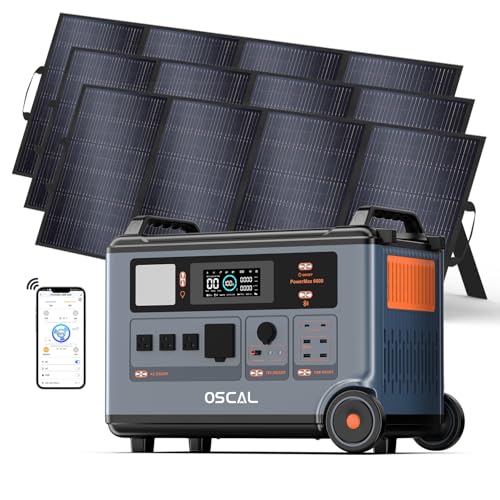
- Delivers split-phase 120V/240V power with 6000W continuous and 9000W surge capacity for high-demand loads
- Safe for indoor emergency operation with zero exhaust emissions and quiet battery-driven inverter performance
- Supplied with three 400W solar panels (1200W nominal array) and accepts up to 2400W of total solar input
- Fast 5-8 ms EPS transfer switchover keeps networking gear and critical household circuits powered during outages
- Long-lasting LiFePO4 cells engineered for up to 3500 cycles supported by comprehensive BMS protection
Cons
- Substantial unit weight of 100.3 pounds requires significant effort or multiple people to transport
- Manufacturer specifications do not publish total harmonic distortion (THD) percentages or specific waveform data
- Substantial continuous multi-kilowatt loads can rapidly deplete the 3600Wh battery without active high-wattage charging
The OSCAL PowerMax 6000, marketed under ECOGREAT, is a high-output portable solar generator and battery power station engineered for serious residential emergency backup, remote jobsite tasks, and heavy-duty off-grid use. Unlike traditional combustion-engine inverter generators that burn gasoline or propane, this unit stores 3,600 watt-hours of electrical energy in an integrated LiFePO4 battery pack and converts it through a built-in DC-to-AC bi-directional inverter. Because it operates without an internal combustion engine, the system generates zero exhaust fumes, operates quietly, and allows safe deployment directly inside living spaces, basements, or offices during severe storms and unexpected grid interruptions.
Electrical performance is anchored by an expansive 6,000-watt continuous AC output rating alongside a 9,000-watt peak surge capacity. Crucially for American households, the system supports split-phase 120V/240V dual-voltage output across 4 dedicated AC outlets, accommodating both standard 120-volt household essentials and higher-voltage 240-volt home appliances or shop equipment. Across its 14 total output interfaces, users can simultaneously energize refrigerators, freezers, portable cooking appliances, medical devices, and mobile electronics. The system also integrates an EPS function that triggers battery power transfer within 5 to 8 milliseconds during an unexpected blackout, protecting desktop computers, servers, and communication hardware from abrupt shutdowns.
Battery longevity and charging capabilities are strong focal points of the PowerMax 6000 architecture. The 3,600Wh lithium iron phosphate (LiFePO4) core is rated for up to 3,500 charge-and-discharge cycles, protected by an eight-layer Battery Management System (BMS) that monitors against overcharge, short-circuits, overcurrent, and temperature extremes. Recharging flexibility is high: the 2,200W AC input can take the battery from empty to full in approximately 1.96 hours using standard utility power, while combined AC and maximum 2,400W solar charging can replenish the capacity in as little as 1.44 hours under optimal conditions. This package includes three 400W folding solar panels, supplying a 1,200W nominal solar array right out of the box for off-grid sustainability.
Day-to-day operation and monitoring are streamlined through onboard controls and the dedicated OSCAL smartphone app. Users can wirelessly supervise remaining capacity, check real-time input and output wattage, and toggle specific ports directly from a phone. Measuring 23.2 inches long, 13.8 inches wide, and 17.3 inches tall, the unit packages substantial electrical storage into an integrated enclosure. The package includes an AC wall charging cable, car auxiliary charging cable, dedicated solar charging cable, and a 2-year manufacturer warranty, providing essential connectivity right from the initial unboxing.
Despite its significant output and capacity, buyers should evaluate several realistic limitations before purchasing. Weighing 100.3 pounds, the power station represents a substantial physical load that challenges solo transport and rapid relocation across rough outdoor terrain. Additionally, while the 3,600Wh battery provides excellent runtime for typical intermittent appliances like refrigerators and lighting, sustained multi-kilowatt electrical demands will deplete the reserve in under an hour without continuous solar or utility replenishment. Prospective buyers should also observe that the manufacturer does not publish a specific total harmonic distortion (THD) percentage or pure-sine waveform certificate in the listing, so users powering sensitive diagnostic equipment should confirm power-quality parameters prior to critical use.
Overall, the OSCAL PowerMax 6000 is an excellent investment for homeowners, renters, and emergency-preparedness planners who need split-phase 120V/240V capability and substantial 6,000W running capacity without managing flammable fuel, engine oil, or toxic carbon monoxide emissions. It serves as an indoor-safe alternative to traditional portable combustion generators for storm outages and off-grid projects. Households needing multi-day continuous heavy power during prolonged cloudy winter weather may still prefer pairing this unit with a traditional dual-fuel generator to ensure reliable charging regardless of sunlight conditions.
A defining technical advantage of the OSCAL PowerMax 6000 is its built-in bi-directional inverter supporting true 120V/240V split-phase dual-voltage output. Most standard portable power stations are restricted strictly to 120-volt circuits, preventing them from operating larger residential loads such as heavy well pumps, electric water heaters, shop tools, or 240-volt transfer panels during emergency grid blackouts. With 6,000 continuous running watts and 9,000 surge watts, this system bridges the gap between conventional portable battery banks and heavy fuel-driven generators.
Power distribution is handled across 14 versatile outlet connections, including 4 heavy-duty AC output ports designed to manage high-amperage appliances. The fast 5 to 8 millisecond EPS switchover operates like an uninterruptible power supply, transferring the connected electrical load to internal battery reserves before sensitive equipment or home network routers reset. Users planning home backup integration should verify their total continuous running load and starting surge requirements to balance power draw against the 3,600Wh onboard capacity.
The PowerMax 6000 is equipped with versatile dual-input charging circuitry designed to minimize downtime before and during emergency grid outages. When connected to a standard residential wall outlet, the system draws up to 2,200 watts of AC power to recharge its 3,600Wh LiFePO4 battery from zero to 100 percent in approximately 1.96 hours. This rapid grid-charging capability allows homeowners to top off emergency energy reserves quickly when severe storm warnings are issued.
For extended off-grid independence, the integrated solar charge controller supports up to 2,400 watts of solar input. This bundle includes three 400-watt folding solar panels, delivering an initial 1,200 watts of nominal photovoltaic capacity that can recharge the unit in sunlight without burning gasoline or propane. Under optimal conditions where maximum 2,200W AC wall power and 2,400W solar charging are combined simultaneously, the manufacturer notes that full replenishment can occur in as little as 1.44 hours.

Pros
- Safe for indoor operation with zero exhaust emissions and low noise, eliminating the need for outdoor gasoline storage.
- Robust 1,500W continuous pure sine wave inverter handles startup surge peaks up to 3,000W for motor-driven appliances.
- Durable LFP battery chemistry provides over 4,000 charge cycles for long-term emergency readiness.
- Fast AC charging reaches a full battery in 1 to 1.7 hours, speeding up pre-storm preparation.
- Compact 23.8-pound design with a folding handle ensures effortless portability between rooms or campsites.
Cons
- 1,070Wh battery capacity limits runtime on continuous high-draw heating or cooling equipment.
- The portable power station and the 200W solar panel ship in separate packages and may arrive on different dates.
- Solar recharging is dependent on clear weather conditions and requires six hours to achieve an 80% charge.
The Jackery Solar Generator 1000 v2 is a portable battery-based backup system that pairs the Explorer 1000 v2 power station with a 200W portable solar panel. Unlike fuel-burning portable generators or permanently installed standby generators, this unit produces zero exhaust emissions and operates quietly, making it an excellent emergency backup choice for renters, suburban homeowners, and apartment dwellers who cannot safely run combustion engines indoors. It is specifically tailored for emergency preparedness, storm readiness, and outdoor recreation where clean, immediate power is required for essential household electronics and small appliances.
On the electrical side, the Explorer 1000 v2 features a pure sine wave inverter capable of supplying 1,500 continuous running watts and handling peak startup surges up to 3,000 watts. With a 1,070Wh battery capacity, the system provides sufficient energy to keep a standard household refrigerator cold, run a CPAP machine overnight, or power communication devices and LED lighting during a utility interruption. The 3,000W surge threshold accommodates the initial compressor startup demand of compatible motor-driven appliances, while three 120V AC outlets and dual 100W USB-C ports allow users to distribute power across multiple priority loads without extra adapters.
Jackery builds the power station around an upgraded lithium iron phosphate (LFP) battery pack, which is rated to retain over 70% of its original capacity after 4,000 charge cycles, delivering an operational lifespan exceeding 10 years. Weighing 23.8 pounds and measuring 8.82 by 12.87 by 9.27 inches, the unit features an integrated folding handle for easy carry and compact storage. The exterior housing includes an onboard LED light for dark outage conditions, a clear display, and full compatibility with the Jackery companion app for monitoring output, adjusting charging speed, and enabling an ultra-quiet 30 dB overnight mode.
Recharging readiness is critical when severe weather threatens, and the 1000 v2 offers flexible replenishment options before and during an outage. When connected to standard grid power, the unit can recharge from empty to 100% in one hour using the emergency charging mode in the app, or in 1.7 hours under the default cycle designed to protect long-term battery health. During prolonged grid failures, the included 200W solar panel offers off-grid replenishment, bringing the battery to 80% in roughly six hours under favorable sunlight, while a 600W vehicle alternator charger can provide a full recharge in three hours on the road.
While effective for critical essentials, this battery-powered generator is not a whole-house backup solution and cannot replace a heavy-duty portable or automatic standby generator. Its 1,070Wh total storage capacity means continuous heating elements or high-wattage air conditioners drawing close to the 1,500W limit will deplete the battery in less than an hour. Additionally, solar replenishment depends heavily on outdoor weather conditions, and buyers should note that the power station and solar panel ship separately, which may result in staggered delivery dates.
The Jackery Solar Generator 1000 v2 is best suited for budget-conscious homeowners, renters, and emergency-preparedness planners who require safe, indoor-operable backup power for essential appliances, medical gear, and personal devices during short to moderate outages. Users needing to power hardwired 240V well pumps, central air conditioning, or whole-house electrical panels will require a larger fuel-based portable generator with transfer equipment or a dedicated standby installation. For portable, fume-free resilience, however, this bundle offers an accessible and low-maintenance emergency power solution.
During unexpected grid failures or severe weather events, the Jackery Solar Generator 1000 v2 provides safe indoor electricity without the noise, fumes, or volatile fuel storage associated with combustion generators. Its 1,500W continuous output is well-suited for preserving food in a standard refrigerator, operating home networking equipment, running fans, and keeping emergency radios and mobile phones charged. Because it produces clean pure sine wave AC power, sensitive medical equipment such as CPAP machines can operate safely without risk of electrical noise or voltage instability.
Effective emergency deployment requires intentional load management due to the fixed 1,070Wh battery capacity. Rather than leaving high-draw appliances plugged in continuously, users can cycle the power station to run a refrigerator intermittently while keeping low-draw communication devices powered for days. For apartment dwellers and suburban households facing municipal restrictions on outdoor gas generator use, this quiet solar generator provides practical, immediate backup security right inside the living space.
The Explorer 1000 v2 incorporates long-life LiFePO4 (LFP) cell chemistry, offering substantial durability advantages over older lithium-ion models. Rated for more than 4,000 charge cycles before dropping to 70% capacity, the battery is engineered to deliver over ten years of dependable service under regular household use. This high cycle life ensures that the power station remains ready for seasonal storms and outdoor excursions without rapid capacity degradation over time.
Recharging flexibility is a standout capability of this system, especially when preparing for incoming severe weather. By toggling emergency charging in the Jackery App, the power station can absorb a full AC charge from the wall in just 60 minutes, while the standard 1.7-hour mode minimizes thermal stress during routine replenishment. In off-grid or prolonged blackout scenarios, the included 200W solar panel provides sustainable daylight recharging to keep your emergency power reserves active.


Pros
- Delivers true 120V/240V split-phase output capable of running major residential appliances without engine exhaust or fuel costs.
- Substantial 16.1kWh lithium battery capacity offers multi-day emergency backup and scales up to 241kWh for expanding energy needs.
- Pure sine wave power generation protects sensitive household electronics and motor-driven appliances from irregular voltage waveforms.
- Integrated MPPT charge control, built-in safety breakers, and comprehensive smart monitoring streamline daily energy management.
Cons
- Freight delivery on pallets and heavy component weights require adequate truck access and physical handling support during delivery.
- Complex split-phase home electrical integration requires installation by a qualified professional electrician.
- Recharging depends on sunlight availability or external power inputs, unlike fuel-driven generators that run on demand with continuous fuel supply.
The ECO-WORTHY 10000W Complete Off-Grid Solar Panel Kit is an integrated photovoltaic and lithium energy storage system designed for whole-house backup and off-grid residential installations. Unlike conventional or portable propane generators that burn fuel to drive a mechanical alternator, this system stores electrical energy in a 48V 314Ah (16.1kWh) LiFePO4 battery pack and converts it to usable AC electricity through a 10kW all-in-one split-phase inverter. For American homeowners, rural property owners, and storm-preparedness buyers who are comparing fuel-burning generators with renewable storage, this setup delivers silent, exhaust-free electricity for both everyday utility offset and emergency power needs.
Electrical output is managed by the integrated 10kW pure sine wave inverter, which supports 120V and 120V/240V single-phase split-phase configurations. The unit provides 10,000 watts of continuous electrical capacity with surge tolerance up to 20,000 watts, allowing it to start and operate demanding 240V household loads such as well pumps, electric water heaters, and split-system cooling equipment within its rating. Because the inverter delivers pure sine wave power, voltage stability remains tightly regulated for sensitive electronics, modern refrigeration controls, and variable-speed appliances. Inverter scalability also permits parallel connection of up to six units for properties requiring higher electrical throughput.
Energy capture and storage rely on five 590W monocrystalline solar panels totaling 2950W of photovoltaic capacity, which the manufacturer states can generate up to 11.8kWh per day under optimal sunlight conditions. The panels use heat-strengthened glass and low-loss cell interconnects to minimize hotspot temperatures and improve shading performance. Stored energy resides in a heavy-duty 48V 314Ah lithium iron phosphate battery equipped with a PACE 200A Battery Management System (BMS) and dual internal breakers. System oversight is facilitated through a 7-inch color display, Wi-Fi, Bluetooth, and PC connectivity, enabling users to monitor real-time generation, state of charge, and load demand.
Installation and physical logistics represent significant considerations due to the scale of the hardware. The battery module integrates heavy-duty wheels and grab handles to assist with positioning on level surfaces, but the combined solar panels and high-capacity battery arrive via freight delivery on pallets, requiring accessible truck delivery. Unlike portable propane generators that can simply be rolled out of a shed and connected via an inlet box, this off-grid solar system interfaces directly with premises electrical distribution. The manufacturer strongly recommends installation by a licensed electrician to properly configure split-phase wiring, overcurrent protection, and panel grounding.
When evaluated against portable or standby propane generators, this solar-plus-storage system offers notable operational differences and distinct limitations. Propane generators offer near-instantaneous continuous output as long as LP gas cylinders or stationary tanks supply fuel, making them independent of seasonal cloud cover or brief daytime charging windows. In contrast, this kit relies on a 2950W solar array that requires multiple optimal sun hours to replenish its 16.1kWh battery bank once depleted. However, it eliminates recurring fuel procurement, carburetor gumming, oil change routines, and toxic carbon monoxide exhaust, allowing safe indoor placement of the battery and inverter components.
The ECO-WORTHY 10000W solar kit suits homeowners seeking a permanent, fuel-independent power infrastructure for off-grid cabins, rural homes, or structured utility backup. Buyers requiring rapid replenishment during extended multi-day storms with heavy cloud cover may choose to pair this setup with a supplemental propane generator connected to the inverter AC input, combining battery quietness with emergency fuel reliability. For users who want a clean, silent, and scalable 120V/240V electrical backbone without ongoing fuel storage requirements, this comprehensive package offers a robust foundation.
The 10kW all-in-one solar charge inverter produces 10,000 continuous watts and up to 20,000 peak watts with 120V and 120V/240V split-phase capability. It features dual MPPT charge controllers, supports up to 200A battery charging, and can parallel connect with up to six inverter units for expanded electrical capacity.
The included 48V 314Ah lithium iron phosphate battery provides 16.076kWh of usable energy storage. Built with a 200A PACE Battery Management System and dual breakers, the battery can scale up to 15 units in parallel for a maximum combined capacity of 241kWh.
Comparing this solar battery kit with an engine-driven propane generator highlights key operational differences for home backup. While a propane generator relies on mechanical combustion, steady LP fuel delivery, routine oil servicing, and outdoor placement to prevent carbon monoxide accumulation, this solar kit operates silently with zero site emissions.
Propane generators provide continuous generation unaffected by weather as long as propane tanks remain filled. In contrast, the solar kit depends on sunlight to recharge its 16.1kWh storage bank via the 2950W array, making hybrid integration with a backup generator an attractive configuration for severe weather preparedness.
Pros
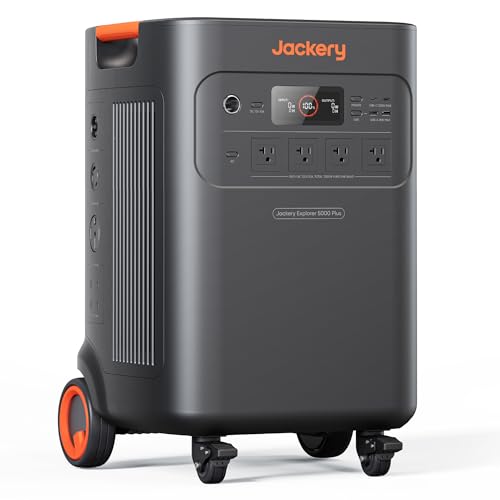
- Massive 7200W rated and 14,400W surge output with native 120V/240V split-phase delivery for heavy residential loads.
- Completely safe for indoor operation with zero exhaust emissions, zero carbon monoxide risk, and silent running.
- Durable LiFePO4 battery cells with ChargeShield 2.0 protection rated for up to 11 years of daily use.
- Fast solar recharging capability supporting up to 4000W of solar input for off-grid power replenishment.
- Direct compatibility with a 60A smart transfer switch to manage essential household circuits cleanly.
Cons
- Significant base weight of 134.5 pounds limits effortless mobility between rooms or jobsite locations.
- Off-grid replenishment depends on sunlight and optional solar panels rather than rapid fuel cylinder swaps.
- Substantially higher upfront investment cost than conventional open-frame portable propane generators of comparable wattage.
The Jackery Solar Generator 5000 Plus is a high-capacity portable power station built on lithium iron phosphate (LiFePO4) battery chemistry, engineered specifically for home emergency backup, RV systems, and off-grid power demands. Unlike conventional engine-driven propane generators or dual-fuel combustion units, this system produces electrical power from stored battery energy rather than burning fuel. Homeowners and storm-preparedness shoppers frequently compare battery stations with portable propane generators because both seek to keep essential circuits alive during severe weather blackouts. Offering a 7200W continuous rated output and a 14,400W surge threshold across 120V and 240V lines, this unit serves buyers who need substantial whole-circuit capability without the noise, outdoor setbacks, or toxic exhaust associated with fossil-fuel machinery.
Electrical performance is anchored by its split-phase 120V and 240V architecture, delivering continuous power for high-draw household equipment. The 7200W continuous rating and 14,400W peak surge support inductive motor loads that often overwhelm smaller portable generators, including well pumps, water heaters, and central air conditioning systems. For whole-home utility integration, the manufacturer highlights compatibility with an optional Jackery 60A Smart Transfer Switch. This configuration enables the unit to power up to 12 individual 120V circuits or 6 balanced 240V circuits directly through the household panel, preventing unsafe backfeeding while providing organized power distribution during grid failures.
The internal energy reservoir holds 5040Wh of capacity, expandable up to 60kWh through modular battery expansion packs to support prolonged outages. Jackery incorporates LiFePO4 cell chemistry and ChargeShield 2.0 technology, offering enhanced thermal stability and a lifespan rated for up to 11 years of daily service. For recharging without utility power, the unit supports up to 4000W of solar input, accommodating both high-voltage and low-voltage solar panels. Under optimal solar exposure, this dual-voltage solar architecture can recharge the 5040Wh base station in approximately two hours, offering a sustainable alternative to stockpiling liquid fuels or managing external propane supply lines.
Operating and maintaining this battery power station involves fundamentally different requirements than a portable propane generator. Because there is no internal combustion engine, the system emits zero exhaust fumes, allowing users to safely place it inside a basement, garage, or living area without carbon monoxide hazard. It eliminates oil changes, air filter cleanings, carburetor rebuilds, and fuel stabilizer treatments. Users also bypass the physical handling of 20-pound or 100-pound propane tanks, regulator checks, and cold-weather fuel vaporization concerns. However, physical handling remains a factor, as the power station weighs 134.5 pounds, making strategic permanent or semi-permanent placement essential during emergency setup.
Buyers must consider specific tradeoffs when evaluating this battery system against engine-driven propane backup options. While a propane generator can run indefinitely as long as replacement fuel cylinders are on hand, this battery station depends entirely on its stored 5040Wh capacity once utility power fails. Extended off-grid runtime requires optional solar panels, which are sold separately, and solar performance drops significantly during overcast, rainy storm conditions. Additionally, the 134.5-pound weight and premium upfront cost exceed the entry barrier of conventional combustion generators with comparable output figures.
The Jackery Solar Generator 5000 Plus is an excellent choice for homeowners, urban or suburban residents, and emergency-preparedness planners who require quiet, clean, indoor-safe backup power capable of handling 240V major appliances. It delivers push-button convenience and direct transfer switch integration without the fumes or maintenance of a small engine. In contrast, property owners in heavily wooded or overcast regions facing extended multi-week outages may find that a conventional portable propane or dual-fuel generator provides a more economical solution for continuous, weather-independent electrical generation.
For residential emergency preparedness, the Jackery Solar Generator 5000 Plus offers an indoor-safe alternative to outdoor combustion generators when paired with the Jackery 60A Smart Transfer Switch. This direct connection manages up to 12 circuits at 120V or 6 circuits at 240V, supplying power straight into household wiring without risky backfeeding through standard wall receptacles.
The 7200W rated output and 14,400W surge headroom easily accommodate demanding motor loads such as refrigerators, sump pumps, and supported 240V appliances. Because the system emits no carbon monoxide or exhaust gases, homeowners can install the unit indoors right next to their primary electrical distribution panel, avoiding the need to run heavy extension cords through open doors or windows during stormy conditions.
The power station relies on a 5040Wh LiFePO4 battery pack engineered for thermal durability and extended cycle life. ChargeShield 2.0 technology actively regulates charging currents and temperatures, supporting an operational lifespan of up to 11 years of daily use. For homes needing multi-day resilience, the storage capacity is modular and expandable up to 60kWh through optional auxiliary battery modules.
To support off-grid utility disruptions, the built-in charging controller handles up to 4000W of solar input, supporting both high-voltage and low-voltage solar arrays. Under clear sky conditions, this enables a complete recharge of the 5040Wh internal capacity in about two hours. Solar panels are optional and sold separately, making proper solar array planning essential for standalone emergency readiness.
Comparing the Jackery Solar Generator 5000 Plus with traditional portable propane generators reveals fundamental differences in power delivery. A propane generator uses an engine and alternator to produce electricity by consuming fuel, running continuously as long as propane tanks are available. The Jackery power station stores electrical energy chemically, providing silent operation, zero carbon monoxide emissions, and instant power delivery without mechanical wear or engine maintenance.
The primary tradeoff is refueling speed versus everyday convenience. A portable propane generator can be replenished in minutes by connecting a fresh 20-pound or 100-pound LP cylinder, making it highly effective during prolonged winter storms or cloudy weather. Conversely, the Jackery 5000 Plus requires grid power or several hours of sunlight across a solar array to recharge once depleted. However, it removes the noise, exhaust ventilation requirements, and storage risks associated with combustible gas tanks.

Pros
- Ultra-lightweight 7.5-pound design with a sturdy integrated handle allows effortless one-handed carrying.
- Upgraded LiFePO4 battery cells deliver over 4,000 cycles to 70% capacity for exceptional long-term durability.
- Zero engine exhaust and silent operation make it fully safe to run inside bedrooms, apartments, and tents.
- Includes a high-output 100W USB-C Power Delivery port alongside two standard AC wall outlets for modern electronics.
- Includes both solar and 12V vehicle charging cables alongside the 40W panel for multiple replenishment options.
Cons
- 300W continuous AC output cannot power high-draw appliances such as microwaves, refrigerators, space heaters, or power tools.
- The 40W solar panel requires roughly 7.5 hours of direct, unobstructed sunlight to reach an 80% state of charge.
- The power station and solar panel may be shipped in separate packages, occasionally resulting in split delivery dates.
The Jackery Solar Generator 300 pairs the Explorer 300 portable power station with a 40W Air Solar Panel to provide a compact, clean-energy alternative to traditional combustion generators. Unlike engine-driven inverter generators that burn gasoline or propane, this solar generator stores electrical energy in an internal 292Wh lithium iron phosphate (LiFePO4) battery and converts it to alternating current using a built-in solid-state inverter. This architecture makes the unit especially valuable for tent campers, remote mobile workers, outdoor hobbyists, and urban apartment residents who require portable electricity but cannot store flammable fuels or produce engine exhaust.
Electrical performance centers on an inverter providing 300W of continuous rated AC power alongside a 600W peak surge rating across two three-prong AC outlets. Backed by its 292Wh internal capacity, the system easily maintains lower-draw household and recreational electronics such as laptops, camera battery hubs, drones, portable monitors, and mobile CPAP devices configured without supplemental humidifiers. A versatile front-facing port array supports up to six devices at once, featuring a dedicated 100W USB-C Power Delivery port for fast laptop charging, two standard USB-A ports, and a regulated 12V/120W automotive DC port. However, because continuous output is capped at 300W, users cannot operate high-wattage resistive heating elements, standard kitchen microwaves, or motorized tools requiring large continuous wattage.
Durability and portability represent the primary engineering highlights of the Explorer 300 power station. Upgraded with premium LiFePO4 battery chemistry, the cell pack is rated to complete more than 4,000 charge cycles before dropping to 70% capacity, offering well over a decade of routine service life. The power station chassis weighs only 7.5 pounds, making it approximately 17% lighter than typical competitors in the 300W power class. An integrated top-molded carry handle enables effortless carrying across campsites or down storage shelves. The included 40W Air Solar Panel folds into an ultra-slim footprint, enabling outdoor enthusiasts to pack self-sustaining power without sacrificing valuable storage space inside small vehicles.
Recharging flexibility allows the system to adapt to varied travel and emergency situations using solar, grid, or vehicle power. When connected to the included 40W solar panel under optimal direct sunlight, the power station recharges to 80% capacity in approximately 7.5 hours, while pairing with an optional 100W solar panel can accelerate that figure to roughly 2.8 hours. AC wall charging and 12V automotive charging cables are also provided for grid and roadside replenishment. Because the system utilizes solid-state battery storage rather than an internal combustion engine, ownership involves zero oil changes, spark plug checks, carburetor cleaning, or fuel stabilization. Operation is completely silent and produces no toxic emissions, making it entirely safe to run indoors on nightstands or inside enclosed tents.
Prospective buyers must understand the functional boundaries of a compact battery power station compared to an engine-driven backup generator. With a 292Wh storage capacity and a 300W AC limit, this system cannot support home refrigerators, sump pumps, window air conditioners, or household circuit transfer switches. Furthermore, the compact 40W solar panel provides modest charging throughput, meaning full off-grid replenishments demand uninterrupted sunshine and careful angle adjustment throughout the day. It is also worth noting that the manufacturer occasionally ships the Explorer 300 power station and the 40W solar panel in separate parcels, which may result in staggered delivery times for the two components.
The Jackery Solar Generator 300 is an outstanding portable power solution for outdoor enthusiasts, tailgaters, and emergency-conscious households seeking quiet, dependable electricity for personal electronics, communications, and lighting. Renters and homeowners restricted from running gas-powered machinery will find it uniquely practical for keeping phones, flashlights, and computing gear powered during regional blackouts. Conversely, buyers seeking a primary emergency system to power heavy household appliances, water pumps, or extended multi-day home backup should look toward a mid-sized dual-fuel or high-output gas inverter generator rather than an ultra-compact battery station.
The Jackery Explorer 300 delivers 300W of continuous rated AC power with a brief 600W peak surge capacity through two standard 120V household outlets. This output range is specifically tailored for low-draw consumer electronics, portable medical equipment, outdoor lighting, and mobile device charging rather than high-load motor-driven tools.
The system features a 6-device output layout designed for modern electronic workflows. A high-output 100W USB-C Power Delivery port provides direct fast-charging for modern laptops, tablets, and flagship smartphones without requiring a separate wall adapter brick. Complementing the USB-C port are two standard USB-A ports for secondary accessories, as well as a regulated 12V/120W DC cigarette lighter port for portable coolers, 12V inflators, and specialized vehicle gear.
The power station features upgraded Lithium Iron Phosphate (LiFePO4) battery chemistry with a total energy capacity of 292 watt-hours. LiFePO4 cells provide substantial thermal stability and long-term durability, retaining over 70% of their initial capacity after 4,000 full recharge cycles, which equates to more than 11 years of regular weekly usage.
Off-grid replenishment is handled by the included 40W Air Solar Panel, which restores the battery to 80% capacity in approximately 7.5 hours under clear, direct sun conditions. For faster solar replenishment, the built-in charge controller also accepts up to 100W of solar input, reducing 80% charging times to roughly 2.8 hours when paired with compatible larger panels. Standard AC wall charging and 12V car charging cables are included for reliable power restoration before heading off-grid.
Understanding the difference between a battery-powered solar generator and an engine-driven fuel inverter generator is essential when planning backup power. The Jackery 300 operates with zero fuel consumption, zero carbon monoxide emissions, and virtually silent operation, making it fully certified for safe indoor operation during stormy weather and inside apartment buildings where fuel combustion is prohibited.
However, battery stations provide finite energy storage and modest output compared to fuel-burning units. While a gasoline or propane inverter generator can run continuously for hours delivering thousands of watts for refrigerators and air conditioners as long as fuel is supplied, the Jackery 300 is focused strictly on micro-power tasks, personal communications, and portable off-grid convenience.

Pros
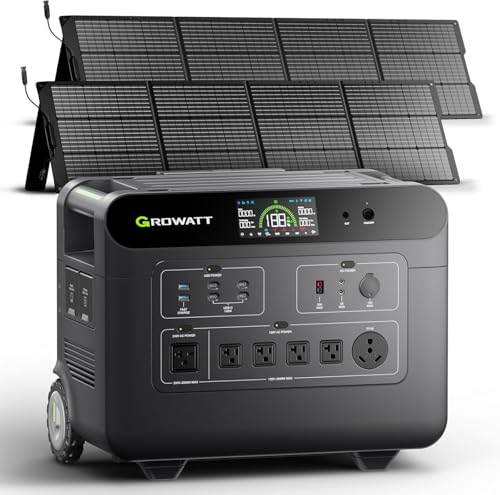
- High continuous output of 3,600 watts supports demanding appliances like refrigerators, freezers, and microwave ovens without fuel emissions
- Comes with 400 watts of bundled solar panels (two 200W panels) to establish an off-grid solar emergency power setup immediately
- Rapid 15ms EPS automatic transfer capability safeguards essential equipment and home office electronics during unexpected outages
- Durable LFP battery cells retain 80 percent capacity after 4,000 charge cycles, backed by UL certification and advanced BMS protection
- Cold-weather performance rated down to -22 degrees Fahrenheit for dependable winter storm readiness
Cons
- Substantial unit weight of 149 pounds limits rapid one-person transport without planning or assistive equipment
- Achieving 240V output and the advertised 7,200W threshold requires purchasing and connecting a second unit in parallel
- Recharging solely with the included 400W solar array will take extended time compared to the unit's maximum 2,000W solar input capacity
The GROWATT HELIOS 3600 is an electric home backup power station bundled with two 200W solar panels to create an all-in-one solar emergency power kit. Operating as a battery-powered inverter generator alternative, it provides 3,600 watts of continuous AC output and a 3,600 watt-hour base battery capacity. This configuration targets American homeowners, renters, and emergency-preparedness planners who need dependable, zero-emission indoor backup power during storm-driven blackouts. Unlike conventional gasoline or dual-fuel generators that produce lethal carbon monoxide and must remain outdoors well away from structures, this LFP-based unit can operate directly inside a living room or kitchen to keep vital appliances running safely.
Backup performance centers on its 3,600W continuous output, which easily accommodates critical household loads including full-sized refrigerators, upright freezers, lighting circuits, internet routers, and medical support equipment. A key technical feature is its 15-millisecond Emergency Power Supply (EPS) transfer switch, which rapidly bridges the gap between grid failure and internal battery power to prevent equipment resets. For households preparing for winter storms, the manufacturer includes cold-start technology that operates reliably in temperatures down to -22 degrees Fahrenheit, resolving a common vulnerability seen in standard consumer lithium power stations during severe freezes.
System design highlights long-term durability and electrical safety. The internal battery pack uses EV-grade Lithium Iron Phosphate (LFP) cells managed by an advanced Battery Management System (BMS) with smart algorithms. The manufacturer lists a cycle life of 4,000 cycles to 80 percent original capacity, translating to roughly a decade of regular use. The system carries UL certification for safety assurance. At 149 pounds and measuring 20.4 by 12.3 by 16.5 inches, this is a substantial piece of power hardware designed primarily for stationary deployment in an outage staging area rather than casual, lightweight camping.
Charging flexibility supports multiple emergency scenarios through AC and solar power sources. The included pair of 200W solar panels provides an immediate 400W charging baseline for off-grid power generation during extended utility downtime. For faster solar replenishment, the integrated charge controller accepts up to 2,000W of solar input if upgraded arrays are connected. When utility power is available, the HELIOS 3600 supports both 120V and 240V AC charging, as well as hybrid fast-charging protocols to replenish the 3,600Wh battery bank rapidly before an approaching storm makes landfall.
Prospective buyers must evaluate system limitations and expansion requirements carefully. While the listing notes whole-house backup capabilities, achieving 240-volt output and the advertised 7,200-watt continuous power limit requires purchasing a second HELIOS 3600 unit to run in parallel. A single standalone unit operates at standard 120V output. Additionally, while the bundled 400W solar array is an excellent starting point, replenishing a depleted 3,600Wh battery solely with 400W of solar panels requires multiple days of ideal sunlight. Maximizing off-grid independence during extended outages will require expanding the solar array toward the 2,000W maximum input limit.
Overall, the GROWATT HELIOS 3600 serves as a capable, clean alternative to portable fuel-burning generators for homeowners prioritizing quiet, indoor-safe emergency backup. It is particularly well-suited for suburban households, apartments, and families who want immediate power without storing volatile fuels like gasoline or managing engine maintenance. Buyers needing to power central 240V air conditioners or deep well pumps will need to factor in the cost of a parallel companion unit, but for essential single-phase household survival circuits, the HELIOS 3600 provides solid capacity and long-lasting LFP battery reliability.
The GROWATT HELIOS 3600 addresses residential blackout readiness by delivering 3,600 watts of continuous 120V power from an integrated 3,600Wh battery bank. The 15ms EPS automatic transfer capability enables continuous operation for essential loads such as refrigeration, CPAP devices, communications gear, and sump pumps when grid power drops unexpectedly.
Scalability is a major design focus of the Growatt platform. The base unit supports a modular, plug-and-play architecture that can scale up to 36kWh of storage capacity with expansion batteries to handle prolonged grid failures. Furthermore, linking two HELIOS 3600 units in parallel establishes a 7,200W continuous output profile with 240V capability, enabling connection to standard home transfer switches and higher-voltage household appliances.
The included emergency power set features two 200W solar panels for an immediate 400W off-grid generation setup. This allows users to start harvesting renewable energy right out of the box during utility disruptions without relying on local fuel station availability.
For faster replenishment, the internal charge controller supports up to 2,000W of solar charging input, drastically shortening recharge intervals when paired with larger solar arrays. The system also supports standard 120V/240V AC wall charging and hybrid charging combinations, allowing homeowners to top off the 3,600Wh pack swiftly ahead of forecasted severe weather.

Frequently Asked Questions
Can the Best Solar Generators For Whole House run a central air conditioner during outages in 2026?
Yes, but the system must deliver 240V split-phase power and sufficient startup surge wattage. Central AC compressors draw heavy locked rotor amps upon startup, requiring at least 6,000W to 10,000W output or a soft starter. High-capacity split-phase units handle these inductive loads smoothly, whereas standard 120V power stations cannot run central cooling.
How many watts do the best solar generators for whole house need for essential circuits?
Most households require between 3,000W and 6,000W of continuous power for critical emergency circuits. This capacity runs a full-size refrigerator, sump pump, microwave, and LED lights simultaneously. Pure sine wave inverters keep total harmonic distortion under 3%, protecting sensitive computers and smart appliances from voltage spikes.
What is the difference between starting surge watts and running watts on battery generators?
Running watts represent continuous sustained output, while surge peak watts cover brief motor startup spikes. Inductive appliances like refrigerators and well pumps demand double their running wattage for a split second to start. A generator with 7,200W continuous output and 14,400W peak surge ensures these heavy loads start without tripping circuit breakers.
How fast can solar panels recharge a large whole-house battery system?
Recharge times depend on total solar array wattage and battery capacity. A 3,600Wh to 5,000Wh battery accepting 2,000W to 4,000W of solar input typically recharges in two to four hours of direct peak sun. During heavy storm overcast, homeowners often supplement solar with grid power or a best propane generator for backup for hybrid reliability.
Is a transfer switch required to connect a solar generator to a home electrical panel?
Yes, an approved transfer switch or interlock kit is required by electrical code for home breaker connection. Direct plug-in connections can cause dangerous grid backfeeding, creating severe electrocution hazards for utility linemen repairing storm damage. A transfer switch isolates your selected circuits, enabling clean and safe whole-house power distribution.





Write Your Review
No reviews yet. Be the first to share your experience!