


Severe storms, summer grid strain, and winter freezes can knock out municipal electricity without warning, threatening essential home infrastructure like sump pumps, refrigeration, and medical devices. Homeowners looking to protect their property often ask how does a standby generator transfer switch work when planning an emergency power installation. The transfer switch operates as an intelligent electrical bridge, continuously monitoring grid reliability while isolating the home electrical panel from incoming utility lines during a blackout. This isolation prevents dangerous electrical backfeeding, protecting utility line technicians while allowing the backup generator to feed power safely into the house. Investing in a resilient power strategy, such as setting up a reliable propane generator for home backup, depends fundamentally on having a robust switching mechanism in place.
Modern automatic transfer switches execute power transitions in seconds without requiring manual intervention from the homeowner. Internal control boards detect utility voltage drops, trigger the standby generator engine to start, and shift the electrical load once the generator reaches stable operating frequency. High-capacity switches also offer integrated load management to prevent generator overload from large inductive appliances like central air conditioners. Understanding the operating sequence of these switches helps buyers choose the right setup for their home electrical panel and power requirements.
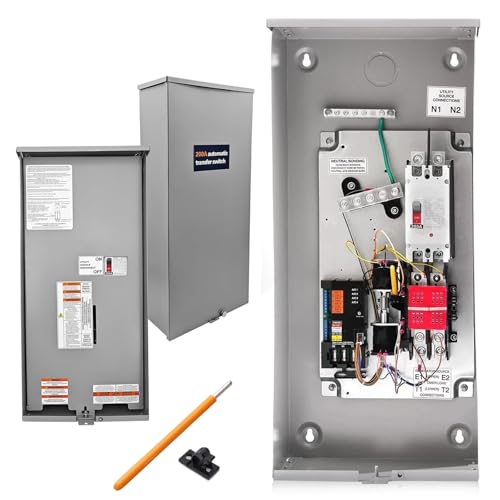
Pros
- Service-entrance rating allows for direct installation between the utility meter and the home distribution panel
- Integrated power management actively controls up to four central air or heat pump loads to prevent generator stalls
- NEMA 3R aluminum enclosure delivers long-lasting outdoor weather and corrosion resistance
- Offers broad compatibility with 8 kW to 24 kW home standby systems needing an RXSW200A3 replacement
Cons
- Intended specifically for permanent home standby generators rather than standard portable generator setups
- High-voltage 200-amp service connection requires professional installation by a licensed electrician
- Aftermarket replacement unit from a third-party manufacturer rather than an OEM-branded switch
The RXSW200A3 replacement automatic transfer switch is a 200-amp, service-entrance-rated power management device designed to pair with 8 kW to 24 kW residential standby generators. Unlike manual transfer switches or interlock kits commonly found on portable generator configurations, this automated switch monitors utility line power and automatically shifts electrical demand to an installed standby generator when a blackout occurs. Homeowners preparing for severe weather events or prolonged grid outages benefit from this automated distribution, as it eliminates the manual intervention required to re-energize essential household circuits.
Electrical management is anchored by integrated digital load management technology capable of controlling up to four separate HVAC loads without requiring additional external accessories. A common limitation of residential standby generators in the 8 kW to 24 kW range is the inability to support multiple heavy motor surges simultaneously, such as central air conditioners or heat pumps. By actively managing these high-demand circuits, the switch automatically sheds or staggers HVAC demands to keep continuous power draw safely within the standby generator capacity, preventing engine overloads while keeping essential household appliances energized.
Hardware construction relies on a NEMA Type 3R aluminum enclosure engineered to withstand wind, rain, rust, dust, sunlight, and atmospheric corrosion. Measuring 32 by 16 by 9 inches, the cabinet is built for permanent exterior mounting alongside residential service meters. Inside the enclosure, a dedicated aluminum partition provides structural isolation, preventing unnecessary physical contact with live electrical components during maintenance inspections. This rugged exterior build ensures sensitive switching mechanisms and contactors remain shielded against harsh outdoor climates across all seasons.
Installation and daily operation require adherence to strict electrical safety boundaries and local building codes. Because this unit is service entrance rated, it interfaces directly with the primary 200-amp utility feed entering the home. The manufacturer supplies an installation manual and strongly specifies that mounting, wiring, and commissioning should be completed by a licensed, professional electrician. Automatic transfer equipment must be wired safely to prevent backfeeding into the municipal electrical grid, and proper grounding is critical for safe long-term operation.
A practical limitation of this equipment is its distinct specialization: it is designed for permanent stationary standby generators and is not a plug-and-play solution for conventional portable generators. Portable emergency generators generally utilize manual transfer switches, inlet boxes, or dedicated cord sets, whereas this unit requires permanent control wiring and high-amperage utility conductors. Additionally, because it is an aftermarket replacement for the Generac RXSW200A3 switch, buyers should verify that their existing generator model and control board are fully compatible with this specific switching profile.
For homeowners looking to replace a damaged transfer switch or install a reliable 200-amp automatic transfer system for an 8 kW to 24 kW standby generator, this unit provides dependable utility switching at a practical value. It combines full 200-amp service capacity, active HVAC load shedding, and robust aluminum weather protection into a single enclosure. As long as buyers have their installation handled by a qualified electrician and verify generator compatibility, it serves as a solid cornerstone for residential storm preparedness and whole-house backup power.
The digital power technology built into this 200-amp transfer switch addresses a central challenge of home backup power by managing up to four separate HVAC loads automatically. When utility power fails and the standby generator starts up, running high-draw appliances simultaneously can create starting surges that exceed the generator running or peak watt limits. By cycling and prioritizing HVAC loads without extra modules, the transfer switch prevents generator stalling while maintaining household climate control.
The unit is engineered as a replacement for the Generac RXSW200A3 automatic switch and is rated to work with 8 kW through 24 kW home standby generators. Standby generators within this output band provide ample continuous output for general lighting, refrigeration, electronics, and sump pumps, but require intelligent load shedding when handling multiple central air conditioning compressors. Verifying your standby generator kilowatt rating and control wiring compatibility ensures smooth integration between the generator control board and the switch contactors.
This transfer switch is housed in a NEMA Type 3R aluminum cabinet designed specifically for outdoor service entrance applications. Aluminum construction provides a natural defense against moisture, rust, salt air, and corrosive environments, making it suitable for long-term exterior placement in wet or coastal regions where steel enclosures might degrade over time.
The enclosure dimensions measure 32 inches high, 16 inches wide, and 9 inches deep, providing sufficient internal volume for bending and securing heavy 200-amp service conductors. An internal aluminum barrier shields the sensitive digital management boards and control terminals from external exposure and physical contact, protecting vital switching mechanisms from dust, wind-driven rain, and debris during severe storms.
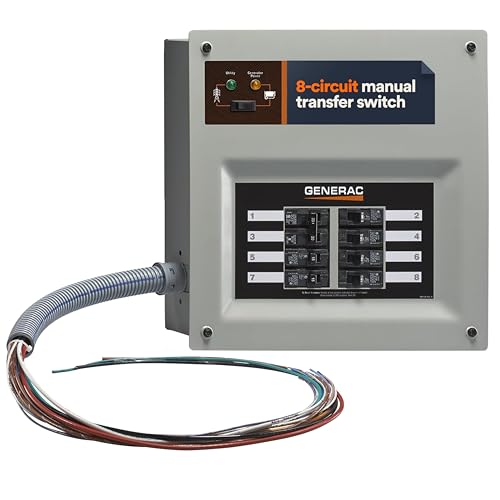
Pros
- Provides a safe, permanent, and code-compliant connection between a 30-amp portable generator and hard-wired circuits
- Electronic rocker switch and LED power status lights make utility-to-generator transfers intuitive during dark storm outages
- Expandable panel architecture supports up to 10 circuits and modern AFCI or GFCI branch breakers
- Future-proof HomeLink design can convert to automatic standby operation with a separate upgrade kit
Cons
- Requires professional electrical installation into the home service panel by a qualified electrician
- 30-amp rating limits continuous electrical load to essential household circuits rather than whole-house high-draw appliances
- Exterior power inlet box and 30-amp generator power cord must be purchased separately
The Generac HomeLink 30 Amp Portable Generator Manual Transfer Switch is an indoor electrical distribution panel designed to safely connect a portable generator to critical hard-wired home circuits during an emergency power outage. For homeowners looking to run essential loads like a refrigerator, freezer, well pump, furnace blower, or dedicated lighting circuits without stringing hazardous extension cords through windows, this switch establishes a permanent, code-compliant connection point.
Rated for 30 amps of continuous service, the panel comes pre-wired for eight circuits and can expand up to ten circuits using compatible standard, tandem, GFCI, or AFCI breakers. Electrical delivery is controlled by an electronic rocker switch that enables swift, one-button switching between incoming utility power and connected portable generator power. Built-in power status indicator lights clearly display the presence of utility voltage and generator voltage, giving homeowners clear visual confirmation when utility service is restored.
The transfer switch panel weighs 26 pounds and measures 25.8 by 18.7 by 7.8 inches, offering a sturdy enclosure designed for clean indoor surface or flush mounting near your main electrical service panel. A notable advantage of the HomeLink system is its future-proof upgrade architecture. Homeowners who start with a manual portable generator setup can later transition the same transfer switch to an automatic home standby generator using a separate HomeLink upgrade kit without replacing the entire panel enclosure.
Operating the transfer switch during a storm outage is straightforward. After wheeling your portable generator outside to a well-ventilated location, connecting a 30-amp power cord to an exterior inlet box, and starting the unit, pressing the electronic rocker switch transfers your pre-selected circuits to generator power. The pre-wired harness simplifies the initial job for a licensed electrician while ensuring that sensitive household branch circuits remain isolated from backfeeding utility lines.
While this 30-amp transfer switch significantly improves safety and convenience, buyers must consider its capacity limits. A 30-amp rating cannot power an entire house or multiple central HVAC systems simultaneously, so circuits must be prioritized carefully during installation. In addition, the package includes the transfer switch panel, selector hardware, installation components, and documentation, meaning an exterior generator inlet box and a 30-amp power cord must be sourced separately.
For homeowners seeking an organized, safe, and code-compliant method to power essential household loads with a portable generator, the Generac HomeLink 30 Amp Manual Transfer Switch is a dependable investment. It eliminates the hazards of backfeeding and tangled extension cords while providing a flexible upgrade pathway if you decide to install an automatic standby system down the road.
The Generac HomeLink transfer switch is pre-wired from the factory for eight household circuits, minimizing installation time for your electrician. If your emergency power plan requires additional circuits, the interior design expands to accommodate up to ten circuits using standard or space-saving tandem circuit breakers.
Unlike older manual transfer switches that struggle with modern electrical panel requirements, the HomeLink panel fully accepts arc-fault circuit interrupter (AFCI) and ground-fault circuit interrupter (GFCI) breakers. This compatibility ensures full compliance with current National Electrical Code requirements when backing up bedrooms, kitchens, bathrooms, and outdoor circuits.
The standout feature of the Generac HomeLink series is its adaptable architecture. Homeowners can begin with manual switching for their portable generator today and later convert the same panel into an automatic transfer switch when budget allows for a permanent standby generator.
This conversion is accomplished using an optional HomeLink upgrade kit, eliminating the need to tear out the existing panel or rewire branch circuits. It provides an economical stepping stone for growing families who want immediate storm protection now with long-term standby power flexibility in the future.
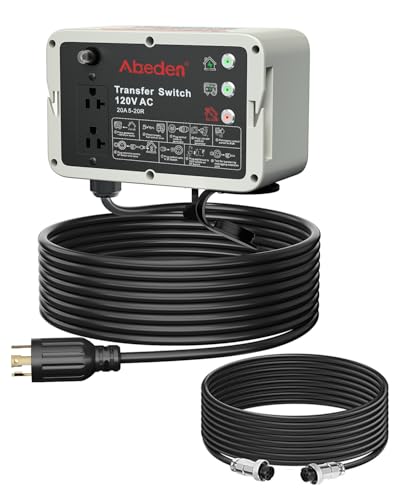

Pros
- Substantial 50-amp, 240-volt rating accommodates high-output portable generators for robust household backup
- Supports up to 10 individual branch circuits for tailored prioritization of essential appliances
- Pre-marked wiring leads assist with circuit identification and clean breaker box integration
- Eliminates backfeeding risks to safeguard utility line workers and domestic wiring
Cons
- Requires manual operation at the switch panel rather than providing automatic utility-loss switching
- Installation requires work inside the main electrical panel and should follow local electrical codes or be performed by a qualified electrician
- Limited to 10 selected circuits rather than providing unlimited whole-house electrical coverage
The DSGSANO 50-Amp 10-Circuit Manual Transfer Switch is a dedicated electrical interface designed for homeowners seeking a safe, code-compliant method to power essential residential circuits with a portable backup generator. Unlike automatic standby transfer systems, this manual transfer switch requires user intervention during an outage to physically toggle power between utility and generator sources. It is built specifically for households preparing for severe storm outages, rural property owners dealing with vulnerable utility lines, and off-grid or RV owners needing structured 240-volt power distribution.
Rated for 50 amps at 240 volts, this transfer switch is engineered to handle substantial electrical throughput from standard high-output portable generators. The unit accommodates up to 10 separate branch circuits, permitting homeowners to isolate and power vital household essentials such as refrigerators, freezers, gas furnace blowers, well pumps, and lighting networks. Because the switch supports 240-volt configurations across its internal contact design, compatible double-pole loads can be incorporated alongside standard 120-volt convenience circuits, provided total simultaneous demand stays within the generator's operating capacity and the switch's 50-amp ceiling.
The transfer switch features a compact cabinet measuring approximately 11.75 inches long, 4.5 inches wide, and 11 inches high, allowing surface mounting beside an existing main service panel. The manufacturer supplies factory wire leads that feature identification tags and marked designations to help installers trace connections accurately. Inside, the unit uses normally open contact terminals engineered to isolate the generator feed from incoming utility lines, preventing hazardous backfeeding into the grid while protecting household equipment from cross-connection hazards.
During a severe weather event or prolonged grid outage, deploying backup power with this switch involves starting an external portable generator outdoors, connecting it to a compatible 50-amp exterior inlet box, and manually switching the individual toggles on the transfer panel from utility to generator mode. The manufacturer notes that pre-tagged wiring streamlines setup for users with basic electrical knowledge, yet safe panel integration still requires strict adherence to local electrical codes and National Electrical Code standards. Homeowners unfamiliar with service panel safety procedures should engage a licensed electrician to handle the primary breaker ties and conduit connections.
While the DSGSANO transfer switch provides reliable manual power distribution, it does not offer automatic start triggers, automatic transfer functionality, or unlimited whole-house coverage. Power restoration remains completely manual, requiring physical presence at the switch to transfer each branch circuit back to utility power once service returns. Furthermore, with a 10-circuit capacity, residences with multiple heavy 240-volt loads such as central air conditioning, electric ranges, and electric water heaters must strictly prioritize circuits, as the switch cannot energize an entire high-draw residential electrical service at once.
This manual transfer switch is well suited for budget-conscious homeowners and emergency-preparedness planners who already own, or plan to buy, a 50-amp portable backup generator and want a clean indoor switching setup instead of running extension cords through open doorways. Buyers seeking seamless, hands-off power restoration during an outage will be better served by a permanently installed automatic transfer switch paired with a standby generator. For practical, targeted circuit protection during storms, the DSGSANO 10-circuit manual switch offers a cost-effective, code-appropriate bridging solution between portable power and household wiring.
A 10-circuit manual transfer switch allows targeted power distribution by isolating individual branch circuits from the main service panel. Homeowners typically designate critical loads such as the kitchen refrigerator, deep freezer, heating system blower, internet modem, sump pump, and primary lighting zones to these positions. Grouping circuits carefully ensures that essential survival and preservation equipment remains powered without exceeding the continuous running wattage of the connected portable generator.
Safety is the fundamental advantage of utilizing an engineered transfer switch over improvised connection methods. Plugging a generator into a standard domestic wall outlet is illegal and dangerous, as it backfeeds power through the home panel and onto neighborhood utility lines, creating lethal shock hazards for utility linemen. The DSGSANO switch utilizes mechanically separated, normally open contact arrangements that physically isolate utility lines before generator power can flow, eliminating backfeed risks and protecting domestic electronics from sudden utility phase collisions.
The DSGSANO transfer switch operates at 240 volts with a continuous 50-amp maximum rating, making it directly compatible with portable generators equipped with standard 50-amp 120/240V outlets, such as 14-50R or CS6365 receptacles. The pre-marked leads exiting the unit are color-coded and labeled to correspond with incoming hot, neutral, and ground buses inside the adjacent load center, reducing guesswork during installation.
Because installation requires opening the main electrical service panel and working near energized service entrance cables, installation must adhere strictly to local building codes. Even though the product includes labeling designed to simplify DIY wiring, utility main feeds remain live even when the main breaker is off. Engaging a licensed electrical contractor ensures proper wire gauge matching, conduit bonding, and compliance with the National Electrical Code for dependable emergency operation.

Pros
- Functional direct replacement for the Generac RXSW200A3 automatic transfer switch at a competitive price point
- Integrated HVAC load management handles up to 4 air conditioning circuits without purchasing add-on modules
- Durable NEMA 3R weatherproof steel cabinet provides reliable protection in exposed outdoor locations
- Integrated service entrance disconnect enhances safety during routine maintenance or grid emergencies
Cons
- Requires professional installation by a licensed electrician due to 200-amp high-voltage service connections
- Third-party aftermarket component rather than an original equipment manufacturer (OEM) Generac unit
- Substantial cabinet dimensions (29 x 14 x 7 inches) require dedicated wall clearance near the service entrance
The KARTONMOTOR 200-Amp Automatic Generator Transfer Switch is designed as an aftermarket replacement for the Generac RXSW200A3 switch, tailored for homes with single-phase 120/240V electrical service. Engineered to pair directly with 8 kW to 24 kW home standby generators, this transfer switch automates the changeover between utility grid power and backup generator power during severe storm outages. It is best suited for homeowners and rural property owners who need a cost-effective, dependable solution to replace a damaged transfer switch or complete an automatic backup power setup without the high price tag of OEM equipment.
Regarding electrical performance, the switch supports a full 200-amp continuous residential utility service. A key functional advantage is its integrated load management architecture, which controls up to four independent HVAC loads without requiring supplementary external hardware. Central air conditioning compressors and heat pumps present heavy inductive starting surges that can easily overload an 8 to 24 kW standby generator. By actively shedding and sequencing these high-draw HVAC circuits, the switch protects the generator from stalling or tripping breakers, ensuring consistent power delivery to refrigerators, freezers, sump pumps, and interior lighting.
Physical build quality relies on a heavy-gauge NEMA 3R rated steel enclosure designed for indoor or outdoor mounting. The weather-resistant enclosure repels driving rain, wind, UV radiation, and atmospheric corrosion, ensuring sensitive internal switching contacts remain shielded in extreme weather. Measuring 29 inches high, 14 inches wide, and 7 inches deep, the cabinet provides sufficient wire-bending space for heavy-gauge 200-amp service conductors. It also incorporates an integrated service disconnect switch, enabling homeowners and service personnel to manually disconnect the building from the utility grid for safe maintenance.
Installation and daily operation require careful planning. Because this unit interfaces directly with incoming 200-amp utility power, hiring a qualified, licensed electrician is strongly recommended to ensure code compliance, correct grounding, and safe interconnection with the standby generator control wiring. Once professionally installed and configured, the switch operates autonomously. When utility power drops, the switch signals the generator to start, verifies stable voltage and frequency, and transfers the load seamlessly. When grid power returns, it retransfers the house back to utility service and allows the generator to complete its normal cool-down cycle.
Despite its solid capabilities, realistic limitations should be evaluated prior to purchase. As an aftermarket replacement produced by KARTONMOTOR rather than Generac, warranty coverage and manufacturer support depend on the replacement brand rather than Generac factory customer service. Additionally, its large physical footprint demands adequate clear wall space either beside the outdoor utility meter or inside a utility room. The switch is also strictly limited to single-phase 120/240V residential electrical layouts and cannot be utilized on three-phase commercial utility entrances.
For homeowners operating an 8 to 24 kW home standby generator who need an economical replacement for an RXSW200A3 switch, the KARTONMOTOR 200-Amp ATS represents a practical, feature-aligned choice. Its integrated four-load HVAC management, NEMA 3R weather protection, and built-in service disconnect provide reliable emergency protection. Prospective buyers should confirm their standby generator output falls between 8 and 24 kW, verify panel physical dimensions against available wall space, and engage a licensed professional for safe, code-approved installation.
This automatic transfer switch is engineered specifically to pair with 8 kW to 24 kW home standby generators, acting as a functional alternative to the Generac RXSW200A3 smart switch. Covering this broad generator output range allows it to support mid-sized compact standby units up to whole-house emergency power plants operating on single-phase 120/240V utility services.
The integrated load management system can manage up to four HVAC loads without purchasing secondary contactor modules. Large motor-driven appliances, like central air conditioners and heat pumps, draw considerable starting watts that can exceed generator headroom during an outage. By automatically shedding and staggering these large electrical draws, the switch optimizes generator capacity, prevents voltage sags, and keeps vital household circuits running reliably.
The enclosure incorporates a built-in service disconnect switch that permits manual electrical isolation of the entire building from the utility grid. This feature satisfies service-entrance requirements in many jurisdictions and allows technicians to safely perform electrical maintenance without requiring the local utility company to pull the primary meter.
Because this transfer switch handles full 200-amp residential utility feeds, installation by a licensed electrician is essential to ensure proper wiring, safety grounding, and compliance with local building codes. The NEMA 3R rated cabinet is certified for both indoor and outdoor placement, offering flexibility whether the installation occurs next to an exterior meter base or inside a dedicated electrical room.

Pros
- Service-entrance rating eliminates the requirement for a separate upstream disconnect switch
- Factory-installed whole-home surge protection guards sensitive appliances against utility voltage transients
- Mechanical interlock prevents hazardous backfeeding and satisfies National Electrical Code Article 702 guidelines
- Robust NEMA 3R aluminum enclosure provides corrosion-resistant indoor or outdoor installation flexibility
Cons
- Designed specifically for compatible Generac standby systems with Evolution or Power Zone 200 controllers rather than portable manual generators
- Requires certified electrical installation due to direct connection at the 200-amp main utility service entrance
- Does not produce power independently and requires an appropriately sized standby generator and fuel supply
The Generac 200 Amp Next Gen Automatic Transfer Switch is an automatic transfer equipment solution engineered specifically for single-phase residential electrical systems paired with compatible Generac home standby generators. As a service-entrance-rated device, it replaces the home's main electrical disconnect, facilitating an automatic transition from grid utility power to generator backup when an outage occurs. Homeowners outfitting a suburban home, rural property, or storm-vulnerable residence with a Generac Guardian standby generator running on propane or natural gas benefit from hands-off operation that restores whole-house circuits without manual switches or portable cords.
Electrical management capability is anchored by a continuous 200-amp service rating capable of managing both 120V and 240V residential loads. When an outage triggers the standby generator to start, the switch manages power distribution across the home's electrical panel, allowing major appliances such as central HVAC units, well pumps, sump pumps, electric water heaters, and refrigeration to receive backup power simultaneously based on generator capacity. A standout feature is the factory-installed commercial-grade surge protection device (SPD), which acts as a shield against transient voltage spikes originating from utility lines before they reach sensitive household electronics.
The enclosure construction utilizes corrosion-resistant aluminum finished with an electrostatically applied, baked powder coating that meets NEMA 3R outdoor standards. Measuring 6.5 inches deep by 13.5 inches wide and 30 inches tall, the cabinet is engineered to repel driving rain, snow, ice, and blowing debris when mounted outside near the electric utility meter or inside a utility space. Internal safety centers on a rugged mechanical interlock mechanism that physically bars utility and generator inputs from connecting simultaneously. This physical separation prevents dangerous backfeeding into the utility grid, satisfying NEC Article 702 standards for emergency standby installations.
System setup centers on integration with Generac Guardian or residential standby generators utilizing Evolution or Power Zone 200 controllers. The transfer switch senses incoming utility line loss, signals the generator to start, and transfers the load once voltage and frequency stabilize, reversing the process when grid power returns. For professional installers, the service-entrance classification simplifies installation by serving as the primary service disconnect, and select models feature a fast-mount hanging setup that speeds up mounting. Long-term reliability is supported by Generac with a 5-year limited warranty that covers both the transfer switch assembly and the integrated surge protection device.
Prospective buyers must evaluate several technical boundaries before purchasing this transfer switch. Because this unit is engineered for automated communication with Generac Evolution and Power Zone 200 controller platforms, it is not a plug-and-play solution for conventional manual portable generators or non-Generac standby platforms. Installation involves direct contact with incoming 200-amp utility power lines, requiring installation by a licensed electrician in compliance with local utility permits and electrical codes. Additionally, while the switch is rated for 200-amp service, total usable electrical capacity during an outage remains strictly dictated by the running watts, surge capacity, and fuel delivery rate of the attached standby generator.
This Generac 200 Amp Next Gen switch is recommended for homeowners planning or upgrading a permanent Generac standby generator installation on a standard 200-amp residential electrical service. It delivers automated convenience, reliable code-compliant utility isolation, and valuable whole-house surge protection in one integrated enclosure. Homeowners utilizing portable propane or gasoline generators, lower-amperage subpanels, or non-Generac power equipment should instead consider dedicated manual transfer switches, generator interlock kits, or appropriate third-party transfer equipment.
The Generac 200 Amp Next Gen Automatic Transfer Switch incorporates a robust mechanical interlock that physically isolates the incoming utility service from the standby generator feed. This positive physical separation prevents backfeeding electricity into grid power lines during an outage, protecting utility workers and keeping the installation fully compliant with National Electrical Code Article 702 requirements.
Because the unit is service entrance rated, it directly replaces the main utility disconnect at the primary electrical service entrance. The integrated commercial-grade surge protection device provides continuous voltage suppression against external grid anomalies, ensuring connected branch circuits and household electronics remain shielded from transient voltage spikes before power enters residential panels.

Pros
- Official UL, CSA, and ETL listings verify electrical safety and standard code compliance.
- Universal neutral architecture supports both bonded and floating neutral generators and battery inverters.
- Enables safe backup operation of hardwired appliances like gas furnaces and sump pumps that cannot use extension cords.
- Compact 4-inch enclosure fits neatly beside junction boxes or dedicated appliance electrical feeds.
- Manufactured in the USA by a veteran-employed company with accessible technical support.
Cons
- Controls only a single dedicated circuit rather than powering multiple household branches simultaneously.
- Requires direct hardwiring into the target branch circuit, which may require professional electrical installation.
- Does not include an integrated power inlet box or generator extension cord in the basic package.
The EZ Generator Switch is a patented, UL and CSA-approved manual transfer switch engineered to provide a safe, code-compliant connection between portable power equipment and hardwired home circuits. While not an engine-driven generator itself, this transfer equipment serves as a vital bridge for homeowners looking to power critical electrical loads using an inverter generator, conventional generator section, or battery inverter. The switch eliminates the hazardous and illegal practice of backfeeding power into household outlets, making it an essential backup accessory for severe weather preparation, winter storm outages, and utility emergencies.
Electrical compatibility is a standout feature of this transfer switch, as the manufacturer specifies full compliance with both bonded neutral and floating neutral generator configurations. This versatility means American households can safely pair it with modern portable inverter generators or battery power stations without triggering neutral fault trips or grounding issues. The switch is designed to route backup power directly to a single essential load such as a gas furnace heating system, basement sump pump, refrigeration circuit, or emergency lighting. By isolating the selected circuit, the switch transfers power without requiring users to manipulate main electrical distribution breakers or touch existing service panel components.
From a design and manufacturing perspective, the switch is made and assembled in the United States by a veteran-employed company offering direct customer support. The compact enclosure measures approximately 4 by 4 by 4 inches and weighs just 1 pound, featuring a distinctive green housing that mounts cleanly beside junction boxes or dedicated appliance feeds. The hardware carries UL, CSA, and ETL compliance markings, providing the independent testing certifications that municipal building inspectors and insurance providers look for in residential transfer equipment installations.
Practical deployment of this transfer switch solves one of the most frustrating challenges of portable generator ownership: powering appliances that cannot simply be plugged into an extension cord. Hardwired equipment like gas furnace blowers and dedicated sump pumps require physical electrical connection to house wiring, which extension cords cannot safely accommodate. By integrating this manual switch into the equipment circuit, users can quickly switch the appliance feed from utility power to an external generator power cord during a blackout. As with any fuel-burning power source, the connected generator must always operate outdoors far away from living areas, doors, and windows to prevent dangerous carbon monoxide buildup.
Buyers should evaluate several realistic limitations before making a purchase. Most notably, this model is a single-circuit transfer switch, meaning it can only power one dedicated appliance or electrical branch at a time rather than multiple circuits across a home. Homeowners seeking to energize several rooms, central air conditioning, or an entire electric range will need a multi-circuit manual transfer panel or a utility-interlocked distribution setup instead. Additionally, while installation is straightforward for individuals familiar with electrical wiring, connecting the switch directly to residential branch circuits requires careful adherence to local electrical codes and may warrant the hiring of a licensed electrician.
For homeowners and emergency-preparedness planners who prioritize keeping one critical system running, such as winter heating or basement flood prevention, the EZ Generator Switch offers an efficient and economical solution. It delivers certified electrical isolation, accommodates virtually any portable generator or inverter power source, and prevents utility backfeeding without the cost of complex panel replacements. Buyers needing broad multi-circuit distribution or automatic utility sensing should consider dedicated subpanels or standby systems, but those needing dependable, code-compliant backup for a single essential load will find this manual switch well matched to practical portable power strategies.
Preventing electrical backfeeding is the core safety purpose of the EZ Generator Switch. Connecting a generator directly to household wiring without a physical transfer switch can send dangerous electrical current backward through utility lines, posing a severe electrocution risk to line workers repairing storm damage as well as neighboring properties.
This manual switch completely isolates the selected household circuit from the main electrical grid before allowing backup power to flow. By utilizing a positive mechanical transfer mechanism, the switch guarantees that generator power and utility electricity can never connect at the same time, protecting home wiring, sensitive heating controls, and neighborhood transformers.
Safe generator operation also demands strict adherence to outdoor equipment placement. Even when using an approved manual transfer switch, engine-driven inverter generators produce hazardous carbon monoxide and must always be placed well away from open windows, exterior doors, crawlspaces, and air intake vents during an outage.
The EZ Generator Switch is specifically built to handle essential hardwired single circuits, including gas or oil furnace blowers, submersible sump pumps, refrigerator outlets, or dedicated lighting branches. Because furnace blowers are typically wired directly into a wall junction box without a standard three-prong plug, this transfer switch provides the necessary code-compliant access point for backup power.
Neutral bonding compatibility is another major operational advantage of this switch. Many modern portable inverter generators feature either a floating neutral or a bonded neutral, which can cause ground faults or tripping when connected to improperly matched transfer panels. This switch explicitly supports both bonded and floating neutrals, as well as standalone battery inverter systems, ensuring broad compatibility across diverse emergency power sources.

Pros
- High 12,000-watt, 50-amp capacity supports heavy 240V appliances like deep-well pumps alongside essential 120V household circuits
- Mechanical interlock ensures utility line worker safety and electrical code compliance by physically blocking simultaneous utility and generator engagement
- Multi-listed breaker compatibility accepts standard, tandem, GFCI, and AFCI breakers from Siemens, Eaton, and Square D
- HomeLink design allows upgrading to an automatic standby generator up to 11 kW without replacing the entire transfer panel
Cons
- The main transfer switch cabinet is rated NEMA 1 for indoor wall mounting only and cannot be installed in weather-exposed locations
- Requires professional electrical installation beside the main service panel to ensure correct circuit balancing and wiring safety
- Restricted to powering selected branch circuits rather than supporting whole-house electrical service during an outage
The Generac HomeLink 50-Amp Manual Transfer Switch Kit is a dedicated electrical transfer panel engineered to distribute emergency power from a portable electric generator directly into household branch circuits. Rather than running a web of extension cords through doorways or windows during an outage, this system establishes a permanent, code-compliant connection between a 120/240V portable generator and up to 10 pre-wired residential circuits. It is particularly well suited for American homeowners, rural property owners, and storm-preparedness planners who need dependable electrical distribution for critical household systems during grid interruptions.
Rated for 50 amps at 120/240V single phase, this transfer switch supports up to 12,000 watts of continuous electrical generation. This high capacity easily accommodates the starting surge and continuous running watts required by heavy 240V motor loads, such as residential well pumps, electric water heaters, and heating system blowers, while simultaneously sustaining standard 120V branch circuits for refrigeration, freezers, and lighting. The built-in mechanical interlock physically prevents the utility breaker and generator breaker from closing at the same time, meeting National Electrical Code (NEC) Article 702 standards and preventing hazardous electrical backfeed into the utility grid.
The indoor transfer panel enclosure features a compact footprint measuring 15.4 by 15.8 by 4 inches, weighing 26 pounds, and is finished in gray and black for clean mounting alongside an existing service panel. The internal bus assembly is multi-listed to accept 1-inch standard, tandem, GFCI, and AFCI circuit breakers from industry-standard manufacturers including Siemens, Eaton, and Square D. This broad compatibility allows installers to expand the baseline 10 circuits up to 16 individual circuits using tandem breakers without having to replace existing circuit breaker hardware.
Deploying this transfer switch during a utility outage requires starting an engine-driven portable generator outdoors in a well-ventilated location, connecting a heavy-duty 50-amp generator power cord, and engaging the rocker switches on the HomeLink panel. The panel includes clear indicator lights to confirm active generator power status. Furthermore, the HomeLink platform provides a unique long-term equipment pathway: if a homeowner decides to replace their portable generator with a permanently installed Generac standby generator up to 11 kW, the transfer switch can be converted to automatic operation simply by changing the controller assembly.
Despite its substantial 12,000-watt throughput, buyers must recognize that this transfer switch is a critical-circuit subpanel rather than a whole-house transfer solution. Total simultaneous electrical demand must remain within both the 50-amp switch rating and the connected portable generator's rated running and starting wattage limits. Additionally, the main transfer panel is rated NEMA 1 for indoor installation only and must be mounted in a dry, protected utility space. As with all fuel-burning generator setups, the generator itself must strictly remain outdoors far away from doors, windows, and vents to eliminate the risk of carbon monoxide poisoning.
The Generac HomeLink 50-Amp Kit is an outstanding choice for households with high-output 120/240V portable generators who need reliable, code-compliant emergency power for well pumps, sump pumps, and essential living areas. It bridges the gap between basic extension-cord setups and costly whole-house standby systems. Homeowners running smaller 120V-only recreational inverter generators may be better served by a 30-amp transfer device, while those seeking immediate, hands-off automation for an entire property should look to whole-house automatic transfer switches paired with dedicated standby generators.
Managing electrical loads with a 50-amp manual transfer switch requires calculating both continuous running watts and initial starting surge across all connected household circuits. With a maximum throughput rating of 12,000 watts at 120/240V, this switch accommodates dual-pole 240V appliances like deep-well pumps, which draw substantial inrush current during electric motor startup. Users should work with a qualified electrician to balance 120V circuits across both panel buses, ensuring balanced loading on the portable generator alternator windings.
The baseline 10-circuit configuration can be expanded up to 16 branch circuits by utilizing compatible tandem circuit breakers from approved brands including Eaton, Siemens, and Square D. This flexibility enables homeowners to tailor their backup circuits precisely to emergency preparedness priorities, grouping essential loads like sump pumps, refrigeration, heating controls, kitchen power, and communications onto the subpanel without requiring a complete panel replacement as household electrical requirements evolve.
Proper connection of an engine-driven portable generator to residential wiring must adhere to strict National Electrical Code requirements to prevent utility backfeeding. The Generac HomeLink features an integrated mechanical interlock mechanism that physically bars the utility and generator contacts from engaging simultaneously. This absolute isolation protects utility lineworkers from unexpected backfeed voltages and prevents catastrophic generator damage when utility electrical service is restored.
Operating any fuel-burning electric generator in conjunction with a manual transfer switch requires strict adherence to outdoor safety practices. Generators produce toxic carbon monoxide exhaust and must always be operated outdoors in open spaces, stationed well away from windows, doors, crawlspaces, and fresh-air intake vents. Utilizing a dedicated transfer switch eliminates the dangerous practice of backfeeding through dryer outlets or running extension cords through open doorways, providing a closed, code-compliant conduit directly into the home.

Pros
- Eliminates manual cords and switches by transferring power automatically during grid failures
- Durable NEMA 3R aluminum enclosure resists rain, snow, ice, and outdoor debris
- Built-in mechanical interlock meets NEC Article 702 standby installation safety requirements
- Brownout protection stops nuisance transfers caused by brief utility voltage sags
Cons
- Restricted to compatible single-phase Generac standby units using Evolution or Power Zone 200 controllers
- Requires professional electrical installation directly into the main 200-amp service panel
- Does not supply electricity on its own; continuous whole-home load support depends entirely on connected generator output
The Generac 200 Amp Next Gen Automatic Transfer Switch is an essential standby power component designed to bridge the gap between incoming utility power and a permanently installed Generac home standby generator. Operating on a 120/240V single-phase electrical system, this switch is positioned for homeowners who require automated outage response without the manual effort of starting an engine, stringing extension cords, or switching breakers. It serves as the electrical command center for whole-house backup configurations, continuously monitoring grid health to initiate power transfers immediately when a blackout occurs.
Electrical performance centers around its full 200-amp service entrance capability. The transfer mechanism manages the entire electrical load of a standard 200-amp distribution panel, accommodating both standard 120V circuits and heavy 240V household appliances like central air conditioning, electric ranges, and deep-well water pumps. The integrated control module is engineered with hardened brownout protection, filtering out transient voltage dips and minor grid fluctuations that might otherwise trigger unnecessary generator starts and false transfers. However, homeowners must recognize that total household load capacity is limited by the running and starting wattage of the connected standby generator, meaning the switch enables access to the circuits but the generator dictates simultaneous appliance use.
System construction reflects durable utility standards with its aluminum NEMA 3R-rated enclosure. Measuring 6.5 by 13.5 by 30 inches, the cabinet features an electrostatically applied powder-coat finish built to deflect rain, snow, ice, and airborne debris during severe storm seasons. A physical mechanical interlock mechanism is built directly into the assembly, ensuring utility power and generator power can never connect to the household circuits simultaneously. This positive isolation fulfills National Electrical Code (NEC) Article 702 standards, preventing hazardous backfeeding into the utility grid to protect utility line workers during restoration efforts.
Installation and system coordination are streamlined for professional electrical setups. The unit features an innovative fast-mount hanging design that helps certified installers secure the enclosure efficiently, reducing mounting labor. Compatibility is tightly calibrated for single-phase Generac home standby and Guardian series generators that utilize Evolution or Power Zone 200 controllers. This direct communication allows the controller to orchestrate automated voltage sensing, startup timing, load transfer, and cool-down cycles without third-party interface modules. Support includes a 5-year limited warranty that covers the integrated surge protection device, backed by 24/7 technical customer service.
Material limitations involve equipment compatibility and installation requirements. This automatic transfer switch is not a universal product and cannot operate with manual portable generators, three-phase commercial lines, or standby generator models utilizing non-compatible control boards. Because this equipment installs in-line with the primary 200-amp utility service, installation requires a licensed electrician to comply with local building codes, utility disconnecting protocols, and electrical safety standards. Furthermore, pairing this switch with a small-capacity generator will still require deliberate load prioritization to prevent generator overload when central HVAC or well pumps attempt to start.
For homeowners installing or upgrading a compatible Generac Guardian or home standby backup generator, the Generac 200 Amp Next Gen Automatic Transfer Switch provides a robust, code-compliant transfer platform. It offers dependable outdoor durability and brownout resilience for storm-prone regions. Buyers utilizing portable backup generators or alternative standby brands will need to select different manual or brand-specific transfer solutions suited to their exact power equipment.
The mechanical interlock built into the Generac 200 Amp Next Gen Automatic Transfer Switch physically prevents the utility feed and standby generator feed from energizing the electrical bus at the same time. This physical barrier eliminates backfeed risk, protecting utility personnel working on exterior power lines and complying fully with NEC Article 702 standby installation mandates.
Weather protection is provided by the NEMA 3R aluminum enclosure, which permits either indoor or outdoor mounting near the main service meter. The powder-coated finish repels moisture, sleet, and corrosion, ensuring internal contactors and the integrated surge protection device remain safeguarded across severe seasonal weather conditions.
Pros
- Enables hands-free, automated power switching during storm outages without handling extension cords or manual breaker interlocks.
- Service-entrance rating and NEMA 3R outdoor-ready aluminum cabinet offer flexible indoor or exterior mounting options.
- Built-in mechanical interlock ensures utility lines and standby power cannot cross-connect, eliminating backfeed danger.
- Integrated surge and brownout protection helps shield the transfer mechanism from utility-line voltage irregularities.
Cons
- Engineered exclusively for compatible Generac standby generators and cannot be used with standard portable generators.
- Requires professional installation by a licensed electrician due to 200-amp main utility service connections and local permitting rules.
- Operating multiple high-draw 240V appliances simultaneously remains strictly limited by the kilowatt capacity of the connected standby generator rather than the switch itself.
The Generac 200 Amp Next Gen Automatic Transfer Switch is an electrical transfer device designed for residential whole-home backup installations. Built specifically for single-phase 120/240V utility systems, this switch serves homeowners who want seamless outage management without manually switching breakers or running portable generator cords. As a service-entrance-rated (SE-rated) component, the unit can install between the primary utility meter and the main distribution panel, serving as the primary disconnect and enabling whole-house emergency power routing.
Electrical performance centers on its 200-amp continuous rating, accommodating standard residential power services. The switch handles both 120V utility circuits for lighting and refrigeration as well as heavy 240V motor loads such as central air conditioning compressors, electric water heaters, and well pumps. However, buyers must note that the switch does not produce electricity; the total number of large appliances running concurrently is ultimately dictated by the kilowatt output of the connected standby generator.
Hardware construction emphasizes durability and long-term electrical safety. Generac houses the mechanism in a NEMA 3R-rated aluminum enclosure measuring 6.5 inches deep, 13.5 inches wide, and 30 inches tall, featuring a corrosion-resistant powder-coat finish that withstands rain, ice, snow, and UV exposure. Inside, a mechanical interlock physically prevents the utility line and generator supply from connecting at the same time, preventing dangerous electrical backfeeding onto utility lines. The switch also integrates a hardened control module engineered with brownout protection to handle erratic grid fluctuations.
Installation and system communication are tailored for Generac standby units equipped with Evolution or Power Zone 200 controllers. These controllers monitor utility line voltage and trigger automatic generator startup and load transfer when a disruption occurs. To simplify mounting, Generac incorporates a Fast-Mount hanging bracket system designed to reduce installation time on compatible walls. Because this switch connects directly to the high-voltage main electrical service, installation requires a qualified, licensed electrician to ensure compliance with local building codes and National Electrical Code standards.
The primary operational limitation is brand and equipment specificity. This automatic transfer switch is not compatible with manual portable generators, open-frame contractor generators, or non-Generac standby platforms lacking the proper digital control architecture. Additionally, homeowners in homes with 400-amp service will need dual switches or a different transfer setup, as this model is rated strictly for 200-amp single-phase systems.
For homeowners investing in a permanent Generac standby power system, the Generac 200 Amp Next Gen SE-Rated Automatic Transfer Switch provides an essential link between the home distribution panel and the generator. Its sturdy NEMA 3R build, automatic controller integration, and robust backfeed prevention make it a dependable choice for comprehensive storm readiness and whole-home outage protection.
Automatic transfer switches represent the safest and most convenient method for connecting a home backup system to permanent household wiring. Unlike manual transfer switches or interlock kits that require someone to go outside, start a generator, and flip individual breakers during a storm, this automatic switch continuously monitors the incoming utility power. When grid power drops below acceptable parameters, the switch signals the standby generator to start, waits for stable operating speed, and automatically shifts the home electrical load over to backup power.
The Service Entrance (SE) rating is a critical distinction for electrical layout planning. An SE-rated switch features an integrated main service disconnect breaker, allowing it to be installed directly on the supply side of your primary circuit panel. This capability eliminates the need for an external, separate utility disconnect switch, reducing exterior wall clutter and simplifying the wiring pathway from the electric meter into the home.
Code compliance and line worker safety depend heavily on the internal switching mechanism. The Generac switch utilizes a mechanically interlocked contactor assembly that guarantees utility power and generator power remain entirely isolated from one another. This physical barrier ensures that emergency backup power cannot backfeed down utility distribution lines, protecting neighborhood utility technicians working to repair storm damage.
Surge resilience is another integral feature of the Next Gen design. The unit includes an integrated surge protection device backed by a 5-year limited warranty, paired with a hardened control circuit that guards against brownouts and voltage dips. This design ensures that temporary utility surges or voltage sags do not cause improper cycling or damage to sensitive switch controls, providing reliable performance when severe weather strikes.
The Mechanics of Standby Generator Transfer Switches: Sensing, Isolation, and Power Flow
A standby generator transfer switch functions as an automated electrical control center that safely routes electricity between the public utility grid and an emergency backup power supply. The switch constantly evaluates incoming utility line voltage, triggers the generator to start when power drops, and transfers the home electrical load once the backup generator stabilizes. Understanding the inner workings of this system helps homeowners appreciate how mechanical interlocks, voltage sensing circuits, and load shedding modules work together to keep household electricity flowing without risking utility backfeed.
Continuous Utility Grid Monitoring and Voltage Sensing
The operational cycle begins with continuous utility voltage monitoring inside the transfer switch control logic. Sensing transformers or solid-state electronic control boards across utility incoming lines continuously measure both voltage and frequency. In a standard split-phase residential 120/240-volt system, the switch actively monitors both hot legs to identify line drops, complete blackouts, or dangerous brownout conditions.
Brownouts present a severe hazard to modern household appliances, variable-speed heat pump compressors, and sensitive electronics. When utility grid voltage sags below an acceptable threshold, typically around eighty percent of nominal voltage for several seconds, the switch recognizes the disturbance as an unacceptable power supply. Units like the Generac 200 Amp Next Gen Automatic Generator incorporate hardened control modules specifically engineered with brownout protection to prevent false transfers during minor grid flickers.
Utility disturbances often involve temporary line interruptions lasting only a fraction of a second. Transfer switches utilize an intentional time delay, usually between two and ten seconds, before commanding the standby generator to crank. This brief delay prevents the backup generator from starting unnecessarily during momentary grid blinks caused by automated utility reclosers clearing temporary line faults.
Engine Cranking Signals and Generator Warm-Up Cycles
Once the sensing logic confirms that utility power has completely failed or sustained an unacceptable voltage drop, the switch sends an engine start command. In modern standby installations, this signal travels across low-voltage control wiring directly to the generator electronic control board. The generator starter motor engages, spinning the internal combustion engine until ignition occurs on natural gas or liquid propane.
Cold engine components cannot immediately accept heavy residential electrical loads without risking stalling or severe voltage drop. The generator controller holds the unit in an unloaded warm-up state for approximately ten to twenty seconds. During this warm-up interval, engine oil circulates through the block, cylinder heads warm up, and the mechanical or electronic stepper motor governor stabilizes engine speed at precisely 3,600 RPM for air-cooled models or 1,800 RPM for liquid-cooled units.
The automatic voltage regulator within the alternator simultaneously excites the rotor field to establish proper output voltage. Once the alternator reaches a steady 240 volts and 60 Hertz frequency, the generator controller signals back to the transfer switch that emergency power is stable. This verification handshake confirms that the engine can accept the sudden electrical demand without stalling.
Break-Before-Make Mechanical Interlocks and Safety Isolation
Safety is the primary engineering requirement of every transfer switch mechanism. The National Electrical Code requires strict isolation between separate power sources to prevent utility backfeeding under Article 702. Backfeeding occurs when an emergency generator pushes high-voltage electricity backwards through a residential transformer, stepping it up to thousands of volts on neighborhood distribution wires where utility line technicians may be working to repair storm damage.
To eliminate this catastrophic risk, automatic transfer switches utilize a break-before-make contactor configuration. Heavy-duty electrical contacts physically disconnect from the utility grid terminals before closing onto the generator terminals. Robust mechanical interlocks physically lock the two contact assemblies so that both power sources can never connect simultaneously, even in the event of an electrical short circuit or control relay malfunction.
Industrial solenoid coils or high-torque electric motor actuators drive the contactor mechanism between positions with rapid speed. This mechanical transition typically takes less than one-tenth of a second once initiated, minimizing the time household circuits spend completely de-energized. The physical snapping sound heard during transfer is the heavy spring-loaded contact carrier locking securely into the generator supply position.
Digital Load Shedding and Inrush Amperage Management
Transferring an entire household onto a residential standby generator introduces significant electrical demand challenges. Large motor loads, such as central air conditioner compressors, heat pump units, and deep well pumps, require massive inrush currents during startup known as locked rotor amperage. If multiple heavy appliances attempt to start simultaneously while the generator is operating, the sudden inductive spike can cause generator frequency to plunge, triggering an engine stall or controller shutdown.
Modern transfer switches address this challenge through integrated digital load management technology. Systems like the RXSW200A3 200 Amp Automatic Transfer Switch and the 200 Amp Automatic Generator Transfer Switch incorporate dedicated control circuits capable of managing up to four separate high-voltage HVAC loads. These modules communicate with external low-voltage thermostat wiring to hold air conditioner compressors locked out during initial load transfer.
The switch introduces staggered restart timers that allow baseline household lighting and refrigeration circuits to establish power first. High-demand cooling or heating systems then receive permission to restart one at a time with brief intervals between each cycle. If the generator approaches its maximum capacity during severe heatwaves, the load management system temporarily sheds non-critical cooling zones to protect essential household electrical stability. Homeowners managing severe storm backup across complex setups often evaluate dual fuel backup generator systems alongside intelligent load-shedding switches to balance runtime efficiency with peak starting capacity.
Utility Voltage Restoration, In-Phase Re-Transfer, and Engine Cooldown
When municipal utility workers restore the electrical grid, the transfer switch does not instantly disconnect the backup generator. Restored utility lines often experience voltage surges, phase instability, and rapid on-and-off cycling as automated substations re-energize regional feeder networks. The transfer switch control board monitors the returning utility voltage to verify that voltage and frequency remain completely stable for a preset observation period, typically between fifteen seconds and five minutes.
Once utility power proves reliable, the switch initiates the re-transfer procedure. The solenoid or mechanical actuator trips the contactor carrier back to the utility position through the same break-before-make sequence. The contacts separate from the generator supply terminals and reconnect seamlessly to the municipal grid, returning the home to normal commercial power without user intervention.
The generator engine does not shut off immediately upon load removal. Removing a heavy electrical load leaves internal engine and alternator components at elevated thermal operating temperatures. The control logic keeps the generator running in an unloaded state for an engine cooldown period of several minutes. This circulation of cooling airflow and engine oil removes residual heat gradually, preventing thermal stress, oil carbonization, and component wear before complete engine shutdown.
Whole-House Service Entrance Disconnects Versus Essential Subpanels
Transfer switches generally fall into two primary physical installation categories: service entrance rated whole-house switches and dedicated circuit subpanels. A service entrance rated switch, such as the Generac 200 Amp Next Gen Automatic Generator or the Generac 200 Amp Next Gen Automatic Generator, installs directly between the utility electric meter and the main indoor distribution panel. Because it includes a built-in utility disconnect breaker, it acts as the primary service disconnect for the entire structure.
Service entrance switches simplify installation by eliminating the need to install a separate external disconnect enclosure. When the switch transfers to generator power, every single breaker inside the home main panel receives electricity. The homeowner does not need to choose which outlets or rooms function during a power failure, provided the generator kilowatt rating and load management modules match total structural electrical demand.
Essential circuit subpanels, by contrast, install adjacent to the main breaker panel and power only selected critical circuits. An electrician reroutes critical circuits like the furnace blower, well pump, kitchen refrigeration, and security system into the subpanel. While this configuration requires careful circuit budgeting, it allows smaller generators to operate reliably without risking overload, making it a viable alternative for properties with limited backup capacity.
Manual Transfer Switches Compared to Automatic Standby Infrastructure
While stationary standby systems rely entirely on automated switches, many property owners utilize manual transfer switch panels to connect portable generators. Manual systems, such as the Generac HomeLink 30 Amp Portable Generator Manual or the Generac HomeLink 50 Amp Portable Generator Manual, require physical homeowner action to shift power sources during an emergency. The operator must wheel out the portable generator, connect a heavy gauge cord, start the engine manually, and press a mechanical rocker switch or flip individual toggle breakers.
Manual panels feature the exact same mechanical interlock safety standards required by national electrical regulations. Individual circuit switches or rocker mechanisms physically prevent utility contacts and generator contacts from engaging at the same time. Compact options like the EZ GENERATOR SWITCH – The Original, Patented transfer single critical loads, such as a furnace or sump pump, while larger multi-circuit units like the Generator Transfer Switch,50A Pro/Tran2 10-Circuit support up to ten separate branch circuits.
Some hybrid systems bridge the gap between portable and standby setups. The Smart Transfer Switch 120V AC Compatible provides automatic power detection for specific portable generators, while platforms like Generac HomeLink offer upgrade kits that convert a manual switch into an automatic standby panel when upgrading to a stationary unit later. Property owners connecting portable equipment often utilize heavy duty generator adapters and exterior inlet boxes to ensure tight electrical connections before operating manual switches during severe weather.
Transient Surge Suppression, National Electrical Code, and Safety Protocols
Modern electrical distribution exposes home equipment to dangerous transient voltage spikes during power transfers. Utility grid switching, lightning strikes on distribution feeders, and the abrupt disconnection of inductive motor loads can induce significant electrical spikes. Premium transfer switches include integrated whole-home surge protection devices directly inside the weather-rated NEMA 3R aluminum enclosure. These suppression modules clamp excess voltage spikes to ground, safeguarding delicate microprocessors in smart appliances, computers, and home automation systems.
Compliance with National Electrical Code Article 702 and Article 220 dictates how transfer switches must be sized and installed. Sizing calculations must account for the continuous amperage rating of the residential electrical service, typically 100 or 200 amps. Installing a switch with an insufficient continuous rating risks overheating terminal lugs and internal busbars under normal utility grid consumption, even when the generator is completely idle.
Professional installation by a licensed electrician is critical for proper operation and building safety. The electrician must configure neutral-to-ground bonding correctly depending on whether the generator has a bonded or floating neutral, install properly sized electrical conduit, and verify control wire shielding to prevent electromagnetic interference from distorting sensor signals. Routine simulated outage tests conducted twice annually confirm that sensing relays, mechanical interlocks, and generator start contacts respond reliably before severe weather strikes.
A standby generator transfer switch is far more than a simple manual toggle; it is an integrated safety and power management platform that guards both your household electrical infrastructure and utility workers. By combining continuous voltage sensing, break-before-make mechanical isolation, and intelligent load shedding, the switch guarantees that backup electricity flows smoothly and safely during the most severe grid emergencies. Selecting the correct switch configuration, whether a 200-amp service entrance disconnect or a managed subpanel, ensures your emergency power system delivers dependable, code-compliant resilience whenever municipal power drops.


Write Your Review
No reviews yet. Be the first to share your experience!