


Off-grid power setups frequently struggle during overcast conditions when solar arrays fail to generate sufficient current. Supplementing an off-grid cabin, boat, or RV battery bank with wind power creates an active hybrid charging system that works day and night. Investing in the best mini wind generator 12v setup offers dependable trickle charging and continuous maintenance power whenever local breeze conditions develop. Unlike massive commercial turbines, compact 12V turbines and micro generation motors mount easily on small poles, masts, and custom DIY framing. Careful evaluation of startup wind speed, rated continuous wattage, and charge controller compatibility ensures your sensitive 12V electronics remain charged without unexpected system shutdowns.
Matching turbine hardware to your specific power goals prevents common installation bottlenecks. Full-scale mini turbines feature integrated MPPT charge controllers, three-phase permanent magnet alternators, and weather-resistant aluminum housings built for rugged marine or farm duty. Meanwhile, ultra-compact DC micro motors deliver affordable demonstration value for science models and hobbyist projects. A small wind turbine works effectively alongside other renewable solutions, similar to how off-grid setups benefit from small-scale wind turbine kits to diversify power generation. Focusing on rated continuous output and proper mechanical mounting will guarantee stable energy collection throughout changing seasonal weather.
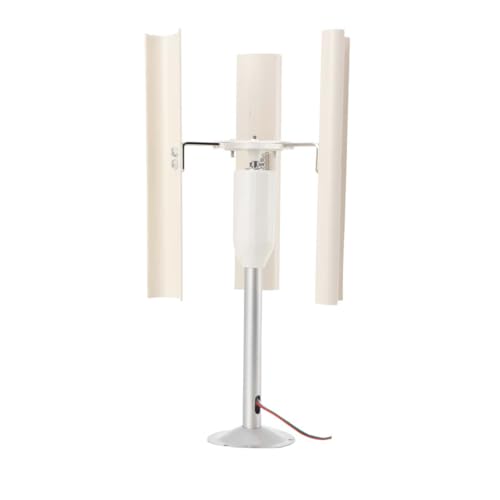
Pros
- Includes a matched wind charge controller in the package, eliminating the need to source a separate rectifier or regulator for basic 12V battery hookups
- Aerodynamic three-blade rotor and permanent magnet alternator deliver smooth, low-noise operation suitable for quiet outdoor settings
- Compact and lightweight footprint makes handling, assembly, and mast mounting straightforward for DIY users
- Provides silent, fuel-free supplemental charging for outdoor 12V battery banks without producing carbon monoxide or exhaust
Cons
- The 30-watt maximum capacity is strictly limited to small battery trickle charging and cannot power standard 120V household appliances
- The package does not include a printed instruction manual or mounting pole, requiring buyers to source installation hardware and request digital setup guidance
- Power output depends entirely on active wind conditions, meaning generation will be intermittent without an adequate battery storage bank
The EODSAD 12V 30W Micro Wind Turbine Generator is a compact, renewable power unit designed for DIY hobbyists, RV travelers, and rural property owners seeking supplemental off-grid battery charging. Unlike fuel-burning portable generators that supply 120-volt household electricity for refrigerators or power tools, this micro wind turbine operates as a 12-volt direct-current charging component. It utilizes a three-blade rotor to drive a three-phase permanent magnet alternator, channeling electricity through an included external charge controller. This setup makes it an appealing, low-maintenance option for maintaining secondary batteries in remote sheds, travel trailers, or off-grid monitoring stations where fuel access or engine noise is undesirable.
Electrical performance is defined by its listed 30-watt maximum rating at 12 volts nominal output. At full rated capacity under optimal wind conditions, the turbine supplies roughly 2.5 amps of continuous direct current. Because this unit is engineered for battery maintenance rather than direct load operation, it does not feature standard 120V electrical receptacles, surge capacity for motor-driven tools, or whole-house backup capability. Instead, it acts as a steady trickle charger for lead-acid or compatible 12V battery systems, helping offset passive electrical draw from small sensors, low-draw 12V LED lighting, or standby electronics.
Build quality centers on an enclosed aerodynamic body finished in white weather-resistant coating designed to resist rust, moisture, and ambient weather exposure. The unit incorporates a three-phase permanent magnet rotor alternator paired with a specialized stator, which minimizes operational drag and mechanical friction. The three precision blades are shaped to optimize wind capture across varying wind speeds while keeping operational sound levels low. By bundling a matched wind charge controller directly in the kit, the manufacturer simplifies the transition from three-phase alternating current generated at the hub to regulated direct current suitable for battery terminals.
Installation and daily handling require a practical DIY approach. The turbine head is lightweight and compact, making it manageable to lift and secure onto a buyer-supplied mounting pole or mast. However, prospective owners should be aware that the manufacturer does not include a printed paper manual in the box; digital video instructions must be requested directly from the seller if assistance is needed. Buyers must also provide their own mounting pipe, mast hardware, and appropriate gauge electrical wiring to link the turbine, controller, and battery bank safely.
The primary limitation of the EODSAD turbine is its modest 30W capacity threshold. It cannot replace a conventional portable generator during severe storm outages, nor can it operate high-draw electrical equipment like sump pumps, space heaters, or air conditioners. Furthermore, because wind generation is inherently weather-dependent, energy production fluctuates with local conditions. The turbine cannot guarantee uninterrupted power without being connected to an appropriately sized battery storage bank, ideally alongside a complementary solar panel array.
For budget-conscious buyers, campers, and off-grid DIYers who want a quiet, fuel-free way to maintain 12V auxiliary batteries, the EODSAD 30W Wind Turbine provides an accessible entry point into renewable energy. It delivers useful trickle-charging utility for remote sheds and battery storage banks during breezy conditions. Homeowners requiring reliable, immediate emergency backup for household appliances or jobsite tools should look instead to combustion-powered portable inverter generators rated for several thousand running watts.
The EODSAD micro wind turbine is built specifically for 12-volt off-grid battery architectures. Because wind velocity varies throughout the day, connecting this turbine directly to sensitive consumer electronics is not recommended. Instead, the three-phase AC wiring from the turbine head connects directly into the included charge controller, which rectifies and regulates the voltage before delivering direct current into a 12V battery bank.
This 30-watt turbine serves best as a supplemental trickle charger rather than a primary power source. In off-grid cabins, RVs, or remote agricultural sheds, small loads such as battery monitors, security cameras, fence energizers, or gate openers can slowly drain auxiliary batteries. Adding this micro turbine allows owners to harvest ambient breeze day and night, providing continuous charge replenishment even when solar panels are inactive after dark or during overcast weather.
Setting up the EODSAD wind generator requires basic mechanical and electrical preparation since mounting hardware and structural poles are not included in the standard package. The turbine head is designed to attach to a standard mast or elevated pipe, which should be secured firmly with guy wires or solid bracketry to withstand high gusts and prevent structural vibration.
Buyers should take note that no printed instruction manual is supplied in the product packaging. The manufacturer indicates that installation guidance is provided via digital video upon messaging their customer support. Safe setup requires selecting proper wire gauges based on the distance between the mast and the charge controller to prevent voltage drop, as well as placing the controller in a dry, protected enclosure close to the battery bank.

Pros
- Low 2.5 m/s start-up speed initiates battery charging in light wind conditions
- Included MPPT microprocessor controller automatically manages voltage and current for 12V systems
- Weatherproof die-cast aluminum body and reinforced fiberglass nylon blades withstand harsh outdoor climates
- Compact 15.32-pound design allows straightforward mounting on masts, poles, or marine arch frames
Cons
- Reaching the maximum 500W output requires a sustained 12 m/s (approx 27 mph) rated wind speed
- Outputs 12V electrical energy for battery systems and cannot power standard 120V household appliances directly without an external power inverter
- Mounting pole, mounting hardware, and storage battery bank are not included and must be sourced separately
The VEVOR 500W Wind Turbine Generator is a 12V renewable power system designed to capture wind energy for remote, off-grid, and mobile electrical applications. Unlike fuel-burning engine inverter generators that consume gasoline or propane to produce immediate on-demand electricity, this wind turbine utilizes an aerodynamic rotor to drive a three-phase AC permanent magnet synchronous generator. This architecture is specifically engineered to replenish 12V storage batteries on RVs, cruising sailboats, farm outbuildings, and remote cabins where utility grid connections are unavailable. Buyers evaluating portable power options should distinguish between combustion-powered inverter generators that deliver plug-and-play 120V AC household power and renewable turbine kits like this one, which serve as continuous, weather-dependent battery chargers.
Electrical production centers on a 500W rated capacity managed through an included MPPT microprocessor controller. The system features a low start-up wind speed of 2.5 m/s (approximately 5.6 mph), allowing the blades to begin turning and generating current in relatively light breezes. Optimal power generation occurs at a rated wind speed of 12 m/s (roughly 26.8 mph), with a safe operating envelope spanning 3 m/s to 25 m/s. The MPPT controller monitors incoming generation and regulates voltage and current to match the connected 12V circuit. Because wind generation varies with weather, actual watt-hour yield depends on local wind conditions, making this unit best suited for steady supplemental charging rather than fixed baseload replacement.
Mechanical durability is supported by a 47-inch rotor diameter paired with five reinforced fiberglass nylon blades. These blades feature waterproof, corrosion-resistant construction capable of operating across an extreme temperature range from -40°C to 80°C (-40°F to 176°F). The main turbine housing is constructed from die-cast aluminum, providing structural strength against gusting winds while keeping total system weight at 15.32 pounds. Dual internal bearings facilitate smooth rotation, helping keep operational noise at a listed 55 dB. Directional tracking is handled passively by an adjustable tail vane that pivots the turbine head into prevailing wind currents to maintain optimal aerodynamic alignment.
Installation and system integration require planning, as the turbine is designed to feed into a dedicated 12V energy storage setup. With overall dimensions of 47 x 47 x 26.7 inches and a lightweight frame, the turbine can be mounted atop a freestanding pole, shed mast, marine radar arch, or RV bracket. The three-phase AC output wires from the generator connect directly to the included MPPT controller, which then rectifies and steps down the current into a 12V DC output suitable for deep-cycle battery banks. For homesteaders and RV owners who already utilize solar arrays, pairing this wind turbine creates a hybrid off-grid generation system capable of maintaining battery charge overnight or during overcast storm conditions when solar panels produce minimal output.
The primary limitations of the VEVOR 500W Wind Turbine relate to environmental dependence and electrical distribution. Full 500W output requires strong, steady winds around 27 mph, which means geographic regions with average wind speeds below 3 on the Beaufort scale will see modest power returns. Furthermore, this turbine does not supply direct 120V AC utility power; it cannot run household appliances, sump pumps, or power tools without a compatible 12V battery bank and a separate power inverter. Buyers must also provide their own mounting tower, guy wires, and electrical wiring between the turbine, controller, and battery terminals, as these installation components are not included with the bare turbine kit.
For rural property owners, marine cruisers, and off-grid travelers seeking passive, quiet battery charging, the VEVOR 500W Wind Turbine Kit offers a practical, low-maintenance generation option. It is an effective solution for maintaining 12V DC systems in windy coastal, mountain, or plains environments without burning fossil fuels. However, homeowners seeking emergency backup power to run essential home appliances during severe weather outages, or contractors needing portable jobsite electricity, will be better served by a traditional portable inverter generator that provides regulated 120V household receptacles and immediate on-demand output.
The VEVOR 500W Wind Turbine Generator operates across a broad aerodynamic wind window designed to optimize off-grid electrical yields. Mechanical rotation begins at a cut-in start-up speed of 2.5 m/s, while standard power generation operates reliably between 3 m/s and 25 m/s. The full 500W power rating is achieved at 12 m/s, making unobstructed placement away from tree cover and tall structures essential for maximizing continuous output.
Power conversion is regulated by the included MPPT microprocessor controller. The turbine head houses a 12V three-phase AC permanent magnet synchronous generator, which outputs alternating current directly to the controller. The MPPT unit automatically rectifies the incoming AC into direct current while dynamically matching voltage and current to safely replenish 12V battery banks and prevent overvoltage damage during high-wind gusts.
This 12V wind power kit is built primarily for off-grid battery maintenance on boats, recreational vehicles, remote agricultural buildings, and off-grid cabins. Because wind often increases during inclement weather and continues throughout the night, adding this turbine to an existing battery setup provides continuous trickle and bulk charging during periods when solar panels are inactive.
Prospective buyers should plan the complete electrical circuit before installation. To run standard household electronics or 120V equipment, the electricity generated by this turbine must first be stored in an appropriately sized 12V deep-cycle battery bank and subsequently converted using an external power inverter. The lightweight 15.32-pound aluminum body allows for versatile mounting on standard pipes or mast poles across diverse off-grid environments.
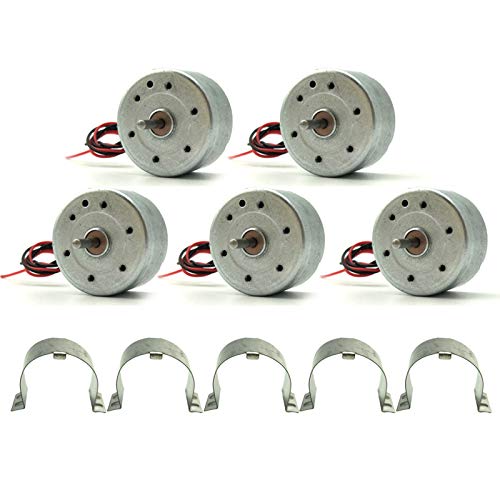
Pros
- Includes five dedicated metal mounting brackets to secure the motors firmly to DIY project bases
- Supports both electrical motor drive and kinetic power generation across a flexible 3V to 12V DC range
- Pre-soldered 12cm wire leads make breadboard prototyping and educational science experiments straightforward
- Lightweight, ultra-compact design fits effortlessly into miniature toy cars, DIY fans, and scale-model wind turbines
Cons
- Designed strictly for low-voltage educational and toy applications, not for household backup or utility power
- Does not include mechanical gears, hand-crank levers, turbine blades, or output voltage rectifiers
- Lacks detailed manufacturer documentation regarding maximum continuous electrical current output when driven as a generator
The EUDAX Mini Generator Motor set is a multi-pack of compact direct-current (DC) electric motors engineered for educational projects, DIY toys, miniature wind turbines, and hand-cranked power models. Unlike fuel-burning portable generators or household backup equipment, these miniature components are designed strictly for low-voltage hobbyist and STEM applications. When spun by external mechanical energy, such as a hand crank or small turbine blades, each unit functions as a micro-scale electrical generator capable of producing low DC voltage to illuminate tiny LEDs or power basic educational circuits.
In terms of electrical operating characteristics, the manufacturer lists operational voltage thresholds between 3V and 12V DC with corresponding shaft speeds. Under electric motor operation, the motor achieves approximately 1,500 RPM at 3V, 2,500 RPM at 4.5V, and up to 6,500 RPM at 12V. When utilized in reverse as an electric generator, the output voltage corresponds directly to the rotational speed applied to the 2.0mm drive shaft. Output current and continuous wattage are sized for micro-electronics rather than real-world appliance loads, making it essential for users to pair these motors with appropriate low-draw components such as indicator diodes or sensitive multimeters.
The mechanical build of each unit features a cylindrical motor body measuring 24mm (0.94 inches) in diameter and 22.21mm (0.87 inches) in height, fitted with an 8.25mm by 2.0mm drive shaft. The package includes five individual motors along with five pre-formed metal mounting bracket holders, which substantially simplifies mechanical integration compared to bare-can motors. Each motor also includes factory-attached lead wires measuring 12cm (4.7 inches) in length, allowing hobbyists and students to connect them to breadboards or wire clips without requiring immediate soldering equipment.
Deploying these motors in practical classroom or workshop settings requires realistic mechanical planning. Because the package contains only the bare motors and metal holders, builders must supply their own mechanical drive systems, such as miniature wind turbine blades, pulleys, or geared hand-crank assemblies. The supplied metal brackets feature pre-drilled fastener holes that allow users to screw the motors securely to wooden craft bases, plastic project chassis, or 3D-printed brackets, preventing shaft misalignment during high-speed rotation.
The primary limitation of this product stems from its specialized hobby category. These units cannot supply 120V household electricity, cannot run power tools, and are completely unrelated to engine-driven portable generators used for emergency outages or RV camping. Furthermore, because these are simple brushed DC units without built-in voltage regulation or rectifiers, the generated voltage will fluctuate directly with rotational speed, requiring external diodes or regulators if stable DC output is needed for sensitive project circuits.
The EUDAX Mini Generator Motor kit is recommended for science teachers, parents, students, and hobby makers who need an affordable hardware pack for hands-on renewable energy demonstrations and mechanical physics experiments. Buyers searching for emergency home backup, severe-weather storm preparedness, or portable outdoor AC power must look instead to full-size fuel-powered portable inverter or conventional generators.
The EUDAX mini DC motors are primarily used in maker spaces and science classrooms to demonstrate the principles of mechanical energy conversion. By attaching a lightweight plastic propeller to the 2.0mm motor shaft, students can assemble a functional miniature wind turbine that generates measurable electrical current when placed in front of a household fan.
For manual kinetic generation projects, hobbyists frequently connect these motors to simple gear trains or 3D-printed hand cranks. Because the motor requires sufficient RPM to reach higher output voltages (up to 12V at 6,500 RPM), adding a gear multiplier helps achieve practical output levels with modest manual cranking effort, making it an engaging hands-on demonstration of mechanical advantage and electrical induction.

Pros
- Versatile voltage response from 3V to 12V provides clear rotational feedback for DIY generation projects
- Pre-soldered 4.7-inch leads simplify classroom setups and fast hobbyist breadboard testing
- Ten individual motors in the package offer excellent practical value for STEM workshops and schools
- Standard 2mm shaft works well with widely available miniature toy propellers and hobby gears
Cons
- Strictly intended for low-voltage educational hobby use and cannot power standard household devices or emergency backup loads
- Requires external mounting hardware, brackets, or custom enclosures as none are included in the package
- Unsealed casing design requires dry, sealed storage when not in use to avoid moisture accumulation and rust
The Coliao 10-Piece Mini Generator Motor set is a collection of compact direct-current (DC) motors engineered for educational physics demonstrations, hobby projects, and miniature mechanical generation models. Unlike full-scale fuel-powered portable generators or residential standby units designed for storm outages, these micro motors are specialized components that demonstrate the core principle of electromagnetic induction on a desktop scale. By rotating the motor shaft mechanically through a hand crank, toy water wheel, or model wind turbine blade, users can generate small amounts of direct-current electrical power suitable for simple experiments.
In terms of electrical performance, the manufacturer lists rated operation across a 3V to 12V direct-current range. Operating at 3V delivers an estimated speed of 1,500 RPM, 4.5V provides approximately 2,500 RPM, and 12V achieves up to 6,500 RPM under driven conditions. When utilized in reverse as an electric generator, the output voltage scales directly with the rotational speed applied to the central shaft. This setup produces low-voltage direct current capable of illuminating miniature LEDs, activating low-draw micro buzzers, or driving small meters for physics experiments.
The physical construction of each motor centers on a cylindrical metal frame measuring 24mm (0.94 inches) in diameter and 22.21mm (0.87 inches) in total height. A 2.0mm diameter output shaft extends 8.25mm (0.32 inches) outward, allowing easy friction-fit pairing with standard educational toy propellers, pulleys, and model pinion gears. Each unit includes dual 12cm (4.7-inch) pre-soldered wire leads, which save preparation time in classroom environments by allowing immediate attachment to alligator test clips, terminal blocks, or solderless breadboards.
Deploying these mini generator motors in educational or hobby environments requires minimal technical overhead. Makers can secure the motor body with standard 24mm mounting brackets, zip-ties, or custom 3D-printed clamps to build hand-cranked generators, solar-hybrid demonstration cars, or miniature wind turbines. Because these small motors feature open-vented steel casings, the manufacturer recommends storing unused units in sealed plastic bags to prevent humidity from causing surface oxidation or shaft corrosion over time.
A critical consideration for buyers is recognizing the strict functional boundaries of this product category. These mini DC motors are low-power educational components, not engine-driven portable generators, battery power stations, or inverter backup systems. They do not produce 120V alternating current, cannot support household appliances or emergency sump pumps, and lack the electrical capacity to charge commercial electronics without specialized step-up and regulating circuitry.
For STEM teachers, parents, science fair participants, and electronics hobbyists, the Coliao 10-piece pack provides an accessible, cost-effective platform for hands-on learning about kinetic-to-electrical energy conversion. Households, contractors, or outdoor enthusiasts seeking reliable portable electricity for home backup, jobsite power tools, camping, or severe weather preparation should bypass micro hobby motors and choose an appropriately sized engine-driven inverter or conventional portable generator.
These miniature generator motors serve primarily as kinetic energy converters for educational physics demonstrations and small maker projects. When paired with a lightweight plastic propeller, a motor functions as the generator head of a micro wind turbine, producing measurable voltage in front of an electric fan to teach wind energy principles.
In mechanical physics classrooms, students frequently mount these units to handmade gear assemblies to build hand-cranked power supplies. When spun manually, the micro motor generates enough direct-current electricity to illuminate low-power diodes or explain direct-current polarity in hands-on student lab stations.
The motors also function as standard power consumers when connected to small photovoltaic cells or AA battery packs. This bi-directional flexibility allows hobbyists to explore basic circuits, solar-powered toy car models, and automated science-fair displays using a single multi-pack component.
Each motor in the Coliao pack features a standardized 24mm (0.94-inch) main body diameter and a compact 22.21mm (0.87-inch) can height, allowing integration into small craft projects and compact demonstration stands. The steel drive shaft measures 2.0mm in diameter with a usable length of 8.25mm (0.32 inches).
Electrical ratings include 3V DC at 1,500 RPM, 4.5V DC at 2,500 RPM, and 12V DC at 6,500 RPM under input voltage testing. Pre-attached 12cm (4.7-inch) insulated lead wires extend from the rear brush plate, offering ready-to-use electrical contacts for prototyping.
Because the package includes ten identical motor assemblies, users have ample units to set up side-by-side comparison experiments, build multi-turbine arrays, or retain spare motors for future STEM class terms.

Pros
- Harnesses free, renewable wind energy with zero emissions, fuel costs, or carbon monoxide exhaust
- Included MPPT microprocessor controller optimizes power harvesting and automatically regulates 12V battery charging
- Sturdy weatherproof build with die-cast aluminum body and reinforced fiberglass nylon blades rated down to -40 deg F
- Low mechanical operating noise rated by the manufacturer at 58 dB with smooth dual-bearing rotation
- Low 2.5 m/s startup speed enables rotor movement in light breezes
Cons
- Requires a compatible mounting pole or tower, 12V battery bank, and separate DC-to-AC inverter to power standard 120V household appliances
- Electrical output fluctuates entirely based on real-time local wind conditions, lacking the on-demand consistency of fuel-driven inverter generators
- Proper site assessment, tall open exposure, and wiring installation are necessary to achieve meaningful charging wattage
The VEVOR 800W Wind Turbine Generator is a 12V renewable off-grid power kit engineered for auxiliary battery charging rather than an engine-driven fuel generator. Featuring a 12V three-phase AC permanent magnet synchronous generator and an included MPPT microprocessor controller, this system converts kinetic wind energy into regulated direct-current electricity for 12V battery banks. It suits off-grid cabins, rural homesteads, agricultural outbuildings, RV boondockers, and marine vessels looking to capture clean, zero-emission power without handling gasoline or enduring engine exhaust.
The manufacturer lists the turbine for a peak output of 800W at a rated wind speed of 12 m/s (approximately 26.8 mph), with movement beginning at a startup speed of 2.5 m/s (about 5.6 mph). Its operational range spans 3 to 25 m/s (6.7 to 56 mph). Because power generation in small wind systems depends directly on wind velocity and unobstructed airflow, output fluctuates with local weather patterns. Unlike an engine-driven portable generator that supplies steady 120V alternating current at the turn of a switch, this turbine routes raw three-phase power into the supplied MPPT controller, which rectifies and conditions the voltage to charge connected 12V battery systems.
Built for continuous outdoor exposure, the turbine features a die-cast aluminum body with dual internal bearings that support smooth rotation and maintain mechanical operating noise at a stated 58 dB. The rotor assembly uses a 3-blade configuration crafted from reinforced fiberglass nylon, creating a 59-inch rotor diameter capable of operating across a wide temperature range of -40 deg C to 80 deg C (-40 deg F to 176 deg F). The integrated tail fin naturally aligns the turbine head into prevailing wind currents, maximizing blade exposure during shifting wind gusts while offering resilience against moisture and corrosion.
Deploying this wind turbine requires assembling a complete off-grid power architecture, as the kit includes only the turbine head, blades, hub hardware, and MPPT controller. Buyers must supply an appropriate mounting pole or guy-wired tower, heavy-gauge transmission wiring, a 12V battery storage bank, and an off-grid DC-to-AC inverter if household appliances need to be powered. When integrated into an off-grid cabin or rural backup system, this turbine pairs effectively with solar photovoltaic arrays, generating valuable charging current during overcast days, storms, and nighttime periods when solar panels produce zero output.
Prospective buyers should recognize that small-scale wind power generation requires specific geographical conditions and elevated mounting to overcome ground friction and turbulence. An 800W rating represents optimal wind conditions near 27 mph, meaning average gentle breezes will generate substantially lower continuous wattage. Additionally, the kit does not include a mounting pole, tower base, or built-in 120V household outlets. Those seeking instant, reliable backup power for high-draw appliances during severe weather will find a portable gasoline or dual-fuel inverter generator far more capable of delivering predictable 120V utility power on demand.
The VEVOR 800W Wind Turbine Kit represents a practical, budget-friendly entry into renewable off-grid energy for DIY enthusiasts, homesteaders, boat owners, and rural property owners with consistent local wind resources. It is ideal as a supplemental trickle or bulk charger for 12V auxiliary battery banks in remote locations where fuel delivery is impractical. However, households needing immediate, high-output storm backup for refrigerators, sump pumps, or space heaters should select an engine-driven inverter generator rather than relying solely on ambient wind speeds.
Understanding the distinction between this wind turbine generator and a fuel-powered inverter generator is critical for planning resilient backup power. A portable engine-driven inverter generator burns gasoline or propane to produce regulated 120V or 240V utility-grade alternating current on demand, regardless of weather conditions. In contrast, the VEVOR 800W wind turbine produces no carbon monoxide, requires zero fuel, and operates quietly at 58 dB, but its generation is entirely dependent on ambient wind velocity and requires an external battery bank to store the harvested energy.
For long-term off-grid homesteads, marine applications, or remote RV base camps, pairing a wind turbine with battery storage reduces engine generator runtime and cuts fuel consumption. For urgent storm readiness and critical emergency home backup, a portable fuel inverter generator remains the dependable primary choice, while this wind turbine excels as a renewable supplemental charging solution.
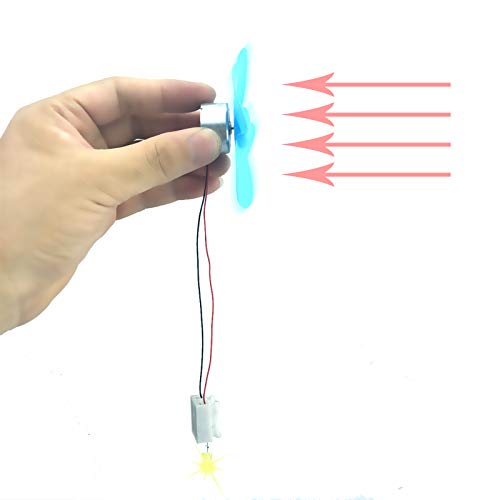
Pros
- Effective hands-on teaching tool for introducing wind power and electromagnetic generator principles
- Verified multi-speed electrical ratings spanning 3V to 12V based on rotational velocity
- Compact footprint with integrated wire leads facilitates quick breadboard and meter connections
- Budget-friendly entry point for hobbyist experiments, school projects, and STEM kits
Cons
- Limited strictly to low-current educational demonstrations and cannot power household appliances or backup equipment
- Requires significant rotational speed reaching up to 6,500 RPM to attain its rated 12V output
- Does not include onboard voltage regulation, rectification, or energy storage components
The EUDAX DIY Micro Motor Wind Turbine Electricity Generator is a miniature educational model designed to demonstrate the fundamental principles of wind power generation. Unlike fuel-powered portable generators or standby home backup systems, this compact DC micro motor serves as an instructional visual aid. It is specifically tailored for STEM educators, physics classrooms, student science fair projects, and DIY electronics hobbyists who need a hands-on method to showcase mechanical-to-electrical energy conversion.
According to the manufacturer specifications, this micro generator produces direct current (DC) with voltage output directly corresponding to shaft rotational velocity. The motor is rated to deliver DC 3V at 1,500 RPM, DC 4.5V at 2,500 RPM, and up to DC 12V when rotated at 6,500 RPM. The unit includes integrated 14cm (5.51-inch) connection wires that allow users to connect directly to multimeters, small breadboards, or sensitive low-draw components such as small LEDs for visual confirmation of power generation.
The physical construction focuses on a compact, lightweight motor assembly featuring a silver exterior finish. The main motor body measures 24mm (0.94 inches) in diameter and 22.21mm (0.87 inches) in height, fitted with an 8.25mm by 2.0mm output shaft. The included blades mount onto the motor shaft to capture airflow. With total packaged dimensions of 3.7 x 3.3 x 1.3 inches, the assembly is small enough to integrate into custom science fair dioramas, tabletop test benches, or student demonstration stands.
Setting up this micro wind turbine model requires attaching the included blades to the 2.0mm motor shaft and positioning the assembly in front of an airflow source, such as an electric household fan or hair dryer. Connecting the 14cm lead wires to a digital multimeter allows users to observe immediate voltage spikes as the airflow accelerates the rotor. Because the unit relies entirely on mechanical airflow for power, operation is completely clean, producing no exhaust emissions, fuel odors, or combustion engine noise during indoor classroom use.
Prospective buyers must recognize the clear boundary between an educational demonstration motor and practical backup power equipment. This micro generator does not provide alternating current (AC), contains no 120V household receptacles, and lacks internal battery storage, charge controllers, or voltage regulation. Achieving higher voltage outputs requires substantial rotational velocity, reaching 6,500 RPM for 12V DC, which low-speed natural breezes rarely achieve without optimized gearing or concentrated forced air. It is not engineered to power camping gear, RV accessories, or emergency home appliances.
Based on the listed specifications, the EUDAX DIY Micro Motor Wind Turbine Generator offers exceptional instructional value for STEM learning environments and hobbyist workshops. It fulfills its intended purpose as a functional teaching tool that visualizes renewable energy concepts at a minimal investment. Buyers needing real-world off-grid electricity or storm outage backup must choose an appropriately sized inverter or portable fuel generator, but educators and students will find this micro model well-suited for classroom demonstrations.
The EUDAX Micro Motor Wind Turbine Model serves primarily as an interactive learning platform for exploring renewable energy fundamentals. In classroom and homeschool environments, the unit provides a tangible demonstration of how kinetic energy from moving air converts into electrical energy through electromagnetic induction.
Students can pair the motor with digital multimeters or basic LED circuits to test variable wind speeds, blade pitch adjustments, and distance from the air source. Because the motor produces a graduated output spanning 3V at 1,500 RPM to 12V at 6,500 RPM, it offers immediate numeric data for science experiments, graphing exercises, and entry-level physics curriculum.

Pros
- Complete hands-on STEM kit with motors, mounting brackets, propellers, and LEDs ready for immediate assembly
- Provides a safe, low-voltage educational introduction to mechanical-to-electrical energy conversion
- Operates across a wide 3V to 12V DC range depending on rotational input speed
- Pre-wired motor leads and push connectors eliminate the need for immediate soldering in classroom settings
Cons
- Produces only micro-level DC power suited for small LEDs and cannot power consumer electronics or household items
- Lightweight plastic brackets and small 2.0mm shafts require delicate handling to avoid damage during builds
- Does not include technical documentation for maximum current output or specific torque curves
The EUDAX Mini Generator Motor Kit is an educational micro-scale DC electric generation set tailored for DIY hobbyists, STEM students, and classroom physics demonstrations. Rather than providing household emergency backup or utility power, this package uses six small permanent-magnet direct-current motors that convert manual or wind-driven rotational kinetic energy into low-voltage electricity. It directly serves educators and young makers who want to understand foundational generation principles through hands-on models such as small wind turbines, water wheels, or hand-cranked generators.
Electrical output across these miniature generator units scales with rotational shaft speed, delivering direct-current output between 3V and 12V. According to the manufacturer specifications, the motor operates at 1,500 RPM at 3V, 2,500 RPM at 4.5V, and reaches approximately 6,500 RPM when driven to 12V. When spun mechanically using the included multi-vane propellers in front of an airflow source, each motor produces enough DC electrical current to illuminate the included mini LEDs. Because this is an educational direct-current component rather than a 120V alternating-current generator, it does not support running watts, surge capacity, or household appliances.
Each motor features a compact cylindrical form factor measuring 24mm in diameter and 22.21mm in height, fitted with an 8.25mm long shaft that has a 2.0mm diameter. The package includes six dedicated plastic motor mounting bracket holders that make it easy to secure the units to craft boards or science fair stands. Mechanical power capture is facilitated by three 4-vane propellers and three 3-vane propellers, while electrical connectivity relies on pre-attached 14cm lead wires, six quick-connect wire terminals, and nine low-draw mini LEDs.
Assembly and circuit creation are straightforward, making this set accessible even for beginner hobbyists and young learners under adult supervision. Users slide a propeller onto the 2.0mm steel shaft, seat the motor firmly into its plastic bracket, and attach the pre-stripped lead wires to an LED using the supplied terminal blocks. When directed into a steady household fan breeze or turned manually with an improvised crank assembly, the spinning rotor immediately energizes the circuit, offering clear visual feedback of power generation without requiring soldering or specialized tools.
Buyers must keep technical expectations aligned with the physical reality of micro-motors, as this kit is purely an educational model and not a functional power source for consumer gear. It cannot charge standard 12V deep-cycle batteries, energize USB devices without dedicated step-up regulation, or supply standard household power. Furthermore, the plastic mounting holders and fine lead wires are designed for light tabletop experimentation rather than permanent outdoor weather exposure or heavy industrial torque.
The EUDAX Mini Generator Motor Kit is a well-rounded, highly practical teaching aid for science teachers, STEM project leaders, and young electronics hobbyists. It demystifies electrical generation by illustrating how mechanical rotation produces measurable DC electricity in real time. Anyone looking for severe weather preparedness, RV power, or jobsite equipment must look toward full-size engine-driven portable generators, but for low-cost, hands-on physics education, this multi-pack provides dependable learning value.
This miniature generator kit serves as a practical demonstration tool for teaching the core principles of electromagnetic induction and energy conservation. By spinning the permanent-magnet motor shaft via wind or hand power, students observe firsthand how mechanical kinetic energy transforms into electrical energy that illuminates an LED circuit.
The inclusion of both 3-vane and 4-vane propellers allows for controlled science fair experiments comparing blade aerodynamics. Students can measure how blade pitch, vane count, and wind speed from a standard household fan influence motor RPM and resulting voltage output across the terminals.
Because the kit includes solderless quick connectors and basic LEDs, classroom teachers can distribute materials across multiple student lab groups without safety concerns related to mains electricity or hot soldering irons. It establishes an intuitive bridge between abstract electrical concepts and tangible real-world technology.

Pros
- Low 2.5 m/s startup wind speed captures energy even in gentle breeze conditions.
- Included IP67-rated MPPT charge controller delivers over 92 percent conversion efficiency and battery overcharge protection.
- Rugged die-cast aluminum construction and nylon blades offer solid weather and corrosion resistance.
- Produces clean, fuel-free, zero-emission charging for 12V energy storage systems.
Cons
- Requires a separate mounting pole and secure mast hardware that are not included in the package.
- Power production depends entirely on prevailing wind conditions rather than on-demand fuel.
- Supplies direct DC battery charging rather than native 120V household AC receptacles, requiring a separate power inverter for standard appliances.
The VEVOR 800W 12V Wind Turbine Generator Kit is an off-grid renewable power generation system designed to charge 12V battery storage banks across rural homes, farms, RVs, and marine vessels. Unlike conventional engine-driven or portable fuel inverter generators that consume gasoline or propane, this system uses a 3-phase AC permanent magnet synchronous generator driven by five nylon composite blades. It provides an eco-conscious power source for American homeowners, homesteaders, and campers seeking continuous trickle and bulk charging without fuel storage concerns, engine exhaust, or mechanical noise.
In terms of electrical performance, the manufacturer lists an 800W maximum power capacity configured for 12V direct-current battery systems. The turbine features a sensitive 2.5 m/s (approximately 5.6 mph) startup wind speed, allowing the five large-diameter blades to begin capturing kinetic energy in mild breezes. Included with the turbine is a dedicated MPPT (Maximum Power Point Tracking) wind controller rated for over 92 percent energy conversion efficiency. While an engine-driven inverter generator produces direct 120V AC household current, this wind turbine produces wild 3-phase AC electricity that the MPPT controller rectifies and regulates into smooth DC charging current for lead-acid, AGM, or lithium battery systems.
Mechanical durability and weather resistance are central to the turbine construction. The main generator body is built from die-cast aluminum that resists corrosion, paired with dual internal bearings that reduce rotational friction and mechanical wear. The five blades are made from high-strength nylon composite material engineered to withstand UV radiation, moisture, and high-velocity gusts. The integrated aerodynamic tail fin automatically tracks shifting wind vectors, orienting the blade rotor into oncoming wind without external tracking hardware. Additionally, the included MPPT controller carries an IP67 waterproof rating and built-in overcharge protection to prevent battery degradation in harsh outdoor environments.
Installation and daily operation require thoughtful planning compared to turnkey portable power equipment. With an assembled footprint of 52.6 x 52.6 x 25.98 inches and an overall weight of 18.74 pounds, the turbine head is relatively easy to lift and position. However, buyers must source an appropriate mounting pole or tower mast separately, as mounting hardware and masts are not included in the package. Setup involves securing the mast, routing the 3-phase output wiring down to the MPPT controller, and attaching the controller outputs to a compatible 12V battery bank. Once secured, operation is automatic and silent, requiring no routine oil changes, spark plug service, or fuel stabilization.
Prospective buyers must weigh clear operational limitations before purchase. Most notably, power generation is entirely weather-dependent, meaning electricity output fluctuates with wind speed and ceases completely during calm spells. Unlike portable fuel inverter generators that deliver predictable on-demand wattage for heavy motor startup loads or emergency home backup, this wind kit is strictly designed to replenish battery banks over time. Running standard 120V AC household appliances or power tools requires routing the stored battery energy through a separate standalone pure sine wave power inverter. Furthermore, securing the tower pole against severe storm turbulence requires proper anchoring, guy wires, and careful site clearance.
For off-grid cabins, rural homesteads, sailboat owners, and RV travelers looking to supplement solar arrays or reduce generator fuel consumption, the VEVOR 800W 12V Wind Turbine Generator Kit offers an affordable, reliable renewable charging tool. It excels at maintaining battery bank health day and night whenever wind conditions permit. Conversely, households seeking immediate, high-output emergency home backup during storm-related utility blackouts will find an engine-driven portable inverter generator better suited for immediate 120V or 240V utility loads.
The included MPPT wind charge controller plays a vital role in maximizing the efficiency of the VEVOR 800W system. The controller achieves over 92 percent conversion efficiency, dynamically regulating the variable 3-phase AC electricity generated by the rotating permanent magnets into safe DC charging current. With an IP67 rating, the controller housing is sealed against heavy rainfall and dust intrusion, making it reliable for marine decks, outdoor utility boxes, and remote mounting pads.
Connecting this wind generation kit to an existing energy storage setup requires matching the 12V DC system voltage. The controller features integrated battery overcharge protection, cutting off current when storage reaches peak voltage to prevent thermal runaway or cell damage. To power standard household appliances like refrigerators, lights, or communication devices during an outage, the 12V battery bank must be linked to a separate standalone power inverter that converts stored DC energy into regulated 120V AC household power.
Proper placement is essential to maximizing energy harvest from the VEVOR 800W Wind Turbine. Because the manufacturer does not include a tower pole, buyers should plan to secure a rigid steel or galvanized pipe mast with appropriate diameter and wall thickness. To minimize turbulent air and ground friction, the turbine should be installed well above nearby rooflines, trees, and outbuildings, where laminar wind flow is strongest and most consistent.
During installation, ensure all five nylon composite blades are balanced and tightened according to specifications to avoid operational vibration. The lightweight 18.74-pound head assembly simplifies mounting on RV ladder brackets, marine stern poles, or freestanding farm towers. Using proper gauge copper wiring between the turbine, MPPT controller, and battery terminals will reduce line-voltage drop and ensure maximum current delivery into your off-grid battery bank.
Frequently Asked Questions
Can a mini 12V wind turbine run household appliances directly?
No, a mini 12V wind turbine cannot power standard 120V household appliances directly without an intermediary battery bank and power inverter. Turbines produce fluctuating current that rises and falls with wind velocity. That raw electrical generation must flow through a charge controller to feed a 12V battery bank, which stabilizes the current before an inverter converts it to usable AC electricity. For heavy household backup during unexpected blackouts, property owners generally rely on traditional home backup generators rather than relying solely on micro turbines.
What wind speed is required for a mini 12V turbine to start producing power?
Most functional mini 12V wind turbines have a startup wind speed between 2.0 and 2.5 meters per second, which equals roughly 4.5 to 5.6 miles per hour. While the blades begin spinning at this low velocity, meaningful battery charging typically begins when winds reach 7 to 9 meters per second. Rated power output is generally achieved around 12 meters per second, meaning steady breezes are necessary to extract optimal wattage from the permanent magnet alternator.
Do 12V wind turbines require a specialized charge controller?
Yes, a dedicated MPPT or PWM wind charge controller is necessary to regulate incoming power and protect connected batteries from overcharging. Wind turbines generate three-phase alternating current that must be rectified into direct current matching your 12V battery bank voltage. Dedicated wind controllers also provide critical electronic braking functions, which slow the turbine blades during dangerous high-wind gusts to prevent internal motor burnout.
How does a mini wind turbine compare to a portable generator for RV camping?
A mini wind turbine provides silent, passive battery replenishment, but it cannot match the immediate high-wattage demand handled by fuel-powered generators. While wind turbines harvest clean energy without fuel costs, RV owners running rooftop air conditioners or microwaves typically turn to dedicated RV generators for instantaneous surge capacity. Wind generators excel at maintaining 12V house batteries during overnight boondocking when noise ordinances forbid engine operation.
What distinguishes outdoor mini turbines from micro DC generator motors?
Outdoor mini turbine kits feature weather-sealed aluminum bodies, heavy-duty composite blades, and internal alternators engineered to withstand rain and high winds, whereas micro DC generator motors are designed strictly for lightweight DIY projects and classroom physics kits. Micro motors produce minimal current at high rotational speeds and lack weather protection. For battery charging on boats, sheds, or campers, complete turbine kits with sealed bearings and aerodynamic tails are mandatory.




Write Your Review
No reviews yet. Be the first to share your experience!