


Building an off-grid energy setup or upgrading an older tractor charging circuit often comes down to matching rotational mechanical speed with reliable electrical output. Standard vehicle alternators require thousands of rotations per minute before producing usable charging current, which causes significant headaches for small wind turbines, hydro builds, or low-idle utility machinery. That is why selecting the Best Low Rpm Generator Alternator becomes critical for custom off-grid and agricultural power systems. Permanent magnet alternators (PMAs) and low-speed charging units generate direct energy without requiring external excitation current, delivering dependable 12V to 24V DC or 3-phase AC power straight from a rotating shaft.
Evaluating these units requires a clear look at continuous wattage capacity, stator winding materials, and internal rectification. Direct-drive gearless designs minimize mechanical resistance so DIY wind turbines begin generating power in modest breezes, while belt-driven tractor units rely on integrated voltage regulators to handle variable engine speeds safely. To prevent battery bank overcharging or unexpected current drop, pairing your setup with a reliable watt meter provides immediate feedback on system output and running demand. Taking the time to verify rotational compatibility, voltage parameters, and housing weatherproofing guarantees that your customized backup or off-grid generating system performs consistently under load.

Pros
- NdFeB rare-earth permanent magnets provide strong magnetic flux in a compact, gearless direct-drive architecture.
- Die-cast aluminum casing provides corrosion resistance against outdoor moisture and weathering.
- Low startup torque design allows mechanical rotation to initiate under lighter wind or drive conditions.
- Includes a matching rectifier to facilitate conversion of three-phase AC to DC power.
Cons
- Severe listing discrepancies exist between the advertised title ratings (18000W/12000W at 12V) and the specification table (10000W at 48V).
- Not a standalone plug-and-play generator; requires an external mechanical drive, mounting hardware, charge controller, and battery system.
- Lacks verified continuous rated power curves, RPM ratings, or clear manufacturer documentation, requiring technical validation before deployment.
The Generic Three-Phase Permanent Magnet Generator is a component-level AC alternator core rather than an engine-driven fuel generator or all-in-one portable power station. Built around a gearless, direct-drive architecture using neodymium iron boron (NdFeB) rare-earth permanent magnets, this unit is engineered primarily for DIY off-grid builders, rural property owners, and renewable-energy hobbyists constructing windmill or micro-hydro generation systems. Unlike conventional fuel-burning generators that include a combustion engine, fuel tank, and integrated receptacle panel, this device functions strictly as an electromagnetic generating head that converts external rotary mechanical motion into three-phase alternating current (AC).
Evaluating electrical output requires caution due to substantial discrepancies in the manufacturer data. The product title references both 18,000 watts and 12,000 watts at 12 volts, while the embedded product specifications indicate a 10,000-watt rating at 48 volts. In low-voltage direct-drive alternators, generating tens of thousands of continuous watts at 12V or 48V would demand massive rotational torque and hundreds of amperes of current, which typical compact permanent magnet alternators cannot physically sustain. An included rectifier converts the raw three-phase AC generation into direct current (DC) for battery banks, but prospective buyers must verify actual rated continuous wattage and specific RPM-to-voltage performance curves with the seller prior to connecting sensitive electrical storage components.
Physical construction focuses on weather endurance and mechanical simplicity. The alternator utilizes a die-cast aluminum outer cover finished with protective spray coating, engineered to resist atmospheric corrosion from rain, salt, and ambient chemical exposure in exposed outdoor installations. Internally, the brushless stator and rotor assemblies are designed to maximize heat dissipation during continuous rotation. The core features low starting resistance torque, which helps wind turbine blades begin spinning under lighter breezes without stalling against heavy magnetic cogging resistance.
Integrating this permanent magnet alternator into a functional off-grid power system requires additional electrical and mechanical hardware. Because it lacks a drive motor, buyers must fabricate or supply external turbine blades, a drive shaft, a mounting hub, and sturdy tower fixtures. On the electrical side, the raw three-phase output wires must route through the included rectifier and connect to an appropriately sized external charge controller, circuit breakers, and battery storage. Standard 120V household appliances cannot plug directly into this unit, as it does not feature standard NEMA receptacles, an integrated inverter, or automatic voltage regulation.
The primary limitation of this product is its identity as an uncalibrated DIY component rather than a turnkey power solution. The absence of clear RPM specifications, published torque requirements, or validated continuous running wattage makes precise system sizing challenging for emergency home backup. Furthermore, because electrical generation depends entirely on variable natural resources such as wind speed or flowing water, it cannot provide instantaneous on-demand power during a storm outage unless paired with a substantial battery bank and power inverter. It cannot be used as an emergency replacement for an engine-driven portable generator on a jobsite or residential transfer switch without a dedicated mechanical prime mover.
This permanent magnet alternator is best suited for experienced off-grid experimenters, DIY renewable energy builders, and rural tinkerers seeking a low-cost, brushless direct-drive core for small wind turbines or experimental hydro projects. Homeowners seeking reliable storm preparedness, jobsite contractors needing immediate 120V or 240V utility power, and RV campers requiring plug-and-play electricity should bypass this component entirely. Those buyers should instead select an engine-driven portable inverter generator or conventional fuel-powered generator equipped with factory-rated running watts, standard household receptacles, and safety certifications.
Deploying a three-phase permanent magnet alternator requires a comprehensive understanding of off-grid electrical architecture. Because this unit produces wild three-phase AC power that varies directly with rotational speed, it cannot safely energize home circuits or battery banks without intermediary control hardware. The included rectifier bridges the three AC phases into direct current, but users must still install a dedicated wind charge controller with dump-load protection to prevent overcharging battery banks or letting the turbine freewheel during high-wind events.
Mechanical mounting also demands proper structural planning. Buyers must match the diameter and pitch of their wind blades or drive pulleys to the torque characteristics of the alternator shaft. Because gearless direct-drive systems rely entirely on the mechanical power of incoming wind or water, achieving meaningful electrical wattage requires adequate rotational speed and sufficient wind exposure, making this product appropriate strictly for specialized off-grid fabrication rather than rapid emergency deployment.



Pros
- Gearless direct-drive architecture eliminates drive belts and reduction gears, minimizing mechanical failure points
- High-grade neodymium magnets and copper windings promote low starting torque in variable wind or water currents
- Weather-resistant aluminum shell operates across an extensive temperature window from -40°C to 120°C
- Includes a dedicated tracking microprocessor controller to assist with output regulation
Cons
- Not a turnkey generator; requires an external mechanical driving source like a water turbine, wind rotor, or motor
- Product documentation contains conflicting electrical specifications between the 10,000W/12,000W title, 110V claim, and 12V listing data
- Lacks standard household receptacles, fuel systems, and engine components, demanding technical electrical assembly
The Generic Permanent Magnet Generator is a low-RPM, direct-drive 3-phase AC alternator head engineered for alternative energy installations such as wind turbines and micro-hydro systems. Unlike conventional portable electric generators that burn gasoline, propane, or natural gas to turn an internal engine, this product is an unpowered generator component. It relies entirely on external mechanical rotation, such as rushing water or spinning wind turbine blades, to turn its rotor and produce electrical power. This configuration makes it specifically suited for off-grid homesteaders, renewable energy builders, and DIY fabricators rather than households looking for an immediate plug-and-play emergency backup machine.
In terms of electrical claims, the manufacturer lists this unit with an output rating of 10,000W to 12,000W and a 110V 3-phase power supply, while also referencing a 12V specification in the product attributes. In permanent magnet alternators, actual voltage, current, and continuous running wattage are entirely dependent on rotational speed (RPM) and the torque supplied by the driving mechanism. Raw 3-phase alternating current cannot be plugged directly into standard household appliances or wall outlets. To make this power usable for household loads or energy storage, operators must route the output through the included tracking controller, an appropriate rectifier, and a compatible battery bank or power inverter system.
The physical construction of the alternator features an enclosed aluminum casing designed for passive heat dissipation and structural rigidity. Internally, the stator utilizes pure copper windings paired with high-flux neodymium permanent magnets on the rotor. The manufacturer highlights an optimized magnetic circuit that lowers cogging and startup torque, allowing wind blades or small water wheels to begin turning even in light flow conditions. With an operational temperature range specified from -40°C to 120°C, the housing is built to resist corrosion, moisture, and dust in demanding marine, coastal, or desert DIY installations.
Deployment and ongoing ownership differ significantly from standard engine-driven generators. There are no recoil ropes, electric starters, fuel tanks, oil sumps, or carbon monoxide exhaust systems to manage during operation. The direct-drive architecture couples straight to your turbine shaft, completely removing the maintenance demands, noise, and friction losses associated with gearboxes or pulley belts. However, the installer assumes full responsibility for mechanical mounting, shaft balancing, environmental sealing, and wiring the 3-phase leads to the tracking controller and downstream storage gear.
Prospective buyers must weigh substantial practical limitations before selecting this component for home power. First and foremost, the product documentation presents conflicting electrical specifications between the 10,000W title, the 110V output designation, and the 12V table entry, meaning buyers must independently verify wiring configurations and voltage constants before connecting sensitive equipment. Furthermore, generating thousands of continuous watts requires massive mechanical force that small backyard turbines rarely achieve. It provides no onboard NEMA receptacles, no automatic transfer compatibility, and zero standalone generating capability without an engineered drive system.
This permanent magnet alternator head is best matched for DIY renewable energy experimenters and off-grid builders constructing custom hydro-electric or wind power plants. Homeowners and contractors in need of dependable, instant power for storm preparedness, jobsite tools, or essential home circuits should choose a complete gasoline, propane, or dual-fuel portable generator instead. If you possess the electrical and fabrication skills to construct a balanced turbine assembly, this direct-drive core offers an affordable starting point, provided you carefully map out your rectification and power storage path in advance.
Permanent magnet alternators generate electrical current by rotating a magnetic field around fixed copper stator windings, eliminating the brushes, slip rings, and external excitation currents found in traditional generator heads. This low-RPM direct-drive model uses neodymium magnets to produce power at lower rotational speeds, making it practical for direct coupling to multi-blade wind rotors or water turbines without stepping up shaft speed through a noisy transmission.
Because the unit outputs wild 3-phase AC power whose voltage and frequency fluctuate directly with turbine RPM, it cannot feed household AC circuits directly. It must be paired with the included tracking microprocessor controller or an external rectifier to convert the raw generation into direct current (DC) for battery charging or hybrid inverter input. Builders should account for this entire power conversion chain when calculating real-world off-grid performance.
Successful integration of a permanent magnet alternator requires realistic calculations of available kinetic energy from your water or wind source. Achieving high wattage outputs requires significant input torque and consistent fluid movement, meaning a light breeze or small garden stream will only produce a modest fraction of the generator's upper rating limits.
Before purchasing, buyers should clarify the specific voltage parameters and winding configuration, given the discrepancies between the 110V description and 12V specification tag. Ensuring your charge controller, battery bank voltage, wire gauges, and power inverter match the actual operating output of this alternator head is essential for safe, effective off-grid generation.

Pros
- Pure copper stator windings deliver superior conductivity and electrical efficiency compared to aluminum-wound alternatives
- Built-in full-wave stabilizer and silicon rectifier eliminate the expense and clutter of external voltage regulation boxes
- High manufacturer-listed 1500W output at 14V delivers strong charging potential for custom 12V battery banks
- Durable aluminum housing and single-pulley design provide a compact, easily mounted package for DIY mechanical projects
Cons
- Requires an external drive source such as a gasoline engine, pulley belt, or PTO shaft; this is a bare component rather than a standalone generator
- Outputs 14V nominal single-phase power, meaning it cannot operate standard 120V household appliances without a battery bank and power inverter
- Supplied documentation is minimal, lacking detailed RPM-to-wattage curves and specific pulley ratio sizing charts
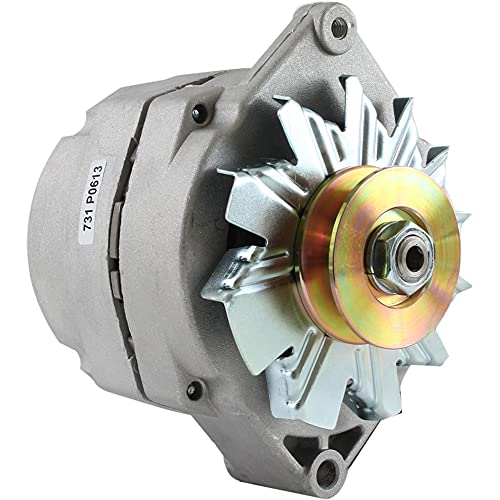
The EODSAD 1500W 14V Permanent Magnet Alternator is a specialized electrical generating component rather than a standalone, fuel-burning portable generator. Designed specifically for DIY fabricators, off-grid tinkerers, and agricultural equipment operators, this permanent magnet silicon rectifier unit combines an excitation alternator layout with magnetic rotor strips. It is engineered to produce low-voltage power when driven mechanically by an external rotational source, making it a viable candidate for custom battery-charging benches, small farm tractor retrofits, or auxiliary mechanical drive setups.
In terms of electrical performance, the manufacturer rates this single-phase alternator at 1500 watts with a nominal 14-volt output. Because it incorporates an internal silicon rectifier and a built-in full-wave voltage stabilizer, the unit converts alternating output to a steady voltage profile suitable for direct low-voltage lighting and nominal 12V to 14V battery replenishment. The primary advantage of an integrated regulator is component reduction; users do not need to wire an external automotive voltage regulator box or external rectifier bridge to maintain a stable electrical output.
Hardware construction centers on an aluminum outer housing paired with pure copper internal windings. The pure copper stator wiring helps reduce internal resistance and manage heat under electrical load, while the aluminum shell provides structural rigidity and natural thermal dissipation. Physical dimensions include a 7.1-centimeter inner foot mounting gap, a 10.8-centimeter outer leg spread, and a net mechanical weight of approximately 3.5 kilograms (7.7 pounds). The input shaft features a single-groove pulley designed to interface with standard V-belts driven by small stationary gas engines, diesel utility motors, or custom drive shafts.
Wiring and installation require basic electrical competence and mechanical fabrication skills. The manufacturer specifies connecting the positive terminal of the target battery to the generator positive post through a switch-controlled live lead, while the negative circuit is grounded to complete the charging and lighting loop. Daily handling will depend entirely on how the user mounts the alternator, tensions the drive belt, and secures the wiring. Because it has no onboard fuel tank, pull cord, or starter motor, maintenance primarily involves inspecting belt tension, cleaning debris from the aluminum cooling fins, and checking terminal connections for corrosion.
Realistic limitations must be kept front and center before making a purchase. This alternator cannot plug into standard household wall outlets, nor can it directly power 120-volt refrigerators, air conditioners, or power tools straight out of the box. To run household AC loads, the unit must feed a compatible 12V battery system connected to a separate power inverter. Furthermore, the product data does not provide specific RPM curves, meaning buyers must experiment with pulley ratios to determine the precise engine speed needed to achieve the full 1500W output.
For homeowners seeking turn-key emergency backup power during storm outages, this product is not a direct replacement for an enclosed portable inverter generator. However, for mechanics, homesteaders, and DIY makers seeking a low-cost, 14-volt permanent magnet generator to build an engine-driven battery charger or restore charging capability to an older tractor or utility rig, the EODSAD 1500W alternator offers strong functional value.
Using a permanent magnet alternator like the EODSAD 1500W requires building a complete mechanical-to-electrical drive system. The alternator acts strictly as the electrical generator, meaning the installer must provide rotational energy using an external power unit, such as a horizontal-shaft gas engine, an electric motor, a tractor PTO, or an alternative mechanical drive.
To configure a functioning 12V or 14V charging station, the single-wheel pulley must be aligned with the drive engine pulley using a compatible drive belt. Proper belt tension is critical to prevent belt slip under heavy electrical generation loads, especially when the unit approaches its listed 1500-watt output rating.
For electrical wiring, install an inline fuse or circuit breaker on the positive cable close to the battery terminal to guard against short circuits. Because the unit includes a built-in voltage stabilizer, the positive lead can route directly through an on/off switch to the battery, while the negative side grounds to the metal chassis or connects directly to the battery negative post.
To power standard household 120V devices during an emergency, this alternator must be operated as part of a multi-stage system: the alternator charges a deep-cycle battery bank at 14 volts, and a separate power inverter draws from that battery bank to produce 120V alternating current for your appliances.

Pros
- Durable pure copper windings provide low electrical resistance and efficient heat dissipation
- Brushless design eliminates brush wear for quieter operation and reduced mechanical maintenance
- Rugged metal construction with an aluminum casing and iron fan resists corrosion and physical impact
- Compact 21.49-pound form factor fits easily into custom belt-driven engine or mechanical assemblies
Cons
- Requires an external prime mover such as a gas engine, tractor PTO, or motor pulley spinning up to 4000 RPM to produce listed output
- Outputs raw 24V DC electricity rather than direct 120V AC household current, requiring an external charge controller and inverter for standard appliances
- Does not include integrated fuel systems, recoil starts, electrical outlets, or mounting hardware found on turnkey portable generators
The MuChaIOAK Permanent Magnet Generator is a specialized electrical component designed to generate direct current from an external rotational power source. Unlike packaged, turnkey portable generators that combine an internal combustion engine, fuel tank, and control panel in a single frame, this product is an alternator head. It is specifically positioned for DIY fabricators, off-grid property owners, and equipment builders who need to fabricate their own belt-driven power generation or battery-charging setup.
In terms of electrical performance, the manufacturer lists this unit with an output capacity of 2000W at 24V DC when driven at approximately 4000 RPM. The internal stator utilizes pure copper coils, which provide lower electrical resistance and generate less waste heat compared to aluminum-wound alternatives. Because it produces 24V DC, its primary role is replenishing 24-volt battery banks or powering dedicated low-voltage DC equipment rather than directly operating common 120V household appliances without conversion hardware.
The build quality reflects heavy-duty mechanical design, featuring a rigid aluminum outer shell paired with an internal iron cooling fan. The aluminum body helps manage overall weight while offering resistance to rust, while the iron fan ensures consistent airflow across the internal components during high-speed rotation. Inside, the brushless configuration removes mechanical friction points associated with traditional carbon brushes, contributing to smoother continuous rotation and reduced operating noise.
Setup and daily operation depend entirely on how this alternator head is integrated into a larger mechanical build. The dual-wheel pulley configuration requires proper alignment with a V-belt connected to an engine, electric motor, tractor drive, or water wheel capable of maintaining the necessary rotational speed. Weighing 21.49 pounds with dimensions of 6.69 by 3.93 by 6.1 inches, the unit remains compact enough to mount onto custom brackets or portable skids, provided the mounting platform is rigid enough to handle belt tension and rotational torque.
The most important limitation of this product is that it cannot function independently. It is not an out-of-the-box emergency generator for storm preparedness and contains no engine, fuel system, circuit breakers, or standard household outlets. Reaching the listed 2000W output requires an external mechanical drive capable of spinning the shaft up to 4000 RPM, and running household equipment will require external wiring, charge management, and a power inverter.
For tinkerers, off-grid builders, and rural equipment fabricators who want an efficient 24V DC alternator to construct a custom belt-driven power source, the MuChaIOAK Permanent Magnet Generator offers solid materials and pure copper efficiency. Buyers seeking immediate plug-and-play home backup power during an outage should instead look at fully assembled portable or inverter generators.
Successful operation of the MuChaIOAK 2000W alternator requires matching your mechanical drive system to its 4000 RPM design rating. Because output voltage and wattage from permanent magnet generators correlate directly with rotational speed, driving this unit below its target RPM will result in reduced voltage and lower available power.
When planning your electrical connections, remember that the generator produces direct current at a nominal 24V rating. To safely use this output for home backup or jobsite tools, the output lines should be routed through an appropriate DC charge controller into a 24V battery bank, followed by a pure sine wave power inverter to supply standard 120V alternating current.
Pros
- Self-exciting permanent magnet synchronous structure requires no external excitation equipment or brush replacement
- High 1200-watt maximum output provides ample charging capacity for 12V lead-acid battery banks and multiple LED field lights
- Straightforward dual-terminal wiring simplifies hookup to ignition keys and vehicle chassis ground circuits
- Smooth external metal casing is easy to maintain and wipe clean after dirty farm operations
Cons
- Requires an external mechanical power source, pulley system, or vehicle drive operating at up to 4500 RPM to produce full electrical output
- Does not generate standard 120V or 240V AC household electricity for direct home emergency appliance backup
- Mounting brackets, drive belts, and pulley hardware are not specified and must be adapted to your vehicle
The njxbrek 1200W Permanent Magnet Alternator Generator is a specialized vehicle-mounted synchronous generator component rather than a standalone, fuel-burning portable generator. Built for agricultural machinery, utility tricycles, and four-wheeled tractors, this alternator converts rotational mechanical energy from an external engine drive into 12V to 14V electrical power. It is primarily positioned for rural property owners, equipment mechanics, and farmers who need a durable replacement or auxiliary alternator head to sustain vehicle electrical circuits, charge onboard batteries, and power supplemental field equipment.
In terms of electrical performance, the manufacturer rates this unit at 1200 watts with an operational output of 12V to 14V and a rated operating speed of 4500 RPM. This makes the alternator capable of replenishing standard 12V lead-acid starting and deep-cycle batteries, which are common across farm machinery. In addition to battery replenishment, the system connects directly to universal auxiliary LED lights spanning from 12V to 80V, allowing equipment operators to add high-visibility field lighting to tractors operating during early morning or late night operations.
The build quality centers around a permanent magnet synchronous design, which provides distinct structural advantages over traditional brush-type automotive alternators. Because permanent magnets provide the magnetic field, the unit eliminates the need for external excitation coils, brushes, and separate excitation power supplies. This self-contained architecture reduces mechanical friction points and common wear components. The unit is housed in a smooth silver casing measuring 11.5 by 17.5 by 17.5 inches, making it straightforward to wipe clean of agricultural debris, grease, and field dust using a clean rag.
Installation and daily handling require practical mechanical and direct-current wiring knowledge. The manufacturer outlines a simplified electrical layout where both terminals of the equipment ignition key connect to the generator positive terminal, while the negative terminal bridges to the battery ground. To generate power, the alternator must be mechanically coupled to an external engine via a belt, pulley, or power take-off mechanism capable of achieving its 4500 RPM operational threshold. Because it relies on external rotation, the alternator produces no engine emissions or fuel consumption of its own, but proper drive alignment is critical for stable voltage generation.
Realistic limitations must be understood before purchasing this product. This alternator does not supply 120V or 240V alternating-current household power and cannot be plugged directly into home transfer switches, generator inlet boxes, or standard household appliances. Achieving the stated 1200-watt output depends entirely on the mechanical drive delivering sufficient rotational speed, and users must fabricate or adapt their own mounting brackets and drive ratios. It is strictly an agricultural and vehicle-level DC electrical component rather than an all-in-one emergency backup generator.
For agricultural equipment builders, tractor operators, and DIY mechanics needing a sturdy, self-exciting 12V charging solution, the njxbrek 1200W alternator provides solid functional value. It resolves the problem of dead equipment batteries and poor field lighting on utility vehicles that lack high-output factory alternators. Buyers should verify their machine's engine pulley ratio, available mounting space, and 12V system requirements to ensure this alternator head matches their specific mechanical drive setup.
This permanent magnet alternator is engineered specifically for off-highway vehicles, including utility tricycles, four-wheeled agricultural tractors, and mechanical field implements. Its primary function is providing auxiliary electrical power for machinery that does not have an integrated high-amp charging system from the factory.
Operators can use the 1200-watt output to maintain starting batteries on diesel tractors, run mechanical utility equipment, or power high-output work lamps. The ability to drive 12V to 80V LED work lights makes this unit especially useful for illuminating fields during planting, harvesting, or equipment transport in low-light rural conditions.
Proper wiring is necessary to ensure consistent 12V to 14V charging and prevent electrical faults. The manufacturer recommends connecting both terminals of the machine ignition switch to the alternator positive terminal labeled with a plus symbol, while the negative side ties into the battery return line or vehicle chassis ground.
Mechanical setup requires matching the drive source to the alternator rated speed of 4500 RPM. Buyers must calculate pulley sizes between their tractor engine or power shaft and the alternator shaft to ensure the unit spins fast enough to generate its full 1200W capacity without over-revving the internal bearings.
Frequently Asked Questions
How does a low RPM generator alternator differ from a standard automotive alternator?
A low RPM permanent magnet alternator utilizes fixed neodymium magnets instead of electromagnetic field coils to produce power at significantly reduced rotational speeds. Standard automotive alternators often require engine speeds exceeding 2,000 to 3,000 RPM along with external battery voltage to excite the rotor. Permanent magnet designs start generating charging current at lower shaft rotations, making them practical for DIY wind turbines, micro-hydro systems, and slow-turning utility tractor engines.
Can a permanent magnet alternator charge a 12V battery bank directly?
Yes, provided the alternator incorporates a built-in rectifier and voltage stabilizer or connects through an external charge controller. Three-phase AC permanent magnet alternators output raw alternating current that requires external rectification to convert into usable direct current for storage. Many compact agricultural alternators include self-rectifying diodes and internal voltage regulation for direct connection to lead-acid batteries. Routing your lines through a dedicated distribution panel ensures proper breaker protection and organized circuit management.
What rotational speed is needed to reach rated wattage on low RPM alternators?
Operating speeds vary based on unit architecture, with direct-drive wind generators producing power under 500 RPM while belt-driven agricultural models typically reach rated capacity between 2,500 and 4,500 RPM. Direct-drive gearless alternators feature large stator diameters and numerous magnetic poles to maximize induction at wind-speed velocities. Smaller belt-driven alternators designed for farm machinery utilize pulley ratios from an engine shaft to reach their optimal running output smoothly.
How do you wire a 1-wire alternator on utility equipment?
Connect the primary positive output terminal directly to the battery positive post through an appropriate fuse or circuit breaker, grounding the metal casing directly to the frame. A true one-wire alternator senses shaft rotation internally, switching on its internal regulator once operational speed is achieved. For multi-terminal models requiring key-switch activation, the positive terminal bridges to the ignition lead to initiate voltage sensing and illuminate connected utility lights safely.
Can a DIY low-speed alternator be integrated with portable kinetic charging projects?
Yes, custom fabricators frequently adapt small permanent magnet alternators for low-speed mechanical charging experiments and off-grid pedal arrays. The low starting torque and gearless shaft rotation found on compact permanent magnet models allow efficient power transfer from manual drive mechanisms. Many tinkerers exploring alternative off-grid charging methods also compare these standalone alternators with a dedicated pedal charging setup to evaluate mechanical effort against actual battery charge intake.






Write Your Review
No reviews yet. Be the first to share your experience!