


Commercial espresso boilers and commercial bean grinders demand substantial starting watts, while sensitive digital PID temperature controllers require clean electrical sine waves with minimal distortion. High-draw coffee gear and loud power units can completely stall a mobile cafe setup during morning service. Investing in the best generators for coffee trailer operations ensures your coffee cart operates smoothly without tripping breakers or deafening customers waiting for their morning latte. Proper continuous voltage keeps commercial refrigeration running consistently and prevents costly downtime during peak rushes.
Evaluating continuous running capacity against manageable sound levels is critical before setting up at busy farmers markets or street venues. Closed-frame inverter models delivering less than 3% total harmonic distortion protect digital controllers while providing dedicated 30-amp hookups for distribution. Reviewing generator sizing tools and calculations can help you tally total wattage needs before choosing equipment. Selecting units with dual-fuel capability or pairing them with heavy-duty distribution splitters keeps your daily beverage service running without unexpected power cuts.
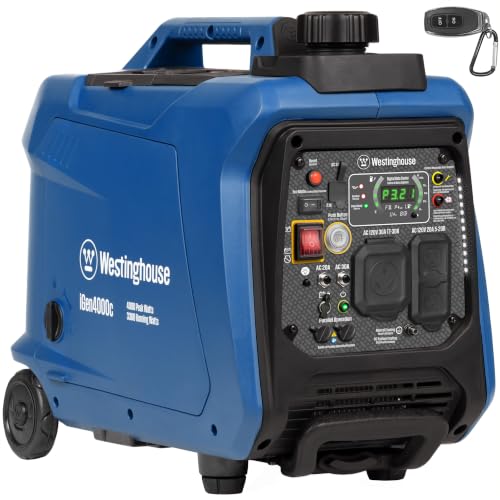
Pros
- Clean electricity with less than 3% THD, remote start with key fob, and auto choke make daily operation straightforward.
- Direct RV-ready TT-30R 30-amp outlet eliminates the need for separate plug adapters when connecting travel trailers.
- Informative LED digital data center displays real-time runtime, voltage, power output, fuel level, and lifetime hours.
- Quiet enclosed design dampens sound output down to 52 dBA, supported by a telescoping handle and wheels for portability.
Cons
- Single-fuel gasoline design lacks the flexibility of alternative propane or natural gas operation.
- Provides 120V power only, so it cannot energize 240V heavy residential appliances like central air conditioners or well pumps.
- The 1.69-gallon fuel tank delivers up to 7 hours of runtime, which may necessitate mid-outage refueling under heavy electrical loads.
The Westinghouse 4000 Peak Watt portable inverter generator is an enclosed, gasoline-powered unit engineered for travel trailer owners, campers, and homeowners preparing for severe weather outages. Featuring an engine-driven inverter power conversion system, this generator delivers 3,300 rated watts and 4,000 peak watts on standard unleaded gasoline. By regulating electrical output through an internal inverter stage rather than an unregulated mechanical alternator, it maintains steady 120V power for appropriately sized residential and recreational loads. Its compact footprint and sound-dampening enclosure make it particularly appealing for U.S. households that need manageable emergency power without the excessive volume of an open-frame conventional generator.
In terms of electrical capacity, the generator delivers 3,300 continuous running watts to sustain ongoing electrical demands, along with 4,000 starting watts to accommodate temporary inrush current from motor-driven equipment. The manufacturer specifies total harmonic distortion at less than 3% THD, confirming clean electrical output suitable for modern microprocessors, televisions, and sensitive consumer appliances. Power distribution is managed through a front control panel featuring one 120V RV-ready TT-30R 30-amp receptacle, one 5-20R 120V household duplex outlet, and two USB ports for mobile devices. Runtime reaches up to 7 hours on its 1.69-gallon fuel tank under manufacturer operating conditions, allowing users to keep refrigerators, freezers, internet modems, and portable fans running during localized power interruptions.
The physical build utilizes a fully enclosed, impact-resistant blue casing paired with a telescoping transport handle and built-in wheels to manage its 61.7-pound operating weight. Inside, an Economy Mode switch adjusts engine speed to match real-time electrical draw, optimizing fuel consumption when demand is low rather than running at wide-open throttle. Monitoring is handled by a rotating LED Data Center that clearly displays vital statistics, including voltage output, power output, fuel level, remaining run time, and lifetime engine hours. For user safety, Westinghouse incorporates an automatic low-oil shutdown system alongside an advanced carbon monoxide (CO) sensor that automatically cuts engine power if dangerous exhaust concentrations accumulate near the machine.
Starting the generator is straightforward due to its electric remote start system, which allows users to fire up the engine from a distance using the included key fob, supported by an automatic choke. A push-button electric start on the control panel and a manual recoil backup provide redundant ignition methods. The generator also features parallel-capable connection terminals, allowing operators to link a second compatible Westinghouse inverter unit to increase total wattage when extra capacity is needed. Setup requires placing the generator outdoors on stable ground far from open windows, doors, and vents; the built-in CO sensor serves strictly as an emergency safeguard and does not make indoor, garage, or enclosed patio operation safe under any circumstances.
Despite its solid performance profile, buyers should recognize several inherent operational limitations before purchasing. This generator is exclusively 120V, meaning it cannot energize 240V double-pole household circuits such as central heat pumps, electric clothes dryers, or deep well pumps. Additionally, the unit runs solely on gasoline, lacking the multi-fuel versatility of propane-capable models that allow extended shelf-life fuel storage. While a 1.69-gallon fuel tank keeps the machine light at 61.7 pounds, an up to 7-hour runtime means overnight backup power may require scheduled refueling depending on the continuous electrical load. Prospective buyers planning manual transfer connections should ensure their home inlet configuration matches the 120V TT-30R output and respect simultaneous wattage boundaries.
Ultimately, the Westinghouse 4000 Peak Watt inverter generator is well-suited for RV campers seeking direct TT-30R plug-in convenience, outdoor enthusiasts needing portable power, and homeowners prioritizing clean, quiet electricity for critical storm essentials. It offers a noticeable upgrade in sound management and voltage stability compared to loud, open-frame contractor generators, while avoiding the massive footprint of stationary standby installations. Households requiring whole-house electrical restoration or 240V utility support will need a larger multi-fuel generator or permanent standby setup, but for portable 120V preparedness, this model provides an excellent balance of clean output, remote accessibility, and manageable portability.
The Westinghouse generator produces 3,300 rated watts and 4,000 starting watts of 120V power, giving users a dependable balance between continuous capacity and surge overhead. Rated running watts represent the continuous electrical load the unit can sustain over time, while starting watts provide the momentary burst required to start induction motors found in refrigerators, sump pumps, or small RV air conditioners.
A critical specification of this inverter generator is its documented power quality of less than 3% total harmonic distortion (THD). Conventional mechanical generators often produce higher distortion levels that can cause sensitive microprocessors, laptop chargers, and smart appliances to overheat or malfunction. With less than 3% THD, the electrical waveform matches clean utility standards, ensuring compatible electronics operate safely and efficiently.
Operating convenience is anchored by multiple starting options, including a remote electric start key fob that allows starting the engine from a distance. The internal auto-choke mechanism regulates the fuel-air mixture automatically, removing the guesswork of manual choke adjustments during cold starts, while push-button electric ignition and a manual recoil pull cord ensure dependable starting redundancy.
The electrical control panel is equipped with an RV-ready TT-30R 30-amp receptacle, making it straightforward to connect standard travel trailer power cords without extra adapters. For household devices and mobile gadgets, the panel also features a standard 5-20R 120V duplex outlet and two USB ports, with parallel terminals available to pair a second compatible inverter generator when higher power output is needed.

Pros
- Robust 3,900 continuous running watts paired with documented clean power under 3% THD.
- Three starting methods: remote key fob electric start, push-button electric start, and manual recoil backup.
- Extended runtime of up to 18 hours on 3.4 gallons of fuel using Economy Mode.
- Informative LED display monitors remaining runtime, voltage, power draw, fuel level, and operating hours.
- Quiet enclosed design rated as low as 52 dBA with factory-installed wheels and telescoping handle.
Cons
- Substantial 104.7-pound dry weight requires two people to lift into high vehicle beds or storage racks.
- Dedicated 120V platform lacks 240V output, ruling out direct connection to high-voltage well pumps or central air conditioners.
- Single-fuel gasoline operation requires active fuel management and stabilization during extended storage periods.
The Westinghouse 5000 Peak Watt Portable Inverter Generator is an enclosed, gasoline-powered unit designed for U.S. homeowners seeking emergency backup, RV travelers requiring dedicated travel-trailer power, and DIYers or contractors needing quiet jobsite electricity. Built on an advanced inverter-based power conversion architecture, this machine transforms raw generator output into clean, regulated 120-volt current while operating at a sound level as low as 52 dBA. Powered by standard unleaded gasoline and supported by a 3.4-gallon fuel tank, it fills the middle ground between small recreational suitcase units and cumbersome open-frame utility generators.
In terms of electrical capacity, the manufacturer lists this model at 3,900 rated running watts and 5,000 peak starting watts with less than 3% Total Harmonic Distortion (THD). The 3,900 continuous watts allow property owners to manage multiple essential household circuits such as refrigerators, sump pumps, lights, and portable heaters simultaneously, while the 5,000 peak watts accommodate the brief startup surges required by compressor-driven motors. The electrical panel includes a 120V 5-20R duplex household outlet, an RV-ready TT-30R 30-amp receptacle, and two USB ports for mobile devices. Using the integrated Economy Mode, the generator can run for up to 18 hours on a single 3.4-gallon tank, though actual runtime naturally fluctuates based on the connected load.
The physical build combines an enclosed acoustic shell with convenient operational controls. By routing power through an internal inverter stage, the generator sustains its documented low-THD power profile, while the enclosed cabinet dampens internal mechanical engine noise down to the stated 52 dBA minimum. The control faceplate centers around a rotating digital LED Data Center, which provides real-time readouts of remaining fuel, current power draw, estimated remaining runtime, line voltage, and cumulative lifetime engine hours. For mobility, the 104.7-pound unit includes an integrated wheel kit and a telescoping pull handle, making level-ground transportation straightforward for a single operator.
Starting and routine operation are remarkably user-friendly thanks to a three-way ignition system featuring remote electric start with an included key fob, push-button electric start, and a standard recoil pull cord. The integrated auto-choke mechanism automates cold-start fueling, allowing users to start the generator from inside an RV or home during inclement weather. For power distribution during storm outages, the 30-amp TT-30R outlet can connect to a compatible manual transfer switch or generator inlet box installed by a licensed electrician. Because fuel-burning generators emit hazardous carbon monoxide, this unit must always be operated outdoors in open air, well away from windows, doors, and vents, regardless of any protective features.
While this Westinghouse inverter generator offers excellent mid-capacity power, prospective buyers must evaluate its specific design limitations. This model is purely a 120-volt generator and does not feature a 120/240V selector switch or a 240V twist-lock outlet, meaning it cannot power 240V household loads such as central HVAC units, electric water heaters, or 240V deep-well pumps. Additionally, its 104.7-pound weight makes loading it into truck beds or tall RV compartments difficult without assistance. Finally, because it operates exclusively on gasoline, users must rotate fresh fuel and use fuel stabilizers to keep the carburetor clean during prolonged off-season storage.
The Westinghouse 5000 Peak Watt Inverter Generator is an outstanding match for RV owners, suburban homeowners, and recreational users who prioritize quiet operation, low THD clean power, and electric push-button convenience for 120V electrical needs. It provides the wattage required to run travel-trailer air conditioners or household emergency essentials without excessive engine roar. Buyers requiring whole-house coverage, 240-volt multi-wire branch connections, or multi-fuel versatility with propane should look toward larger open-frame dual-fuel inverter generators or permanently installed standby systems instead.
The Westinghouse 5000 Peak Watt generator provides 3,900 continuous running watts and 5,000 peak starting watts at 120 volts. This capacity offers sufficient electrical overhead to handle heavy inductive motor startup demands without overwhelming the inverter system. Because the power conversion architecture keeps harmonic distortion below 3% THD, the electrical waveform is well suited for modern electronic appliances, televisions, and sensitive computer hardware.
The front-facing connection panel features a dedicated RV-ready TT-30R 30-amp 120-volt receptacle, eliminating the need for plug adapters when powering standard travel trailers. It is complemented by a 5-20R 120V household duplex outlet for standard extension cords and two 5V USB ports for personal electronics. Parallel capability terminals are also integrated into the panel, allowing users to couple this unit with a compatible Westinghouse inverter generator using an appropriate parallel kit to double available output when demand increases.
User convenience is centered on a flexible ignition system that provides three distinct starting options: a remote wireless key fob, an on-panel push-button electric start, and a standard manual recoil starter for emergency backup. The automatic choke system manages airflow during ignition without requiring manual lever adjustments, enabling reliable cold starts at the press of a button from up to several yards away.
Operational awareness is supported by the built-in rotating digital LED Data Center. This multi-mode display systematically alternates between active fuel level percentage, real-time power consumption, estimated remaining operational runtime, current voltage output, and total accumulated engine lifetime hours. These precise data points assist users in managing connected electrical loads and staying on top of scheduled engine maintenance intervals.
Safe generator deployment requires strict adherence to ventilation guidelines, as combustion engines produce toxic, odorless carbon monoxide gas. The generator must always be placed outdoors on a dry, level surface at a safe distance from windows, doors, vents, and enclosed patios, and should never be run inside a home, garage, basement, or shed. For household emergency backup, connection to home circuits should always be routed through a properly wired transfer switch or interlock kit installed by a qualified professional to prevent dangerous utility line backfeeding.
Preparation and ongoing maintenance are essential for reliable emergency readiness. The 3.4-gallon fuel tank delivers up to 18 hours of operation under Economy Mode, but unleaded gasoline degrades over time; treating stored fuel with quality stabilizer and draining the carburetor before extended storage prevents gumming and starting failures. Westinghouse backs this generator with EPA compliance, a 3-year limited parts, labor, and service warranty, and access to a nationwide customer service support network.

Pros
- Heavy-duty 10-gauge copper wiring delivers full 30-amp continuous current capacity with minimal voltage loss.
- Fan-out triple outlet design easily accommodates multiple bulky power adapters simultaneously.
- Integrated grip handle provides secure leverage for plugging and unplugging in tight generator panels or pedestals.
- All-weather STW jacket maintains flexibility and durability in demanding outdoor environments.
Cons
- Does not include an internal fuse or breaker, requiring users to manually balance total combined load under 30 amps.
- Short one-foot cord length requires standard extension cords to reach devices stationed away from the power source.
- Designed strictly for 120V NEMA TT-30 receptacles and cannot connect to 240V twist-lock generator outlets like L14-30R.
The ELEGRP 30 Amp to 110V RV Adapter Plug is a dedicated electrical distribution accessory designed to convert a standard 120-volt, 30-amp NEMA TT-30 outlet into three standard household receptacles. It specifically fits the dedicated RV-style TT-30R ports found on many portable generators, travel trailers, and campground electrical pedestals. This setup allows campers, DIY homeowners, and emergency-preparedness planners to run standard household appliances from a high-output 30-amp connection without requiring complex wiring.
Equipped with heavy-duty 10AWG pure copper wiring and an STW-rated jacket, the adapter is built to handle electrical loads up to a combined maximum of 30 amps at 120 volts. The three female receptacles accept both 15-amp (NEMA 5-15R) and 20-amp (NEMA 5-20R) straight-blade plugs. Its fan-out pigtail configuration spaces out the three outlets on separate short leads, preventing socket crowding when plugging in bulky power adapters, tool chargers, or outdoor lighting plugs.
Durability and ease of handling are central to the adapter design. Tested to UL specifications, the rugged yellow STW outer jacket resists damage from abrasion, direct sunlight exposure, and damp conditions, while remaining flexible across outdoor temperatures. A molded ergonomic grip handle on the TT-30P male connector offers solid finger holds, making it easy to disengage the plug from deep pedestal boxes or tight generator panels without placing strain on the electrical cord itself.
In practical use, this one-foot pigtail serves as an essential bridge during home power outages, camping trips, and jobsite operations. When connected to a portable generator operating safely outdoors, the adapter allows users to run three separate outdoor-rated extension cords into living spaces to keep refrigerators, fans, lighting, and communication devices powered. For RV travelers, it unlocks the ability to power everyday camp kitchen appliances or power tools directly from the campsite pedestal.
Prospective buyers must recognize that this adapter does not function as a sub-panel, fuse, or circuit breaker. Because the power originates from a single 30-amp breaker at the source, users must calculate and manage their connected appliance wattages to ensure the cumulative current draw does not exceed 30 amps. Furthermore, this adapter is exclusively wired for 120-volt TT-30 connections and will not mate with four-prong 120/240V generator twist-lock outlets such as NEMA L14-30R.
For owners of portable generators or travel trailers seeking to maximize the utility of their 30-amp 120-volt receptacles, the ELEGRP TT-30P to triple 5-15R/5-20R adapter represents a robust, practical accessory. Its heavy-gauge conductors, smart pull-handle design, and flexible multi-outlet split provide dependable power access for emergency household backup and outdoor recreation alike.
The ELEGRP adapter features a male NEMA TT-30P plug on one end and splits into three female NEMA 5-15R / 5-20R receptacles on the other. The TT-30 configuration is the standard 3-prong 120-volt connector commonly found on RV-ready portable generators and campground power pedestals. The female connectors feature T-slot designs, allowing them to accept standard 15-amp household plugs as well as heavier 20-amp straight-blade cords.
Unlike rigid multi-outlet tap blocks that create severe clearance issues with larger power supplies, the three-way fan-out cord design allows each receptacle to move independently. This layout provides ample physical clearance for three distinct power cords, cell phone charging bricks, or tool power adapters simultaneously without awkward bending or socket obstruction.
The adapter is constructed with 10AWG heavy-duty conductors and an STW jacket compliant with UL testing specifications. The 10-gauge copper wiring supports the full 30-amp capacity of the source outlet safely, reducing resistance, voltage drop, and heat generation during prolonged power delivery.
Because the adapter does not contain an internal circuit breaker, total load management remains the responsibility of the operator. Users must verify that the simultaneous wattage of all connected devices across the three outlets does not surpass 30 amps (3,600 watts at 120 volts). In addition, always remember that any fuel-burning generator connected to this adapter must operate outdoors far away from occupied spaces to avoid carbon monoxide hazards.

Pros
- Dual-fuel operation provides fuel flexibility during extended outages or outdoor trips.
- Documented clean power output with less than 3% THD protects sensitive electronics.
- Convenient remote electric start with an included key fob simplifies operation from a distance.
- LED data display provides real-time tracking of fuel level, wattage output, and remaining runtime.
- Enclosed design with Economy Mode delivers quiet performance as low as 52 dBA.
Cons
- At 104.7 pounds, lifting the unit into a truck bed or tall storage area generally requires two people.
- Does not offer 240V output, limiting use to standard 120V loads and precluding heavy 240V well pumps or central AC.
- Manufacturer specifications do not list separate wattage ratings or runtime figures specifically for propane operation.
The Westinghouse 5000 Peak Watt Portable Inverter Generator is an enclosed, dual-fuel engine-driven generator engineered for American homeowners, RV travelers, and emergency-preparedness households. Built with an inverter-based power conversion architecture, it generates utility-grade alternating current while maintaining quiet acoustic levels compared to open-frame conventional generators. The flexibility to run on gasoline or liquid propane provides substantial advantages during severe storms or prolonged power outages when gas stations may be closed. Its combination of high running capacity and enclosed dampening makes it a strong contender for travel trailers and critical household backup circuits.
In terms of electrical performance, this model supplies 5,000 peak starting watts and 3,900 rated running watts on gasoline, keeping total harmonic distortion (THD) below 3%. This documented low THD level satisfies typical manufacturer requirements for sensitive electronics, including laptops, networking gear, flat-screen televisions, and modern microprocessor-controlled appliances. The power distribution panel provides a standard 120V 20A 5-20R duplex outlet, a 120V 30A TT-30R travel trailer receptacle, and two 5V USB ports for mobile devices. Runtime on gasoline is rated up to 18 hours on a 3.4-gallon tank when operating in Economy Mode, which regulates engine speed to match electrical demand. Westinghouse does not publish separate continuous wattage or runtime metrics for propane in the initial summary, so buyers should expect typical dual-fuel variance when running on liquid petroleum gas.
The build quality centers on an enclosed sound-attenuating casing that dampens operational noise down to as low as 52 dBA under manufacturer test conditions. For starting convenience, the control panel integrates a three-way starting system featuring a wireless remote key fob, push-button electric start, and a standard recoil backup pull cord. Monitoring generator performance is straightforward thanks to an integrated rotating LED data center that cycles through real-time fuel level, current power output, remaining runtime, voltage, and cumulative lifetime operating hours. Transport is managed by a fold-down telescoping handle paired with integrated rear wheels, helping users navigate driveways, campsites, or jobsite paths.
Deploying this generator for home backup or recreational camping requires proper load calculation and strict adherence to outdoor safety. Fuel-burning generators emit poisonous carbon monoxide and must never be operated indoors, in garages, basements, or near open windows and doors, even if equipped with safety alerts. For home backup, the 3,900 running watts comfortably support essential 120V loads such as a refrigerator, chest freezer, router, lighting circuits, and a portable fan or sump pump using properly rated, heavy-duty outdoor extension cords. Connecting this generator directly to a home breaker panel requires a professionally installed, compatible 120V transfer switch or interlock kit; standard wall backfeeding is hazardous and illegal.
Despite its versatile feature set, buyers should weigh several distinct practical limitations before purchasing. Weighing 104.7 pounds, the machine is portable on flat ground via its telescoping handle and wheels, but loading it into a pickup truck bed or high vehicle cargo area typically requires a two-person lift. Additionally, the unit outputs only 120V single-phase power, meaning it cannot operate 240V appliances like central air conditioners, electric water heaters, or 240V well pumps. While the generator is parallel-capable for pairing with a compatible unit to increase amperage, the necessary parallel kit is sold separately and does not convert the system to 240V split-phase service.
Ultimately, the Westinghouse 5000 Peak Watt Inverter Generator is an excellent fit for RV owners needing plug-and-play 30A travel trailer power, campers requiring quiet campsite compliance, and suburban households wanting a fuel-flexible emergency backup solution for critical 120V appliances. Buyers who require 240V power to run well pumps or whole-house transfer switches will need a larger multi-voltage generator, while those seeking ultralight one-person portability may prefer a compact 2,000-watt class inverter generator instead.
The dual-fuel capability of this Westinghouse inverter generator allows seamless switching between unleaded gasoline and liquid propane, providing essential versatility during weather emergencies. Gasoline offers convenient accessibility during standard conditions, while propane stores indefinitely in standard tanks without gumming up carburetors during long off-season storage. This makes propane an ideal emergency fuel reserve for storm preparation.
Power conversion is handled by an advanced inverter module that restricts total harmonic distortion (THD) to less than 3%. Standard open-frame generators frequently produce high harmonic distortion that can cause overheating or malfunction in delicate circuitry. With clean sine-wave power output, this model provides safe, reliable electrical flow for mobile devices, modern appliances with digital circuit boards, computer hardware, and entertainment systems.
The control panel on this Westinghouse generator is configured to accommodate both recreational vehicles and standard household appliances. The built-in TT-30R 30-amp outlet allows RV travelers to plug directly into the generator without requiring specialized adapters, delivering dedicated 120V current to travel trailers. For home appliances and emergency tools, the standard 5-20R 120V duplex receptacle accepts regular household plugs, while twin USB ports allow direct charging of smartphones, flashlights, and power banks.
Operational usability is enhanced by multiple starting options and digital diagnostic tracking. The included remote key fob allows users to start or shut down the generator from inside an RV or home within range. The rotating digital LED display provides immediate insight into fuel levels, current wattage demand, voltage, and remaining operational hours, eliminating guesswork when planning refueling cycles during an outage.

Pros
- Dual-fuel capability provides operational flexibility when either gasoline or propane is preferred or more readily available.
- Verified low harmonic distortion under 3% THD offers cleaner electrical power for sensitive laptops, televisions, and charging setups.
- Direct RV-ready TT-30R 30-amp outlet allows simple connection to camper and travel trailer power cords without extra adapters.
- Comprehensive LED display takes the guesswork out of maintenance and runtime planning by tracking output, voltage, hours, and fuel.
- Enclosed build with wheels and a telescoping handle keeps carrying weight manageable at 59 pounds while moderating sound output.
Cons
- Manual recoil start is the sole starting method, lacking push-button electric start or remote-fob convenience.
- Provides 120V power only, which cannot operate 240V heavy appliances like central air conditioning or multi-phase well pumps.
- Manufacturer specifications do not provide separate, derated wattage or runtime metrics for propane operation.
The Westinghouse dual-fuel portable inverter generator is an enclosed, engine-driven power unit utilizing inverter-based conversion architecture, engineered specifically for American homeowners managing weather outages, RV travelers, and outdoor recreation enthusiasts. Supplying 3,300 continuous rated watts and 4,000 peak starting watts, it operates using either standard unleaded gasoline or liquid propane. By pairing a sound-attenuating outer housing with an electronic inverter stage, this generator provides stable 120V power suited for appropriately sized residential essentials, camping appliances, and jobsite tools.
Regarding electrical performance, the generator delivers 3,300 running watts to handle continuous power demands alongside 4,000 peak watts to accommodate temporary startup surges from motor-driven loads like refrigerator compressors or small pumps. The manufacturer lists total harmonic distortion (THD) at less than 3%, establishing documented power quality that makes it suitable for sensitive computing equipment, televisions, and battery chargers when load parameters are respected. The interface panel includes one 120V 5-20R household duplex receptacle, an RV-ready TT-30R 30-amp outlet, and two 5V USB ports for personal devices. Running on gasoline, its 1.69-gallon fuel tank provides up to 7 hours of operation under manufacturer test conditions, supported by a switchable Economy Mode that adjusts engine revolutions to current electrical demand for improved fuel efficiency.
The physical build emphasizes quiet utility and convenient mobility. Measuring 21.3 inches long, 12.6 inches wide, and 19.3 inches high with a dry weight of 59 pounds, the unit integrates a wheel kit and a telescoping handle to make positioning around properties or campsites practical for a single user. Monitoring is consolidated into an LED digital data center that cycles through real-time fuel level, power output in watts, remaining runtime, voltage output, and total lifetime running hours. Critical safety provisions include an automatic low-oil shutoff to guard the engine against internal seizure and an integrated carbon monoxide (CO) sensor shutdown that automatically de-energizes the engine if elevated CO levels gather around the frame. Sound output is documented as low as 52 dBA, reflecting the substantial acoustic benefits of its fully enclosed outer casing.
Starting the engine is handled through a manual recoil pull cord rather than an electric starter system. The unit is parallel capable, which allows pairing with a second compatible Westinghouse inverter generator via an appropriate parallel kit to increase total 120V capacity without stepping up to a substantially heavier single machine. Because this combustion engine burns liquid fuel, it generates toxic carbon monoxide fumes and must always be operated strictly outdoors on level ground, placed well away from open windows, doors, and exterior fresh-air vents. While the integrated CO shutoff provides a vital automated safety fallback, it does not permit operating the machine inside garages, carports, basements, sheds, or enclosed porches under any circumstances.
Several practical limitations should be weighed by prospective buyers. The generator outputs 120V electricity only, meaning it cannot energize 240V household loads such as central HVAC equipment, electric clothes dryers, or 240V well pumps. Starting requires physical pull-cord effort without the convenience of a battery-powered push button or wireless remote fob. Furthermore, while dual-fuel operation allows connecting a standard liquid propane cylinder, the manufacturer specifications do not explicitly list derated propane running watts, surge watts, or runtime estimates, so buyers planning to use LPG should anticipate slightly lower overall output compared to gasoline.
This Westinghouse dual-fuel inverter generator represents an appealing, well-rounded solution for RV owners, tailgaters, and homeowners seeking manageable, quiet 120V backup power with documented low THD. It provides sufficient continuous output to operate a full-size home refrigerator, essential lighting circuits, microwave, and internet hardware during an outage, or a camper air conditioner when loads are managed appropriately. Homeowners requiring 240V transfer switch integration or push-button electric start will want to consider larger open-frame inverter units or permanent standby generator systems instead.
Dual-fuel architecture allows the generator to run on either unleaded gasoline or liquid propane, providing valuable flexibility when storm conditions limit local fuel availability. Gasoline offers straightforward refilling from portable fuel cans, while propane provides prolonged shelf stability that avoids gumming up the internal carburetor during seasonal storage. The integrated fuel tank holds 1.69 gallons of gasoline, providing up to 7 hours of operation according to manufacturer test specifications.
The front-facing electrical panel delivers direct plug-in connections for recreation and home backup. It features an RV-ready TT-30R 30-amp receptacle that directly accepts standard travel trailer cords, a 5-20R 120V household duplex outlet for extension cords, and two USB ports for recharging personal mobile electronics. Inverter-regulated power ensures that total harmonic distortion remains under 3% across these connections, providing documented electrical stability for compatible loads.
The rotating LED data center provides continuous operational tracking by cycling through fuel level, real-time power output, remaining runtime, voltage output, and cumulative engine lifetime hours. This real-time visibility enables users to balance simultaneous appliance loads accurately and plan refueling stops before the tank empties during severe weather emergencies.
Safety protections include an automatic low-oil shutdown and an integrated carbon monoxide (CO) sensor system that halts the engine when dangerous fumes collect. Carbon monoxide is an invisible, odorless hazard produced by all internal combustion engines. While the automatic CO shutdown acts as a valuable safety net, the generator must always be operated outdoors in open air, placed at least 20 feet away from living quarters with exhaust aimed away from openings.
For RV travel and camping, the 3,300 rated watts and 4,000 peak watts deliver sufficient capacity to power standard travel trailer air conditioning units, interior lights, and countertop appliances when managed systematically. The TT-30R outlet provides a direct connection without extra adaptors, and the enclosed housing operates as low as 52 dBA under manufacturer testing, helping preserve quiet campsite environments.
For residential emergency preparedness, this inverter generator easily manages critical 120V household appliances through heavy-duty outdoor-rated extension cords or properly configured transfer equipment. It can keep a full-size refrigerator and freezer running, power a sump pump during storm events, and maintain lighting and communication gear. However, because it does not supply 240V output, appliances requiring multi-phase 240V power cannot be supported by this unit.

Pros
- Durable powder-coated steel construction stands up well to tough weather conditions and outdoor road transport
- Sound-dampening insulation paired with an exhaust fan helps balance noise reduction with equipment ventilation
- Pre-drilled mounting holes and a sag-resistant bottom plate streamline attachment to RV bumpers and trailer tongues
- Padlock-ready security latch offers peace of mind when leaving portable equipment outdoors or on a vehicle rack
Cons
- Listed product dimensions show a conflict between the feature text (up to 30 x 22 x 24 inches) and specification table (23.8 x 25.5 x 21.79 inches), requiring careful measurement prior to ordering
- Padlock is not included with the enclosure and must be purchased separately
- Power requirements and wiring connections for the integrated exhaust fan are not detailed in the supplied specifications
The Jopquyo Heavy Duty Generator Box is an all-steel protective enclosure designed to house portable generators for outdoor storage, RV transport, and stationary operation. Intended for RV travelers, contractors, and homeowners preparing for storm outages, this accessory solves the dual challenge of protecting portable power equipment from harsh weather while dampening engine noise. Rather than hauling a portable generator in and out of storage or leaving it unprotected in an open truck bed, this lockable metal box creates a dedicated, weather-resistant station for portable power gear.
Acoustic management and heat control are critical factors when operating a portable generator inside an enclosure. The Jopquyo enclosure addresses operational acoustics by incorporating soundproof insulation layers along the interior surfaces to absorb mechanical and combustion noise. To counter heat buildup from the engine and alternator, the enclosure includes side ventilation louvers and an integrated exhaust fan to promote airflow. This active and passive cooling combination helps keep temperatures manageable inside the cabinet, allowing compatible portable units to run without immediate overheating while dampening sound levels at quiet campgrounds or residential neighborhoods.
Structural durability centers on reinforced, powder-coated steel engineered to resist rain, snow, and road debris. Unlike plastic generator sheds or thin vinyl covers, the heavy-gauge steel shell provides rigid protection against accidental impacts during travel. The solid bottom panel is specifically designed to resist sagging over time, ensuring stable support when bolted directly to high-vibration platforms like utility trailer tongues, truck beds, or RV rear bumpers. Pre-drilled mounting holes simplify mechanical fastening to standard steel frames and outdoor mounting platforms.
Day-to-day usability focuses on security and ease of access during outdoor activities. The integrated latch system is padlock-ready, enabling owners to lock down valuable portable generators at crowded campsites, public jobsites, or suburban driveways. Because the enclosure incorporates ventilation louvers and an exhaust fan, users do not need to pull the generator out of the box every time power is required, minimizing back strain and setup time during an emergency outage or quick roadside stop.
A primary consideration for prospective buyers is verifying internal clearances against manufacturer dimensions. The product features note compatibility with generators up to 30 x 22 x 24 inches, while the technical specification table lists exterior dimensions of 23.8 x 25.5 x 21.79 inches. Because of this listed discrepancy, buyers must measure their specific portable generator model, including handle protrusions, wheel assemblies, and exhaust pipe clearance, to ensure adequate fit and proper ventilation spacing. Additionally, the supplied data does not include a padlock or specific electrical details for operating the exhaust fan.
For owners of compact portable inverter or open-frame generators seeking reduced sound levels and secure vehicle mounting, the Jopquyo Heavy Duty Generator Box provides a sturdy, weather-tight solution. Its powder-coated steel build, sound-dampening insulation, and cooling vents deliver significant value for RV road trips and outdoor backup power setups. Buyers should measure their equipment carefully to confirm dimensional compatibility before completing their purchase.
Adequate ventilation is essential when operating a fuel-burning portable generator in any housing. The Jopquyo enclosure incorporates side-panel louvers to encourage fresh air intake and an integrated high-quality exhaust fan to expel heated air and combustion gases. This active ventilation system protects internal engine components from thermal overload, provided the generator exhaust outlet aligns properly with open exterior airflow pathways.
Mounting flexibility is supported by pre-drilled holes in the heavy-duty bottom panel, facilitating secure bolt-on installation to steel RV rear bumpers, open truck beds, and A-frame trailer tongues. The reinforced solid floor prevents deformation across highway miles and rough terrain, keeping the generator level and secured against vibration during long-distance towing.
Frequently Asked Questions
What size generator is required to power a mobile coffee trailer?
A mobile coffee trailer typically requires between 3,500 and 5,000 running watts to operate an espresso machine, grinder, and water pump simultaneously. Espresso machine heating elements demand continuous energy, while rotary pump motors introduce brief startup wattage spikes. Reviewing budget 3000-watt generator models can help you evaluate baseline output, though commercial dual-group espresso setups often necessitate units with at least 3,900 rated watts.
Why is total harmonic distortion critical for coffee trailers?
Low total harmonic distortion under 3% is vital because modern commercial espresso machines, digital scales, and point-of-sale registers rely on delicate microprocessors. Inverter generators convert alternating current to direct current and back to a stable sine wave, preventing electrical noise from damaging sensitive circuit boards. Operating high-end brewing equipment on dirty, high-THD conventional power can void equipment warranties and cause sudden electronic lockups.
Can a dual-fuel generator maintain consistent brewing temperatures?
Yes, dual-fuel units maintain steady voltage on propane or gasoline, provided their continuous wattage exceeds the espresso boiler’s consumption rating. Propane burns cleaner and eliminates carburetor gumming during seasonal storage, though it generally yields slightly lower peak output than gasoline. Operators should verify continuous propane wattage against simultaneous heating elements to prevent boiler temperature drops during high-volume rushes.
How quiet should a generator be for customer-facing coffee vending?
Operating noise should remain around 52 to 58 decibels at normal loads to allow clear customer conversations near the service window. Enclosed inverter designs muffle engine exhaust and mechanical clatter significantly better than open-frame portable generators. Mounting the unit inside an insulated, ventilated enclosure on the trailer tongue further dampens sound while shielding the engine from rain and dust.
How do you distribute generator power across multiple coffee trailer appliances?
A heavy-duty NEMA TT-30P to 120V outlet splitter distributes the generator’s full 30-amp capacity into multiple 15-amp or 20-amp circuits. This prevents overloading standard household duplex outlets by routing dedicated lines to the refrigerator, espresso machine, and grinders. Always ensure total simultaneous amperage across all split outlets stays within the generator’s breaker limit to prevent sudden mid-service trips.
Are CO shutdown sensors safe to run inside an enclosed trailer tongue box?
No, carbon monoxide shutdown sensors will trigger an automatic engine shutdown if exhaust accumulates inside an enclosed box. Generator storage boxes must feature active mechanical ventilation fans and open side louvers to expel exhaust and prevent dangerous heat buildup. Operators should always route the exhaust port outward, directed away from trailer service windows, air intakes, and customer lines.


Write Your Review
No reviews yet. Be the first to share your experience!