


Starting severe storm outages without a functioning electrical grid forces homeowners to make rapid, high-stakes decisions about their emergency power setup. Many shoppers seeking resilient machinery actively research what portable generators are made in the usa to support domestic industry while securing electricity for critical appliances like refrigerators and sump pumps. In modern power equipment, finding an engine-driven machine manufactured entirely within the United States is complicated because of global supply chains and small-engine emissions specialization. Homeowners evaluating their backup options often weigh quiet operation, fuel accessibility, and clean sine wave output alongside country-of-origin considerations.
Evaluating domestic manufacturing requires distinguishing between corporate headquarters, final assembly facilities, and global component sourcing. While many trusted brands maintain engineering and customer support centers across North America, consumer-grade portable combustion engines are primarily built overseas. Exploring our analysis of compact small portable generator options helps buyers balance domestic quality standards with real-world electrical demands. Understanding how these machines are manufactured ensures you invest in reliable hardware capable of handling high motor inrush currents during unexpected blackouts.

Pros
- High continuous 2400W output with 4000W surge handles motor-driven kitchen and work appliances.
- Fast 1.5-hour AC wall recharging prepares the 2150Wh battery quickly between outages.
- LiFePO4 battery chemistry offers over 3,500 charge cycles for extended operational longevity.
- Responsive 10ms UPS function protects desktop computers and networking gear from sudden outages.
- Clean, quiet indoor operation without engine exhaust, gasoline storage, or oil maintenance.
Cons
- At 48 pounds, manual lifting requires moderate physical effort without built-in wheels.
- Does not provide 240V split-phase output for heavy-duty central HVAC or high-voltage well pumps.
- Solar panels are not included with the power station and must be purchased separately for off-grid recharging.
The LIPOWER 2400W Portable Power Station is a high-capacity battery-powered backup generator engineered to supply clean, portable electricity during household utility outages, severe weather emergencies, and outdoor trips. Unlike conventional fuel-burning portable generators or permanently installed standby generators, this unit relies on an internal 2150Wh lithium iron phosphate (LiFePO4) battery pack rather than gasoline or propane. This design provides quiet, emissions-free operation, allowing homeowners, apartment dwellers, and renters to operate essential backup power directly inside living spaces where combustion engines are strictly prohibited due to carbon monoxide hazards.
Electrical performance centers on an integrated pure sine wave inverter that delivers 2400W of continuous running power and up to 4000W of peak surge capacity. This rated output enables the station to power high-draw household appliances such as full-size refrigerators, microwave ovens, portable power tools, and lighting circuits without harmful electrical distortion. In addition to standard power delivery, the system includes an uninterruptible power supply (UPS) transfer feature with a listed 10ms switching time, which automatically shifts connected desktop computers, network routers, and sensitive electronics to internal battery power during an unexpected blackout before they can reset or lose data.
The physical build combines an EV-grade LiFePO4 battery pack with a multi-port distribution faceplate inside a compact grey chassis measuring 9.06 by 14.17 by 12.6 inches. The LiFePO4 cell chemistry is rated for more than 3500 charge cycles, supporting frequent cycling and an estimated 10-year operational life under regular use. The unit features 10 total power outlets spanning 7 distinct output types, allowing multiple appliances and mobile devices to run simultaneously. Complete accessories and essential charging cables are packaged with the unit, eliminating the need to source proprietary adapters before establishing an emergency backup station.
Recharging options provide flexible recovery times before and during an outage event. Through standard AC wall input, the power station can replenish from 0% to 100% capacity in approximately 1.5 hours, making it easy to charge quickly when severe storm warnings are issued. For extended off-grid situations where grid power remains down, the unit accepts up to 800W of solar input from compatible solar arrays, as well as up to 200W through a 12V vehicle charging port during road trips or RV travel. Because there is no internal combustion engine, the system requires no engine oil, spark plug replacements, fuel stabilizers, or outdoor shelter considerations.
While the power station provides strong portable capacity, buyers must plan around clear operational limits. Weighing 48 pounds without integrated wheels, moving the unit between floors or across rugged terrain requires deliberate two-handed carrying. Furthermore, the 2150Wh battery capacity is finite; running continuous 1000W to 2000W heating or cooking appliances will deplete the charge in one to two hours unless sustained by an active solar array. The unit is designed for standard 120V household loads and cannot supply 240V split-phase power for whole-house central air conditioning, high-voltage well pumps, or electric clothes dryers.
The LIPOWER 2400W portable power station is best suited for homeowners, renters, and emergency-preparedness households who require a safe, indoor-deployable backup solution for food preservation, communications, lighting, and sensitive medical or office equipment. It offers a practical alternative to noisy gas generators for buyers living in apartments, townhomes, or storm-prone suburbs. However, property owners seeking whole-house backup power, automatic transfer switch coordination for heavy 240V utility loads, or multi-day continuous heating without solar access will be better served by a larger dual-fuel portable generator or a permanently installed standby generator system.
The LIPOWER power station provides 2400W of continuous running wattage and up to 4000W of peak surge capacity through a clean pure sine wave inverter. This surge buffer is essential for starting motor-driven equipment such as refrigerator compressors, power tools, or water pumps that draw brief spikes of current above their normal running demand.
With 2150Wh of total battery energy storage, the unit can support critical survival loads through multi-hour or overnight outages. Lower-wattage devices like LED lamps, laptops, and Wi-Fi routers can run for dozens of hours, while a standard 150W residential refrigerator can cycle intermittently for an extended duration. The built-in 10ms UPS transfer function ensures seamless transition for desktop PCs and networking equipment without system shutdowns.
Fast AC input capability allows the 2150Wh battery to charge from 0% to 100% in roughly 1.5 hours from a standard household outlet. This rapid turnaround time gives households the ability to top off emergency reserves rapidly whenever grid power is temporarily restored or prior to anticipated storm landfall.
For prolonged off-grid emergencies, camping, or RV adventures, the system supports up to 800W of solar charging input. When paired with compatible solar panels, users can harvest renewable daytime energy to sustain daily household loads indefinitely without reliance on municipal power or gasoline availability. A 200W car charging port provides an additional mobile replenishment channel while driving.


Pros
- Electric push-button start reduces startup effort with reliable manual recoil backup
- Capable 3,000 running watts handle RV air conditioning needs, power tools, or critical home essentials
- Extended 9-hour runtime at 25 percent load from a modest 1.8-gallon fuel capacity
- Factory-equipped Whisper Series muffler rated at a manageable 59 decibels for campsites and neighborhoods
- Parallel capability provides an easy expansion path if household or recreational power demands grow
Cons
- Substantial 109-pound dry weight makes single-person lifting and transport difficult without assistance
- Configured strictly for 120V output, meaning it cannot energize 240V well pumps or central home appliances
- Specific total harmonic distortion (THD) percentage and waveform classifications are not documented in the manufacturer specifications
The Firman W03082 is an enclosed portable inverter generator engineered around a 171cc engine, delivering 3,000 continuous running watts and 3,300 peak starting watts. Designed primarily for outdoor recreation, travel trailers, and emergency preparedness, this 120V unit bridges the gap between lightweight compact suitcase units and bulky open-frame industrial machines. Its inverter-based electrical conversion provides stable power across the multi-outlet control panel, making it a viable mobile power station for RV owners, tailgaters, contractors, and suburban homeowners preparing for seasonal severe weather outages.
Electrical capacity is anchored by 3,000 rated running watts, which easily supports continuous loads such as a standard refrigerator, portable electric heaters, sump pumps, or power tools. The additional 300 surge watts assist in absorbing momentary inrush currents from motor-driven equipment during startup. In terms of runtime, the 1.8-gallon fuel tank supports up to 9 hours of continuous operation at a 25 percent load condition. While the unit utilizes modern inverter power conversion, the manufacturer does not publish a specific total harmonic distortion (THD) percentage or pure sine wave certification in the supplied specifications, so buyers operating delicate sensitive electronics should reference their equipment requirements before connection.
Operational usability is a strong point, highlighted by an electric push-button start system paired with a standard recoil rope for backup reliability. The engine is fitted with Firman's Whisper Series muffler, which achieves an operating noise rating of 59 decibels according to manufacturer data. An integrated Eco Mode switch alters engine speed based on the connected electrical demand, which helps stretch fuel efficiency and lower mechanical strain during periods of low power consumption. Safety features include an automatic low-oil shutdown mechanism that protects the 171cc engine block from running without adequate lubrication.
Portability and layout reflect practical outdoor utility. Measuring 23.2 inches long, 17.8 inches wide, and 17.9 inches high, the unit has a compact footprint suitable for truck beds, trailer storage compartments, or garage corners. However, with an overall weight of 109 pounds, moving this generator typically requires two people or dedicated transport equipment. The multi-outlet control panel includes an RV-ready connection and parallel communication ports, allowing users to couple this generator with another compatible unit using a manufacturer-supported parallel kit to scale available amperage without purchasing an oversized machine.
Despite its versatile design, buyers should note several distinct limitations. The Firman W03082 operates exclusively at 120 volts, excluding it from running 240V heavy appliances like whole-house central air conditioning, electric clothes dryers, or deep-well submersible pumps. In addition, like all fuel-burning engine equipment, this generator generates hazardous carbon monoxide exhaust and must strictly be operated outdoors in open spaces well clear of windows, doors, and occupied structures. Improvised indoor connections or dangerous panel backfeeding should never be attempted.
For RV travelers, campers, and storm-conscious homeowners seeking dependable 120V power with the convenience of electric starting, the Firman W03082 offers a well-balanced blend of output and runtime. Households with 240V utility transfer switches or high-capacity backup demands will require a larger multi-voltage generator, while ultralight backpackers will prefer a smaller 2,000-watt suitcase model. For mainstream portable recreation and critical appliance preservation during local blackouts, this 3,000-watt inverter generator represents a capable and practical investment.
The Firman W03082 produces 3,000 running watts and 3,300 starting watts, providing an optimal balance for mid-range electrical loads. Continuous running capacity is sufficient to keep essential household appliances running simultaneously, such as a full-sized refrigerator, freezer, and emergency lighting, provided total combined wattage remains within the 3,000-watt threshold.
Fuel efficiency is supported by a 1.8-gallon fuel tank that yields up to 9 hours of runtime at a 25 percent load rating. Enabling the onboard Eco Mode allows the 171cc engine to throttle down automatically when electrical demand decreases, conserving fuel over extended camping trips or overnight power outages.
Designed with recreational users in mind, the control panel includes a dedicated RV-ready outlet alongside standard 120V receptacles. This setup allows travel trailer and camper owners to power rooftop air conditioners, microwaves, and mobile electronics without requiring complex aftermarket adapters.
At a manufacturer-stated 59 decibels, the Whisper Series muffler keeps sound output low enough for comfortable use at public campgrounds and tailgating events. Furthermore, integrated parallel ports allow travelers to connect an additional compatible Firman generator when extra power is required for heavy recreational demands.
Starting the Firman W03082 is straightforward thanks to electric push-button ignition, eliminating the frustration of manual pull cords during cold weather or emergency situations. A reliable manual recoil cord remains installed on the unit as a dependable backup starter.
Engine longevity is supported by an integrated low-oil shutoff sensor that halts operation if crankcase oil levels drop below safe thresholds. Users must adhere strictly to outdoor placement guidelines, operating the generator at least 20 feet away from occupied buildings to prevent the accumulation of lethal carbon monoxide fumes.
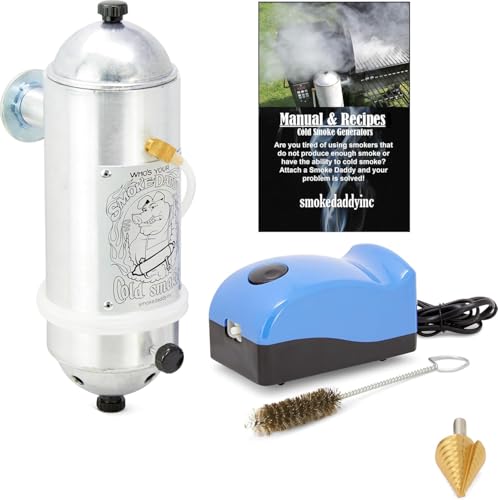
Pros
- Heavy-gauge USA-machined aluminum housing provides dependable heat resistance and long-term durability
- External fuel chamber allows continuous refilling during operation without losing grill heat or smoke
- Adjustable air pump delivers precise control over smoke volume for delicate cold smoking or heavy barbecue flavor
- Comes complete with a dedicated step drill bit and stainless steel cleaning brush for convenient setup and upkeep
Cons
- Requires drilling a permanent 1-1/8-inch mounting hole into the wall of your grill or smoker
- Needs an external electrical power source to operate the included adjustable air pump
- Ceramic Kamado grills and Big Green Egg cookers require a separate adapter that is not included
The Smoke Daddy Big Kahuna is an externally mounted cold smoke generator engineered for outdoor barbecue grills, pellet smokers, and custom smoke cabinets. Unlike electrical power generators designed for emergency home backup, this specialized outdoor cooking accessory generates aromatic wood smoke from hardwood chips or chunks. It is primarily built for backyard pitmasters, homesteaders preserving foods through cold smoking, and outdoor cooks wanting deeper wood flavor on pellet grills that run hot.
Smoke production relies on an internal fuel capacity of 3 cups of hardwood chunks or chips, providing up to 1.5 hours of continuous burn time per load. Airflow is driven by an included adjustable electric air pump, allowing users to fine-tune smoke volume from a light mist to a dense draft. An internal spring baffle creates a clear channel down the barrel, ensuring air circulates through the burning wood without snuffing out the burn. Because the heat source remains external, cooks can smoke temperature-sensitive items such as cheese, nuts, and fish without melting them, or operate it alongside a hot grill to infuse briskets and pork roasts.
Build quality centers on heavy-gauge SCH 40 6061 aluminum precision-machined in the United States, which offers excellent thermal tolerance and reliable sealing. The unit measures 11.5 inches in height and 3.5 inches in diameter, weighing 4.7 pounds, making it solid yet easy to mount securely to metal grill barrels. Smoke Daddy includes necessary accessories directly in the box, such as the adjustable air pump, the airflow spring baffle, a 1-1/8-inch step drill bit for setup, and a long stainless steel brush for barrel maintenance.
Installation involves using the provided step drill bit to drill a 1-1/8-inch opening in your smoker barrel and securing the outlet tube through the wall. The attachment works universally across major grill brands, including Traeger, Pit Boss, Camp Chef, Z Grills, Masterbuilt, and Grilla Grills. A major practical advantage during use is the continuous refueling feature: cooks can simply pop off the top cap and drop in additional wood chips at any point without relighting the system or exposing the cooking grate to sudden temperature drops.
There are several practical considerations buyers should evaluate before purchasing. Installing the unit requires drilling directly into the grill or smoker wall, which may alter the cooking appliance permanently and requires comfortable handling of a drill. Ceramic grills like the Big Green Egg or Kamado cookers require a separate adapter sold independently to avoid drilling into ceramic. Additionally, while the fuel burn is purely mechanical, the adjustable air pump requires household electricity or an external portable power bank to operate.
The Smoke Daddy Big Kahuna provides a dependable, heavy-duty solution for cooks looking to take control of their wood smoke intensity. Its heavy aluminum housing, simple refueling system, and adjustable airflow make it an effective upgrade for pellet grills and custom smokers alike. Backyard cooks and homesteaders seeking authentic smoke penetration in both hot and cold cooking setups will find it a capable addition to their outdoor gear.
The Big Kahuna generates wood smoke externally by smoldering wood chips or chunks within an enclosed aluminum barrel. Airflow is actively regulated by a variable-speed electric air pump that pushes fresh air through the fuel bed, giving cooks direct control over the smoke output rate.
An internal spring baffle maintains a hollow air channel through the center of the wood charge, preventing ash and settling fuel from choking the airflow. This mechanical setup allows the unit to maintain steady output for approximately 1.5 hours before needing additional wood chips.
Mounting the Big Kahuna requires boring a 1-1/8-inch hole through the side wall of your metal grill or smoker, which is accomplished using the included step drill bit. Once the hole is ready, the aluminum outlet tube is inserted and secured to channel smoke straight into the cooking chamber.
The unit works universally with metal pellet smokers and charcoal grills from brands like Pit Boss, Camp Chef, Traeger, and Masterbuilt. For ceramic Kamado-style cookers, drilling is not recommended, and buyers must source a dedicated ceramic adapter plate separately.
Pros
- Dual-fuel versatility with automated switching between propane and gasoline for flexible emergency planning
- Direct RV compatibility via a factory-installed NEMA TT-30R receptacle without requiring external adapters
- Quiet enclosed operation rated at 58 dBA at 22 feet under quarter-load conditions
- Mechanical fuel shut-off switch simplifies long-term maintenance by running the carburetor dry
- Onboard digital display tracks active electrical load and fuel levels
Cons
- Recoil start only, lacking an electric push-button or remote starting system
- Delivers 120V output only, making it unsuitable for multi-pole 240V household loads or transfer panels
- Substantial 100-pound dry weight requires two people to comfortably lift into high truck beds or SUV cargo areas
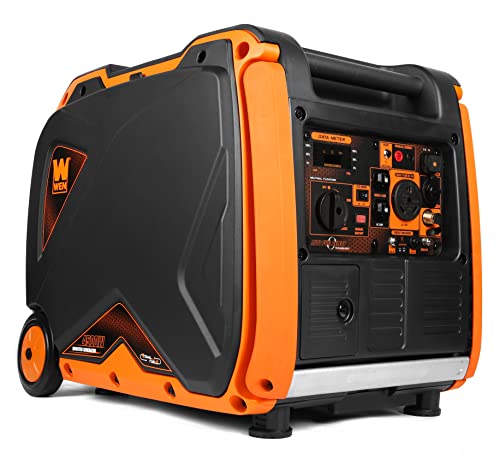
The WEN DF450i is an enclosed portable inverter generator designed for American RV travelers, outdoor enthusiasts, and suburban homeowners preparing for storm-related utility outages. Powered by a 212cc four-stroke engine that meets EPA III and CARB emissions standards, this model bridges the gap between ultra-compact recreational units and heavy open-frame industrial machines. Its dual-fuel capability allows users to run on standard unleaded gasoline or liquid propane, providing valuable logistical flexibility during extended emergencies when gas stations may face supply shortages or power loss.
Electrical performance centers on continuous 120V power conversion, making the DF450i capable of handling common portable and domestic loads within its stated limits. Operating on gasoline, the unit provides 4,500 starting watts to overcome brief motor inrush currents, settling into a continuous 3,500 rated watts. Propane operation yields an identical 4,500 starting watts and 3,150 continuous rated watts. The manufacturer notes that the inverter architecture produces clean power suitable for sensitive devices such as laptops, tablets, and smartphones. Electrical connections include two standard 120V three-prong household outlets, an RV-ready NEMA TT-30R receptacle, a 12V DC port, and a 5V USB port. Because runtime depends entirely on the fuel source, connected load, and environmental variables, users should actively monitor load requirements rather than assuming a static operating duration.
The build quality incorporates an enclosed casing tailored for noise attenuation and protection against travel wear. WEN rates the operational volume at 58 dBA at a distance of 22 feet under a quarter-load condition, which aligns well with noise-restricted campsites and residential backup situations. A prominent mechanical feature is the Auto Fuel Selection Technology, which can automatically transition operation from propane to gasoline when fuel supplies run down. Furthermore, an integrated fuel shut-off switch allows the engine to consume the remaining fuel within the carburetor before stopping, a proven practice for preventing sticky residue and carburetor maintenance headaches between infrequent uses.
Day-to-day operation relies on a traditional manual recoil pull-start mechanism, requiring users to pull the starting cord rather than pressing an electric ignition switch. Monitoring performance is made straightforward via a digital load and fuel display integrated into the main control panel, providing visibility into live wattage output and tank levels. While the unit weighs 100 pounds, mobility is facilitated by onboard rolling wheels and a sturdy folding handle, allowing single-person transport on smooth driveways and packed dirt trails. For home emergency preparedness, it can power essential extension cords routed safely to refrigerators, portable fans, lights, or communication stations.
Prospective buyers must weigh several realistic limitations before making a purchase. The DF450i provides only 120V single-phase power, meaning it cannot operate 240V appliances like central air conditioners, electric water heaters, or high-capacity well pumps. The reliance on manual recoil starting may also prove cumbersome for individuals seeking push-button convenience during harsh weather. Additionally, while the product data confirms clean power for sensitive electronics, it does not document an exact total harmonic distortion (THD) percentage, nor does it list built-in parallel capability for connecting multiple units together. As with any combustion engine, carbon monoxide output mandates that this generator must always be operated outdoors well away from occupied doors, windows, and ventilation intakes.
Ultimately, the WEN DF450i is well suited for RV campers seeking a plug-and-play 30-amp power source, as well as budget-conscious homeowners looking for a reliable, enclosed dual-fuel generator for critical 120V emergency essentials. Its balanced wattage, low quarter-load noise profile, and carburetor-saving fuel shut-off offer practical long-term utility. Shoppers requiring 240V output, push-button electric start, or whole-home capacity will need to consider larger open-frame dual-fuel generators or permanent standby systems instead.
The primary advantage of the WEN DF450i lies in its dual-fuel power generation, giving operators the freedom to choose between gasoline and liquefied petroleum gas (propane). On gasoline, the 212cc engine produces 4,500 surge watts and 3,500 continuous running watts, offering sufficient headroom for starting inductive loads such as compact sump pumps or modern refrigerators. Switching to propane delivers the same 4,500 surge watts with 3,150 running watts, reflecting the expected operational difference between the two energy densities.
A standout operational feature is WEN's Auto Fuel Selection Technology, which can automatically manage the transition between connected fuels to prolong total operating time without user intervention. Using propane provides significant storage advantages, as LPG cylinders can remain stored for years without gumming fuel systems or degrading. For active outage management or long camping weekends, operators can prioritize propane for clean, stable storage and transition to gasoline when extra wattage capacity is needed.
The control panel on the WEN DF450i is configured to serve recreational vehicle setups and standard household appliances simultaneously. Central to its layout is an AC 120V NEMA TT-30R receptacle, allowing RV owners to plug standard 30-amp travel trailer shore cords directly into the generator without cumbersome adapters. This single connection simplifies power distribution inside the camper for appropriately sized 120V lighting, entertainment, and convenience circuits.
Alongside the RV receptacle, the panel provides two three-prong 120V household outlets designed to accept heavy-duty outdoor extension cords during storm recovery operations. Auxiliary power is supported through a 12V DC outlet and a dedicated 5V USB port, enabling direct charging for phones, battery packs, and communication gear. The front interface is anchored by a digital load and fuel display that reflects real-time power draw and supply levels, preventing accidental overload conditions before circuit breakers trip.
Domestic Manufacturing Realities and Portable Emergency Power
Navigating the modern power equipment market requires clear insight into how portable electrical generators are built, tested, and distributed. Many consumers assume that iconic American brand names represent machinery manufactured entirely within domestic borders from native raw materials. In reality, globalized supply chains have reshaped the small-engine industry over recent decades, creating distinct tiers between engineering, assembly, and component fabrication. Understanding these manufacturing nuances allows equipment buyers to focus on engineering integrity, electrical safety, and actual performance metrics rather than ambiguous marketing labels.
The Legal Standards Defining Made in USA Designations
Federal Trade Commission regulations establish strict standards regarding origin claims on consumer industrial machinery. To display an unqualified standard claiming domestic origin, a product must undergo final assembly domestically with all significant parts and processing originating inside the United States. For combustion-driven equipment, this standard presents substantial hurdles because specialized components like carburetors, copper windings, and microinverter control boards are rarely produced domestically in high volumes. Consequently, manufacturers utilize specific phrasing such as assembled in the USA with global components to remain transparent with consumers and regulatory bodies.
Purchasers who scrutinize product packaging will notice that broad domestic claims often apply to specific accessories rather than complete motorized units. Specialized metal safety containers, mounting brackets, and welded heavy-duty carts frequently achieve full domestic manufacturing certifications, whereas the engine block attached to them originates overseas. Recognizing this distinction prevents consumer confusion when cross-referencing equipment listings and promotional claims. It also helps homeowners identify which parts of their emergency power ecosystem legitimately support domestic fabrication facilities.
Global Supply Chains in Small Engine and Alternator Production
Overhead valve small engines that power contemporary portable generators represent specialized engineering optimized over decades of global manufacturing. High-volume engine factories in Asia produce the vast majority of four-stroke engines ranging from 79cc to 459cc displacement found on recreational and emergency generators. These automated facilities achieve economies of scale that keep portable electrical power accessible to everyday suburban homeowners and outdoor enthusiasts. Even major legacy brands with extensive domestic operations source these internal combustion powerheads from specialized international manufacturing partners.
Alternator architecture and digital inverter modules follow a similar global manufacturing trajectory. Pure sine wave inverter generators convert raw alternating current into direct current before an intelligent microprocessor inverts it back into ultra-clean alternating current. The precision semiconductor modules, copper field coils, and digital control boards required for this conversion are predominantly manufactured in advanced overseas electronics centers. Even when a generator brand maintains its corporate headquarters, product testing laboratories, and customer support staff in North America, its internal electrical core relies on international component networks.
Domestic Commercial Platforms Versus Consumer Portable Inverters
A meaningful distinction exists between consumer portable generators and specialized commercial or whole-house standby systems. Certain industrial equipment fabricators continue to assemble heavy-duty open-frame generators on domestic production lines using American labor. These commercial-grade platforms typically pair domestic tubular steel roll cages and custom wiring harnesses with premium imported engines from Japan or Europe. While these rugged workhorses deliver outstanding durability on commercial job sites, their substantial weight and higher build costs place them outside the typical recreational camper or budget-minded homeowner bracket.
Consumer-focused brands balance these engineering trade-offs by managing research, structural design, and quality assurance domestically while utilizing overseas manufacturing hubs. Brands like Firman operate extensive design and distribution facilities out of Arizona, while WEN maintains its technical headquarters in Illinois. This operational model ensures that portable inverter generators receive thorough engineering oversight tailored to North American electrical codes and consumer expectations. Buyers benefit from responsive customer service and domestic warranty fulfillment while taking advantage of competitively priced machinery.
Power Quality and Microprocessor Protection in Modern Inverters
Beyond country of origin, the fundamental metric governing generator utility is electrical power quality. Traditional open-frame contractor generators produce alternating current directly from an engine-driven rotor, often yielding total harmonic distortion between 10 percent and 25 percent. This electrical distortion introduces voltage irregularities and harmonic noise that can overheat sensitive electronic circuits. Modern appliances with delicate microprocessors, variable-speed furnace blower motors, and portable medical devices require clean power with harmonic distortion kept below 3 to 5 percent.
Digital inverter generators solve this distortion dilemma by synthesizing a flawless pure sine wave output. Equipment such as the WEN DF450i and Firman W03082 utilizes digital inverter modules engineered to deliver clean, grid-quality power under fluctuating electrical loads. This level of waveform stability allows homeowners to run sensitive consumer electronics, laptop power supplies, and modern smart refrigerators without fear of premature component failure. When sizing equipment for multi-appliance home backup, consulting our analysis of high-capacity home backup generators helps users distinguish between standard contractor output and clean inverter power.
Fuel Selection, Propane Derating, and Cold Weather Resilience
Operational dependability during a regional blackout depends heavily on fuel chemistry and storage characteristics. Standard pump gasoline containing ethanol poses significant maintenance challenges when stored in generator fuel tanks or carburetors for extended periods. Ethanol attracts atmospheric moisture, leading to phase separation, gummy varnish formation, and clogged carburetor jets that prevent cold engines from starting. Utilizing dual-fuel inverter generators that run on liquid propane offers a practical solution because propane cylinders can be stored indefinitely without chemical degradation or fuel system fouling.
Operating on propane introduces a predictable mechanical trade-off known as fuel derating. Liquid propane contains lower energy density per cubic foot than gasoline, resulting in an expected 10 to 15 percent reduction in peak surge and continuous running wattage. For example, a dual-fuel inverter engine may generate 3,500 running watts on gasoline but produce approximately 3,150 running watts when supplied with liquid propane. Homeowners must calculate appliance electrical loads with this derating in mind to avoid unexpected breaker trips during emergency operation.
Freezing winter weather introduces additional fuel delivery considerations that demand careful preparation. Sub-zero temperatures reduce the internal vaporization rate inside 20-pound propane cylinders, potentially starving the engine regulator during high electrical draws. In addition, small engine crankcases require multi-viscosity synthetic engine oil, such as 5W-30, to ensure easy pull-starting or swift starter motor engagement when outdoor temperatures drop below freezing. Maintaining reliable cold-start capabilities prevents catastrophic heating failures when winter ice storms knock out utility power lines.
Safe Fuel Handling and American Made Storage Standards
Safe emergency power management requires equal attention to how liquid fuel is stored, transported, and dispensed around the home. While consumer generators frequently feature overseas fabrication, the safety containers used to store volatile hydrocarbons can be sourced directly from domestic manufacturers. Heavy-duty galvanized steel safety cans manufactured in the United States, such as Eagle Type I models, provide robust defense against accidental shop fires and catastrophic spills. These containers feature double-interlock no-weld seams and internal flame arrestors designed to prevent external sparks from igniting flammable vapors inside the reservoir.
Adhering to strict fuel containment protocols helps homeowners comply with local fire codes and OSHA safety standards. Galvanized steel construction resists chemical degradation, physical punctures, and sun-induced cracking far better than lightweight consumer plastic jugs. Incorporating spring-loaded, self-closing gasketed pour spouts prevents hazardous fuel vapor release in residential storage sheds and detached garages. When managing volatile gasoline alongside portable emergency equipment, investing in certified domestic containment hardware provides long-term safety dividends.
Safe Electrical Distribution: Transfer Switches Versus Backfeeding
Connecting portable generator power into residential electrical wiring requires strict adherence to the National Electrical Code to prevent electrocution hazards. Running individual heavy-duty extension cords to essential appliances provides a simple, direct connection method for basic blackouts. However, powering hardwired home circuits like central heating furnace blowers, well pumps, and multi-room lighting requires an approved manual transfer switch or mechanical interlock panel. These isolating devices physically prevent the generator from powering utility lines while simultaneously stopping utility power from frying the generator alternator when grid service restores.
Homeowners must never attempt hazardous shortcuts such as building male-to-male extension cords, commonly referred to as suicide cords, to backfeed power through dryer receptacles. Backfeeding energizes neighborhood utility distribution transformers in reverse, transforming 120 or 240 volts back into lethal high-voltage lines that can kill utility line workers repairing storm damage. A code-compliant manual transfer switch isolates electrical panel neutrals, balances appliance circuits across generator legs, and provides safe, stable power distribution throughout the home. Professional installation by a licensed electrical contractor guarantees home safety and maintains homeowner insurance compliance.
Neutral Ground Bonding Configurations and Ground Fault Protection
Understanding generator neutral bonding configuration prevents frustrating circuit breaker trips and potential grounding hazards. Portable generators leave manufacturing facilities wired in either a bonded-neutral or floating-neutral electrical state. In a bonded-neutral machine, the neutral conductor is physically connected to the generator frame and grounding terminal, which is ideal for standalone job site use and OSHA compliance. Conversely, in a floating-neutral generator, the neutral circuit remains completely isolated from the frame, allowing external electrical systems to establish grounding continuity.
Connecting a portable generator to a residential transfer switch typically requires a floating neutral to avoid creating dangerous parallel ground paths. If a bonded-neutral generator connects to a home panel that already bonds neutral to ground at the main service entrance, double-bonding occurs. This improper configuration can cause ground-fault circuit interrupter breakers to trip spontaneously and may route stray electrical currents through equipment chassis. Equipment owners should verify their generator neutral bonding status and install or remove bonding jumpers strictly in accordance with manufacturer technical specifications and local electrical codes.
Carbon Monoxide Defense, Sensor Standards, and Setback Rules
Internal combustion engines emit lethal carbon monoxide gas, making proper generator placement the single most critical safety requirement of emergency operation. Carbon monoxide is an invisible, odorless, and tasteless poison that rapidly displaces oxygen in the bloodstream, leading to asphyxiation within minutes in enclosed spaces. A portable generator must never be operated inside a home, basement, crawlspace, detached shed, or enclosed garage, even if doors and windows remain wide open. Custom exhaust extensions, window vents, and makeshift fan ventilation systems consistently fail to stop toxic exhaust fumes from infiltrating living areas.
Industry safety standards have significantly advanced through the implementation of automatic carbon monoxide detection modules complying with UL 2201 and PGMA G300 standards. Generators equipped with these advanced safety shutoff sensors continuously monitor ambient carbon monoxide concentrations and instantly cut engine ignition if dangerous fumes accumulate near the unit. Even with automatic shutoff protection, operators must maintain a minimum outdoor operating setback distance of 20 feet away from all exterior doors, windows, and fresh-air intake louvers. Pointing the engine exhaust muffler downwind and away from adjacent residential structures ensures hazardous combustion byproducts disperse safely into open air.
Zero Emission Indoor Alternatives: Advanced LiFePO4 Power Stations
When emergency backup power is required inside living spaces, battery-driven portable power stations represent the only safe technical alternative to combustion engines. Modern solar generators, such as 2400W units built with lithium iron phosphate cells, deliver substantial electrical energy without producing exhaust emissions, noise, or mechanical vibration. These silent indoor systems can power critical medical equipment like CPAP machines, oxygen concentrators, and home dialysis units right at a patient bedside. Homeowners seeking indoor battery solutions can read our guide to battery powered backup generator systems to evaluate runtime capacities for uninterrupted electronics protection.
Lithium iron phosphate chemistry provides exceptional operational lifespan and safety compared to older lithium-ion battery formulas. High-capacity battery stations provide over 3,500 full charge cycles while retaining superior thermal and chemical stability under heavy electrical loads. Featuring integrated pure sine wave inverters and rapid 10-millisecond uninterruptible power supply switching, these units protect sensitive computer workstations and network routers from sudden grid dropouts. While battery power stations cannot replace the raw multi-day energy output of large fuel-burning generators, their zero-emission indoor operation makes them indispensable for apartment dwellers and storm-prepared suburban households alike.
Essential Selection Criteria for Dependable Emergency Power
Selecting the right emergency power equipment requires evaluating realistic electrical demands rather than chasing broad manufacturing labels. Homeowners must calculate both continuous running watts and inductive motor starting surge requirements for heavy household appliances. Refrigerator compressors, sump pumps, and air conditioning blowers require momentary locked-rotor amperage that can double or triple baseline running wattage during motor startup. Choosing an inverter generator with adequate surge headroom prevents nuisance overload cutouts and keeps vital home circuits operational when adverse weather strikes.
Acoustic engineering, fuel access, and mobility hardware also deserve careful consideration during the purchasing process. Enclosed inverter generators operating below 60 decibels maintain neighborhood harmony during nighttime outages and comply with strict national park noise regulations. Dual-fuel capability provides essential security when gasoline stations lose pumping power during regional blackouts. Equipping your home with dependable emergency power, certified safety fuel containers, and code-compliant electrical distribution ensures your family remains secure, comfortable, and prepared through any grid interruption.


Write Your Review
No reviews yet. Be the first to share your experience!