


Connecting mobile living quarters to a reliable power source requires more than simply plugging in a cord and pulling a recoil starter. RV electrical systems operate on strict voltage and amperage tolerances that demand precise coordination with portable power equipment. When evaluating how to hook up portable generator to rv setups during off-grid boondocking or emergency travel stops, matching electrical receptacles and managing continuous wattage loads protects expensive onboard appliances. Travelers aiming to run heavy cooling units can review specialized portable generators for air conditioner support to understand how inductive compressor loads impact electrical supply demands.
Modern recreational vehicles feature sensitive power distribution panels, battery converters, and solid-state control boards that require clean electrical current with low harmonic distortion. Using the right heavy-duty adapter cord prevents overheating at connection terminals while guarding against voltage drop across extended cord runs. Campers seeking compact, lightweight power options for weekend trips often evaluate a rated small portable generator to balance transport convenience with essential appliance operation. Understanding receptacle pin configurations, neutral bonding requirements, and safe operational distances ensures that your camper receives steady, reliable electricity without risking equipment failure.
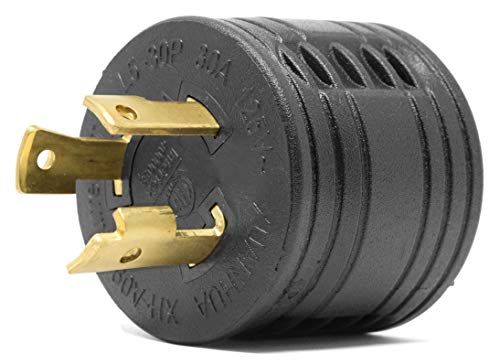
Pros
- ETL-certified construction rated for reliable 120V, 30-amp, 3,600-watt power transfer
- Twist-lock L5-30P male plug secures firmly into generator receptacles to resist engine vibration disconnects
- Comfortable molded non-slip grip allows easy handling even with work gloves
- Ultra-compact dimensions make storage simple in small RV compartments or travel kits
Cons
- Configured strictly for 120V 30A circuits and cannot adapt 4-prong 120/240V receptacles or 50-amp RV cords
- Serves as a physical adapter only and does not regulate voltage, clean power, or boost generator capacity
- Rigid block design requires careful cord support to prevent mechanical strain on the generator outlet face
The WEN GNA030 is a compact, heavy-duty electrical adapter designed to bridge the gap between portable generator power panels and recreational vehicles. Specifically, this adapter converts a 3-prong 30-amp NEMA L5-30P twist-lock male plug into a standard 3-prong RV-ready TT-30R female receptacle. For travel trailer owners, campers, and outdoor enthusiasts running portable inverter or conventional generators that feature an L5-30 twist-lock port rather than a dedicated RV outlet, this compact device resolves a frequent campsite connection mismatch.
According to the manufacturer specifications, the WEN GNA030 is rated to handle up to 30 amps at 120 volts, supporting a continuous electrical capacity of up to 3,600 watts. This 3,600-watt ceiling matches the standard requirements of 30-amp RV electrical distribution systems. It is critical for operators to remember that this adapter serves strictly as a mechanical and electrical interface. It does not alter, step up, or condition the voltage, amperage, frequency, or waveform supplied by the generator. Connected loads, such as RV rooftop air conditioners or converter chargers, must still stay within the running and starting wattage limits of the generator itself.
Safety and build durability are central to the design of the WEN GNA030. The adapter features an ETL-certified molded housing, confirming compliance with recognized electrical safety benchmarks for portable power transfer. With physical dimensions of 2.75 by 2.25 by 2.25 inches, the solid one-piece body eliminates unnecessary cord length and clutter. The exterior surface incorporates molded, non-slip textured grooves that give users positive leverage when locking the L5-30P prongs into place or pulling apart tight-fitting RV power plugs in wet or cold outdoor conditions.
Using the adapter during camping trips, tailgating events, or emergency backup situations is straightforward. The operator inserts the L5-30P male prongs into the generator's matching 120V 30-amp twist-lock receptacle and turns the housing clockwise to lock it firmly, preventing loosening from engine vibrations. The standard TT-30P plug of an RV shore power cord then pushes directly into the TT-30R female face. Because heavy shore power cables can exert downward leverage, supporting the cord helps prevent unnecessary mechanical strain on the generator faceplate.
While the WEN GNA030 is an effective and economical accessory, its limitations must be evaluated against specific setup requirements. It is exclusively built for 3-prong 120V 30-amp circuits and is not compatible with 4-prong 120/240V twist-lock outlets (such as NEMA L14-30) or larger 50-amp RV electrical systems (NEMA 14-50). For RV owners and outdoor power users who need a dependable, ETL-certified link between an L5-30 generator outlet and a standard 30-amp RV power cable, the WEN GNA030 offers an exceptionally practical, space-saving solution.
The WEN GNA030 features an electrical input consisting of a 3-prong NEMA L5-30P male twist-lock plug and an output consisting of a 3-prong NEMA TT-30R female RV receptacle. This configuration is engineered for 120-volt single-phase power delivery up to a maximum continuous threshold of 30 amps and 3,600 watts.
This adapter is compatible with portable generators equipped with standard NEMA L5-30R receptacles, including many WEN portable and inverter generator models. It accepts standard TT-30P shore power plugs commonly found on 30-amp travel trailers, pop-up campers, and motorhomes. It cannot be used with 4-prong twist-lock receptacles or 50-amp RV electrical cables.
Connecting an RV to a portable generator requires careful attention to physical support and load management. To install the WEN GNA030, align the L5-30P prongs with the generator outlet, push firmly inward, and rotate clockwise until the twist-lock mechanism engages completely to resist vibration.
Because standard 30-amp RV cords are thick and heavy, operators should avoid letting the full weight of the cord hang unsupported from the adapter. Providing external support under the power cord preserves the integrity of both the adapter prongs and the generator receptacle faceplate during extended outdoor generator operation.


Pros
- Dedicated 120V NEMA TT-30R outlet enables direct plug-and-play hookup for recreational vehicles without separate adapters.
- Carburetor fuel shut-off switch prevents stale gasoline buildup in the jets during extended seasonal storage.
- Digital load and fuel display simplifies power management by clearly displaying active wattage demand and fuel volume.
- Enclosed housing delivers a quiet 58 dBA rating at quarter load from 22 feet, suitable for campgrounds and neighborhood use.
Cons
- Weighs 99.2 pounds, making single-person vehicle loading challenging without assistance despite the integrated wheel kit.
- Provides 120V output only, meaning it cannot power 240V well pumps, central air conditioning units, or clothes dryers.
- The manufacturer does not provide a specific numeric THD percentage or stated fuel tank capacity in the technical specifications.
The WEN 56450i is an enclosed portable inverter generator engineered to provide stable 120-volt power for recreational vehicle travel, outdoor camping, and essential residential emergency backup. Utilizing an inverter-based power conversion architecture driven by an EPA III compliant 212cc combustion engine, this unit converts raw electrical output into clean power designed to prevent damage to sensitive electronics such as smartphones, tablets, and laptops. Positioned primarily for U.S. RV campers, tailgaters, and homeowners preparing for severe weather outages, the generator combines moderate high-output capacity with an enclosed housing designed to suppress operating noise.
Electrical performance centers on 3,500 continuous rated watts and up to 4,500 surge watts, providing sufficient starting overhead for motor-driven equipment like refrigerators and sump pumps. Power delivery is managed through a comprehensive front control panel featuring one RV-ready AC 120V NEMA TT-30R receptacle, two standard three-prong 120V household outlets, one 12V DC receptacle, and one 5V USB port for portable mobile accessories. Because the generator outputs strictly 120 volts, it is optimized for 120V RV circuits and standard household branch circuits, but it cannot run heavy 240V appliances like two-pole well pumps, electric ranges, or central HVAC systems.
The build quality of the WEN 56450i emphasizes noise reduction, operational monitoring, and engine protection. The manufacturer lists an operating volume of 58 dBA at quarter load measured from a distance of 22 feet, keeping acoustic disturbance low during campground hours or neighborhood utility interruptions. A digital load and fuel display on the main panel offers direct visibility into current electrical draw and remaining gasoline levels. To prevent common fuel storage issues, an integrated fuel shut-off switch cuts off the fuel supply while leaving the ignition running, allowing the 212cc engine to consume the remaining fuel inside the carburetor bowl before shutting down completely, which helps prevent jet clogs and ethanol residue during storage.
Portability and daily operation are supported by integrated transport wheels and an onboard carrying handle. Measuring 23.2 by 18 by 20.1 inches and weighing 99.2 pounds, the unit has a compact footprint for truck beds and storage sheds, though lifting it into a vehicle typically requires two people. Safe operation mandates that this fuel-burning generator must always run outdoors in open, well-ventilated spaces far away from doors, windows, and fresh-air intakes to avoid deadly carbon monoxide buildup. For residential emergency backup, connecting the generator to home circuits must be handled through an approved manual transfer switch or interlock kit installed by a qualified electrician, avoiding unsafe backfeeding practices.
Prospective buyers should note a few hardware and specification boundaries before purchase. While the manufacturer specifies that the generator produces clean power safe for consumer electronics, a specific numeric total harmonic distortion (THD) percentage is not listed in the published specifications. Furthermore, the unit lacks 240V output, does not include documented electric push-button or remote start, and does not list parallel capability in its core feature set. Buyers should also verify fuel tank volume and runtimes based on their expected operating loads, as those metrics depend directly on overall wattage demand.
The WEN 56450i is best suited for RV travelers seeking native NEMA TT-30R connection and suburban homeowners who need clean, dependable 120V power for storm preparedness. Its blend of 3,500 continuous watts, enclosed noise dampening, digital panel monitoring, and carburetor-saving fuel shut-off makes it a practical, high-utility choice for everyday portable power. Users who require 240V capacity for whole-home transfer switches, dual-fuel capability for propane storage, or ultra-lightweight hand-carry designs should explore alternative generator classes, but for balanced 120V inverter power, this model delivers solid overall performance.
The core of the WEN 56450i is an EPA III compliant 212cc four-stroke engine designed to meet emissions standards while delivering 4,500 peak surge watts and 3,500 rated watts. Its enclosed inverter architecture allows the engine to run efficiently while producing a manufacturer-rated sound output of just 58 dBA at quarter load from 22 feet away, significantly quieter than conventional open-frame industrial generators.
A critical longevity feature of this model is the integrated carburetor fuel shut-off valve. In conventional portable generators, modern ethanol-blended gasoline left sitting in the carburetor float bowl can degrade, varnish, and gum up internal jets within weeks of non-use. By turning the fuel shut-off switch to the off position while keeping the engine running, the unit burns off all remaining gasoline inside the carburetor passages until it starves and shuts down naturally, ensuring dry storage and smooth restarts after seasonal storage.
Engine monitoring is streamlined via the front-facing digital load and fuel display. This screen allows operators to monitor their real-time power consumption and keep track of fuel levels without opening the fuel cap, preventing unexpected power interruptions during severe weather events or recreational trips.

Pros
- Substantial 4,000 running watts handles RV air conditioners and multiple household emergency appliances
- Convenient keyless electric start eliminates the physical strain of manual pull starting
- Direct TT-30R outlet provides plug-and-play connection for travel trailers and campers without adapters
- Integrated fuel shut-off valve drains fuel from the carburetor to reduce gumming and starting problems during long-term storage
- Built-in CO Watchdog sensor provides vital emergency shutoff protection against hazardous carbon monoxide accumulation
Cons
- Operates exclusively at 120V and does not support 240V heavy household appliances like well pumps or electric clothes dryers
- Manufacturer specifications do not publish exact decibel levels or fuel-tank runtime figures in the provided data
- At 77 pounds, lifting the unit into high truck beds or SUV trunks may require two people despite the rolling handle
The WEN 56480iX is an enclosed portable inverter generator designed for American homeowners, RV travelers, and emergency-preparedness shoppers seeking dependable 120V electricity. At its foundation, a 224cc engine drives an alternator connected to an inverter power-conversion stage, generating 4,000 continuous rated watts and up to 4,800 starting surge watts. This output profile allows the unit to bridge the gap between small, suitcase-style recreational generators and heavy, open-frame jobsite machines. It is positioned primarily for travel trailer power, campsite electrical needs, and essential household circuit support during severe storm outages.
Electrical distribution on the WEN 56480iX is well configured for recreational and backup uses. The front control panel provides one standard TT-30R 120V RV receptacle, four three-prong 120V household receptacles, two 5V USB ports for mobile devices, and one 12V DC receptacle. Inverter architecture regulates the electrical output, delivering what the manufacturer describes as clean power to protect sensitive equipment such as laptops, tablets, and smartphones from electrical irregularities. While the manufacturer does not publish an explicit numeric total harmonic distortion (THD) percentage in the listing data, the inverter-based design is intended to deliver smoother output than standard non-inverter conventional models.
Starting and routine operation are simplified through a keyless electric-start ignition, supported by a traditional manual recoil pull cord as a reliable backup. For extended equipment life, WEN incorporates a dedicated fuel shut-off switch. This mechanism allows the engine to burn through all remaining gasoline in the carburetor before shutting down, which helps prevent fuel varnish, gummed jets, and the hard-starting issues common with seasonal generator storage. Safety is reinforced by an integrated WEN Watchdog carbon monoxide shutdown sensor, which monitors ambient exhaust levels and automatically powers down the generator if dangerous concentrations are detected. Even with this sensor, fuel-burning generators produce toxic exhaust and must always be operated outdoors far from open windows, doors, and occupied structures.
Portability is an important asset of the 56480iX design. With physical dimensions of 23.8 by 12.6 by 22 inches and an operating weight of 77 pounds, the machine remains reasonably compact for its 4,000-watt continuous rating. It includes an integrated set of onboard wheels and a fold-out telescoping luggage-style handle, allowing a single user to roll the machine across driveways, patios, and packed campsite paths. While moving it on flat ground is straightforward, hoisting the 77-pound unit into a tall pickup bed or vehicle cargo area is generally easier with two people.
Buyers should weigh several practical limitations before purchasing. First, this model produces 120V power exclusively; it does not provide 120V/240V split-phase power, meaning it cannot energize 240V appliances like central heat pumps, electric water heaters, or high-voltage well pumps. Second, the product specifications do not list fuel-tank capacity or exact runtime figures under specific percentage loads, meaning buyers will need to plan fuel supplies based on general 224cc engine consumption rates. Finally, parallel capability is not documented in the provided specifications, so buyers needing expandable power should not assume two units can be linked together.
Overall, the WEN 56480iX delivers exceptional utility for RV owners seeking a direct TT-30R connection, as well as suburban and rural households needing backup power for refrigerators, freezers, sump pumps, and communication devices. Buyers requiring 240V connectivity, multi-fuel propane flexibility, or ultra-light single-hand transport will need to consider larger open-frame dual-fuel units or compact 2,000-watt generators instead. For those who want electric starting, solid 4,000-watt running capacity, and clean inverter power in a rolling enclosed package, the 56480iX represents a very capable and balanced portable power solution.
The WEN 56480iX is well adapted for recreational vehicle integration thanks to its factory-installed TT-30R 30-amp receptacle. Travel trailer owners can plug standard RV shore-power cords directly into the generator panel without hunting for third-party adapters. With 4,000 running watts and 4,800 surge watts, this machine delivers sufficient continuous power to run a standard 13,500 BTU or 15,000 BTU RV air conditioner while leaving enough headroom for an RV refrigerator, lighting, and interior power outlets, provided heavy heating appliances are managed sequentially.
For home emergency backup, the 56480iX provides dependable coverage for critical 120V circuits. During utility outages caused by severe weather or storms, the four standard three-prong 120V outlets can simultaneously support multiple vital appliances via heavy-duty extension cords, including a full-sized kitchen refrigerator, a chest freezer, television equipment, and network routers. Motor-driven devices like sump pumps require extra startup wattage, and the 4,800 surge watts provide the temporary boost needed to start compatible induction motors without triggering an immediate overload fault.
Carbon monoxide protection is a central feature of the WEN 56480iX, which incorporates the proprietary WEN Watchdog CO shutdown sensor. This internal safety device continuously monitors ambient air for lethal carbon monoxide concentrations and triggers an automatic engine cutoff if dangerous levels are detected. While this system offers an essential layer of safety against accidental exposure, it does not replace proper outdoor placement. All fuel-burning generators generate deadly exhaust and must strictly be operated outdoors in open spaces, away from doors, windows, and vents.
Maintenance convenience is enhanced by the integrated fuel shut-off dial, which simplifies carburetor care between uses. Stale gasoline residue is the primary cause of small-engine failure, and running the carburetor bowl completely dry before periods of storage prevents fuel degradation from clogging the internal jets. Combined with standard oil service access and backed by WEN with a three-year limited warranty, this inverter generator provides a practical ownership experience for seasonal and emergency users alike.

Pros
- Secure NEMA L14-30P twist-lock mechanism prevents disconnection caused by generator engine vibration.
- Heavy-duty 10/3 pure copper conductors safely handle the full 30-amp continuous 125V load up to 3,750 Watts.
- Compact 1-foot dogbone design relieves physical strain on the generator faceplate compared to rigid one-piece adapters.
- Durable STW outdoor-rated jacket provides weather, oil, and abrasion resistance for dependable outdoor deployment.
- Ergonomic molded grip handles make plugging and unplugging easy without pulling directly on the cable insulation.
Cons
- Measures 1 foot in total length, requiring a standard RV shore power extension cord to reach the camper.
- Draws from one 120V leg of a 125/250V receptacle, so it does not combine phases or supply 240V power.
- Requires a 4-prong NEMA L14-30R outlet on the generator and is incompatible with 3-prong L5-30R or standard household outlets.
The ELEGRP 30 Amp Generator to RV Adapter Cord is a heavy-duty dogbone electrical converter designed to bridge the gap between portable generators and recreational vehicles. Many mid-size to large portable generators feature a 4-prong NEMA L14-30R twist-lock receptacle delivering 120/240V power, while standard travel trailers and campers utilize a 3-prong NEMA TT-30P shore power plug designed exclusively for 120V systems. This adapter solves that interface challenge by converting a 30A 125/250V locking generator receptacle into a standard 30A 125V RV female receptacle, making it a valuable tool for RV owners, tailgaters, and homeowners using their camper as temporary quarters during severe storm outages.
In terms of electrical capacity, the adapter is rated for 30 Amps at 125 Volts, providing up to 3,750 Watts of continuous power delivery. The internal construction uses 10 Gauge (10/3 AWG) stranded wire made from 100 percent pure copper, ensuring high conductivity and minimizing voltage drop under heavy draw. The adapter taps into one 125V hot leg of the generator's 4-prong receptacle to deliver safe, balanced single-phase power to the RV's electrical panel. When paired with an appropriately sized generator, this 3,750-watt throughput is sufficient to run critical camper appliances, including a standard 13,500 BTU or 15,000 BTU RV air conditioner, converter-charger, and residential microwave within standard 30-amp limits.
Physical durability is a strong point of the ELEGRP adapter design. Wrapped in a rugged STW jacket, the cord is formulated to withstand harsh outdoor conditions, showing high resistance to moisture, oil, abrasion, and direct sunlight. The outer jacket maintains structural flexibility in cold weather and resists softening under high ambient summer temperatures. The NEMA L14-30P male connector features a molded twist-lock design that engages with a simple push-and-twist action, ensuring the cord remains seated despite continuous engine and frame vibrations from a running generator. On the receiving end, the molded NEMA TT-30R female connector provides a snug fit for your RV shore power cord to prevent terminal overheating.
Deploying the adapter is straightforward and engineered for panel protection. At 1 foot in overall length, this dogbone configuration allows the thick 10-gauge cable to flex naturally, preventing the heavy, rigid leverage that standard one-piece block adapters often place on generator faceplates. Both the male and female molded ends feature ergonomic finger grips, allowing users to pull the plugs apart safely without yanking on the cord ends or straining the internal wire terminations. Whenever setting up outdoor power, remember that any engine-driven generator must be positioned safely outdoors away from open windows and doors to eliminate carbon monoxide hazards, regardless of weather conditions or cord type.
Despite its heavy-duty build, buyers must keep several operational limitations in mind before ordering. This 1-foot adapter is strictly a converter, not an extension cord, meaning you will still need your travel trailer's standard 30-amp shore power cord to cover the distance between the vehicle and the generator. Additionally, because standard 30A RV electrical systems operate strictly on 120V, this adapter draws power from only one of the two hot legs in a 125/250V L14-30 generator receptacle. It does not provide 240V power, nor does it combine both legs to deliver 60 Amps. It is also incompatible with generators that only have 3-prong twist-lock outlets such as L5-30R, so inspecting your generator's control panel prior to purchase is essential.
Overall, the ELEGRP 30 Amp Generator to RV Adapter Cord is an excellent, cost-effective accessory for campers, contractors, and emergency preparedness households who own a portable generator with a 4-prong L14-30R outlet. It delivers solid build quality, verified compliance with UL specifications, and reliable 3,750-watt power transfer to keep essential RV systems running smoothly. RV owners whose generators already come equipped with a dedicated NEMA TT-30R RV outlet will not need this adapter, but for anyone looking to connect a standard camper to a 120/240V twist-lock generator, this dogbone converter provides a secure and durable electrical link.
The ELEGRP adapter cord features a male NEMA L14-30P twist-lock plug and a female NEMA TT-30R standard RV receptacle. The L14-30P connector is configured with four prongs (two hot, one neutral, and one ground) and requires a matching 4-prong NEMA L14-30R twist-lock receptacle on the generator panel. The TT-30R side provides the standard 3-prong 120V connection used by the vast majority of 30-amp travel trailers, pop-up campers, and motorhomes.
Electrically, the adapter delivers up to 30 Amps at 125 Volts, corresponding to a maximum continuous capacity of 3,750 Watts. The heavy-duty 10/3 AWG pure copper stranded wiring safely routes one 120V circuit leg to the TT-30R connector. Users should verify that their generator's continuous running wattage meets or exceeds their planned RV electrical demand, especially when operating inductive loads such as air conditioners that exhibit high starting surge requirements.

Pros
- High power-to-weight ratio delivering 3,600 continuous watts in a manageable 53-pound portable chassis.
- Dedicated TT-30R RV receptacle eliminates the need for separate 30-amp travel trailer adapters.
- Carburetor-clearing fuel shutoff switch minimizes maintenance headaches and stale fuel gumming during storage.
- Clean power architecture is explicitly designed to safeguard sensitive consumer electronics from voltage fluctuations.
- Three-year warranty provides extended peace of mind for seasonal storm preparedness and camping trips.
Cons
- Operates exclusively on gasoline with no native support for propane or natural gas.
- Supplies 120V power only, making it unsuitable for 240V well pumps or heavy home appliances.
- Manufacturer specifications do not provide numeric THD percentages, rated decibel sound levels, or runtime figures.
The WEN 56432i is a portable gasoline inverter generator engineered for U.S. homeowners, RV travelers, campers, and DIY users seeking mid-range continuous power in an exceptionally lightweight footprint. Driven by a 181cc four-stroke engine, this model supplies 3,600 rated running watts alongside 4,500 starting surge watts. Unlike conventional open-frame utility generators that run at fixed high speeds and lack refined electrical conversion, this unit relies on an inverter-based architecture to convert raw mechanical output into stable electricity. This setup makes it an attractive choice for buyers who require sufficient electrical capacity for essential appliances while prioritizing single-person mobility.
Continuous electrical performance is anchored by the generator's 3,600-watt running capacity, which supports essential household loads such as refrigerators, freezers, lighting, and entertainment systems during utility outages. The power distribution panel features two standard three-prong 120V household outlets, an RV-ready TT-30R 30-amp receptacle, two 5V USB ports, and a 12V DC outlet. The manufacturer emphasizes clean power delivery specifically engineered to protect sensitive electronic devices such as laptops, tablets, and smartphones from electrical irregularities. While the listing does not document a numeric total harmonic distortion (THD) rating or specific waveform measurement, the inverter power-conversion system is designed to provide stable current suitable for modern consumer electronics.
A defining design achievement of the WEN 56432i is its outstanding power-to-weight ratio, weighing in at a mere 53 pounds with compact external dimensions measuring 19.3 by 12 by 18.3 inches. Portability is central to its utility, allowing one person to lift, load, and stow the generator into a car trunk, truck bed, or camper compartment without requiring a bulky wheel kit. The control face includes an intelligent data meter to monitor operating metrics alongside an integrated fuel shutoff switch. This fuel shutoff feature permits the engine to consume the remaining gasoline in the carburetor passages before powering down, mitigating the primary cause of small-engine failure: stale fuel gumming and carburetor varnish during seasonal storage.
Safe deployment and outage preparation demand strict adherence to standard portable generator safety guidelines. Because this gasoline-fueled engine generates lethal carbon monoxide exhaust, it must always be operated outdoors in open air, placed far away from doors, windows, and air intakes; running this unit inside a home, garage, shed, or basement is strictly unsafe regardless of ventilation. For residential backup, power should be delivered through grounded, heavy-duty outdoor extension cords or a code-compliant transfer switch installed by a licensed professional. Directly connecting the generator to a household wall receptacle, known as backfeeding, is extremely hazardous and must never be attempted.
Prospective buyers must evaluate the realistic operational boundaries of this machine before purchase. Because the WEN 56432i is a dedicated 120V generator, it cannot energize 240V household loads such as central air conditioners, electric clothes dryers, or high-voltage well pumps. Furthermore, the provided manufacturer data omits specific decibel ratings under load, fuel tank capacity, runtime hours, and parallel-kit compatibility, meaning users must monitor fuel consumption and load demands during active field use. It is also a single-fuel gasoline platform, lacking the fuel-storage versatility of dual-fuel propane generators.
The WEN 56432i is an outstanding choice for RV owners wanting a plug-and-play TT-30R connection, campers seeking a balance between output and weight, and suburban households preparing for short-term storm outages on selected 120V circuits. Buyers needing 240V emergency panel backup, whole-house coverage, multi-day stationary fuel supplies, or propane capability should look toward larger dual-fuel open-frame units or permanently installed standby generators. For everyday portable utility and single-person maneuverability, this 53-pound inverter generator offers practical capacity backed by a three-year warranty.
The WEN 56432i is specifically configured for recreational vehicle use thanks to its factory-installed TT-30R 120V 30-amp receptacle. This direct connection eliminates the need for aftermarket dogbone adapters, allowing standard RV shore power cords to plug directly into the generator panel. With 3,600 continuous rated watts, the unit supplies ample capacity to run an RV air conditioner alongside baseline lighting, ventilation fans, and smaller kitchen appliances, provided total simultaneous demand is kept within running wattage limits.
Weighing only 53 pounds, this generator avoids the heavy transport penalties associated with traditional high-wattage travel generators that often exceed 90 to 100 pounds. Its compact 19.3-inch length fits cleanly into exterior RV storage bays, truck beds beneath tonneau covers, or camper pass-through compartments. Dual 5V USB ports further expand travel convenience by allowing direct charging of mobile devices and navigational equipment without occupying primary 120V receptacles.
Carburetor maintenance is one of the most critical aspects of small-engine longevity, and the WEN 56432i addresses this directly with an integrated fuel shutoff valve. When preparing the unit for shutdown or extended storage, engaging the fuel shutoff cuts the gasoline supply from the tank while keeping the ignition active. The engine continues running until all residual gasoline inside the carburetor bowl and internal jets is completely consumed.
This burn-off process prevents modern ethanol-blended gasoline from evaporating into sticky varnish, which frequently clogs carburetor passages and prevents engines from starting after sitting idle between storm seasons. Combined with the included intelligent digital data meter for tracking engine metrics and a dependable three-year manufacturer warranty, this maintenance-focused feature ensures reliable ignition when severe weather strikes.
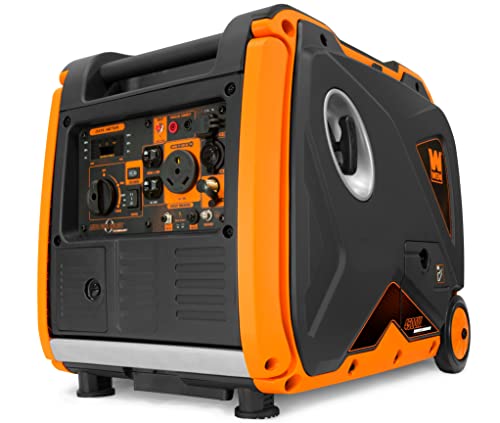
Pros
- Dual-fuel flexibility with automatic propane-to-gasoline switching for extended emergency runtime.
- Direct RV plug-in capability via the onboard 120V NEMA TT-30R receptacle without requiring external adapters.
- Push-button keyless electric starting paired with a manual recoil backup system.
- Dedicated fuel shut-off valve prevents fuel stagnation and carburetor clogging during long-term storage.
- Clean inverter electrical output combined with an enclosed 58 dBA quiet rating at quarter load.
Cons
- Dry weight of 100 pounds makes solo vehicle loading or elevated lifting challenging despite onboard wheels.
- Provides 120V power only, lacking 240V split-phase output for high-draw well pumps or central air conditioning systems.
- Manufacturer documentation does not list an exact numerical total harmonic distortion (THD) percentage despite clean power claims.
The WEN DF451i is an enclosed portable inverter generator built on an engine-driven electrical power-conversion architecture that runs on both unleaded gasoline and liquid propane. Featuring a 212cc EPA III and CARB compliant engine, this model is designed to supply dependable 120-volt power for American homeowners facing storm-induced utility outages, RV campers requiring dedicated campsite connections, and recreation enthusiasts who prioritize manageable sound levels. By pairing an internal engine and alternator with an electronic inverter stage, the unit delivers stable electrical output suitable for common household electronics, lights, and small motorized appliances while maintaining a compact footprint.
Electrical output varies depending on the chosen fuel supply, offering continuous running capacity alongside temporary surge overhead. On gasoline, the WEN DF451i provides 4,500 surge watts and 3,500 rated running watts, while propane operation delivers 4,500 surge watts and 3,150 rated running watts. Starting watts offer the brief momentary surge required to overcome initial motor resistance on compatible refrigeration or portable tools, while continuous running watts dictate the total electrical load that can operate concurrently. An integrated Auto Fuel Selection Technology allows the generator to switch automatically from propane to gasoline, extending overall operational periods during emergency blackouts without manual intervention.
The electrical interface is tailored for recreational vehicles and direct appliance connections, centered around a standard 120V NEMA TT-30R RV-ready receptacle. The control panel also includes two standard three-prong 120V household receptacles, a 12V DC port, and a 5V USB port for charging small handheld devices such as smartphones and tablets. The manufacturer specifies that the inverter design produces clean power intended to prevent damage to sensitive microprocessors and mobile devices, though specific numerical total harmonic distortion (THD) percentages are not published in the manufacturer data. The digital load and fuel display offers immediate visibility into electrical draw and remaining fuel, aiding responsible capacity management.
Operating convenience is reinforced by a keyless electric start system paired with an auxiliary recoil starter, ensuring reliable ignition even if the starting battery weakens. At 100 pounds, the generator features an enclosed housing that dampens mechanical noise, resulting in a manufacturer-rated sound level of 58 dBA at quarter load measured from a distance of 22 feet. Built-in transport wheels and a folding handle make single-person ground mobility manageable across driveways and level campsites. Additionally, the unit incorporates an essential fuel shut-off valve that lets operators starve the carburetor of gasoline before shutting down, reducing the risk of gummed fuel passages during seasonal storage.
While versatile for recreational outings and moderate backup tasks, the WEN DF451i carries clear operational boundaries that buyers must evaluate before purchasing. The unit supplies 120-volt electrical output exclusively and lacks 240-volt split-phase capability, meaning it cannot power large 240V central air systems, high-voltage well pumps, or electric ranges. Furthermore, its 3,500-watt running limit on gasoline (and 3,150 watts on propane) cannot accommodate whole-house electrical panels without strict load shedding, and connecting to household wiring requires properly configured, professional transfer equipment rather than hazardous backfeeding. Like all internal combustion generators, it emits dangerous carbon monoxide and must only be operated outdoors far away from doors, windows, and living spaces.
The WEN DF451i serves as an effective portable power solution for travel trailer owners, tailgaters, and suburban households seeking flexible dual-fuel readiness for basic outage essentials like refrigerators, portable fans, lights, and communications. Its push-button electric start, direct RV receptacle, and dual-fuel automation make it particularly appealing to first-time inverter generator buyers seeking straightforward functionality. However, property owners with heavy 240-volt loads or those needing high continuous capacity for whole-home backup will require a larger open-frame generator or dedicated standby system, while backpackers and ultra-light campers will be better served by a lightweight 2,000-watt inverter model.
The dual-fuel fuel system on the WEN DF451i provides critical operational flexibility when preparing for weather disruptions or remote travels. Gasoline operation delivers the maximum continuous capacity of 3,500 running watts and 4,500 surge watts, while liquid propane supplies 3,150 running watts and 4,500 surge watts. Propane offers long shelf-life stability without the gumming issues associated with ethanol-blended gasoline, making it an exceptional fuel source for emergency outage preparedness.
A standout attribute is the onboard Auto Fuel Selection Technology, which monitors fuel delivery and switches automatically from propane to gasoline when fuel depletion occurs. This seamless changeover maximizes overall running duration during severe weather events without requiring the user to power down the generator or manually swap connections in adverse conditions. Managing total operational load within the continuous running wattage rating remains essential for maintaining voltage stability across all connected devices.
Designed with travel trailers and recreational vehicles in mind, the WEN DF451i comes equipped with an integrated 120V NEMA TT-30R receptacle. This 30-amp RV outlet allows users to connect standard RV shore-power cords directly to the generator without relying on aftermarket adapters that can introduce resistance or connection wear. The 3,500-watt gasoline running capacity provides sufficient headroom to run typical 13,500 BTU RV air conditioning units alongside standard 120V cabin loads, subject to actual equipment startup demand.
Beyond recreational vehicles, the control panel supports direct plug-in connections for household appliances via two standard three-prong 120V outlets, alongside a 12V DC outlet and a dedicated 5V USB charging port. When used for home backup, cords must run directly to designated appliances or connect through an approved, professionally installed transfer switch. Fuel-burning generators produce toxic carbon monoxide and must never be operated indoors, in garages, or inside RV storage compartments under any circumstances.
Complete Guide to Connecting and Operating a Portable Generator with Your RV
Connecting a generator to a recreational vehicle requires aligning the electrical output of the machine with the power distribution panel of your camper. Achieving a safe, dependable electrical link involves verifying receptacle pin compatibility, calculating running and surge wattage overhead, and establishing adequate physical separation between the exhaust stream and living quarters. Bypassing essential electrical safety checks or using undersized wiring can damage onboard converters and create severe fire hazards. Following a methodical setup procedure ensures that every 120-volt branch circuit in your camper receives stable voltage without overloading the power plant.
RV Shore Power Inlets and Generator Receptacle Configurations
Standard travel trailers and camper vans typically utilize a 30-amp shore power cord terminating in a three-prong NEMA TT-30P male plug. The TT designation specifically denotes travel trailer service delivering 120 volts across one hot wire, one neutral wire, and one ground wire. Traditional contractor generators often omit this dedicated outlet, instead offering three-prong NEMA L5-30R or four-prong NEMA L14-30R twist-lock receptacles. In contrast, modern RV-ready inverter units, such as the WEN 56450i, include a built-in NEMA TT-30R receptacle directly on the control panel, allowing direct connection without intermediate hardware.
Four-prong receptacles such as the NEMA L14-30R deliver split-phase 120/240-volt power across two separate 120-volt hot legs, a shared neutral, and a safety ground. When feeding a 30-amp camper from an L14-30R receptacle, the connection hardware must draw power from only one 120-volt hot leg to avoid introducing 240 volts into a 120-volt camper distribution panel. For larger fifth wheels equipped with 50-amp electrical systems terminating in a four-prong NEMA 14-50P plug, specialized dogbone converters bridge both onboard 120-volt legs together. This configuration powers all internal branch circuits from a single 120-volt generator supply, though total consumption remains constrained by the generator capacity.
Choosing Between Dogbone Adapters and Solid Twist-Lock Plugs
Bridging the gap between diverse generator receptacles and standard RV shore power plugs requires an appropriate electrical converter. Compact block adapters, such as the WEN GNA030, convert a 30-amp NEMA L5-30P twist-lock plug directly into an RV-ready TT-30R receptacle. These one-piece solid adapters feature non-slip outer grooves for fast installation and occupy minimal storage space in mobile utility compartments. Because they sit flush against the generator panel, they provide a very clean and direct mechanical connection for 120-volt generator outlets without extra cables.
Heavier shore cords can exert substantial downward leverage on one-piece block adapters, potentially straining the internal terminal connections of the generator panel over time. Flexible dogbone adapter cords, such as the ELEGRP 30 Amp Generator to RV Adapter Cord, solve this physical leverage problem by incorporating a short cable length between the male twist-lock plug and female receptacle. The heavy-duty 10-gauge stranded copper wiring inside an STW jacket absorbs mechanical vibrations while isolating the generator panel from physical strain. Advanced options like the RVGUARD 30 Amp Generator to 30 Amp RV Adapter Cord also feature an integrated 30-amp overload circuit breaker and an LED power indicator to visually confirm line power.
Calculating Running Wattage and Air Conditioner Surge Demands
Electrical management in an RV requires separating continuous operating wattage from momentary starting surge requirements. Resistive loads, such as electric water heater elements, coffee makers, and space heaters, draw a consistent amount of electricity from the moment they are switched on. Inductive motor loads, including rooftop air conditioner compressors and refrigerator motors, require substantial inrush current to overcome initial mechanical resistance. This locked rotor amperage surge can demand up to three times the running wattage of the motor for several seconds during compressor startup.
A standard 13,500 BTU rooftop air conditioner typically requires approximately 1,500 to 1,800 running watts but can demand up to 3,000 starting watts when the compressor engages. Connecting a generator that offers 4,500 surge watts and 3,500 continuous rated watts, such as the WEN 56450i, provides sufficient headroom to absorb this compressor surge while continuing to power base electrical loads. If your camper features a larger 15,000 BTU cooling system, a generator delivering 4,800 surge watts, like the WEN 56480iX, offers additional overhead to prevent breaker tripping during hot weather restarts. Switching the onboard water heater and refrigerator to propane mode further preserves vital generator wattage exclusively for the air conditioner and battery converter.
Harmonic Distortion and Pure Sine Wave Inverter Architecture
Power quality is just as critical as raw wattage capacity when supplying electricity to modern recreational vehicles. Traditional open-frame contractor generators produce alternating current directly from an engine-driven alternator, frequently resulting in total harmonic distortion levels between ten and twenty-five percent. This irregular electrical waveform generates excessive heat within electronic transformer windings and can scramble microprocessor signals. Advanced RV appliances, including digital thermostat controls, smart televisions, and high-efficiency battery converters, require smooth, clean sine wave power to operate without component degradation.
Enclosed inverter generators eliminate erratic waveforms by utilizing a multi-stage electrical conversion process. The internal alternator generates high-voltage multi-phase alternating current, which the digital inverter module converts into direct current before reconstructing a pristine 120-volt, 60-hertz pure sine wave. Inverter units like the WEN 56432i and WEN 56450i maintain total harmonic distortion below three percent under varying operational loads. Inverter architecture also introduces dynamic throttle management, automatically adjusting engine speed to match real-time camper demand and reducing fuel consumption during low-draw periods.
Resolving Neutral-Ground Bonding and RV Surge Protector Faults
Many RV owners install sophisticated hardwired or portable Electrical Management Systems to protect their campers from shore power faults. These monitoring devices measure line voltage, line frequency, and grounding integrity before allowing power into the main breaker panel. When plugged into a portable generator, an RV management system may refuse to deliver power and display an open ground error message. This situation occurs because most portable inverters feature a floating neutral design where the neutral circuit is isolated from the mechanical equipment frame.
A floating neutral configuration is intentionally engineered into portable generators for safety when powering standalone plug-in tools without a common earth ground rod. When an RV monitoring system detects no physical continuity between the neutral and ground terminals on the generator receptacle, it automatically trips its internal contactor to prevent potential electrical shock. Resolving this open ground lockout requires utilizing a specialized neutral-ground bonding plug inserted into an unused 120-volt duplex receptacle on the generator panel. This plug links the neutral terminal to the ground terminal, allowing the monitoring system to detect the proper reference and close its internal contactor.
Safe Outdoor Setback Distances and Carbon Monoxide Safety
Combustion engines produce hazardous carbon monoxide gas that is completely colorless, odorless, and potentially fatal when inhaled in concentrated amounts. A portable generator must never be operated inside an RV interior, an attached toy hauler garage, a pass-through storage compartment, or an enclosed exterior tent. Proper operation mandates placing the generator outdoors at a minimum distance of twenty feet from the recreational vehicle. Position the exhaust port facing completely away from camper windows, slide-out seals, rooftop vents, and outdoor living areas under awnings.
Modern inverter generators feature advanced integrated safety systems engineered to protect users from toxic exhaust accumulation. Models such as the WEN 56480iX incorporate an automatic carbon monoxide shutdown sensor that continuously monitors ambient atmospheric conditions. Protecting the electrical equipment from inclement weather also requires proper physical shields that do not impede convective engine cooling. Many campers invest in purpose-built running covers or review metal generator enclosure options to shelter power equipment during severe storms without trapping deadly exhaust or causing engine overheating.
Step-by-Step Connection and Operational Starting Procedure
Executing a disciplined physical connection sequence protects both the generator alternator and the delicate electrical converters inside your recreational vehicle. Begin by placing the generator on firm, level ground at least twenty feet away from all camper openings. Check the engine oil dipstick to verify proper lubrication levels, as low oil levels will trigger internal float switches that disable the ignition system. Inspect the fuel tank to ensure fresh, clean gasoline is present, and open the manual fuel tank cap vent to prevent fuel starvation vapor locks.
Before turning the engine switch on, make certain that all electrical cords remain completely unplugged from the generator panel receptacles. Starting a combustion engine under electrical load places extreme mechanical drag on the starter motor and can damage the inverter voltage regulation module. Engage the engine choke control, switch the fuel selector valve to the on position, and start the engine using the push-button electric starter or recoil pull rope. Allow the engine to idle smoothly for two to three minutes until it reaches stable operating temperatures before engaging the economy throttle switch.
Once the engine produces a steady output, move inside the camper and turn off the main 30-amp or 50-amp circuit breaker in the power distribution panel. Shutting off the main breaker prevents immediate inrush surges from reaching onboard battery chargers, converter transformers, and refrigeration cooling circuits. Insert the twist-lock adapter plug into the generator receptacle, rotate it clockwise to lock the pins securely, and connect the shore power cord. Return inside the living quarters, flip the main distribution breaker to the on position, and verify that voltage readings display between 115 and 122 volts alternating current.
Managing Staggered Electrical Loads and Breaker Protection
Safely operating your camper on generator power requires staging electrical loads sequentially rather than activating multiple appliances simultaneously. When all interior branch circuits are energized at once, combined startup surges can instantly trip the thermal overload breaker on the generator panel. Large mobile power systems or travelers running heavy shop equipment from high-wattage portable generators often utilize split-phase balancing to distribute high-amp draws across independent legs. In a standard single-phase 30-amp RV connection, total current passes through a single 120-volt circuit, making sequential load management essential.
Activate your largest inductive motor load first, which in most camping scenarios is the primary rooftop air conditioner. Setting the thermostat fan control to the continuous on setting rather than auto prevents the fan motor and compressor from cycling on and off at the exact same moment. Listen to the pitch of the generator engine as the compressor clutch engages, allowing the machine to stabilize its RPM before introducing additional circuits. Staggering high-wattage appliance use prevents nuisance breaker trips and keeps the generator running within its optimal fuel efficiency curve.
Dual-Fuel Operation, Fuel Shutoff Valves, and Storage Care
Dual-fuel inverter generators offer exceptional versatility for RV travelers by operating on either unleaded gasoline or liquid propane fuel. Inverter units like the WEN DF451i feature automatic fuel selection technology that seamlessly transitions between fuel supplies for extended runtimes. When operating on liquid propane, expect a ten to fifteen percent derating in continuous running wattage compared to gasoline operation due to the lower energy density of propane gas. A generator producing 3,500 rated watts on gasoline will typically deliver approximately 3,150 rated watts on propane, which still provides plenty of power for essential RV functions.
Proper storage procedures protect your investment and ensure dependable starts during future camping excursions. Standard pump gasoline containing ethanol begins breaking down within thirty days, gumming up delicate pilot jets and float needles inside small engine carburetors. When running on gasoline, utilize the integrated fuel shutoff valve found on models like the WEN 56432i to drain the carburetor float bowl prior to shutdown. Switching the valve to the off position allows the engine to burn through all residual fuel remaining inside the fuel lines and carburetor chamber, preventing sticky lacquer buildup during seasonal storage.
Mastering the electrical connection between your portable generator and recreational vehicle ensures seamless off-grid comfort while safeguarding critical appliances. Matching the appropriate heavy-duty adapter cord to your specific generator receptacle eliminates overheating risks and protects terminal connections from physical strain. Maintaining proper outdoor clearances, observing clean pure sine wave thresholds, and systematically staging high-draw inductive loads guarantees reliable electricity wherever your travel trailer ventures. Following these technical guidelines provides steady power and dependable performance on every outdoor journey.


Write Your Review
No reviews yet. Be the first to share your experience!