


Hooking up a generator to your electrical panel requires a code-compliant connection method, such as a manual transfer switch or an interlock kit, to prevent backfeeding the utility grid. The how to hook up generator to electrical panel process involves installing a dedicated inlet box, connecting it to your main service with appropriately sized conductors, and ensuring the generator output matches the panel’s amperage capacity.
Directly plugging a generator into a standard wall outlet is dangerous and illegal because it can electrocute utility workers repairing power lines. Safe integration requires hardware that physically isolates the home from the grid. You will need to verify your panel manufacturer and model to ensure compatibility with the interlock device or transfer switch you select.
Proper installation protects your appliances from voltage spikes and ensures that power flows only into your home during an outage. For details on the internal components that manage this power flow, see our generator components guide.

Pros
- All-in-one package includes the interlock bracket, dedicated 50A breaker, pre-drilled inlet box, and 50A power cord to avoid mismatched third-party parts.
- Full-panel interlock design allows homeowners to power essential loads across any household circuit up to the generator running wattage capacity.
- Heavy-duty ETL-certified pure copper cord (6 AWG x 3 plus 8 AWG ground) ensures reliable 120V and 240V power transmission with reduced voltage drop.
- Physical interlock mechanism reliably prevents hazardous backfeeding into the utility grid to protect utility workers and home wiring.
Cons
- Exclusively engineered for Square D Homeline 150-225A load centers and cannot be installed on Square D QO, Siemens, Eaton, or other panel brands.
- Manual transfer method requires manual load management at the panel to prevent overloading a portable generator when running multiple large appliances.
- Panel integration involves working inside the main service panel, generally requiring local permits and professional installation by a licensed electrician.
The LiftCharger 50 Amp Generator to House Hook-up Kit is a specialized manual transfer accessory package designed to integrate a high-output portable backup generator directly into a residential Square D Homeline main electrical panel. Rather than being a generator itself, this kit provides the vital electrical connection hardware needed to route emergency power from an outdoor fuel-burning portable unit into household wiring. It is configured specifically for homeowners with 150-amp, 200-amp, or 225-amp Square D Homeline load centers who want an organized, code-compliant alternative to multi-circuit manual transfer switches or unsafe cord tangles through open windows.
In terms of backup performance, this hook-up package is rated for a continuous 50-amp current draw, making it compatible with portable generators delivering between 7,500 and 12,500 running watts and up to 15,000 starting watts. The bundled power cord features a heavy-duty one-inch exterior diameter containing pure copper conductors arranged as three 6 AWG current-carrying lines and one 8 AWG equipment ground. This conductor sizing supports full 120V/240V dual-voltage power distribution, giving homeowners the technical capacity to back up essential household circuits such as refrigerators, freezers, gas furnace blowers, well pumps, and lighting networks within the physical output limits of their portable generator.
The build quality centers on standard-compliant safety components that eliminate dangerous backfeeding into the utility grid. The package provides a heavy-duty pre-drilled power inlet box for exterior home placement, a genuine Square D 50-amp 2-pole Homeline branch breaker, a metal interlock bracket mechanism, and the ETL-certified 50A generator power cord. The mechanical interlock acts as a physical gatekeeper: it prevents the utility main breaker and the generator backfeed breaker from ever being engaged simultaneously. This hardware design ensures that generator voltage cannot travel backward into downed neighborhood power lines, safeguarding utility repair crews and preventing severe equipment damage when utility grid power is restored.
Deployment and day-to-day operation remain completely manual. During a storm or grid failure, the homeowner positions the portable generator outdoors on level ground, well away from doors, windows, and soffit vents to ensure complete carbon monoxide safety. The user connects the 50A power cord from the generator 120V/240V receptacle to the exterior inlet box, starts the generator engine, and walks to the electrical load center. After switching off the utility main breaker, the interlock plate slides into position, allowing the 50-amp generator breaker to be turned on. Because this setup feeds the panel busbars directly rather than isolating a few pre-wired circuits, the homeowner must manually prioritize branch breakers to prevent exceeding the generator continuous wattage rating.
The primary limitations of the LiftCharger kit involve electrical panel specificity and manual operational overhead. This package is strictly tailored to Square D Homeline 150-amp through 225-amp panels; it will not fit Square D QO series load centers or panels made by Eaton, Siemens, GE, or Murray due to distinct breaker spacing and panel cover geometry. Furthermore, unlike an automatic standby generator system, it provides zero automation; outage response requires manual cord connection, engine starting in adverse weather, and deliberate breaker switching. Installation also requires working directly around live main service conductors, which mandates proper electrical permits and the services of a qualified, licensed electrician in most jurisdictions.
For homeowners who already own or plan to buy a 7,500 to 12,500 running watt portable generator and have a compatible Square D Homeline service panel, the LiftCharger 50 Amp Hook-up Kit is a practical, value-focused connection solution. It delivers the flexibility to power any circuit in the home under active load monitoring without the steep expense of custom transfer panels. Buyers with non-Homeline panels, smaller 30-amp generators, or those seeking hands-off automatic backup power should look toward dedicated automatic transfer switches or panel-specific interlock alternatives.
Panel compatibility is the most critical factor when evaluating the LiftCharger 50 Amp Generator Hook-Up Kit. The included sliding mechanical interlock is engineered exclusively for Square D Homeline main breaker panels rated at 150, 200, or 225 amps. It relies on the specific physical distance between the main breaker toggle and the top right branch breaker slots where the included Square D 50-amp 2-pole breaker installs. Homeowners must verify their panel brand, model series, and amperage rating before purchasing, as this hardware will not seat correctly on Square D QO series panels, commercial panels, or panels from competing manufacturers.
Electrical safety and utility isolation form the core purpose of this connection package. By mechanically interlocking the main service disconnect with the generator input breaker, the kit eliminates the risk of backfeeding utility lines during grid outages. Backfeeding can energize downed exterior power lines, presenting lethal shock hazards to utility linemen and neighbors. Furthermore, the ETL-certified cord uses heavy-gauge 6 AWG copper conductors with an 8 AWG ground line to handle continuous 50-amp current loads without excessive heat buildup, ensuring stable voltage delivery across 120V and 240V household branch circuits.
Operating a home backup system through a full-panel interlock requires active load management by the homeowner. Although the LiftCharger kit allows any circuit in the panel to receive power, a portable generator rated between 7,500 and 12,500 running watts cannot run every household appliance at the same time. High-draw appliances such as central air conditioning compressors, electric water heaters, and electric clothes dryers require significant starting and running wattage. Users should selectively turn off non-essential branch breakers before engaging the generator breaker, then switch on critical essentials like refrigeration, lighting, and communication devices progressively to avoid tripping the generator breaker.
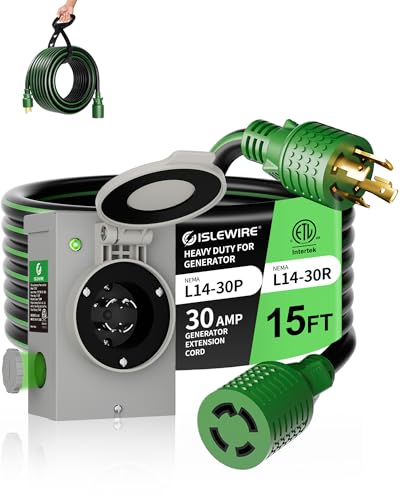
Pros
- Complete package includes both the 15-foot 10 AWG cord and outdoor inlet box
- ETL-listed construction with 100% pure copper conductors and flame-retardant PVC
- Green LED power indicator provides quick visual confirmation in dark outage conditions
- NEMA L14-30 twist-lock mechanism prevents plugs from shaking loose under load
Cons
- Fixed 15-foot cord length requires placing the generator relatively close to the house
- Requires professional premises wiring into a manual transfer switch or interlock panel
- Limited to 30-amp / 7,500-watt capacity and cannot support 50-amp generator systems
The islewire 30 Amp Generator Cord and Power Inlet Box Kit is an all-in-one electrical hookup solution engineered to connect a portable generator to a residential transfer switch or interlock panel. Positioned in the generator connection and power distribution category, this package includes a 15-foot, 10 AWG four-conductor cord and a heavy-duty exterior inlet box. For American homeowners preparing for severe storms, winter freezes, or hurricane outages, this kit eliminates the safety hazards of feeding multiple extension cords through cracked windows or propped-open doors by establishing a permanent, code-compliant outdoor entry point.
In terms of electrical capacity, the islewire system supports up to 30 amps and 7,500 watts at 125V/250V split-phase power. The 15-foot power cable is built with four 10 AWG pure copper conductors wrapped in a durable, flame-retardant PVC jacket, matching standard 30-amp portable generator output specifications. The cable features standard NEMA L14-30P male and NEMA L14-30R female twist-lock plugs. When paired with a generator producing running watts within the 7,500-watt threshold, this connection delivers dual-voltage 120V and 240V current to feed critical household loads like well pumps, refrigerators, furnace fans, and lighting circuits through appropriate transfer equipment.
Build quality emphasizes weather resistance and mechanical reliability for outdoor deployment. Both the heavy-duty power cord and the exterior inlet box carry ETL listings for electrical safety compliance. The inlet box is fabricated from powder-coated galvanized steel designed to endure harsh outdoor exposure including rain, snow, and high ambient temperatures. It incorporates a spring-loaded flip-top cover that seals the receptacle against moisture and debris when disconnected. A built-in green LED indicator glows when the generator sends active voltage, allowing quick visual confirmation from a distance during nighttime power failures. Inside the enclosure, pre-drilled knockouts simplify conduit attachment for clean wall mounting.
Practical usability and storage are supported by thoughtful accessories. The kit includes a heavy-duty cord organizer strap and a zippered storage bag, protecting the 10-gauge cable from physical damage, sunlight degradation, and tangling when stored in a basement, garage, or RV compartment. The twist-lock interface requires only a firm push and a clockwise quarter-turn to lock securely into the inlet box and generator receptacle, ensuring that normal engine vibrations will not work the connectors loose during extended runtimes.
While this kit provides solid utility for standard 30-amp setups, buyers must consider several realistic limitations. The 15-foot cord length restricts generator placement, requiring careful site planning to keep the generator exhaust pointed safely away from residential windows, doors, and fresh-air intakes. Furthermore, the 30-amp, 7,500-watt maximum capacity will not support large 50-amp generators or heavy whole-house electrical loads like large central air conditioners and electric water heaters. The outdoor inlet box also requires direct wiring into a UL-listed manual transfer switch or mechanical panel interlock kit, which necessitates proper electrical knowledge or professional installation by a licensed electrician.
The islewire 30-amp hookup kit is an excellent, budget-conscious choice for homeowners, rural property owners, and emergency-preparedness planners who own a portable generator with a 120V/240V L14-30R outlet. It establishes a secure, durable link between your backup power source and home electrical system. However, households with high-capacity generators delivering 9,000 running watts or higher should bypass 30-amp assemblies and choose a 50-amp NEMA 14-50 or CS6365 power inlet setup to prevent electrical bottlenecks.
The islewire power inlet box utilizes a four-wire configuration consisting of two hot legs, one neutral, and one equipment ground. This setup accommodates 120V/240V split-phase systems standard in North American residential wiring, allowing balanced distribution across panel busbars.
This inlet box must always connect to an approved manual transfer switch or an electrical panel fitted with a mechanical interlock kit. Homeowners must never attempt dangerous backfeeding by wiring an inlet directly to an unprotected household breaker, as backfeeding risks sending lethal voltage onto utility lines and endangering utility lineworkers.
The pre-drilled knockouts on the galvanized steel box accommodate standard conduit fittings, simplifying the path through exterior siding into your basement or garage electrical panel. Professional installation by a licensed electrician is recommended to comply with local building codes and National Electrical Code standards.
Any fuel-burning portable generator produces dangerous carbon monoxide gas and must remain strictly outdoors in an open, well-ventilated area. Never run a generator inside a garage, shed, carport, or near open windows, even if the generator features an automatic CO shutoff sensor.
Because the included power cord measures 15 feet in length, verify that your designated outdoor generator operating location provides adequate clearance from exterior wall openings before installation. The generator exhaust must direct away from the home to prevent toxic fumes from drifting inside.
The inlet box features a spring-loaded flip cover that keeps rain and snow away from the contacts during idle periods. When connected, the weather-resistant twist-lock interface maintains a water-tight seal against typical rain and outdoor elements, though the generator itself should remain sheltered under an approved weatherproof running cover.

Pros
- Bundles all four key hook-up components: 25-foot cord, power inlet box, circuit breaker, and interlock hardware.
- Provides access to any branch breaker on the panel rather than limiting users to fixed circuits.
- Rated to handle portable generator output up to 7,500 running watts and 8,500 peak watts.
- Mechanical interlock reliably locks out the utility main to prevent utility line backfeeding.
Cons
- Compatible only with Square D Homeline 150A, 200A, and 225A load centers, excluding other brands or panel lines.
- Requires manual load management to avoid exceeding the 30-amp / 7,500-watt continuous rating.
- Installation inside the main service panel involves live wiring and typically requires a licensed electrician.
The LiftCharger 30 Amp Generator to House Hook-up Kit is a manual backup-power connection system designed for American homeowners seeking a safe, code-conscious method to link a portable generator to their home electrical system. Engineered specifically for Square D Homeline 150-amp, 200-amp, and 225-amp load centers, this hardware package bridges an outdoor generator and indoor branch circuits. Instead of using a traditional multi-circuit transfer switch that permanently restricts backup power to six or ten dedicated circuits, this interlock system allows operators to energize any branch circuit in the panel, provided total power demand remains within operating limits.
Rated for a 30-amp continuous current, this connection kit accommodates portable backup generators delivering up to 7,500 running watts and 8,500 peak or surge watts. Generator power feeds from an external source through the outdoor inlet box, flows along the 25-foot cord, and enters the electrical panel through the included 30-amp circuit breaker. While this architecture provides panel-wide flexibility, it does not turn a 7,500-watt portable generator into a whole-house power plant. Homeowners must actively manage concurrent loads, ensuring that simultaneous demands from refrigerators, freezers, lighting, water pumps, or electronics do not exceed the 30-amp continuous threshold.
The physical system includes four primary components: a 25-foot generator power cord, a weatherproof outdoor power inlet box, a mechanical panel interlock bracket, and a compatible circuit breaker. The mechanical interlock plate is the central safety device of the assembly, sliding between the main utility disconnect and the generator supply breaker. By physically blocking both breakers from being turned on at the same time, the interlock prevents hazardous utility backfeeding, protecting utility line workers from backfed generator current during neighborhood grid repairs and protecting the generator from catastrophic phase collisions when utility power restores.
Safe deployment requires keeping any fuel-burning portable generator outdoors in a well-ventilated space far away from doors, windows, and vents to eliminate the danger of carbon monoxide accumulation inside the home. The included 25-foot generator cord provides adequate length to place the generator at a safe operating distance while reaching the exterior power inlet box. During a utility outage, the homeowner starts the generator outside, connects the 25-foot cord to the inlet box, turns off the utility main switch, slides the interlock plate into position, flips on the generator breaker, and then manually turns on only the essential branch breakers needed.
Panel compatibility represents the most critical limitation of this hook-up package. The interlock hardware fits Square D Homeline 150-amp, 200-amp, and 225-amp load centers exclusively, meaning it will not fit Square D QO panels or load centers manufactured by Siemens, Eaton, or GE. Additionally, working inside the main service enclosure involves high-voltage utility lines that remain live even when the main breaker is off, so installation by a licensed electrician is strongly advised. High-demand 240-volt loads such as central air conditioners or electric heat strips can quickly exceed the 30-amp / 7,500-watt capacity and must be switched off during generator operation.
The LiftCharger 30 Amp Hook-up Kit is an excellent option for practical homeowners and storm-preparedness planners who own a Square D Homeline panel and a mid-sized portable generator up to 7,500 running watts. It delivers the operational freedom of panel-wide circuit selection at a fraction of the cost of a multi-circuit transfer switch or a permanently installed standby generator. Buyers with different electrical panel brands, or those who need automatic transfer capabilities during an outage, should select brand-specific interlocks or automated standby systems instead.
Using a mechanical interlock kit provides a flexible alternative to traditional pre-wired transfer switches by granting manual access to every circuit in your Square D Homeline load center. Rather than deciding ahead of time which six or eight circuits receive power, the interlock allows you to pick and choose circuits as outage needs evolve. You can power the kitchen refrigerator and freezer in the morning, switch on a well pump or sump pump as necessary, and power living room lighting or entertainment devices in the evening.
Because the kit is rated for 30 amps and up to 7,500 running watts, careful load prioritization is essential. Large motor-driven appliances produce significant starting surges that briefly exceed their running wattage, meaning simultaneous startup of major loads can trip the 30-amp generator breaker. Homeowners should stagger appliance startups, allowing continuous loads like refrigerators to stabilize before engaging additional branch circuits.
The mechanical interlock serves as a vital safeguard by ensuring that the utility main breaker and the generator input breaker can never be switched on concurrently. This positive mechanical block satisfies National Electrical Code safety principles regarding generator isolation, completely preventing unsafe backfeeding into the electric utility grid while keeping household wiring isolated and secure.
Connecting a portable generator to your home’s main service involves three critical hardware components: the generator itself, the connection interface (transfer switch or interlock), and the wiring infrastructure. The goal is to create a safe path for electricity to enter your home without touching the utility lines. This setup allows you to power specific circuits or the entire panel, depending on the method chosen. It is essential to understand the electrical ratings of your equipment before beginning any work.
| Connection Method | Typical Capacity | Installation Complexity | Code Compliance Note |
|---|---|---|---|
| Manual Transfer Switch | 200 Amp Main | High (Requires Panel Modification) | Requires Licensed Electrician |
| Panel Interlock Kit | 50-125 Amp Branch | Medium (Panel Specific) | Requires Licensed Electrician |
| Sub-panel Transfer | 60-100 Amp Sub | High (New Wiring Run) | Requires Licensed Electrician |
The first step is identifying your main load center manufacturer and model number. Interlock kits are not universal; they are designed for specific panel brands like Square D, Siemens, or Eaton. Mismatched hardware can lead to improper electrical connections and void safety certifications. Always match the kit specifications to your exact panel series and amperage rating. If you are unsure of the model, the label is usually located on the door or the inner frame of the panel.
Next, determine the amperage of the generator you intend to use, ensuring the connection hardware matches or exceeds the generator’s output rating.
- A 50-amp kit is suitable for generators producing up to 12,500 watts at 250 volts.
- A 30-amp kit supports up to 7,500 watts of generator output.
- Using a kit rated lower than your generator can cause overheating and fire hazards.
- Conversely, using a higher-rated kit with a smaller generator is safe but may be unnecessary cost.
Installation begins by de-energizing the main breaker to ensure safety during wiring. A licensed electrician will install the inlet box on the exterior of the home, typically near the main panel or in a location that allows for a short cable run. The inlet box houses the female connector that receives the generator cord. It is crucial that the inlet box is weatherproof and rated for outdoor use to prevent corrosion and electrical faults.
Wiring the inlet box to the panel requires specific gauge conductors. For a 50-amp circuit, 6 AWG copper wire is standard, while 30-amp circuits often use 10 AWG wire. The wire must be run through conduit to protect it from physical damage and environmental factors. Inside the panel, the wires connect to the designated terminals for the transfer switch or interlock device. This connection must be tight and secure to prevent arcing.
Once wired, the interlock or transfer switch mechanism is installed in the panel. This device physically prevents the main breaker and the generator breaker from being on at the same time. This mechanical interlock is the primary safety feature that prevents backfeeding. The electrician will test the mechanism to ensure it operates correctly and that the breakers cannot be flipped simultaneously. This step is critical for protecting utility workers and your home from electrical hazards.
Choosing Between Transfer Switches and Interlock Kits
Manual transfer switches are typically installed on the main panel and allow you to switch individual circuits to generator power. They are ideal for homes where you want to power specific essential circuits like refrigerators, sump pumps, and lighting. The advantage is precise control over which circuits receive power. However, installation is more complex because it often requires modifying the main panel and running new wires to the switch.
Interlock kits are a simpler alternative that attaches to the existing main breaker and a dedicated generator breaker. They allow you to power any circuit in the panel, provided the generator has enough capacity. This flexibility is useful for unpredictable outage scenarios. The limitation is that you must manually manage the load to avoid overloading the generator. If you trip the main breaker while the generator is running, the interlock prevents the generator breaker from being turned on, ensuring safety.
Sub-panel transfer systems are another option, where a separate panel is installed to handle generator power. This method isolates the generator load from the main panel entirely. It is often used in new construction or major renovations. The sub-panel is wired directly to the generator inlet, and a transfer switch connects the sub-panel to the main service. This setup provides a clean separation of loads and can be easier to manage for high-capacity generators.
Each method has its own cost and complexity profile. Transfer switches offer the most control but require the most installation work. Interlock kits are faster to install but require careful load management. Sub-panels provide isolation but require additional wiring and space. The best choice depends on your specific power needs, budget, and the configuration of your existing electrical system. Consulting with a licensed electrician is essential to determine the most suitable option for your home.
Wiring Specifications and Conduit Requirements
The wiring between the inlet box and the panel must comply with local electrical codes. This typically involves using copper or aluminum conductors of the appropriate gauge. For a 50-amp circuit, 6 AWG copper wire is standard, while 10 AWG is common for 30-amp circuits. The wire must be run in rigid or flexible conduit to protect it from physical damage. The conduit must be rated for outdoor use if any portion of the run is exposed to the elements.
The length of the wire run affects voltage drop. Longer runs may require larger gauge wire to maintain adequate voltage at the generator. An electrician will calculate the voltage drop based on the distance and load to ensure compliance. Excessive voltage drop can cause appliances to malfunction or the generator to overload. Using the correct wire gauge ensures efficient power delivery and protects your equipment from damage.
Grounding is a critical aspect of the installation. The neutral and ground wires must be bonded correctly according to code. In most cases, the neutral from the generator is bonded to the ground at the main panel, not at the generator. This prevents neutral current from flowing on the ground wire, which can cause interference and safety hazards. An electrician will ensure the bonding jumper is installed correctly and that the ground wire is connected to the panel’s grounding bus bar.
Load Management and Circuit Selection
Once the generator is connected, you must manage the electrical load carefully. The total wattage of the appliances you power must not exceed the generator’s continuous running wattage. Starting wattage is also a factor, as motors in appliances like refrigerators and air conditioners draw more power when starting than when running. You should calculate the total starting wattage of the circuits you intend to power and ensure it is within the generator’s peak capacity.
Using an interlock kit allows you to power any circuit, but this flexibility requires discipline. You must manually turn off circuits that are not essential to avoid overloading the generator. Overloading can cause the generator to trip its internal breaker or shut down entirely. It is recommended to keep a log of the circuits you power and their approximate wattage. This helps you manage the load and prevents unexpected shutdowns during an outage.
Transfer switches simplify load management by allowing you to pre-select which circuits receive power.
- You can prioritize essential circuits like refrigerators, medical equipment, and lighting for power.
- Non-essential circuits like ovens, dryers, and HVAC systems are left off the transfer switch.
- This setup ensures that the generator only powers the circuits you need, reducing the risk of overload.
- It is a more user-friendly option for homeowners who want a straightforward backup solution.
Monitoring the generator’s output is also important. Many generators have a watt meter or an indicator that shows the current load. Keep an eye on this meter to ensure you are not approaching the maximum capacity. If the load is too high, turn off non-essential appliances until the load drops. Regular monitoring helps you use the generator efficiently and extends its lifespan by preventing sustained overload conditions.
Safety Protocols and Code Compliance
Safety is the top priority when connecting a generator to your home. Never plug a generator directly into a wall outlet, as this is a life-threatening hazard. The connection must be made through a transfer switch or interlock kit that isolates the home from the utility grid. This prevents backfeeding, which can electrocute utility workers and damage your home’s electrical system. Always follow local electrical codes and obtain necessary permits before starting any work.
Ensure the generator is placed outdoors, at least 20 feet from windows, doors, and vents. Carbon monoxide is a colorless, odorless gas that can be fatal if it enters your home. Running a generator indoors or in a garage is strictly prohibited. Use a carbon monoxide detector in your home as an additional safety measure. Regularly inspect the generator for fuel leaks and ensure it is in good working condition before using it during an outage.
Wear appropriate personal protective equipment when working with electrical systems. Use insulated tools and avoid touching live components. If you are not a licensed electrician, do not attempt to wire the inlet box or modify the panel. Electrical work is dangerous and requires specialized knowledge and skills. Hiring a licensed professional ensures that the installation is safe, code-compliant, and protected by warranty. For more on safe generator operation, see our backup generator guide.
Maintenance and Long-Term Storage
Regular maintenance is essential for reliable generator performance. Change the oil every 50-100 hours of use or once a year, whichever comes first. Replace the air filter and spark plug according to the manufacturer’s schedule. Use fresh fuel with stabilizer if the generator will not be used for an extended period. Stale fuel can clog the carburetor and prevent the generator from starting when you need it most.
Store the generator in a dry, secure location to protect it from moisture and theft. Cover the generator to prevent dust and debris from accumulating on the engine and electrical components. Check the battery charge regularly and use a battery maintainer if the generator has a battery. A dead battery can prevent the generator from starting, even if the fuel and oil are in good condition. Regular testing ensures the generator is ready for use during an emergency.
Inspect the wiring and inlet box for signs of wear or damage. Look for frayed wires, loose connections, or corrosion. Tighten any loose terminals and replace damaged components immediately. A compromised connection can cause overheating, arcing, or fire hazards. Regular inspections help you identify potential issues before they become serious problems. Keeping your generator and wiring in good condition ensures reliable backup power when you need it.
Proper hook-up and maintenance ensure your generator provides reliable power during outages. By following code-compliant installation practices and managing the load carefully, you can protect your home and family. Always consult with a licensed electrician for installation and periodic inspections. This approach guarantees a safe and effective backup power solution for your home.





Write Your Review
No reviews yet. Be the first to share your experience!