


Power blackouts often strike without warning, leaving homeowners scrambling to keep food cold, basements dry, and family members comfortable. Calculating continuous operating draw alongside sudden motor inrush current remains the single most critical step in preparing for unexpected electrical grid failures. Learning how to determine portable generator size for home backup prevents costly mistakes, such as purchasing an undersized unit that stalls during a storm or an oversized machine that wastes fuel. Evaluating your critical electrical circuits before an emergency helps you balance continuous wattage needs against sudden starting demands. Homeowners seeking basic coverage for a refrigerator and phone charging often consider small portable generator models to keep energy consumption manageable during short-term outages.
Selecting the appropriate capacity also influences fuel storage strategies, operational noise levels, and electrical connection safety. Modern inverter units produce clean electricity with low total harmonic distortion, protecting delicate microprocessors in smart appliances and home heating systems. Traditional open-frame models deliver robust starting power for heavy inductive equipment like well pumps, but they consume fuel at a much faster rate. Understanding the difference between continuous rated watts and peak surge watts ensures your household stays secure throughout any extended blackout.


Pros
- Documented power quality with less than 3% THD safeguards sensitive electronic equipment against voltage fluctuations
- Lightweight 40-pound design with built-in carry handle makes transport easy for a single person without requiring a wheel kit
- Quiet operation under 58 dBA at 23 feet prevents campsite disturbances and neighborhood noise complaints
- Modern outlet configuration includes standard 120V AC plugs alongside dedicated 12V DC, USB-A, and USB-C ports
- Integrated fuel shut-off switch allows the carburetor to run dry for cleaner off-season storage
Cons
- Limited to 2,000 continuous running watts, which cannot power high-draw 240V equipment or multiple heavy motor-driven loads simultaneously
- Single-fuel gasoline operation without native dual-fuel or propane capability
- Requires a separate high-altitude carburetor jet kit (not included) when operating above 4,000 feet of elevation
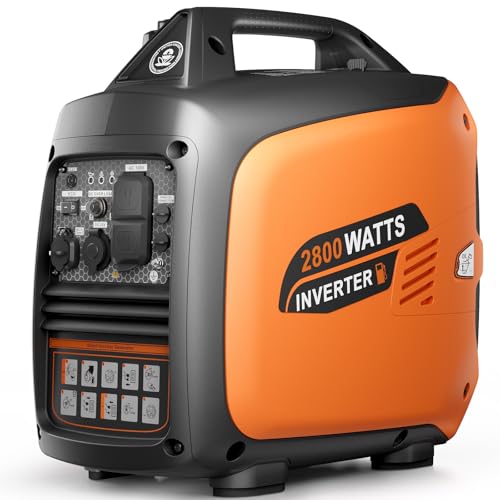
The Oxseryn 2800W portable inverter generator is an enclosed, gasoline-powered unit designed for U.S. homeowners, RV campers, and outdoor enthusiasts seeking manageable emergency backup power. Built on an inverter-based electrical conversion platform, this generator separates itself from traditional open-frame machines by delivering electronically regulated voltage rather than raw alternator output. Positioned for recreational travel and storm preparedness, it supplies 2,000 running watts and 2,800 peak starting watts to handle moderate utility interruptions and off-grid power needs.
Electrical performance centers around an EPA-compliant 79.8cc 4-stroke OHV engine paired with an inverter stage that maintains total harmonic distortion (THD) below 3%. This low THD figure represents true utility-grade power, making it appropriate for charging delicate electronics such as laptops, cellular phones, drones, camera batteries, and portable power stations without harmonic overheating. Operating from a 1.1-gallon fuel tank with an integrated fuel gauge, the generator delivers up to 9 hours of continuous runtime under a 25% electrical load when running in Eco mode. The continuous 2,000-watt output is suited for running single critical home appliances, such as an efficient refrigerator or small freezer, alongside communications gear.
The physical build emphasizes quiet operation and user-friendly transport. Fully enclosed plastic housing keeps operating noise under 58 dBA at a distance of 23 feet, allowing users to comply with standard campground noise ordinances and maintain neighborhood peace during severe weather outages. Weighing approximately 40 pounds with compact dimensions of 18.6 by 11.2 by 19.2 inches, the unit can be lifted and placed into a vehicle trunk or truck bed by a single adult using the molded top handle. The front panel features two standard 120V AC household receptacles, a 12V DC outlet, a USB-A port, and a USB-C port, eliminating the need for standalone wall adapters when charging modern personal devices.
Setup, fueling, and off-season storage are streamlined by practical design choices. The generator includes a dedicated fuel shut-off control that permits the engine to burn through all residual gasoline in the carburetor before shutting down, which helps prevent stale fuel varnish from clogging the jet during long storage periods. Brand-new units may exhibit a faint gasoline smell out of the carton because of mandatory factory testing. If the generator is deployed at elevations above 4,000 feet, the manufacturer recommends installing an optional high-altitude carburetor jet to prevent rich fuel mixtures, rough running, and carbon buildup, switching back to the stock jet once returning to lower altitudes.
Despite its efficiency, the generator has clear power and operational boundaries that buyers must account for before purchase. A 2,000-watt running limit and 120V-only electrical architecture mean this machine cannot support high-draw 240V appliances like central air conditioners, electric water heaters, or high-capacity well pumps. While the panel includes parallel connection ports, doubling output requires purchasing a separate, compatible parallel kit and a second inverter generator. Furthermore, runtime drops as electrical loads rise above the 25% benchmark, and the unit lacks push-button electric start or wireless remote capabilities, relying instead on a manual recoil pull rope.
The Oxseryn 2800-watt inverter generator represents a reliable, budget-conscious choice for campers, tailgaters, and homeowners who need to keep basic food preservation, lighting, and communication devices operational during an outage. Its combination of sub-3% THD power, lightweight 40-pound portability, and quiet operation delivers practical value without excessive bulk. Homeowners seeking whole-house coverage, heavy-duty jobsite tool support, or propane versatility should bypass compact 2,000-watt models in favor of larger dual-fuel or high-wattage 120/240V inverter units.
Inverter technology operates differently from conventional mechanical generators by producing multiphase AC power, converting it to direct current (DC), and then digitally inverting it back into clean alternating current (AC). The Oxseryn 2800W model delivers less than 3% total harmonic distortion (THD), which matches or exceeds standard residential utility grid cleanliness. Conventional open-frame portable generators frequently generate THD levels of 10% to 25%, creating electrical noise and voltage spikes that can degrade sensitive power supplies over time.
Because this generator maintains a documented THD rating under 3%, it is well-suited for powering modern solid-state microprocessors, laptops, cellular smartphones, CPAP devices, camera systems, and rechargeable battery power stations. Operating the generator in its selectable Eco mode allows the internal engine governor to adjust RPM dynamically according to real-time electrical demand rather than running constantly at high speed. This variable engine speed protects sensitive loads from sudden surges while conserving fuel during periods of low power consumption.
Internal combustion engines lose air density at higher elevations, which alters the air-to-fuel ratio and affects overall engine efficiency. For users operating this 79.8cc OHV engine above 4,000 feet (approximately 1,200 meters), the manufacturer recommends installing a high-altitude carburetor jet kit. Operating at elevated altitudes without the proper jetting can lead to rich fuel mixtures, reduced power output, excessive spark plug fouling, increased emissions, and hard manual starting. When returning to sea level or lower elevations, the standard carburetor jet must be reinstalled to avoid running too lean, which can cause engine overheating.
Long-term reliability is closely tied to proper fuel management and carburetor cleanliness. The integrated fuel shut-off valve allows users to stop the flow of gasoline from the 1.1-gallon tank while letting the engine run until the carburetor float bowl is entirely empty. This maintenance practice prevents modern ethanol-blended gasoline from evaporating, separating, and forming gum or varnish inside the small internal passages of the carburetor during seasonal storage.

Pros
- Electric start capability makes powering up the generator quick and accessible during power outages.
- Produces 4,750 surge watts and 3,750 rated watts to support multiple essential household or jobsite loads.
- Includes a wheel kit and folding handles, significantly improving mobility for a 112.5-pound machine.
- Digital readout assists with tracking operational hours and scheduling critical routine maintenance.
- CARB and EPA III certified for compliant operation in all 50 states.
Cons
- Single-fuel gasoline operation lacks alternative fuel flexibility such as liquid propane or natural gas.
- Conventional open-frame generator design with AVR is not an enclosed inverter system.
- Supplied specifications do not detail individual receptacle configurations, requiring buyers to verify outlet types for specific cords.
The WEN 56475 is a conventional portable gasoline generator engineered for residential emergency preparedness, outdoor projects, and jobsite utility power. Driven by an internal combustion 223cc engine, this machine delivers 3,750 continuous rated watts alongside 4,750 surge watts. It occupies a practical middle-tier capacity range for American homeowners seeking to keep core household circuits or appliances energized during severe weather and utility blackouts without investing in a permanently installed standby system.
Electrical performance centers on its dual-output power ratings, which distinguish between ongoing operating loads and temporary motor-starting demands. The 3,750 rated watts represent the continuous electrical threshold the generator can supply simultaneously across connected devices. The 4,750 surge watts provide momentary headroom to accommodate the inrush current demanded by compressor-driven appliances such as refrigerators, freezers, or sump pumps. Power delivery is stabilized by an automatic voltage regulator (AVR), which helps buffer voltage swings as electrical loads switch on and off.
System build and operator safety are integrated directly into the structural frame. The unit features built-in overload protection to interrupt circuit flow if demand exceeds design capacity, alongside an automatic low-oil shutdown sensor that prevents the 223cc engine from running dry. An integrated digital readout serves as an operational hour meter, helping users monitor run times to maintain scheduled oil changes and engine service intervals. The generator also meets both CARB and EPA III standards, ensuring emissions compliance across all 50 states.
Mobility and starting ease are key highlights of the mechanical setup. With an operational weight of 112.5 pounds and dimensions measuring 26.6 by 17.1 by 17.3 inches, the machine incorporates a factory-supplied wheel kit and folding handles to streamline transit across driveways, yards, or jobsites. Electric start functionality allows users to start the engine without relying entirely on a manual recoil rope, which proves especially beneficial during freezing weather or stressful storm conditions. Because fuel-burning generators generate hazardous carbon monoxide, this unit must always be operated outdoors on stable ground, positioned well away from open doors, windows, and structure vents.
Understanding operational boundaries is essential when planning backup strategies. The WEN 56475 relies on a single-fuel gasoline architecture, meaning operators must maintain fresh fuel reserves and stabilize gasoline for prolonged storage. The supplied data does not list fuel tank volume, runtime figures, or specific outlet combinations, so buyers must verify plug configurations before matching cords or setting up transfer equipment. Furthermore, this conventional open-frame design differs from fully enclosed inverter generators, making load planning vital when connecting sensitive electronics.
This generator is best suited for budget-conscious homeowners, DIYers, and contractors who need dependable, mid-range portable power with electric-starting convenience. It provides sufficient continuous wattage for prioritized emergency backup and standard jobsite equipment. Buyers who require multi-fuel versatility, ultra-quiet enclosed inverter operation, or automatic whole-house coverage should consider dual-fuel units, specialized inverter models, or dedicated standby generators instead.
The core power plant of the WEN 56475 consists of a 223cc engine that generates 3,750 rated watts and 4,750 surge watts. Rated watts indicate the ongoing electrical capacity available to power simultaneous loads, while surge watts offer the brief burst capacity needed to turn over electric motors and compressors. An onboard automatic voltage regulator (AVR) actively conditions output voltage to keep power delivery consistent under shifting loads.
Starting the generator is streamlined by an onboard electric-start mechanism. This feature reduces physical strain by providing fast ignition at the flip of a switch, retaining manual recoil starting as a dependable secondary method. Integrated overload protection works in tandem with the engine architecture, tripping automatically if connected appliances attempt to draw current beyond the generator's operating threshold.
The WEN 56475 includes dedicated hardware for field handling and engine longevity. The supplied wheel kit and folding handle assembly allow one person to guide the 112.5-pound frame across varied ground conditions, while the 26.6 by 17.1 by 17.3 inch footprint fits conveniently inside standard garages or utility sheds when not in operation. A digital readout provides continuous hour tracking to ensure that preventative maintenance, such as oil changes, occurs at recommended intervals.
Safe operation requires strict adherence to outdoor deployment guidelines. Internal combustion engines produce lethal carbon monoxide gas, meaning this generator must never be operated inside homes, basements, garages, sheds, or enclosed porches, even with doors open. Automatic low-oil shutdown adds critical internal equipment protection by stopping the engine immediately if lubrication drops below safe operating levels.

Pros
- Robust 4,000 running watts and 5,000 peak watts capacity comfortably handles essential household or RV loads
- Inverter-driven architecture is engineered to provide stable, clean power for delicate electronic equipment
- Automated Eco-Mode helps manage engine speed to optimize gasoline consumption under variable loads
- Compact design at roughly 20 by 13 by 19 inches makes vehicle packing and storage straightforward
Cons
- Manufacturer does not document a specific total harmonic distortion (THD) percentage or pure-sine-wave certification
- Runtime hours, fuel tank capacity, starting mechanism, and exact receptacle configurations are omitted from the supplied specifications
- Listing does not provide a verified decibel (dBA) rating to quantify operating sound levels
The maXpeedingrods 5KW Inverter Generator is an enclosed portable power unit engineered to deliver 4,000 running watts and 5,000 peak watts using inverter-based power conversion. Operating on gasoline, this model is positioned primarily for recreational vehicle owners, outdoor campers, mobile vendors such as food truck operators, and suburban or rural homeowners seeking emergency backup power during storm-related utility outages. Because it utilizes an engine-driven inverter system rather than a standard open-frame conventional alternator, it is specifically configured to deliver stable electrical current for modern utility demands.
Electrical capability is defined by its continuous 4,000-watt output, with a 5,000-watt peak threshold to accommodate initial startup surges from inductive motor-driven appliances. The manufacturer identifies this generator as providing clean power suitable for sensitive electronic gear, including smart devices, laptop computers, and cameras. However, because a specific total harmonic distortion (THD) numerical rating is not published in the manufacturer documentation, buyers should review the power-quality requirements of ultra-sensitive equipment. In home backup applications, 4,000 running watts can energize critical circuits such as standard refrigerators, lighting networks, communication hubs, and sump pumps, though it does not provide whole-house electrical service and requires disciplined load budgeting.
The unit features an integrated Eco-Mode designed to adjust engine operation automatically according to the active electrical load. Under lower electrical demand, this operating mode lowers engine speed to conserve gasoline and reduce unnecessary mechanical wear. Physically, the generator occupies a footprint of roughly 20 inches in length, 12.9 inches in width, and 19 inches in height. This relatively compact structure allows the generator to be transported in passenger vehicle trunks, truck beds, or RV cargo compartments without occupying excessive space during travel or off-season garage storage.
Deployment and day-to-day operation center around safety, proper placement, and power management. As a gasoline-powered combustion engine, the generator produces hazardous carbon monoxide exhaust and must operate strictly outdoors, positioned far away from open windows, doors, and intake vents. It must never be operated inside a home, garage, shed, or enclosed patio. For emergency household connection, users should rely on heavy-duty, outdoor-rated extension cords connected directly to appliances, or consult a qualified electrician regarding a properly installed manual transfer switch, avoiding any hazardous attempts to backfeed domestic wiring through standard wall receptacles.
Prospective buyers must weigh several specification gaps when evaluating this model. The provided manufacturer data does not state the fuel tank capacity, expected runtime at a specific load percentage, operational noise levels in decibels, or the starting mechanism (such as recoil versus electric start). Furthermore, while the generator is described as having an RV-ready design, the exact receptacle configurations, circuit breaker ratings, and whether it includes a dedicated TT-30R connector are not itemized. Users needing specific runtimes or verified sound ratings for strict camping regulations will need to confirm those parameters prior to purchasing.
Ultimately, the maXpeedingrods 5000-watt inverter generator serves as an accessible, high-output portable inverter generator for budget-conscious RVers, DIY operators, and storm-preparedness shoppers. It bridges the output gap between smaller 2,000-watt recreational suitcase generators and heavy commercial jobsite machines. Users who require dual-fuel capability, documented low-THD lab figures, or 240-volt high-amperage output for large central air conditioning systems may need to consider larger dual-fuel open-frame units or permanent standby generators instead.
The maXpeedingrods 5KW generator is specifically positioned for mobile recreational applications, catering to campers, travel trailer owners, and tailgaters who need substantial portable wattage. With 4,000 continuous running watts, the unit provides enough power to support essential RV electrical demands, including lighting, microwave ovens, entertainment systems, and auxiliary battery charging setups without straining the generator.
Its stated RV-ready configuration provides a dedicated portable solution for travelers off the grid, though operators should calculate combined electrical loads before operating high-draw appliances simultaneously. For instance, motor-driven air conditioning units demand a high initial surge, which draws heavily against the 5,000 peak watt capacity. Managing your recreational power budget ensures consistent, uninterrupted power throughout camping trips and tailgates.
For storm-preparedness and emergency electrical backup, this 5,000 peak watt inverter generator offers immediate utility when severe weather disrupts the municipal power grid. Homeowners can prioritize essential living loads by running food preservation freezers, standard refrigerators, portable fans, and emergency communication electronics, mitigating the stress of multi-day outages.
Safe deployment remains paramount during severe weather recovery. Fuel-burning generators emit toxic carbon monoxide fumes and must run exclusively in well-ventilated outdoor areas, safely distanced from dwelling entrances. Users should maintain fresh gasoline supplies, ensure extension cords are properly rated for outdoor wattage, and never attempt unapproved connections to residential breaker panels without professional transfer equipment.
Pros
- Exceptionally portable 40-pound design with a molded top handle for effortless one-person carrying
- Multi-interface panel includes modern USB Type-C, standard USB, 12V DC, and dual 120V AC outlets
- Listed 58 dBA sound rating at 23 feet helps maintain low noise levels during campsite or residential backup use
- Parallel capability allows users to pair units together if future power demands increase
- Achieves up to 10 hours of operation at a 25 percent load condition on gasoline
Cons
- Limited to 120V output and 2,000 continuous watts, which cannot power 240V heavy appliances or central home HVAC systems
- The manufacturer does not publish a specific numeric Total Harmonic Distortion (THD) percentage
- Fuel tank capacity is not disclosed in the official technical specifications
The EFURDEN 2800W portable inverter generator is an engine-driven, gasoline-powered unit engineered for outdoor recreational users, campers, tailgaters, and homeowners seeking manageable emergency backup during severe weather. Operating on an inverter-based electrical conversion architecture, this enclosed generator transforms raw combustion-engine output into regulated alternating current suitable for standard 120V household equipment and mobile devices. Unlike battery-powered portable power stations, this machine contains no internal battery storage and generates electricity exclusively through fuel combustion, delivering continuous power as long as fresh gasoline is supplied.
Electrical performance centers around 2,000 running watts and 2,800 peak starting watts, offering sufficient continuous capacity for basic household essentials, portable refrigeration, or small jobsite tools. The manufacturer highlights clean, stable power suitable for charging smartphones, laptops, cameras, and drones, though an exact numeric Total Harmonic Distortion (THD) rating is omitted from the official specifications. Under a modest 25 percent electrical load, the generator is rated to run for up to 10 hours, providing reliable overnight support for lighting, router equipment, and food preservation during utility disruptions. The front panel is equipped with two 120V AC household outlets, a 12V DC outlet, a standard USB-A port, and an updated USB Type-C interface, allowing direct charging of modern consumer electronics without separate charging bricks.
The physical build features a fully enclosed housing measuring 18 by 11 by 19 inches, constructed to suppress engine noise and protect internal mechanical components from dust and debris. Weighing just 40 pounds, it stands out as one of the lighter units in the 2,000-watt running class, allowing a single adult to lift it into a vehicle trunk, truck bed, or camper bay using the molded top carry handle. The unit incorporates an integrated ECO mode function that regulates engine speed based on the connected load rather than running wide open continuously, optimizing fuel usage and sound levels. At a measured distance of 23 feet, the manufacturer lists operational sound at 58 dBA, which helps prevent disruptive noise around crowded campsites and suburban neighborhoods.
Setting up and maintaining this generator requires careful attention to load planning and strict adherence to outdoor combustion safety rules. The machine includes built-in parallel ports, enabling owners to link two compatible inverter generators using a parallel kit to increase overall output without upgrading to a significantly heavier single generator. Because this engine-driven generator produces toxic carbon monoxide exhaust, it must strictly be operated outdoors on a dry, level surface far away from occupied spaces, windows, doors, and vents. It must never be run inside a home, garage, shed, basement, or enclosed porch, and appliances should always be connected via outdoor-rated, grounded extension cords matched to the electrical load.
While the generator provides outstanding mobility and versatile interface connections, potential buyers should recognize its operational limitations. The continuous rating of 2,000 running watts at 120 volts cannot support 240V heavy residential appliances such as central heat pumps, electric clothes dryers, or deep well pumps. Additionally, the manufacturer does not specify the exact fuel tank volume, and the absence of a stated numeric THD percentage means buyers powering sensitive electronics or specialized medical equipment must evaluate power compatibility carefully. Starting and parallel kit accessories are also sold separately and require confirmation of model compatibility before purchase.
For RV travelers, tent campers, tailgaters, and budget-conscious suburban households, the EFURDEN 2800W portable inverter generator offers a well-rounded combination of lightweight handling, quiet operation, and essential backup capacity. It is well suited for powering individual refrigerators, small appliances, entertainment devices, and jobsite tools where high-voltage 240V power is not required. Users seeking whole-house coverage, multi-fuel propane versatility, automatic transfer switch compatibility, or high continuous wattage should consider larger dual-fuel open-frame inverters or permanent standby generator systems instead.
The EFURDEN 2800W inverter generator features a comprehensive electrical interface designed for direct plug-and-play operation during outdoor recreation and emergency power cuts. The control panel includes two standard 120V AC household receptacles that supply up to 2,000 running watts of continuous power for running portable appliances, floor fans, and power tools. These outlets allow homeowners to keep essential refrigeration or communications running during grid failures without needing specialized wiring.
In addition to traditional alternating current, the control panel integrates direct-current charging interfaces, including one 12V DC port, a standard USB-A port, and a modern USB Type-C port. This variety allows users to recharge smartphones, mobile gear, camera batteries, and camping accessories directly from the generator panel without occupying standard AC outlets. Dedicated parallel terminals are also present, allowing connection to another compatible inverter generator via an appropriate parallel cable when higher continuous electrical capacity is necessary for demanding equipment.
Weighing approximately 40 pounds, the EFURDEN 2800W inverter generator is engineered for true one-person portability. Its compact footprint of 18 by 11 by 19 inches and integrated molded top handle make it easy to lift, transport, and pack into tight vehicle trunks or RV compartments without requiring a separate wheeled frame or multi-person handling.
The fully enclosed body works in combination with an automated ECO mode system to control mechanical noise during operation. By adjusting engine speed to match actual electrical demand, the generator operates at a manufacturer-rated sound level of 58 dBA from a distance of 23 feet. This relatively quiet sound profile helps adhere to noise guidelines in public campgrounds and prevents disruptive engine roar in residential areas during power outages. Proper safety protocols require that the unit be placed outdoors on a stable, level surface away from living areas to ensure proper ventilation of exhaust fumes.

Pros
- Capable power profile with 4,000 running watts and 5,000 starting watts to support multiple household appliances or jobsite power tools.
- Documented power quality under 3% THD provides safe operation for sensitive electronics without requiring additional line conditioning.
- Diverse electrical interface equipped with four standard 120V outlets, a dedicated 120V 30A NEMA L5-30R twist-lock RV receptacle, and dual USB ports.
- Certified carbon monoxide safety shutoff system compliant with ANSI G300 and UL2201 standards.
- Generous 3.43-gallon fuel tank delivers up to 10 hours of continuous power at 50% load.
Cons
- Operates strictly on 120V electrical architecture, lacking 240V split-phase capability for heavy appliances like central air conditioners or well pumps.
- At an overall weight of 89 pounds, single-person lifting and vehicle transport can be physically demanding without assistance.
- The provided specifications do not list multi-fuel functionality such as propane support or parallel capability.
The AMERISUN 5000W portable inverter generator is an engine-driven power unit built around a 223cc OHV engine, delivering 4,000 continuous running watts and 5,000 peak starting watts. Positioned primarily for recreational vehicle owners, outdoor jobsites, and suburban households preparing for severe weather outages, this unit utilizes an inverter-based electrical power-conversion architecture. Unlike traditional open-frame conventional generators that can exhibit wide voltage and frequency fluctuations, this inverter platform stabilizes electrical delivery for modern residential and outdoor requirements while balancing physical footprint and power capacity.
Electrical performance centers on continuous versus temporary capacity, where the 4,000 running watts represent ongoing electrical support and the 5,000 starting watts provide brief surge capacity to overcome initial inductive motor demand. The manufacturer explicitly documents a total harmonic distortion (THD) level of under 3%, which qualifies as clean electrical power suitable for charging sensitive consumer electronics such as laptops, tablets, and smartphones without auxiliary line conditioners. Operating runtime extends up to 10 hours under a 50% electrical load using its integrated 3.43-gallon (13-liter) fuel tank, offering dependable overnight capability for standard essential appliances.
Receptacle availability on the control panel accommodates diverse connection setups without requiring immediate aftermarket adapters. The interface includes four standard 120V 20A household AC receptacles, one 120V 30A NEMA L5-30R twist-lock RV outlet, one 12V DC port, and two 5V USB charging ports. Safety systems are certified to UL2201 and ANSI G300 standards, featuring an integrated carbon monoxide (CO) sensor shutoff, overload protection, overheat monitoring, and low-oil auto-shutdown. Even with advanced CO sensor technology present, engine-driven generators produce toxic carbon monoxide exhaust and must operate outdoors away from open doors, windows, and home ventilation points.
Operational efficiency is aided by a dedicated ECO mode switch, which allows the 223cc engine to regulate its operating speed according to connected electrical load instead of constantly running at maximum velocity. At 89 pounds with physical dimensions of 26 x 19 x 22 inches, the generator delivers substantial power in a manageable footprint, though moving the unit into high truck beds or over rough jobsite terrain typically requires steady physical effort or a two-person lift. The product holds EPA compliance and comes supported by a 2-year manufacturer warranty for added mechanical assurance.
Prospective buyers must account for notable design boundaries before finalizing their electrical plans. Because this unit outputs 120V power exclusively, it cannot energize 240V split-phase household appliances such as central air conditioners, electric water heaters, or high-draw 240V well pumps through a home transfer panel. Additionally, the manufacturer specifications do not indicate dual-fuel or propane functionality, confining fuel management strictly to standard gasoline supplies. Parallel capability is also not documented in the provided data, meaning capacity cannot be linked to a secondary unit using a parallel kit.
For RV travelers seeking a direct 30-amp hookup, as well as property owners who need to keep refrigerators, freezers, portable sump pumps, lighting circuits, and communication gear energized during unexpected utility interruptions, the AMERISUN 5000W generator serves as a practical, high-value solution. Those requiring heavy 240V household backup, secondary fuel alternatives, or lightweight one-hand portability will need to look toward larger dual-fuel generators or compact 2000-watt recreational units instead.
The AMERISUN inverter generator produces 4,000 running watts and 5,000 starting watts, supported by an internal 223cc OHV engine. The continuous 4,000-watt threshold defines the ongoing operating capacity for connected equipment, while the 5,000 starting watts supply temporary overhead for inductive motor startup demands.
Clean power is verified by a documented total harmonic distortion rating under 3% THD. This clean sine-wave regulation helps protect sensitive microprocessor-controlled electronics such as laptops, routers, gaming consoles, and mobile devices from electrical noise.
The front power distribution panel provides four 120V 20A household AC outlets, one 120V 30A NEMA L5-30R twist-lock RV receptacle, two 5V USB ports, and a 12V DC outlet. These receptacles offer direct plug-in versatility for power tools, recreational trailers, and multiple extension cords during storm emergencies.
Safety engineering on this AMERISUN model includes an automated carbon monoxide (CO) sensor system certified under ANSI G300 and UL2201 standards. This mechanism monitors ambient exhaust levels and automatically shuts down the engine if hazardous carbon monoxide concentrations accumulate near the machine.
Despite the inclusion of an automated CO shutoff, all combustion-engine generators must operate outdoors at a safe distance from living spaces, open windows, doors, and air intakes. The presence of a CO shutoff sensor does not make indoor, garage, shed, or covered porch operation safe.
Additional operational safeguards include low-oil automatic shutdown to prevent internal engine seizure, thermal overheat protection, and circuit overload breakers to prevent electrical damage. The unit also satisfies standard EPA emissions guidelines.
Pros
- Dual-fuel flexibility allows switching between standard gasoline and clean-storing propane.
- Substantial inverter output provides 5,250 continuous watts and 6,000 surge watts for larger loads.
- Documented power quality under 3% THD ensures clean voltage for modern electronics.
- User-friendly remote key-fob starting eliminates the need for manual pull-starting.
- Built-in carbon monoxide sensor adds critical automatic shutoff protection.
Cons
- Dry weight of 117.9 pounds makes two-person lifting necessary when loading into vehicles or storage.
- Supplied specifications do not document fuel-specific wattage differences between gasoline and propane.
- Receptacle configuration details and runtime hours are not specified in the manufacturer data and must be verified before purchase.
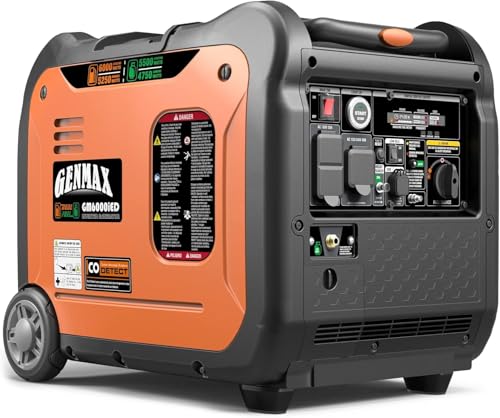
The GENMAX GM6000iED is an enclosed portable inverter generator designed for residential emergency backup, RV use, camping, and jobsite applications. Powered by a 224cc 4-stroke OHV engine, this model operates on either gasoline or propane, giving users valuable fueling flexibility during extended weather emergencies or remote travels. By pairing high electrical output with an inverter-based power architecture, it fills the gap between compact, low-wattage recreational generators and heavy, loud open-frame industrial machines. For U.S. homeowners preparing for seasonal storm outages or travelers managing high electrical loads, it provides a versatile and capable power generation platform.
Electrical output is a primary strength of the GM6000iED, providing 5,250 rated running watts and 6,000 peak starting watts. Unlike conventional portable generators that may produce significant electrical distortion, this unit utilizes an advanced inverter conversion stage that limits total harmonic distortion (THD) to less than 3%. This documented clean power waveform is suitable for operating sensitive microprocessors found in laptops, smart televisions, and modern appliances without risk of electrical interference. Monitoring output is straightforward thanks to an integrated 5-in-1 digital data center that displays running hours, output voltage, active load percentage, operating frequency, and gasoline fuel levels in real time. Potential buyers should verify the specific outlet panel configurations and voltage delivery options against their specific transfer switches or RV power cords, as exact plug types are not detailed in the base product data.
Engine operation and acoustic management are tailored for neighborhood and campground environments. The manufacturer lists noise levels as low as 62 dBA when tested at a 23-foot distance under a 25% electrical load, supported by an acoustic enclosure and an intelligent Low Idle Mode that automatically adjusts engine RPM to match electrical demand. A 3.6-gallon gasoline fuel tank provides a solid on-board reservoir for extended operation. Operating on propane offers an added advantage for emergency preparedness, as liquid propane can be stored indefinitely without the gumming and carburetor varnish common to untreated gasoline.
Everyday operation is engineered around user convenience and active safety. Starting the unit is simplified through an included remote-control key fob, enabling push-button ignition without walking out to the generator in harsh weather. Portability is managed by a single telescopic pull handle and two integrated rolling wheels, which allow a single operator to move the 117.9-pound machine across hard surfaces. Crucially, the GM6000iED includes a factory-installed CO Detect module that continuously samples ambient air and initiates an automatic engine shutdown if unsafe concentrations of carbon monoxide are identified. While this safety feature provides vital protection, this engine-driven generator must always be operated outdoors in open spaces well away from windows, doors, and living areas.
Despite its strengths, prospective buyers must consider several practical limitations. Weighing 117.9 pounds and measuring 24 by 18.5 by 21.1 inches, lifting this unit into an SUV tailgate or elevated truck bed typically requires two capable adults or specialized loading ramps. Additionally, while dual-fuel generators traditionally experience a modest drop in available wattage and fuel efficiency when running on propane compared to gasoline, the manufacturer data does not specify exact propane-mode wattage ratings or estimated runtimes per tank. Buyers requiring split-phase 240V power for heavy central air conditioning or multi-wire home circuits must also verify voltage compatibility prior to selection.
For homeowners needing dependable power for essential household circuits, refrigerators, freezers, and communication equipment during grid failures, the GENMAX GM6000iED represents a capable, feature-dense investment. It is equally appropriate for RV owners and outdoor enthusiasts seeking high wattage without the harsh noise and dirty electrical output of traditional contractor generators. Buyers whose priority is lightweight, sub-50-pound hand-carried portability or those needing dedicated whole-house 240V standby power should evaluate smaller suitcase inverters or permanently installed home standby systems instead.
The GENMAX GM6000iED utilizes an engine-driven alternator coupled with an electronic inverter stage to generate 5,250 continuous rated watts and 6,000 peak surge watts. This architecture completely decouples engine speed from the electrical output frequency, allowing the 224cc 4-stroke OHV engine to slow down under light loads rather than running at a fixed 3,600 RPM. This variable-speed behavior, engaged via the unit's Low Idle Mode, reduces mechanical wear, moderates fuel consumption, and keeps operational noise within reasonable limits.
Power cleanliness is a key metric for modern inverter generators, and the GM6000iED is documented to deliver electrical output with less than 3% total harmonic distortion (THD). High distortion levels from conventional open-frame generators can cause overheating in delicate power supplies, variable-speed fan motors, and smart consumer appliances. With its clean sine-wave output, this generator provides power quality comparable to commercial utility grids, making it appropriate for desktop computers, gaming systems, modern refrigeration controls, and flat-panel displays. Real-time operating conditions can be monitored continuously on the 5-in-1 digital meter, which tracks active load percentage, voltage, line frequency, operating hours, and remaining fuel.
Dual-fuel functionality gives the GENMAX GM6000iED substantial operational flexibility during natural disasters and extended outages when standard filling stations may experience fuel shortages or power failures. The generator can run directly from its integrated 3.6-gallon gasoline tank or draw from a portable liquid propane cylinder. Propane burns cleanly, does not degrade during long-term storage, and prevents the carburetor clogging often caused by ethanol-blended pump gas during extended storage intervals between storm seasons.
Safety engineering on the GM6000iED is anchored by an active CO Detect monitoring system. Carbon monoxide is an odorless, colorless, and lethal byproduct of combustion engines. The internal sensor continuously evaluates surrounding air quality and cuts engine ignition automatically if carbon monoxide reaches dangerous thresholds. However, owners must note that safety shutoff systems are an emergency safeguard rather than a substitute for proper placement. The GM6000iED is EPA compliant and must always be operated outdoors on level ground, positioned well away from occupied buildings, open windows, and intake vents.

Pros
- Documented clean power output with under 3% THD safely supports delicate electronics and medical devices
- PowerRush technology provides generous 3,300-watt starting surge headroom for a compact 2,500-watt running unit
- Built-in COsense carbon monoxide monitoring adds a vital automatic shutdown safety layer
- Parallel-ready capability allows users to pair two units with a compatible kit to scale output as needs grow
Cons
- Single-fuel gasoline operation without native propane or natural gas multi-fuel support
- Manual recoil pull start with no electric push-button or remote starting system
- Limited to 120V output, making it unsuitable for powering 240V heavy appliances such as central AC or large well pumps
The Generac GP3300i is a compact, gasoline-powered portable inverter generator engineered for U.S. homeowners, campers, tailgaters, and DIY enthusiasts who require clean, dependable electricity in a portable format. Producing 2,500 continuous running watts and 3,300 peak starting watts, this enclosed unit utilizes modern inverter-based power conversion rather than a conventional open alternator assembly. At a manageable dry weight of 59.5 pounds, it gives individual users the ability to load, carry, and deploy a stable power supply for remote job tasks, campground living, or storm-related utility blackouts.
Electrical output performance is highlighted by Generac's PowerRush technology, which enables the generator to surge up to 3,300 starting watts to overcome the temporary startup demand of motor-driven loads like sump pumps, refrigerators, or power tools that might otherwise trip standard compact inverters. Power quality is carefully managed through onboard TruePower Technology, delivering a clean sine wave with less than 3% total harmonic distortion (THD). This documented low-THD threshold ensures that voltage-sensitive microprocessors inside laptops, mobile devices, CPAP machines, and smart televisions receive stable utility-grade power without risk of thermal stress or operational glitching.
Control and connection options are laid out across an intuitive front panel that features two standard 120V 20A household outlets, one 120V 30A twist-lock receptacle, and two USB-A ports for direct device charging without bulky adapters. Fuel management is controlled by an integrated Economy Mode switch, which automatically adjusts engine RPM to mirror real-time electrical draw rather than revving at high speed constantly. Using its compact 1.06-gallon fuel tank, the GP3300i delivers up to 7 hours of runtime at a 25% electrical load and approximately 4.5 hours at a 50% load, providing practical overnight or multi-hour operation between gasoline refills.
Portability and outdoor readiness are reinforced by an enclosed suitcase profile measuring 22.3 by 13.4 by 18.4 inches, complete with a sturdy molded handle for balanced one-person carrying. For public land recreation, the exhaust is fitted with a USDA-qualified spark arrestor, permitting safe and legal use in national parks and dry forestry environments. Operational safety is augmented by COsense technology, an automated safety mechanism that detects dangerous concentrations of carbon monoxide near the generator and shuts down the engine immediately to protect surrounding areas.
Despite its versatility, prospective buyers should keep realistic operational boundaries in mind before purchasing. The GP3300i is exclusively a gasoline-fueled generator with a manual recoil pull-start, lacking both multi-fuel propane versatility and the push-button convenience of an electric starter. In addition, the unit supplies 120V power only, which means it cannot power 240V household loads such as multi-ton central air conditioners, electric clothes dryers, or high-voltage well pumps. While the integrated COsense feature offers vital protection, users must always remember that all fuel-burning generators release lethal exhaust gases and must strictly operate outdoors well away from doors, open windows, and inhabited structures.
Ultimately, the Generac 3,300-watt inverter generator stands out as an exceptionally balanced portable power source for suburban families securing emergency basics, outdoor campers seeking quiet efficiency, and mobile workers needing clean electricity on remote sites. Those who require whole-home 240V capability, push-button electric start, or dual-fuel propane flexibility will need to step up to a larger open-frame or multi-fuel inverter model, but for high starting headroom, clean sine-wave output, and easy one-person portability, the GP3300i represents a solid and dependable investment.
The Generac GP3300i features an advanced inverter power-conversion stage paired with TruePower Technology, producing an electrical sine wave with less than 3% total harmonic distortion. This documented level of clean power mirrors standard residential utility grids, making it fully appropriate for modern sensitive electronics including microchip-controlled appliances, medical CPAP machines, laptops, and audio gear that are vulnerable to harmonic interference produced by traditional open-frame generators.
For connection versatility, the control panel provides two 120V 20A household receptacles for extension cords, a 120V 30A twist-lock receptacle for RV cords or transfer inlets, and two USB-A ports for direct mobile device charging. If energy needs increase, the generator is equipped with parallel-ready terminals that allow seamless connection to a second GP3300i via a sold-separately parallel kit, effectively doubling continuous electrical output without requiring a bulkier high-output generator.
Operational efficiency is anchored by Generac's built-in Economy Mode, which regulates engine speed dynamically according to connected load. By avoiding continuous maximum-throttle operation, the engine significantly curbs gasoline consumption and dampens acoustic output, stretching its 1.06-gallon fuel capacity to provide up to 7 hours of continuous run time under quarter-load conditions and 4.5 hours under half-load demand.
Onboard safety centers on Generac's COsense Technology, an advanced monitoring system designed to prevent carbon monoxide poisoning by shutting down the engine the moment elevated gas levels are detected. Complemented by a USDA-qualified spark arrestor for dry outdoor recreational zones, the unit satisfies essential fire and environmental guidelines. Regardless of built-in safety shutoffs, this engine-driven generator must always be positioned safely outdoors with exhaust facing away from living quarters.

Pros
- Exceptionally lightweight at 37.5 pounds, allowing easy single-handed carry and compact vehicle storage
- Carburetor fuel shutoff feature minimizes fuel stagnation and reduces carburetor cleaning issues between uses
- Built-in digital hour meter ensures accurate monitoring of run times for timely oil changes and servicing
- Two 120V receptacles and two USB ports support small appliances and mobile electronics without requiring special adapters
Cons
- Continuous 1,900-watt capacity cannot power large 240V household loads, central air conditioning, or heavy high-draw tools
- Manufacturer specifications do not provide a documented numeric THD percentage or decibel sound rating
- Does not include a 30-amp RV receptacle or documented parallel connectivity ports in the standard configuration
The WEN 56250i 2500-Watt Inverter Generator occupies a practical position in the compact, portable power category, utilizing an engine-driven inverter architecture designed for recreation, DIY tasks, and small-scale home emergency preparedness. Powered by an 80cc engine, this generator delivers 1,900 continuous rated watts alongside 2,500 starting surge watts. It is purpose-built for users who need a manageable, single-person portable power unit rather than a bulky whole-house machine, making it a viable match for tailgaters, tent campers, remote hobbyists, and homeowners seeking backup electricity for essential plug-in appliances during sudden utility disruptions.
Electrical delivery is managed through an inverter stage that converts and regulates generator output into stable 120-volt alternating current. The manufacturer highlights that this clean power generation helps protect sensitive microelectronics found in modern smartphones, laptops, and tablets from damaging voltage irregularities, though a specific total harmonic distortion (THD) percentage is not explicitly stated in the product documentation. For user connections, the front panel supplies two standard three-prong 120V household outlets and two 5V USB ports, letting you run a refrigerator, power basic lighting, or recharge vital communication equipment directly without extra adapters.
Mechanical reliability and maintenance ease stand out as key engineering priorities on the WEN 56250i. A notable inclusion is the dedicated fuel shutoff switch, which cuts off fuel delivery from the tank while letting the engine exhaust remaining gasoline inside the carburetor bowl before shutting down. This prevents stale fuel residue and varnish from clogging critical passages during seasonal storage, which is historically the primary cause of small engine starting trouble. Encased in an enclosed black chassis measuring 11.4 by 17.9 by 19.7 inches, the entire assembly weighs an easily manageable 37.5 pounds, complemented by an integrated top handle and an onboard hour meter that tracks run time to simplify routine oil change intervals.
Deploying this generator safely requires adherence to essential combustion safety practices. Because the 80cc engine consumes gasoline and produces carbon monoxide, it must strictly be operated outdoors in open spaces with clear airflow, stationed well away from windows, doors, and intake vents. Under no circumstances should it ever be run inside a home, garage, shed, or recreational vehicle interior, as exhaust fumes can rapidly prove fatal. When distributing power to household appliances during an outage, users should use heavy-duty, outdoor-rated extension cords connected directly to the unit panel rather than attempting unsafe, unapproved connections to residential wall outlets.
While the WEN 56250i excels in compact convenience, prospective buyers must recognize its deliberate capacity boundaries. A 1,900-watt running threshold is suitable for running a refrigerator, several LED lights, and charging electronics, but it cannot sustain large electric water heaters, central HVAC equipment, or high-draw 240V well pumps. Additionally, the unit does not feature a dedicated 30-amp RV receptacle or documented parallel capability for combining output with a second machine. Managing the simultaneous wattage of connected equipment is necessary to prevent overloading the generator section.
Ultimately, the WEN 56250i offers significant value for outdoor enthusiasts, mobile workers, and storm-conscious households needing lightweight, dependable 120V power without unnecessary mechanical bulk. The combination of sub-40-pound portability, dual USB ports, a three-year warranty, and an engine-saving carburetor fuel shutoff makes it an attractive investment for intermittent use. Buyers requiring multi-fuel flexibility, whole-panel transfer switch backup, or high starting wattage for central heating and cooling systems will need to step up to a higher-capacity dual-fuel or open-frame inverter generator instead.
Stale gasoline left inside a small engine carburetor is the most frequent cause of starting difficulties in portable generators. The WEN 56250i addresses this maintenance headache with an integrated fuel shutoff mechanism that stops fuel delivery while keeping the ignition circuit active. This allows the 80cc engine to consume every drop of fuel remaining inside the carburetor float bowl and fuel lines before coming to a stop, effectively eliminating gummy varnish deposits that typically foul jets during months of non-use.
Combining this fuel shutoff routine with a quality fuel stabilizer provides solid protection for seasonal readiness during storm seasons or between camping trips. Additionally, the onboard digital hour meter provides precise operating records, taking the guesswork out of maintenance schedules so owners can service engine oil and inspect air filters in accordance with manufacturer recommendations throughout the three-year warranty period.
A Complete Engineering Guide to Sizing Your Home Portable Generator
Establishing the correct generator capacity requires a methodical assessment of household electrical demands rather than guesswork. An undersized unit repeatedly trips its circuit breakers, risks damaging sensitive electronics, and can overheat its alternator windings during motor startups. Conversely, an excessively large machine consumes fuel rapidly, produces unnecessary noise, and increases storage challenges during long periods of standby. Taking control of your emergency power plan begins by cataloging essential appliances, separating continuous running requirements from initial startup surges, and building in a protective buffer for dependable operation.
Distinguishing Continuous Running Watts from Peak Starting Surge
Electrical appliances divide into two primary categories known as resistive loads and inductive motor loads. Resistive devices, such as incandescent lamps, coffee makers, and space heaters, demand a steady and predictable amount of energy from the moment you turn them on. Inductive appliances rely on electric motors or compressors that require an initial burst of electricity to break mechanical inertia and spin up to operational speed. This brief inrush current, often referred to as starting or surge wattage, can demand two to three times the power that the appliance needs to remain running.
A standard kitchen refrigerator might consume roughly 700 continuous running watts while cooling, yet its compressor can briefly draw 1,500 to 2,200 starting watts when cycling on. If your generator cannot deliver that momentary peak, the engine will bog down, drop system voltage, or trip the breaker. Modern inverter units often incorporate electronic surge management circuits, such as Generac PowerRush technology, to provide brief output spikes beyond continuous limits without stalling. Open-frame utility units, such as the WEN 56475, provide 4,750 surge watts from a 223cc engine to absorb these heavy motor spikes.
Cataloging Essential Household Appliances and Emergency Circuits
Creating an accurate household load profile requires identifying which circuits are genuinely necessary for safety, health, and property protection during an outage. Most homeowners prioritize keeping food preserved, maintaining basement water removal, sustaining critical communication devices, and powering home heating controls. A typical kitchen refrigerator requires between 600 and 800 running watts, while a standard sump pump demands approximately 800 running watts and 2,100 surge watts. Forced-air furnaces rely on an electric blower motor, which typically draws 600 to 800 running watts with a starting spike around 1,400 watts.
Secondary convenience loads add modest continuous wattage but make an extended blackout substantially more manageable. Modern LED light fixtures draw only 10 to 15 watts each, while a home Wi-Fi router and laptop charger combined usually pull under 100 watts. Medical equipment, including CPAP machines and oxygen concentrators, generally requires between 100 and 400 continuous watts depending on whether humidification heaters are active. When outdoor temperatures climb during summer emergencies, homeowners frequently integrate dedicated portable generators for air conditioners to handle the heavy inductive spikes of window units or small central systems.
The Mathematical Sizing Formula: Step-by-Step Calculation
Calculating the exact generator size requires three distinct mathematical steps to avoid overloading the alternator. First, list every appliance you intend to operate simultaneously and calculate the sum of their continuous running watts. Second, review that list to find the single largest starting surge requirement among your motor-driven appliances, then subtract its running watts to determine the starting deficit. Third, add that single largest starting deficit to your total running watts, because motors rarely start at the exact same fraction of a second.
Consider a realistic emergency backup scenario where you need to run a refrigerator, a sump pump, a furnace blower, ten LED bulbs, and a wireless router. The continuous running watts sum to roughly 2,350 watts, representing your baseline electrical floor. The sump pump has the highest starting surge at 2,100 watts, which represents a 1,300-watt surge deficit above its 800-watt running load. Adding that 1,300-watt deficit to your 2,350-watt continuous total reveals a minimum peak requirement of 3,650 watts.
Prudent electrical planning dictates adding a 20 to 25 percent continuous operating buffer to your calculated baseline. Operating a generator at 100 percent of its continuous rating creates thermal stress, increases engine wear, and accelerates fuel consumption dramatically. Adding a 20 percent buffer to our 2,350 running watt baseline produces a target continuous rating of approximately 2,820 running watts. In this scenario, selecting a generator with at least 3,000 running watts and 4,000 surge watts provides ample headroom for reliable long-term performance.
Matching Generator Capacity Tiers to Outage Scenarios
Generators naturally group into distinct capacity categories designed for specific emergency and recreational demands. The compact entry tier ranges from 1,500 to 2,500 peak watts, represented by units like the Champion 1500-Watt generator and the WEN 56250i. These lightweight machines weigh under 40 pounds, run quietly, and sip minimal fuel while handling a single refrigerator, a few lamps, and basic personal electronic devices. They cannot run heavy motor loads simultaneously, but their exceptional portability makes them outstanding for quick deployment during brief localized outages.
The mid-capacity tier spans from 3,000 to 5,000 watts and serves as the sweet spot for suburban homeowners seeking critical circuit coverage. Units in this category, such as the AMERISUN 5000W inverter or the maXpeedingrods 5KW generator, offer 4,000 running watts and can easily support a refrigerator, a sump pump, and a furnace blower at the same time. These generators often include dedicated 30-amp receptacles, enabling seamless connection to a manual transfer switch or power inlet box. Their enclosed inverter architecture suppresses engine noise while delivering sufficient muscle to handle multiple household branch circuits without hesitation.
The heavy backup tier covers units producing 6,000 watts and higher, designed for rural properties or homeowners with substantial electrical loads. Models like the GENMAX GM6000iED provide 5,250 rated watts, while large 7000-watt portable generators can energize 240-volt well pumps, multiple refrigerators, and electric water heaters. These larger open-frame and hybrid machines weigh over 100 pounds and require folding handles and wheel kits for transport. While they consume more fuel per hour, they deliver the raw electrical capacity needed to sustain normal household routines during severe winter blizzards.
Power Quality and Total Harmonic Distortion Considerations
Wattage capacity tells only half the story when powering modern residential appliances. Total harmonic distortion, commonly abbreviated as THD, measures the cleanliness and waveform stability of the alternating current generated by the machine. Traditional open-frame generators produce electricity through an alternator driven directly by engine speed, often yielding raw waveforms with harmonic distortion levels between 10 and 25 percent. High distortion can introduce electrical noise, overheat delicate transformers, and cause erratic behavior in smart electronic devices.
Modern high-efficiency furnaces, tankless water heaters, and variable-speed appliance blowers incorporate sensitive printed circuit boards that require clean power. Inverter generators solve this issue by converting raw multi-phase AC power into DC power, then processing it through digital microprocessor controllers back into clean AC power. Units like the Oxseryn 2800W, EFURDEN 2800W, and Generac GP3300i maintain harmonic distortion below 3 percent, matching the pure sine wave standards of commercial utility power. Homeowners powering medical equipment, high-end refrigerators, or delicate entertainment centers should prioritize low THD inverter technology when sizing their backup power source.
Fuel Selection, Runtime Calculations, and Wattage Derating
The fuel source you choose plays an influential role in the actual wattage output your generator can produce in the field. Gasoline provides the highest energy density, allowing an engine to deliver its maximum advertised peak and continuous ratings. However, ethanol-blended pump gas degrades quickly during seasonal storage, leaving varnish that clogs small carburetor jets within 30 to 60 days. Incorporating a model with a dedicated fuel shutoff switch, such as the WEN 56250i, lets you run the carburetor completely dry before storage to prevent gummed components.
Liquid propane offers an indefinite shelf life without carburetor gumming, making it an exceptional fuel for emergency standby readiness. But propane contains roughly 10 to 15 percent fewer British Thermal Units per gallon compared to gasoline, causing a corresponding drop in engine horsepower and electrical wattage. A dual-fuel generator rated at 6,000 peak watts on gasoline may produce around 5,400 peak watts when running on propane. Sizing calculations must account for this fuel derating if you intend to run primarily on standard 20-pound propane cylinders during winter storms.
Runtime efficiency directly governs how comfortably you can manage an outage without frequent refueling trips. Small inverters like the EFURDEN 2800W can run for up to 10 hours at a 25 percent load on a 1.1-gallon fuel tank in economy mode. Larger units with generous fuel tanks provide overnight runtime at 50 percent loads, preventing cold midnight trips outside to add fuel. Selecting a generator that operates comfortably within 40 to 60 percent of its capacity maximizes fuel economy while keeping engine operational noise within acceptable neighborhood limits.
Electrical Connection Methods: Transfer Switches and Cord Safety
Determining generator size dictates how you can safely distribute electrical power into your living space. For smaller generators under 3,000 watts, running heavy-duty outdoor extension cords directly to individual appliances represents the most straightforward approach. These extension cords must use 10 AWG or 12 AWG heavy copper conductors to prevent voltage drop and overheating over extended distances. You must never route cords under carpets or through pinched window frames where physical friction could compromise insulation.
Connecting a mid-size or high-output generator to your main electrical panel requires a professionally installed manual transfer switch or breaker interlock kit. Receptacles like the NEMA L14-30R twist-lock found on larger generators supply balanced 120/240-volt split-phase power through a single heavy inlet cable. Direct backfeeding through a dryer outlet using a male-to-male cord is exceptionally dangerous, illegal, and presents a lethal electrocution risk to utility line workers. Proper transfer panels isolate your home from the electrical grid, ensuring seamless load management without safety hazards.
Neutral-ground bonding represents another essential detail when connecting a portable unit to a household transfer switch. Most home electrical panels feature a bonded neutral where the neutral and ground conductors bond together inside the primary service panel. Connecting a generator that also possesses a bonded-to-frame neutral can create multiple ground paths, which frequently trips ground-fault circuit interrupter breakers. Units with a floating neutral allow the home panel to serve as the single bonding point, maintaining proper electrical code compliance and eliminating nuisance tripping.
Outdoor Operating Safety and Carbon Monoxide Prevention
Proper generator deployment requires uncompromising adherence to outdoor placement protocols to eliminate the threat of carbon monoxide poisoning. Internal combustion engines produce toxic, odorless carbon monoxide gas at levels that can prove fatal within minutes in enclosed spaces. A portable generator must always operate outdoors on a stable, level surface at a minimum distance of 20 feet away from any door, window, or ventilation intake. Running an engine inside a garage, carport, shed, basement, or breezeway is extremely hazardous, even with open doors and windows.
Modern units increasingly feature integrated carbon monoxide detection systems that comply with UL 2201 or PGMA G300 safety standards. Systems like Champion CO Shield and Generac COsense monitor ambient air quality near the machine and automatically shut down the engine if hazardous gas concentrations accumulate. These safety shutoffs provide an indispensable secondary layer of defense against shifting wind eddies that might blow exhaust toward a home. Electronic sensors never replace the fundamental requirement to maintain strict outdoor perimeter clearances and install functioning carbon monoxide alarms inside every residential sleeping area.
Practical Verification and Post-Selection Operational Protocol
Conducting a simulated outage test run ensures your calculated wattage totals translate into dependable field performance before severe weather arrives. Start the generator outdoors, allow the engine to reach stable operating temperature, and engage circuit breakers one at a time. Connect your heaviest inductive load first, observing whether the engine maintains smooth RPM without aggressive hunting or voltage sag. Once the primary motor stabilizes, sequentially add your remaining continuous resistive circuits while monitoring the load meter on your digital control panel.
Ongoing maintenance protects your emergency investment and guarantees prompt starting during sub-freezing winter blizzards. Maintain fresh synthetic 5W-30 engine oil for cold-weather flow characteristics, and keep spark plugs inspected and properly gapped according to manufacturer specifications. Treat all stored gasoline with quality fuel stabilizer, or drain the carburetor float bowl completely after each operational exercise. By matching your calculated appliance loads to a properly configured generator, you establish an effective, safe, and dependable home backup power strategy ready for any grid disruption.


Write Your Review
No reviews yet. Be the first to share your experience!