


Severe storm seasons and unpredictable utility grid failures leave many property owners wondering if portable equipment can truly sustain an entire household during an extended blackout. Understanding whether will a portable generator run my house depends directly on your electrical priorities, total wattage calculations, and the specific connection equipment installed at your service panel. While smaller inverter units comfortably energize essential appliances like refrigerators and internet routers, energizing high-demand 240-volt loads such as central air conditioning or deep well pumps requires substantially larger capacity. Homeowners planning their emergency strategy often start by reviewing 7000-watt portable generators to bridge the divide between basic convenience and whole-home circuit support.
Standard residential electrical panels divide power across multiple branch circuits, meaning a generator cannot safely deliver electricity to your wiring without code-compliant isolation. Attempting to backfeed circuits through makeshift cords presents severe fire hazards and risks the lives of utility line workers restoring neighborhood power. Selecting the right setup requires balancing continuous running wattage, inductive motor startup spikes, and fuel storage realities over days of continuous operation. Exploring capable dual-fuel models from manufacturers like Westinghouse, WEN, and DuroMax provides the flexibility needed to weather sustained winter storms and summer heat waves alike.

Pros
- Solid output with 3,400 running watts and 4,400 starting watts suited for basic home essentials and RV gear
- Equipped with a dedicated 30A RV outlet, dual standard 120V AC ports, and a 12V DC outlet
- Delivers up to 14 hours of runtime at a 25% load on a 2-gallon fuel capacity
- Open-frame format keeps overall dry weight relatively low at 56 to 57 pounds for easier transport
- Features ECO mode for engine management along with protective low-oil and overload safeguards
Cons
- Does not provide a documented Total Harmonic Distortion (THD) percentage or pure-sine-wave specification in the listing data
- Open-frame layout lacks full acoustic baffling, and the manufacturer lists no official decibel sound rating
- Single-fuel gasoline operation without electric start, remote start, or documented parallel expansion capability
The Oxseryn 4400-Watt portable generator is an open-frame inverter generator engineered to provide dependable 120V electricity for recreational vehicle enthusiasts, DIY jobsite projects, and emergency home backup. Built around an engine-driven inverter architecture, this model is designed to convert and regulate electrical output more efficiently than traditional mechanical generators while maintaining the straightforward durability of a tubular steel roll-cage frame. For American homeowners and outdoor travelers seeking a balance between raw wattage capacity and portable weight, this unit targets the common power band needed to operate essential appliances during utility interruptions or camping excursions.
In terms of electrical capability, the generator is listed at 3,400 running watts and 4,400 peak or starting watts. This continuous rating accommodates appropriately sized 120V loads such as household refrigerators, sump pumps, LED lighting, or select RV air-conditioning units, while the peak capacity provides brief overhead for motor-driven equipment startup demand. The control interface features two standard 120V AC household receptacles, one dedicated 120V 30A RV port, and a 12V DC port for auxiliary charging. Fuel efficiency is supported by a 2-gallon gasoline tank that delivers a stated runtime of up to 14 hours when operated at a 25% electrical load. The product data does not provide a numeric Total Harmonic Distortion (THD) figure or an explicit pure-sine-wave declaration, meaning buyers should exercise normal caution before connecting sensitive microelectronics without manufacturer-verified power-quality data.
The physical design utilizes an open-frame configuration rather than a fully enclosed plastic shell, maintaining an overall dry weight between 56 and 57 pounds with outer dimensions of 19.4 by 15.2 by 19.2 inches. This open layout allows for effective passive cooling around the engine and electrical components while keeping the generator easy to lift into truck beds or storage spaces. Built-in features include an ECO mode switch that adjusts engine speed relative to electrical draw, integrated overload protection, and an automatic low-oil shutdown sensor to protect the engine from low lubrication levels. Additionally, Oxseryn notes that all units undergo functional factory testing before shipment, meaning a minor scent of fuel upon initial unboxing is standard.
Operation and ongoing ownership are geared toward functional utility. The unit incorporates cold start technology to facilitate manual starting during chilly mornings at a campsite or after a winter storm. Fuel-burning generators produce carbon monoxide, requiring that this unit only ever be operated outdoors on a dry, level surface far away from open windows, doors, and vents. It must never be used inside a home, garage, shed, or partially enclosed structure. Connecting this generator to home wiring requires a professionally installed manual transfer switch or interlock kit; direct backfeeding through a household wall outlet is hazardous and must never be attempted.
Several practical limitations should be evaluated prior to purchase. Because this model uses an open frame and does not publish an official decibel rating, sound levels will typically be more noticeable than those from fully enclosed suitcase inverter generators. The generator is limited to single-fuel gasoline operation and does not provide an electric push-button or wireless remote start. Furthermore, the unit does not produce 240V output, restricting its capability to 120V circuits, and the supplied documentation does not list parallel connectivity, meaning output cannot be doubled by chaining a second generator.
For budget-focused homeowners, campers, and RV owners, the Oxseryn 4400-Watt open-frame inverter generator presents a practical power-to-weight ratio with useful plug-and-play 30A RV readiness. It serves users who need more continuous wattage than compact 2,000-watt units can provide without jumping to the substantial weight and expense of larger machines. Buyers who require multi-fuel flexibility, documented sub-3% THD for delicate laboratory electronics, 240V well pump support, or push-button starting should look toward larger enclosed dual-fuel models or stationary standby power systems.
The inclusion of a 120V 30A RV receptacle allows direct connection to compatible camper and travel trailer electrical cords without needing third-party adapters. With 3,400 running watts available, the generator provides sufficient continuous power to run an RV converter, interior lights, minor kitchen appliances, and standard motor loads within the stated 120V limits.
For emergency residential backup, this generator can support critical survival circuits through heavy-duty outdoor extension cords or a properly configured 120V transfer switch. Users must calculate the total simultaneous wattage of connected equipment, factoring in both continuous operating watts and initial startup surges, to ensure loads stay within the 3,400-watt running and 4,400-watt peak limits.
The open-frame architecture of the Oxseryn generator delivers distinct practical advantages in weight and service access compared to fully enclosed suitcase-style inverter generators. By eliminating heavy sound-insulating body panels, the total weight remains around 56 to 57 pounds, making the machine substantially easier to carry and maneuver for a single person or a two-person team.
The structural steel perimeter frame also provides rigid lift points and straightforward access to maintenance areas such as the spark plug, air cleaner, and oil drain ports. However, because it lacks full acoustic shielding, operating noise will generally be higher than that of an enclosed inverter, making site placement an important consideration at campgrounds and residential lots.

Pros
- Dual-fuel flexibility enables operation on readily available gasoline or long-storing liquid propane cylinders.
- Switchable 120V/240V power output directly accommodates 240V home-backup circuits via the L14-30R receptacle.
- Turn-key electric start system allows fast, effortless engine ignition during severe weather emergencies.
- Provides an extended 11-hour runtime at half load on a single 4-gallon tank of gasoline.
- Comes complete with practical accessories including a wheel kit, oil bottle, and LPG regulator hose.
Cons
- Uses a conventional open-frame alternator design rather than inverter power conversion, with no documented THD specification supplied for sensitive microelectronics.
- Lacks eco-mode engine throttle regulation and remote-start capabilities found on enclosed recreational inverter units.
- At 105.8 pounds, transport requires using the included wheel kit and the unit cannot be parallel-paired with a second generator.
The WEN DF475T is an open-frame dual-fuel portable generator built around an engine-driven 224cc 4-stroke OHV power plant. Unlike lightweight enclosed inverter generators designed purely for recreational trickle loads, this conventional generator focuses on delivering robust starting and running wattage alongside split-phase 120V/240V output. Tailored for homeowners preparing for severe weather outages, rural property managers, and jobsite contractors, the DF475T provides flexible dual-fuel capability without the higher price tag typical of large-format inverter units.
Electrical output varies predictably by fuel source, providing clear operational boundaries for household load planning. On gasoline, the generator produces 4,750 surge watts and 3,800 running watts, while liquid propane yields 4,350 surge watts and 3,500 running watts. The control panel includes a designated voltage selector that switches between 120V and 240V, channeling current into two 120V GFCI household outlets (5-20R), a 120V/240V NEMA 30A twist lock (L14-30R), and a 12V DC automotive-style port. According to manufacturer specifications, the 4-gallon fuel tank provides up to 11 hours of runtime at a 50 percent electrical load on gasoline, making it capable of powering essential appliances such as a refrigerator, sump pump, and multiple lighting circuits through an outage.
System operation is centered around practical ease of use during demanding conditions. Ignition is handled by an electric-start system that turns the 224cc OHV engine over with the twist of an ignition key. Fuel management is equally straightforward, utilizing a front-facing dial that selects between gasoline and propane lines without requiring disassembly or carb adjustments. The package includes a 47-inch LPG connection hose that connects directly to standard residential propane tanks, along with a bottle of engine oil to assist initial setup. Structural durability is reinforced by a rigid tubular steel frame, supported by an included wheel kit and folding handle designed to move the 105.8-pound machine across gravel, grass, or workshop floors.
Deployment and ongoing ownership demand careful adherence to generator safety standards. Because fuel-burning engines generate hazardous carbon monoxide, this generator must always be operated outdoors in open spaces well away from windows, entryways, and ventilation ducts. Connecting the generator to residential wiring should only be performed using a compatible manual transfer switch or interlock kit installed by a qualified professional, avoiding dangerous backfeeding through standard wall outlets. The dimensions of 23.2 by 17.5 by 18.5 inches ensure the unit stores compactly in a shed or garage, while routine ownership involves inspecting engine oil, monitoring spark plug condition, and draining untreated gasoline before long-term seasonal storage.
Prospective buyers should evaluate several clear technical boundaries before purchasing. The supplied specifications identify this model as a conventional generator without inverter-based power conversion architecture, meaning it lacks documented total harmonic distortion (THD) ratings, pure sine wave designations, and variable-speed eco-mode throttling. Furthermore, the 105.8-pound dry weight requires two people for vehicle lifting, and the unit does not feature parallel expansion capabilities. Buyers planning to power delicate microprocessors or audio-visual gear without intermediate line conditioning should factor in the absence of documented THD figures.
Ultimately, the WEN DF475T is best suited for budget-conscious homeowners, emergency-preparedness planners, and DIY workers who prioritize 120V/240V transfer-switch utility, dual-fuel flexibility, and dependable mechanical output. It offers practical power to maintain core household refrigeration, water pumping, and heating blowers during utility failures. Buyers needing whisper-quiet operation, ultra-clean inverter waveforms, or lightweight single-person portability may prefer an enclosed inverter generator, but for raw dual-fuel value and switchable 240V capability, the DF475T is an exceptionally practical workhorse.
The WEN DF475T provides distinct power outputs depending on the fuel selected, giving owners flexibility during localized fuel shortages. On standard unleaded gasoline, the 224cc 4-stroke OHV engine produces 4,750 surge watts to handle brief motor startup spikes, settling into a continuous 3,800 running watts for sustained electrical loads. When switched to liquid propane (LPG), the unit outputs 4,350 surge watts and 3,500 running watts. Propane offers the practical advantage of indefinite shelf life without carburetor gumming, making it an excellent storage fuel for seasonal storm preparation.
Runtime is directly tied to fuel choice, tank capacity, and operating load conditions. The onboard 4-gallon gasoline tank delivers up to 11 hours of continuous operation at a half-load draw, providing reliable through-the-night emergency power without requiring midnight refueling trips. Switching fuels is achieved via a mechanical front-panel dial, and WEN supplies a 47-inch LPG connection hose in the box to connect directly to standard 20-pound or larger liquid propane tanks.
A standout electrical feature of the WEN DF475T is its voltage selector switch, which transitions the alternator output between dedicated 120V operation and balanced 120V/240V split-phase service. This functionality makes the heavy-duty NEMA 30A L14-30R twist-lock receptacle fully compatible with standard generator inlet boxes and manual transfer switches, allowing homeowners to distribute electricity directly into a breaker panel during an emergency.
In addition to the 240V twist-lock outlet, the control panel incorporates two standard 120V GFCI receptacles (5-20R) for safe direct-cord connection of residential appliances and power tools in damp outdoor environments. The panel also includes a 12V DC cigarette-lighter-style port suitable for charging automotive batteries or operating small 12-volt accessories. Connecting this generator to home circuits must always follow safe electrical codes using certified transfer equipment to prevent backfeeding into the utility grid.

Pros
- Substantial continuous capacity of 5,300 running watts supports multiple major appliances, pumps, and essential home circuits simultaneously.
- Dual-voltage capability with an L14-30R outlet makes direct connection to a manual home transfer switch or generator interlock simple.
- Generous 14.5-hour maximum runtime per tank minimizes refueling interruptions during severe weather or overnight power outages.
- Built-in carbon monoxide detection and automatic shutdown sensor provide an added layer of operational safety outdoors.
Cons
- Manual recoil start only, lacking the push-button convenience of electric or wireless remote starting systems.
- Conventional open-frame engine architecture without documented low total harmonic distortion (THD) or inverter-based electronic wave regulation.
- Dry weight of 133.6 pounds makes repositioning and vehicle loading demanding without an installed wheel kit.
The Westinghouse 6600 Peak Watt Portable Generator is a heavy-duty, gasoline-powered open-frame generator engineered for emergency home backup, RV travel, and jobsite power. Delivering 5,300 running watts and 6,600 peak watts, this generator relies on a proven conventional engine-driven alternator design rather than an inverter module. For American homeowners and storm-preparedness buyers comparing portable options, this unit prioritizes robust continuous wattage, dual-voltage flexibility, and high surge capability to start inductive motor loads that smaller portable power stations or compact inverter units cannot support.
Electrical capability centers around a 120/240V voltage selector switch, allowing operators to channel maximum output through standard 120V circuits or supply balanced 240V power to home panels. The interface includes one 120V 20A duplex receptacle (5-20R), one RV-ready 120V 30A receptacle (TT-30R), and one 120/240V 30A twist-lock receptacle (L14-30R). With 5,300 running watts, the generator can comfortably maintain critical household loads like a refrigerator, deep freezer, well pump, and essential lighting circuits within documented limits. A 4.7-gallon fuel tank with an integrated gauge delivers up to 14.5 hours of runtime under stated manufacturer conditions, reducing the frequency of nighttime refueling during severe weather.
The unit is driven by a 274cc Westinghouse 4-stroke OHV engine equipped with a cast iron cylinder sleeve designed for extended operational life. A digital hour meter is integrated directly into the control panel, offering clear visibility into accumulated runtime so owners can stay on top of regular maintenance routines. Safety features include an automatic low-oil shutdown mechanism and an integrated carbon monoxide (CO) sensor system that halts the engine if hazardous emissions build up nearby. Fitted rubber covers protect each outlet against dust and outdoor moisture when not in use.
Initial preparation requires minimal assembly, and Westinghouse includes initial engine oil, a filling funnel, and a maintenance tool kit right in the box. Starting is executed manually through a heavy-duty recoil pull-cord. RV owners can plug 30-amp travel trailers directly into the TT-30R receptacle without extra adapters, while homeowners connecting to manual transfer panels can leverage the L14-30R twist-lock port through qualified premises wiring. Because this is a fuel-burning engine, it must always be operated outdoors at a safe distance from doors, windows, and vents, as onboard CO shutoff systems are protective failsafes rather than a substitute for open-air placement.
Buyers should evaluate several distinct mechanical tradeoffs when comparing this open-frame unit to modern inverter generators. At 133.6 pounds dry weight, moving this generator across gravel or loading it into a truck bed requires notable physical effort, particularly because a dedicated wheel kit is not pre-installed. The manual recoil start requires physical pull effort, which may be a drawback for users seeking push-button or remote ignition. Additionally, the manufacturer does not publish a measured total harmonic distortion (THD) specification, and open-frame conventional generators generally produce higher operational sound levels than fully enclosed inverter models.
The Westinghouse 6600 Peak Watt Generator is best suited for homeowners needing dependable, high-wattage storm protection, rural property owners running 240V pumps, and travel trailer owners needing dedicated 30A RV power. It delivers exceptional running capacity and connection versatility for buyers who prioritize raw wattage per dollar over whisper-quiet operation. Shoppers requiring ultra-low noise profiles for close-quarters camping, push-button electric start, or verified low-THD power for sensitive electronics should instead consider an enclosed inverter generator.
The outlet configuration on this Westinghouse generator is designed specifically to simplify residential backup and travel trailer integration. The control panel features a 120/240V voltage selector switch paired with a heavy-duty L14-30R 30A twist-lock outlet, making it straightforward to connect to an external generator inlet box and a manual transfer switch or interlock kit. Directing power through appropriate transfer equipment allows homeowners to safely energize selected household circuits without resorting to hazardous extension-cord backfeeding.
Recreational vehicle owners benefit from the factory-installed TT-30R 30A receptacle, which connects directly to standard RV power cords to run travel trailer air conditioning and onboard converter chargers. For standard household tools and appliances, the 5-20R 120V 20A duplex outlet provides standard plug-and-play access. All outlets are shielded by fitted rubber covers to protect the electrical contacts from dirt, debris, and weather exposure when storing or transporting the unit.
Power is generated by a 274cc Westinghouse 4-stroke OHV engine built with a durable cast iron sleeve that resists cylinder wear over long run cycles. The engine utilizes an automatic low-oil shutdown sensor that cuts ignition if lubricating oil falls below safe operating levels, helping protect the mechanical components from severe friction damage. An integrated digital hour meter records accumulated run hours to help users maintain appropriate oil change and spark plug service schedules.
For operator safety, the generator includes an onboard carbon monoxide (CO) detection sensor that automatically shuts down the engine if dangerous levels of carbon monoxide accumulate in the immediate area. A fuel-burning engine must always be run strictly outdoors in open air, well away from windows, doors, and vents. The integrated CO shutoff functions as an essential safety monitor, but it never makes indoor, garage, shed, or enclosed porch operation safe.

Pros
- Heavy continuous output of 10,500 watts on gasoline easily manages multiple high-draw household loads such as well pumps, refrigeration, and heating circuits.
- Dual-fuel flexibility allows switching to shelf-stable liquid propane to avoid carburetor issues during seasonal storage.
- Remote key fob start allows users to turn the generator on or off conveniently from inside the home or sheltered areas.
- Factory-equipped 50A (14-50R) and 30A (L14-30R) receptacles simplify direct connection to manual transfer switches and generator inlet boxes.
- All electrical receptacles feature protective rubber covers to safeguard connection points from dust and outdoor debris.
Cons
- At a dry weight of 230 pounds, maneuvering the unit over soft ground, gravel, or inclines requires considerable physical effort.
- Running output decreases by 1,000 watts when fueled by liquid propane compared to gasoline operation.
- Open-frame construction produces noticeable engine noise compared to fully enclosed inverter generator models.
The Westinghouse 13500 Peak Watt Dual Fuel Generator is a high-output portable backup generator engineered to provide substantial emergency electricity during utility blackouts and severe weather events. Unlike permanently installed standby systems that activate automatically via an automatic transfer switch, this open-frame portable model requires manual deployment outdoors, manual fueling, and user-initiated starting. With its dual-fuel system, homeowners can run the generator on standard gasoline or liquid propane, providing crucial logistical flexibility when local filling stations lose power during regional emergencies.
Electrical performance is anchored by a high continuous capacity, delivering 10,500 running watts and 13,500 peak watts on gasoline, or 9,500 running watts and 12,500 peak watts on propane. These continuous ratings determine the simultaneous electrical loads the generator can maintain, allowing households to support major appliances such as refrigerators, freezers, sump pumps, and well pumps when connected through compatible transfer equipment. The manufacturer specifies up to 19 hours of runtime on a full 9.5-gallon fuel tank, though actual operational duration varies according to electrical load and ambient conditions. While propane generates slightly less continuous wattage, it provides clean-burning operation and avoids the carburetor gumming common to stored gasoline.
Mechanical power comes from a heavy-duty 500cc 4-stroke OHV Westinghouse engine built with a cast-iron sleeve for extended service life. The control panel is structured for versatile power distribution, featuring two GFCI-protected 120V 5-20R standard duplex receptacles, a 120V L14-30R 30-amp twist-lock receptacle, and a heavy-duty 120/240V 14-50R 50-amp receptacle. All outlets include fitted rubber covers to guard against moisture and dirt. For monitoring and maintenance, an integrated digital hour meter tracks cumulative run time, while built-in safety controls include low-oil engine shutdown and an automated carbon monoxide (CO) sensor that stops the engine if hazardous fumes accumulate.
Operating and connecting this generator requires careful attention to household electrical safety and manufacturer placement guidelines. Because this is an internal combustion engine producing toxic carbon monoxide exhaust, the unit must always operate outdoors in an open, well-ventilated space far from windows, doors, and intake vents. The onboard CO shutoff serves as a critical secondary failsafe and does not make indoor, garage, or enclosed-space operation safe. To feed household circuits safely without hazardous backfeeding, the generator should connect to an exterior power inlet box paired with an approved manual transfer switch or interlock kit installed by a licensed electrician.
Practical tradeoffs center primarily on the unit's substantial physical mass and the performance characteristics of open-frame power equipment. Weighing 230 pounds, moving the unit requires solid footing and clear pathways, making dedicated outdoor storage planning important. Furthermore, switching from gasoline to propane reduces continuous capacity from 10,500 running watts to 9,500 running watts, requiring homeowners to calculate appliance loads carefully before switching fuel sources. As a conventional open-frame generator, it will also run louder and consume more fuel than smaller, enclosed inverter units.
The Westinghouse 13500 Dual Fuel Generator is best suited for homeowners, rural property owners, and disaster-preparedness buyers who need substantial continuous wattage to manage multiple critical household circuits without the high investment of an automatic standby system. Its combination of high power output, dual-fuel convenience, and remote electric starting provides exceptional utility for storm preparedness. Buyers with modest backup requirements limited to a refrigerator and small electronics may prefer a smaller inverter generator, while those seeking fully automated utility failover should explore permanently installed standby systems.
Operating flexibility is a defining advantage of this generator, offering distinct power profiles depending on the fuel selected. On standard gasoline, the unit produces 10,500 running watts and 13,500 peak watts, maximizing continuous capacity for heavy domestic electrical demands. When operated on liquid propane, output adjusts to 9,500 running watts and 12,500 peak watts, providing a clean-burning, shelf-stable alternative fuel that eliminates carburetor varnish during extended periods between storms.
The unit features a 9.5-gallon fuel tank with an integrated mechanical fuel gauge, supporting up to 19 hours of listed run time under manufacturer test conditions. Connecting the generator to household circuits requires prioritizing high-surge motor loads, such as well pumps or air conditioning equipment, to keep simultaneous startup demand within the generator's 12,500-watt or 13,500-watt peak thresholds. Users should always distribute electrical draw through properly rated transfer equipment to maintain balanced, safe power delivery during utility outages.

Pros
- True tri-fuel versatility with factory-supplied natural gas and propane connection hoses included
- Impressive electrical capacity providing 10,000 running watts on gasoline, 9,000 on propane, and 8,000 on natural gas
- Convenient push-button electric start with an included battery and reliable 500cc engine
- Intelligauge screen provides real-time voltage, frequency, and maintenance-interval monitoring
- CO Shield system provides an essential safety layer by automatically shutting off the engine if carbon monoxide accumulates
Cons
- Substantial 231-pound unit weight requires deliberate transport planning and physical effort to maneuver
- Continuous running capacity drops from 10,000 watts on gasoline to 8,000 watts when fueled by natural gas
- Operates as a manually deployed portable generator rather than an automatic whole-house standby system
The Champion 12,500-Watt Tri-Fuel Portable Generator is an open-frame, manual-start home backup generator engineered for homeowners who need serious electrical output during severe storms and prolonged grid failures. Unlike permanently installed standby generators that activate automatically, this portable unit requires manual rollout, outdoor setup, and connection to your home wiring through a compatible transfer switch, generator inlet, or manual interlock kit. It bridges the gap between smaller portable units and expensive standby systems, making it an excellent match for suburban or rural households looking to maintain critical living conditions during extended emergency blackouts.
Electrical performance varies depending on the chosen fuel, giving users clear choices between raw power and refueling convenience. On gasoline, the generator produces 12,500 starting watts and 10,000 running watts. Switching to liquid propane delivers 11,250 starting watts and 9,000 running watts, while a residential natural gas line provides 10,000 starting watts and 8,000 running watts. Even on natural gas, 8,000 continuous watts is substantial capacity, allowing households to manage demanding startup surges from central heating blowers, well pumps, sump pumps, and multiple refrigeration units when electrical loads are properly calculated and prioritized.
At the center of this power plant is a heavy-duty 500cc Champion four-stroke engine paired with a convenient electric-start rocker switch. Champion supplies the starting battery and engine oil in the carton, removing the guesswork from initial setup. Operational awareness is handled by the onboard Intelligauge display, which cycles through output voltage, operating frequency, run time for the current session, and lifetime operating hours. This real-time telemetry helps users verify that household electronics receive stable electrical frequency while ensuring that oil changes and engine maintenance intervals are observed on schedule.
Operational safety is anchored by Champion CO Shield technology, which utilizes an internal sensor to detect elevated carbon monoxide concentrations and immediately shuts the engine down. Because fuel-burning generators generate lethal exhaust fumes, this machine must always operate outdoors in an open, well-ventilated area far away from occupied doors, windows, and soffit vents. The presence of CO Shield does not make indoor, garage, shed, or basement operation safe. Connecting this machine to home circuits requires appropriate transfer equipment installed by a qualified electrician to avoid hazardous utility backfeeding.
Buyers should evaluate practical handling considerations before purchasing, as the machine weighs 231 pounds and measures 29 inches long by 28.5 inches wide by 25.8 inches high. Moving a unit of this mass across rough terrain or up steps requires deliberate planning and solid footing. Additionally, buyers planning to run primarily on natural gas must account for the 2,000-watt continuous output drop compared to gasoline, ensuring their specific appliance startup requirements fit comfortably within the 8,000-watt running threshold.
For homeowners wanting high-wattage protection without paying the high installation and equipment costs of a permanently installed standby system, the Champion 12,500-Watt Tri-Fuel Generator is a compelling investment. Its ability to tap directly into a residential natural gas meter eliminates the panic of hunting for open gas stations during winter storms or hurricanes. However, those requiring automatic switchover during an outage or those who lack the physical ability to manage a 231-pound machine should evaluate stationary standby systems or smaller, lightweight portable inverters instead.
Tri-fuel flexibility solves the most critical logistical challenge of emergency preparedness: fuel availability during widespread municipal utility interruptions. Gas stations frequently lose pumping power or run dry following severe weather, leaving gasoline-only generator owners stranded. By accommodating standard gasoline, portable 20-pound or 30-pound propane cylinders, and stationary residential natural gas hookups, this Champion generator provides three distinct pathways to keep household electricity flowing.
Champion includes both the propane regulator hose and the natural gas supply hose directly in the box, allowing immediate multi-fuel deployment without purchasing third-party conversion kits. Connecting to a natural gas line offers the unique advantage of an uninterrupted fuel supply, removing the need to store liquid fuel containers or safely refill hot machinery in the dark. Users should ensure their exterior gas supply line and shutoff valve provide adequate volume and pressure to support a 500cc engine under load.
Understanding fuel-specific electrical ratings is essential for effective load planning. Gasoline delivers the highest peak performance at 12,500 starting watts and 10,000 running watts, which is useful when simultaneous high-draw tools or heavy heating elements are needed. Propane provides a clean-burning middle ground at 9,000 running watts with extended fuel shelf life. Natural gas provides 8,000 running watts, trading a modest amount of output for the ultimate convenience of continuous, unattended fuel delivery.
Managing home backup power with a high-capacity portable generator requires an understanding of running continuous wattage versus brief motor-starting surge wattage. Many residential appliances, such as submersible well pumps, refrigerator compressors, and furnace fans, require two to three times their normal operating power for several seconds when cycling on. The 10,000 to 12,500 starting watts provided by this generator across its fuel spectrum offer ample overhead to absorb these motor-start spikes without tripping circuit protection.
The integrated Intelligauge panel provides direct visibility into generator output by displaying active line voltage and alternating current frequency in hertz. Keeping track of frequency and voltage helps users confirm the unit is running smoothly within standard electrical tolerances before and during major appliance cycling. The built-in hour meter tracks accumulated operating time, enabling owners to follow recommended routine service procedures such as spark plug inspections and scheduled oil changes.
To safely power domestic branch circuits, this generator should be connected to a manual transfer switch or an electrical panel interlock mechanism paired with an exterior power inlet box. Backfeeding through standard household wall outlets is extremely hazardous and must never be attempted. By connecting through an approved transfer system, homeowners can selectively power critical breakers including lighting circuits, food preservation equipment, communication hubs, and water supply infrastructure within the generator rated operating capacity.
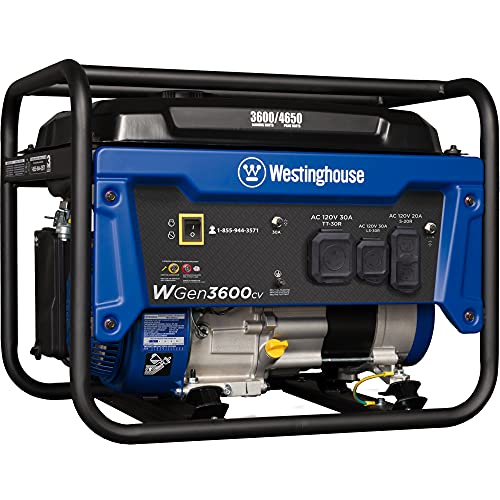
Pros
- Delivers dependable continuous output of 3,600 running watts and 4,650 starting watts for 120V emergency essentials.
- Large 4-gallon fuel tank provides up to 14 hours of run time per fill for extended storm coverage.
- Comprehensive 120V receptacle panel includes a dedicated TT-30R RV port and an L5-30R locking outlet with rubber weather covers.
- Integrated carbon monoxide sensor and automatic low-oil alert enhance operational safety.
- Includes essential startup supplies such as engine oil, an oil funnel, and assembly tools in the box.
Cons
- Restricted entirely to 120V output, making it incapable of powering 240V heavy appliances such as central air conditioning or multi-wire well pumps.
- Relies solely on a manual recoil pull start, lacking the push-button convenience of an electric or remote start system.
- Weighs 100.6 pounds without an integrated wheel kit, which requires two people or a cart for transport over rough ground.
The Westinghouse 4650 Peak Watt Portable Generator is a conventional open-frame, gasoline-fueled generator designed for emergency household backup, RV camping, and basic outdoor power tasks. Unlike permanently installed standby generator systems, this portable unit requires manual outdoor positioning and individual cord management when severe weather interrupts grid power. It is primarily built for budget-conscious homeowners, storm-preparedness planners, and travel trailer owners who need dependable 120V power to keep core household necessities functioning without the major financial outlay of an automatic standby setup.
In terms of backup performance, the generator provides 3,600 running watts and 4,650 peak watts of surge capacity from its 212cc 4-stroke OHV engine. This continuous electrical capacity is well matched for simultaneously running household essentials such as a full-size refrigerator, a chest freezer, portable box fans, LED lamps, and consumer electronics, while maintaining adequate headroom for the brief startup surge of a 120V sump pump. The control panel features two standard 5-20R 120V duplex receptacles, one TT-30R 30-amp RV outlet, and one L5-30R 30-amp twist-lock outlet. Because the unit supplies 120V single-phase power only, it cannot support 240V domestic appliances such as large electric water heaters, clothes dryers, or central air conditioning systems.
The build quality centers around a rugged steel tubular frame housing the 212cc engine, which includes a long-lasting cast iron sleeve for thermal endurance and reduced internal wear. Westinghouse integrates an automatic low-oil shutoff mechanism to protect against mechanical failure if lubrication drops below safe operating limits, alongside an onboard carbon monoxide (CO) sensor that stops the engine if dangerous exhaust gases gather. Every receptacle is shielded by an individual rubber dust cover to protect the electrical contacts when idle. The generator arrives ready for initial servicing with included engine oil, an oil fill funnel, and a spark plug tool kit.
Setting up and managing fuel on this generator is practical for storm scenarios thanks to a 4-gallon steel fuel tank equipped with a top-mounted mechanical fuel gauge. The manufacturer rates the run time at up to 14 hours per tank, allowing households to maintain steady overnight food preservation and drainage protection during utility failures, although actual operating duration will fluctuate with connected electrical load. Starting the unit is strictly manual via a heavy-duty recoil pull cord. When deploying this fuel-burning machine during a storm, it must always be situated outdoors on level ground far away from home windows, doors, and exterior vents. While the integrated CO sensor offers an added layer of safety, it never substitutes for proper outdoor clearance.
Several operational limitations should be evaluated before purchasing this model. Weighing 100.6 pounds and measuring 23.3 by 17.5 by 18.7 inches, moving this open-frame generator requires physical effort because the standard package does not incorporate a transport wheel kit or a folding handle. Operation is limited strictly to pump gasoline, meaning buyers cannot run the generator on liquid propane or natural gas during prolonged fuel shortages. Furthermore, the absence of an electric starter means the operator must be physically comfortable using a recoil pull cord to start the 212cc engine in cold or wet weather.
The Westinghouse 4650 Peak Watt Portable Generator is a practical, cost-effective backup power investment for homeowners needing to run critical 120V appliances and storm-defense pumps during regional outages. It also serves travel trailer owners wanting direct 30-amp RV hookup capability. Households requiring seamless automatic operation, 240V home-circuit compatibility, dual-fuel versatility, or effortless push-button starting will be better served by larger dual-fuel portable generators or dedicated home standby systems.
The outlet configuration on this generator is engineered to handle common 120V emergency needs across multiple connection methods. The panel includes two 5-20R standard household duplex receptacles for running heavy-duty outdoor extension cords directly to kitchen appliances, interior lamps, and chargers during an unexpected blackout. For homeowners utilizing a compatible 120V manual transfer switch or generator inlet box, the L5-30R 30-amp locking outlet provides a secure point of connection to energize pre-selected 120V household branch circuits without the risk of cord disconnection.
Recreational vehicle owners benefit directly from the factory-installed TT-30R 30-amp receptacle, which accepts standard RV shore power cords without requiring aftermarket adapter plugs. Because the system outputs 3,600 continuous watts, users must prioritize simultaneous electrical demands to avoid tripping the circuit breakers. Inductive motor loads, such as sump pumps and refrigerator compressors, pull brief surge currents upon startup that draw against the 4,650 peak watt ceiling before settling into their lower running watt ranges.
Safe generator deployment requires strict adherence to ventilation practices, as all gasoline-powered engines generate carbon monoxide. The integrated CO sensor constantly evaluates ambient air quality around the alternator and engine, triggering an automatic shutdown if exhaust fumes accumulate to unsafe levels. However, the presence of a CO shutoff sensor never makes it safe to run the machine in a garage, carport, breezeway, shed, or interior room. The generator must always operate outdoors in an open-air environment with clear exhaust dispersion away from occupied dwellings.
Maintaining the 212cc 4-stroke engine is straightforward thanks to the included maintenance package, which provides the initial oil supply, an angled oil funnel, and essential hand tools. The cast iron cylinder sleeve supports extended engine longevity under heavy load, while the low-oil shutdown sensor automatically prevents ignition if oil levels recede. To ensure storm readiness, owners should check engine oil before every start, drain stale fuel before seasonal storage, and periodically inspect the rubber outlet caps to keep dirt and moisture away from the electrical panel.

Pros
- High running output of 11,500 watts on gasoline accommodates multiple high-draw household loads simultaneously
- Dual-fuel functionality provides fuel flexibility when pump gasoline is scarce during regional weather emergencies
- Generous 9.5-gallon fuel tank with built-in gauge supports up to 19 hours of runtime on gasoline
- Low THD architecture and copper windings provide cleaner power to help safeguard televisions, computers, and sensitive controls
- Push-button remote electric start simplifies generator startup during adverse weather conditions
Cons
- Substantial unit weight of 230 pounds makes manual loading, transport, and rough-terrain repositioning demanding
- Running output is reduced to 10,500 watts and runtime drops to roughly 7 hours when operating on a standard 20-pound propane tank
- Open-frame portable backup design requires dedicated outdoor space with clear ventilation and manual storm setup
The Westinghouse 14,500 peak watt dual-fuel generator is a high-output portable backup power system engineered for substantial household emergency support, work sites, and severe weather preparedness. Unlike permanently installed whole-house standby systems that require dedicated automatic transfer switches and fixed utility line integration, this unit operates as a high-capacity portable generator that requires manual outdoor deployment. Homeowners facing extended grid failures will find this model positioned well above entry-level portable units, delivering the continuous electrical overhead needed to manage multiple circuits during winter freezes, windstorms, and hurricanes.
Backup performance centers on its dual-fuel capability, providing 14,500 peak watts and 11,500 running watts on gasoline, compared to 13,500 peak watts and 10,500 running watts when powered by liquid propane. Continuous running capacity determines what household equipment you can operate simultaneously, while the peak wattage accommodates momentary motor startup surges from compressors, well pumps, or refrigeration units. On gasoline, the onboard 9.5-gallon fuel tank delivers up to 19 hours of operation under stated manufacturer conditions, while a standard 20-pound propane tank offers up to 7 hours of runtime. Furthermore, the generator is engineered with low total harmonic distortion (THD) and durable copper windings, helping supply clean electrical output suitable for televisions, personal computers, and modern appliances with sensitive control boards.
The powertrain is built around a heavy-duty 550cc 4-stroke OHV Westinghouse engine equipped with a wear-resistant cast iron sleeve designed for sustained duty cycles. For ease of operation, the control architecture incorporates remote electric start, giving users push-button ignition convenience from a distance rather than relying strictly on a manual pull recoil. The system is marketed as transfer switch ready, meaning its panel configuration is oriented toward connecting directly to a manual transfer switch or generator inlet box. This setup avoids hazardous backfeeding through household wall outlets and provides a code-compliant pathway to distribute power across selected essential residential circuits.
Safe deployment and routine maintenance are critical factors in long-term ownership of any heavy fuel-burning generator. Measuring 28.9 by 29.6 by 26.9 inches and weighing 230 pounds, moving this machine requires careful leverage and solid staging near your exterior transfer inlet. As an engine-driven, open-frame power source, it produces toxic carbon monoxide exhaust and must operate strictly outdoors on level ground, positioned well away from open windows, exterior doors, soffits, and attached structures. Running a generator inside a home, garage, shed, or crawlspace is never safe, regardless of open doors or ventilation fans. Users should also plan to shut down the engine and allow it to cool before any refueling procedure, checking engine oil levels consistently to preserve the cast iron sleeve powertrain.
While this Westinghouse model offers notable power reserves, buyers must weigh its practical limitations. The 230-pound dry weight makes single-person transport difficult without using the frame handles and rolling gear on firm terrain. Operating on propane also involves a modest derating in both peak and continuous wattage, and extended propane operation will require cycling through multiple 20-pound tanks or plumbing to a larger stationary LP supply. Additionally, because it is an open-frame portable unit rather than an enclosed standby generator, it does not provide automatic utility sensing or hands-off startup during a blackout.
Overall, this Westinghouse dual-fuel generator is an excellent investment for suburban and rural homeowners seeking serious multi-circuit emergency power without the high installation expense of a permanently wired standby system. It delivers sufficient wattage for major household appliances, water pumps, and essential electronics while providing critical fuel versatility. Buyers who need fully automated, hands-off backup power or ultra-compact recreational portability may prefer an automatic standby system or a compact suitcase inverter, but for robust manual home outage defense, this machine provides exceptional utility and dependable output.
The dual-fuel architecture of this Westinghouse generator allows users to toggle between conventional gasoline and liquid propane depending on supply availability and storage convenience. During major regional storms, local gas stations frequently suffer power disruptions or long lines, making the option to run on readily available propane tanks an invaluable emergency contingency. Propane also offers an indefinite shelf life compared to untreated gasoline, which can degrade and gum carburetors during off-season storage.
Operating ratings and runtimes shift depending on the selected fuel source. On gasoline, the generous 9.5-gallon fuel tank with an integrated fuel gauge can deliver up to 19 hours of operation under the manufacturer's specified test load. Switching to a standard 20-pound propane cylinder yields up to 7 hours of runtime with an output rating of 10,500 running watts and 13,500 peak watts. Planning for extended multi-day outages requires calculating your continuous household electrical load to budget daily fuel consumption and maintaining adequate fuel storage in safe, compliant outdoor containers.
With 11,500 running watts available on gasoline, this portable generator possesses the continuous capacity to support multiple high-demand circuits simultaneously, including refrigerators, freezers, sump pumps, well pumps, and lighting networks. The unit is transfer switch ready, which simplifies integration with a professionally installed manual transfer switch or an interlock generator inlet box. Using proper transfer equipment ensures that utility lines remain isolated, eliminating dangerous utility line backfeeding and keeping line workers safe during grid repairs.
Electrical quality is further enhanced by low total harmonic distortion (THD) engineering and copper windings, which run cooler and deliver a cleaner waveform than standard open-frame conventional generators. While high-output generators traditionally produce dirtier electrical current, this design helps safeguard delicate microprocessors found in contemporary furnace boards, smart TVs, and communication equipment. Users should nevertheless balance simultaneous loads responsibly, ensuring that motor-starting demands do not exceed the generator's 14,500 peak watt threshold.

Pros
- Substantial continuous capacity of 3,400 running watts supports multiple household essentials or travel trailer loads simultaneously.
- Open-frame build maintains a lightweight 56-pound profile that is easier to lift than many conventional steel-frame generators.
- Built-in RV outlet eliminates the need for external plug adapters when connecting to a travel trailer power cord.
- Extended runtime of up to 14 hours at a 25% electrical load when utilizing the integrated ECO mode switch.
- Direct fuel level gauge on the 2-gallon tank allows quick readiness checks before and during severe weather events.
Cons
- Sound output is rated under 72 dBA at 23 feet, which is louder than fully enclosed suitcase-style inverter generators.
- Product specifications do not list a documented Total Harmonic Distortion (THD) percentage or waveform certification.
- Provides only 120V electrical service, meaning it cannot power 240V heavy appliances or multi-wire branch transfer circuits.
- Lacks documented electric push-button start or wireless remote starting options, relying on manual starting.
The Oxseryn 4400-watt inverter generator is a gasoline-powered, open-frame portable model designed for homeowners seeking emergency storm backup, RV travelers needing direct shore connections, and outdoor hobbyists. Unlike standard enclosed suitcase inverters, this unit utilizes an open steel roll-cage chassis that balances inverter-based electrical conversion with reduced overall weight. Rated at 4,400 peak starting watts and 3,400 continuous running watts, the generator is tailored for 120V utility outage response, camping, and jobsite chores where moderate portable capacity is essential.
Electrical performance centers on the 3,400-watt continuous output rating, which determines the maximum aggregate wattage connected loads can draw without triggering overload protection. The 4,400 peak starting watts accommodate the brief startup surges required by motor-driven equipment like refrigerators, sump pumps, or small power tools. Power distribution is managed through two 120V AC household receptacles, one dedicated 120V RV port, and a single 12V DC port. The unit is restricted strictly to 120V applications and does not support 240V split-phase circuits. In addition, the manufacturer does not publish a specific Total Harmonic Distortion (THD) rating or pure sine wave specification, meaning buyers planning to run highly sensitive microelectronics should rely on verified operating requirements rather than category assumptions.
Mechanical construction pairs a single-fuel gasoline engine with an inverter module and a 2-gallon steel fuel tank. The manufacturer specifies a runtime of up to 14 hours when operating at a 25% electrical load with the ECO mode switch engaged. Engaging ECO mode allows the generator to regulate engine operation to match applied electrical demand, helping stretch fuel reserves during prolonged weather events. The generator measures 19 inches long, 15.6 inches wide, and 19.1 inches high, maintaining a dry weight of 56 pounds. The steel tank includes an integrated visual fuel gauge, giving operators a quick assessment of fuel levels without having to open the filler cap. All units undergo factory quality testing prior to packaging, which may leave a faint residual fuel odor upon initial unboxing.
Operational deployment requires adherence to standard outdoor power-equipment safety standards. Because combustion of gasoline produces toxic carbon monoxide gas, this generator must always be operated outdoors in open spaces, positioned well away from doors, windows, vents, and air intakes. Operating this unit inside a garage, home, crawlspace, or partially enclosed structure is extremely dangerous. The listed operational sound level is rated under 72 dBA at a distance of 23 feet. While this noise level is competitive for an open-frame unit of this wattage, it is noticeably louder than premium enclosed suitcase inverters that feature insulated sound dampening.
Key limitations should be weighed prior to purchase. The absence of a documented THD figure or pure-sine-wave verification requires caution when powering precision laboratory or audio gear. Furthermore, the generator features manual starting without documented push-button electric start, remote control, or parallel connectivity ports. The lack of a 240V receptacle also precludes powering high-draw central air conditioners, electric water heaters, or 240V well pumps through a dual-pole transfer switch.
The Oxseryn 4400-watt open-frame inverter generator is a practical, value-oriented solution for buyers who prioritize high running wattage and RV-ready connections in a lightweight 56-pound package. It serves travel trailer owners, campers, and suburban households managing essential 120V emergency appliances well. Buyers requiring whisper-quiet operation in tight campgrounds, electric push-button starting, dual-fuel capability, or verified low-THD power for sensitive electronics should consider an enclosed suitcase inverter or a larger dual-fuel system instead.
Continuous electrical capacity on the Oxseryn generator is rated at 3,400 running watts, supported by 4,400 starting watts to handle the initial surge demand of compatible inductive loads. When planning outage backup, continuous draw from connected appliances such as refrigerators, chest freezers, LED lighting, and sump pumps must remain within the 3,400-watt limit to prevent breaker trips.
The control panel provides direct access to two 120V AC household receptacles, one dedicated 120V RV receptacle, and a 12V DC auxiliary outlet. The inclusion of an RV receptacle eliminates the need for separate dogbone adapters when connecting an RV power cord. This model provides 120V single-phase power only, so it cannot be used to power 240V household appliances or circuits.
Weighing 56 pounds and measuring 19 x 15.6 x 19.1 inches, the Oxseryn open-frame inverter is relatively easy to lift into a pickup truck bed, SUV cargo area, or RV storage compartment compared to traditional 80-pound open-frame units. The integrated steel frame tubing provides natural handholds for two-person lifting or solo repositioning.
The manufacturer lists an operational noise level under 72 dBA measured from 23 feet away. While open-frame architecture allows for enhanced engine cooling and lower overall weight, it does not offer the heavy acoustic insulation found on fully enclosed inverters. Operators should factor this sound profile into campsite placement and residential distance planning.

Pros
- High 13,000-watt power capacity supports high-draw household appliances and heavy equipment
- Dual-fuel capability provides emergency fuel flexibility between pump gasoline and long-storing propane
- Transfer switch-ready 50-amp outlet simplifies safe connection to residential electrical backup systems
- Heavy-duty build featuring all-metal construction, 100 percent copper windings, and rugged no-flat tires
- Push-button electric start makes starting reliable and physically accessible
Cons
- Substantial 234-pound unit weight requires deliberate effort to maneuver and transport
- Open-frame conventional generator design lacks documented total harmonic distortion (THD) ratings for sensitive electronics
- Supplied specifications do not provide separate continuous running wattage or fuel-specific output breakdowns for gas versus propane
The DuroMax XP13000EH is a high-output, dual-fuel portable generator engineered primarily for whole-home emergency backup and demanding jobsite applications. Unlike compact digital inverter generators that emphasize ultra-low weight and enclosed acoustic baffling, the XP13000EH utilizes a heavy-duty open-frame architecture designed to generate up to 13,000 watts of raw electrical power. This makes the unit an appealing option for American homeowners preparing for severe weather outages and contractors who must run high-amperage power tools simultaneously.
Electrical capability centers on a robust 13,000-watt rating and a versatile power panel highlighted by a transfer switch-ready 50-amp receptacle. This heavy-duty 50-amp outlet allows homeowners to connect directly to an installed manual transfer switch or interlock kit, avoiding a tangle of extension cords during an extended blackout. While the manufacturer highlights 13,000 watts of available capacity, buyers should recognize that the raw product specifications do not differentiate between continuous running watts and peak starting watts, nor do they list separate outputs for gasoline versus propane. Additionally, unlike digital inverter generators with documented low total harmonic distortion (THD) specifications, this conventional alternator design does not list specific waveform metrics, so users should verify power-quality requirements before connecting delicate digital microprocessors directly.
Mechanical construction is exceptionally rugged, highlighted by an all-metal protective frame, an all-metal power interface, and 100 percent copper windings. Copper windings conduct heat far more efficiently than aluminum wiring, which prevents thermal degradation under heavy continuous electrical loads and extends the operational life of the generator. The front panel incorporates an intuitive fuel selector switch that lets users toggle between gasoline and liquid propane in seconds, providing crucial operational flexibility when local gas stations lose power during storm emergencies.
Day-to-day operation is streamlined by a push-button electric start system that removes the physical fatigue associated with manual recoil starting on large-displacement engines. Maneuvering this 234-pound generator is made manageable through integrated no-flat tires designed to navigate mud, gravel, and rough jobsite terrain. Like any fuel-burning engine-driven generator, the XP13000EH produces toxic carbon monoxide exhaust and must operate outdoors in an open space, positioned well away from doors, windows, and fresh-air intakes. Connecting this generator to home wiring requires a properly installed transfer switch or breaker interlock; unsafe backfeeding through household wall outlets must never be attempted.
The principal limitations of the DuroMax XP13000EH stem from its size, weight, and electrical architecture. At 234 pounds and measuring 30 by 29 by 26 inches, this generator requires substantial storage space and can be difficult for a single person to lift into a truck bed without ramps. Furthermore, buyers seeking the whisper-quiet performance, variable-speed eco modes, and tight harmonic distortion regulation typical of enclosed inverter generators may find a conventional open-frame 13,000-watt generator louder and less suited for light recreational camping or direct connection to sensitive audio equipment.
The DuroMax XP13000EH is best suited for suburban homeowners, rural property owners, and tradespeople who prioritize raw wattage, dual-fuel resilience, and a dedicated 50-amp transfer switch interface over lightweight portability. Buyers needing to power essential residential circuits like well pumps, sump pumps, refrigerators, and heating systems during utility blackouts will find significant practical utility in this machine. Conversely, shoppers who require compact portability for tailgating, ultra-quiet sound levels for strict RV parks, or documented pure-sine-wave power for sensitive laboratory gear should consider a dedicated digital inverter generator instead.
The dual-fuel capability of the DuroMax XP13000EH allows operation on either standard unleaded gasoline or liquid propane (LPG), providing valuable operational flexibility during weather emergencies. Gasoline delivers convenient availability and high energy density, while propane offers the distinct benefit of long shelf life without gumming up the carburetor during prolonged storage.
A dedicated front-facing fuel interface allows users to switch between fuel sources quickly and securely without complex retooling. When planning emergency power reserves, homeowners should account for the fact that internal combustion engines typically exhibit differences in overall fuel efficiency and output capacity depending on whether gasoline or propane is utilized.
A defining feature of the DuroMax XP13000EH is its integrated 50-amp outlet, specifically positioned for transfer switch compatibility. This heavy-duty receptacle enables a single high-capacity power cable to link the generator directly to an external generator inlet box connected to a manual transfer panel.
Utilizing a properly installed transfer switch ensures that electrical current is safely distributed to designated household branch circuits while preventing dangerous utility backfeeding. Homeowners should always employ a licensed electrician to install transfer equipment in accordance with local electrical codes and generator manufacturer requirements.
Realistic Home Backup Capabilities of Portable Generators
A portable generator can indeed run your house, but the extent of what stays powered depends entirely on your total wattage demand and electrical hookup configuration. Most residential households require between 5,000 and 12,000 running watts to operate everyday conveniences simultaneously during an unexpected blackout. Smaller portable models can easily sustain refrigeration, interior lighting, and gas furnace blowers, while larger high-output machines can manage heavy 240-volt loads including well pumps and air conditioning systems. Matching your specific appliance inventory to the continuous and surge output of a generator prevents overloaded circuits, engine stalls, and unnecessary equipment damage.
The Fundamental Difference Between Whole-Home and Critical Circuit Backup
Homeowners often confuse whole-home power with essential circuit backup when planning emergency power strategies. True whole-home coverage implies operating heavy central heat pumps, electric water heaters, clothes dryers, and kitchen ranges exactly as if the primary utility grid remained active. Achieving that level of seamless operation with a portable machine requires an exceptionally large unit delivering over 10,000 running watts. In contrast, critical circuit backup focuses on keeping life-safety systems, communications, food storage, and basic comfort devices operational. Prioritizing essential circuits allows homeowners to rely on compact, fuel-efficient models that consume substantially less gasoline or propane during extended grid failures.
Selecting an essential backup strategy dramatically simplifies fuel logistics during prolonged storm emergencies when local filling stations lose pumping power. A generator producing 3,500 to 5,000 continuous watts can easily handle a modern refrigerator, several LED lighting circuits, a television, medical gear, and a sump pump. Choosing to manage without energy-intensive resistive heating elements or massive 240-volt electric clothes dryers keeps engine noise down and runtime high. For households seeking zero-emission indoor electricity for CPAP machines or sensitive electronics, battery-powered backup generators offer a clean alternative that complements outdoor engine-driven units during quiet night hours.
Calculating Continuous Running Watts Versus Motor Surge Amperage
Accurately sizing a backup generator begins with distinguishing between continuous running watts and instantaneous starting surge watts. Purely resistive appliances, such as incandescent light bulbs, toasters, and basic space heaters, consume the exact same amount of wattage from startup through steady operation. Conversely, inductive motor-driven equipment requires a brief burst of surge wattage, often referred to as locked rotor amperage, to break mechanical inertia and spin up to operational speed. Major household appliances containing heavy electric motors include refrigerators, freezers, basement sump pumps, well water pumps, and central HVAC air handlers.
Failing to account for motor inrush current is the single most common reason portable generators trip circuit breakers or stall during power outages. For example, a standard residential refrigerator might draw only 600 to 800 running watts once its compressor cycles smoothly, but it can easily demand 2,000 to 2,400 peak starting watts for a few seconds. If a sump pump or well pump kicks on at the exact moment a refrigerator compressor starts, an undersized generator will experience massive voltage sag or shut down entirely. Homeowners should calculate their cumulative running wattage, identify the single highest inductive starting surge requirement in the house, and add that surge value to the total continuous baseline. When budgeting power for hot summer blackouts, studying specialized portable generators for air conditioning units helps ensure your machine provides adequate surge overhead for heavy compressor cycling.
120-Volt Versus 240-Volt Split-Phase Requirements for Large Household Appliances
Residential homes in North America utilize a 120/240-volt split-phase electrical service delivered from the utility transformer into the main breaker panel. Standard household wall outlets operate on 120 volts by connecting one hot leg and the neutral conductor. Heavy mechanical appliances, however, connect across both hot legs simultaneously to draw 240 volts of electricity. If your home relies on a submersible well pump, an electric water heater, a central air conditioning compressor, or an electric furnace, a 120-volt-only generator simply cannot power those specific circuits regardless of its total wattage rating.
Portable generators equipped with 120/240-volt voltage selector switches or dedicated NEMA L14-30R and 14-50R receptacles deliver the necessary dual-pole power to run 240-volt appliances. Units like the Westinghouse 6600, WEN 4,750-Watt dual-fuel, or heavy-duty DuroMax XP13000EH supply split-phase electricity that energizes both hot bus bars inside a home distribution panel. When utilizing a split-phase generator, balancing the electrical load across both 120-volt legs becomes critical. Placing too many heavy single-phase appliances on one side of the panel can unbalance the alternator, causing voltage fluctuations, erratic engine hunting, and reduced generator operating efficiency.
Safe Integration: Manual Transfer Switches, Interlock Kits, and Inlet Boxes
Directing electricity from a portable generator into your home requires permanent, code-compliant switching equipment installed by a qualified electrician. Connecting a generator to an interior wall outlet or dryer receptacle using a dangerous male-to-male cord, commonly called a suicide cord, is illegal and exceptionally dangerous. Backfeeding the panel without a physical mechanical disconnect energizes outdoor utility power lines, posing deadly electrocution risks to line repair workers working to restore the neighborhood grid. Code-compliant isolation is accomplished using either a dedicated manual transfer switch or a breaker interlock kit mounted directly to the main service panel.
A manual transfer switch isolates pre-selected emergency circuits, switching them individually from utility grid power to generator input. A mechanical breaker interlock plate slides over the main service disconnect, preventing the generator breaker and the utility main breaker from ever engaging at the same time. Both systems connect to an exterior power inlet box mounted on an outside wall, allowing you to run a single heavy-gauge rubberized cord from the generator without leaving doors or windows open. For generators producing up to 7,500 running watts, a 30-amp four-prong twist-lock L14-30 connection is standard, whereas larger 10,000-plus watt machines utilize 50-amp 14-50 connections to transmit full continuous current safely.
Fuel Options and Power Output Derating Across Gasoline, Propane, and Natural Gas
Fuel versatility represents a major operational factor when keeping a portable generator running across multiple days of neighborhood power loss. Gasoline offers superior energy density, allowing engines to achieve their maximum advertised peak and continuous running wattage ratings. However, ethanol-blended pump gasoline begins degrading in as little as thirty days, gumming up internal carburetor jets and creating stubborn no-start conditions if stored without stabilizer. Dual-fuel and tri-fuel generators solve this storage dilemma by operating on liquid propane or residential natural gas lines in addition to standard gasoline.
Operating an engine on alternative fuels comes with a predictable reduction in maximum electrical output due to lower energy density per unit volume. Liquid propane typically causes a 10 to 15 percent derating in continuous running and surge wattage compared to gasoline operation. Natural gas exhibits an even lower energy density, often reducing an engine’s rated wattage by 20 percent or more. For example, a heavy-duty generator rated for 13,500 peak watts on gasoline may deliver 12,500 peak watts on propane, while a tri-fuel model like the Champion 12,500-watt drops to 10,000 peak watts on natural gas. Homeowners must account for these fuel-specific derating figures when calculating whether a dual-fuel unit can carry their household electrical load during an outage.
Propane also presents physical vaporization challenges during severe sub-freezing winter weather. As an engine draws fuel rapidly from a 20-pound propane cylinder, the liquid inside absorbs heat from the surrounding metal cylinder walls to vaporize into gas. In sub-zero temperatures, the cylinder can frost over externally, dropping internal pressure below the operating threshold of the generator’s demand regulator. For extended home backup during cold winter blizzards, connecting your generator to large 100-pound propane cylinders or an underground residential tank ensures consistent fuel pressure and uninterrupted electrical output.
Power Quality and Total Harmonic Distortion for Sensitive Home Electronics
Modern homes contain dozens of delicate microprocessors embedded inside smart appliances, variable-speed furnace blowers, televisions, computers, and home automation systems. The electrical waveform produced by a backup generator plays a direct role in whether these sensitive control boards function reliably or suffer premature component degradation. Total harmonic distortion measures the deviation of an alternating current sine wave from an ideal, perfectly smooth 60 Hz electrical curve. High distortion generates parasitic electrical heat within microchips and electronic power supplies, often causing erratic behavior, nuisance system shutoffs, or permanent circuit board failure.
Standard open-frame portable generators utilize rotating brush or brushless alternators governed by basic automatic voltage regulators, typically producing harmonic distortion levels between 10 and 25 percent under heavy load. In contrast, digital inverter generators convert raw alternating current into direct current before electronically synthesizing an ultra-clean, pure sine wave with harmonic distortion well below 3 to 5 percent. Units engineered with low distortion profiles, such as the Westinghouse 14500 or compact Oxseryn inverter models, provide the clean power characteristics required by modern variable-speed HVAC blowers and medical devices. Homeowners using traditional high-distortion open-frame generators should consider dedicated surge protection or inverter equipment to safeguard expensive home appliances.
Neutral-Ground Bonding and Electrical Safety Rules for Home Panel Hookups
Understanding neutral-ground bonding is essential when pairing an outdoor portable generator with a residential electrical panel. The National Electrical Code requires that an electrical system have exactly one primary neutral-to-ground bonding connection point to prevent dangerous ground loops and shock hazards. In a standard single-family home, this master bonding jumper resides exclusively inside the main service panel, where the neutral conductor ties directly to the physical earth grounding rod. When connecting a portable generator through a transfer switch that does not switch the neutral conductor, the generator itself must have a floating neutral configuration.
Many portable generators arrive from the factory configured with a bonded neutral, meaning the neutral wire connects directly to the generator’s metal frame to satisfy jobsite safety standards. If a bonded neutral generator connects to a home panel containing its own bonded neutral, an illegal secondary bond is established. This duplicate ground-neutral connection can cause stray current to circulate along equipment grounding conductors, potentially tripping ground fault circuit interrupter breakers or shocking equipment operators. Most transfer switch installations require disconnecting or lifting the internal bonding jumper on the generator alternator to establish a floating neutral, ensuring clean electrical compatibility with the home’s permanent grounding infrastructure.
Outdoor Placement, Setback Distances, and Carbon Monoxide Safety Guidelines
Operating a fuel-powered portable generator demands strict adherence to life-safety protocols to prevent fatal carbon monoxide poisoning. Internal combustion engines produce massive quantities of colorless, odorless carbon monoxide gas that can incapacitate building occupants within minutes of inhalation. Under no circumstances should a combustion generator ever be operated inside a home, basement, attached garage, detached workshop, carport, or covered breezeway. Myths regarding running an engine indoors by opening garage doors or rigging makeshift exhaust pipes fail to protect occupants, as atmospheric pressure differentials inevitably pull toxic fumes back into living spaces.
Safe operation requires positioning the generator completely outdoors at a minimum distance of 20 feet away from any residential structure. The exhaust muffler must point directly away from all exterior doors, windows, crawlspace vents, and fresh air heating intakes to prevent exhaust gas backdrafting. Modern generators frequently incorporate automatic carbon monoxide safety shutoff sensors, conforming to standards like PGMA G300 or UL 2201, which automatically kill the engine if dangerous gas levels accumulate near the machine. To protect your generator from rain and snow while maintaining mandatory safety clearances, utilize purpose-built, flame-retardant running covers that maintain open airflow rather than enclosing the unit in unventilated boxes.
Staging Electrical Loads and Practical Outage Operating Protocols
Successfully managing your household electrical needs during a blackout requires a deliberate, step-by-step operating routine. Before starting the engine, ensure all circuit breakers on the generator panel and within the home transfer switch remain switched off. Check the engine oil level on a flat surface, confirm clean fuel supply, and ensure the machine sits at least 20 feet away from exterior walls. Start the engine, allow it to run without electrical load for two to three minutes to reach stable operating temperature, and verify proper voltage output before connecting the heavy-duty power inlet cord.
Once the generator is running smoothly and the main transfer connection is engaged, introduce household circuits sequentially rather than turning everything on at once. Begin by energizing the circuit containing the largest inductive motor, such as a basement sump pump or refrigerator compressor. Allowing that primary motor to overcome its starting surge and settle into continuous running watts prevents generator breakers from tripping under compounded inrush currents. Gradually switch on secondary lighting, television, and small kitchen circuits while monitoring the generator’s engine tone and hour meter. Practicing this disciplined load-staging routine ensures your portable generator reliably sustains your home through the most severe grid emergencies.


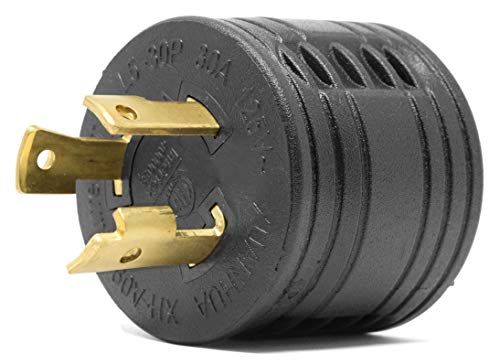

Write Your Review
No reviews yet. Be the first to share your experience!