


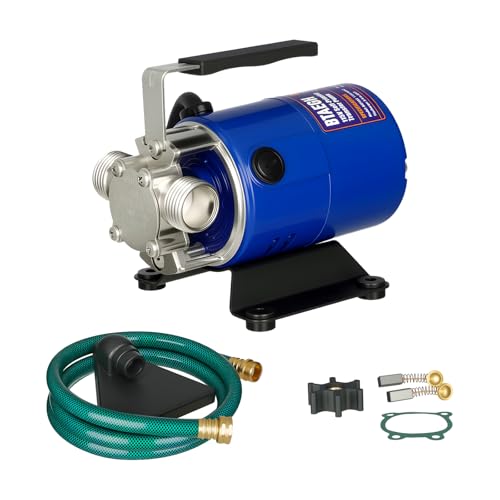
Heavy rainstorms often knock out neighborhood electrical grids right when rising groundwater threatens your basement foundation. Standard sump systems stop cold without grid electricity, which can leave you scrambling before rising water ruins drywall and expensive appliances. Connecting an auxiliary utility pump directly to an emergency power source prevents catastrophic water damage during sudden blackouts. Matching the best water pumps that hook to generator setups demands close attention to continuous running wattage, starting surge spikes, and total harmonic distortion so you never trip an inverter circuit during a severe downpour.
Standard 115-volt utility motors draw manageable continuous wattage that pairs smoothly with compact inverters, while submersible models clear flooded basins quickly without manual priming hassles. Pairing your emergency drainage hardware with a dependable generator for backup power ensures steady water removal through long outages. Based on manufacturer performance curves, rated discharge volumes, and owner feedback, selecting the right pump guarantees that your home stays dry even when utility crews can’t restore lines right away.




Frequently Asked Questions
Can any portable generator run a utility water pump during an outage?
Yes, almost any portable generator can run a utility pump if continuous running watts and surge ratings match the motor. Most 1/10 HP to 1/4 HP utility transfer pumps draw between 200 and 600 running watts, though induction motors require two to three times that amount during initial rotor spin. Checking motor nameplate amperage ensures your generator outlets handle the temporary starting surge without tripping.
Do I need an inverter generator with low THD for electric water transfer pumps?
No, standard electric utility pumps with mechanical switches do not require clean sine wave power under 3% THD. However, transfer pumps with electronic sensors, digital float switches, or brushless DC motors run cooler and last longer on clean inverter electricity. Using an inverter also keeps decibel sound levels quiet around residential yards during extended pumping sessions.
Can I run a submersible sump pump on a solar power station during grid failure?
Yes, a solar power station can power a 120V submersible utility pump as long as its pure sine wave inverter handles the startup surge. Campers and remote homeowners also utilize dedicated off-grid systems like solar generators for travel trailer setups to run transfer pumps without storing volatile fuel. Always check battery watt-hour capacity to ensure enough runtime for multiple drainage cycles.
What electrical capacity is needed for high-output transfer pumps and appliances?
A generator delivering at least 2,500 to 3,500 continuous running watts is recommended when combining a 1/2 HP transfer pump with critical household loads. Heavy cast-iron pumps demand significant starting surge watts, which can overload compact recreational units if a refrigerator compressor starts simultaneously. For whole-home backup during severe storms, units like best 7500 watt generators offer generous overhead for transfer switches and multiple branch circuits.
Why does my water pump trip the generator circuit breaker immediately upon starting?
Excessive startup inrush current is the primary cause of immediate generator breaker trips. Electric pump motors routinely pull three to four times their rated running amperage for several milliseconds to overcome rotational inertia. If your generator lacks sufficient peak surge wattage or you use a light-gauge extension cord that drops voltage, the breaker trips to prevent motor burnout.
What electrical specs matter most when pairing the Best Water Pumps That Hook To Generator?
Continuous running wattage, starting surge capacity, and voltage compatibility are the vital electrical ratings to inspect. Standard household utility pumps run on standard 115V or 120V duplex outlets, while portable 12V transfer pumps require direct battery clamps or dedicated DC power supplies. Always confirm that your generator rated running wattage comfortably exceeds the pump continuous draw by at least 25% for safe operation.




Write Your Review
No reviews yet. Be the first to share your experience!