


Severe storms and unexpected grid collapses can instantly plunge a household into darkness, placing critical systems like sump pumps, refrigeration, and medical devices at immediate risk. Connecting an auxiliary power source directly to residential wiring without dedicated isolation equipment creates extreme hazards, including destructive electrical conflicts and life-threatening utility line backfeeding. Understanding how does a home generator transfer switch work allows property owners to safely route auxiliary electricity directly into domestic branch circuits without running hazardous extension cords through doorways. A properly designed setup forms the backbone of reliable emergency home backup power planning by establishing an impenetrable barrier between grid infrastructure and your personal generator.
Every code-compliant transfer assembly relies on a mechanical or electromechanical break-before-make design that physically prevents utility power and auxiliary generator current from connecting simultaneously. Whether a homeowner selects a compact manual circuit selector switch, a meter-mounted automatic collar, or a heavy-duty service-entrance disconnect, the core operational principle remains completely centered on electrical isolation and controlled distribution. By directing wattage specifically toward selected 120-volt and 240-volt branch breakers, these devices safeguard delicate electronic appliances while shielding utility line technicians from dangerous upstream voltage surges. Selecting the correct amperage and enclosure configuration ensures seamless power management across winter freezes, summer heatwaves, and protracted neighborhood outages.

Pros
- UL Listed non-automatic design ensures code-compliant isolation and eliminates backfeeding hazards
- Complete package includes the 6-circuit transfer panel, L5-30P power inlet box, and 30A connection cord
- Full compatibility with modern AFCI and GFCI circuit breakers prevents nuisance tripping
- Illuminated rocker switches provide instant, clear visual status of generator-fed branch circuits
- Works universally with portable inverter generators, dual-fuel units, and high-capacity battery power stations
Cons
- Configured strictly for 120V single-phase circuits and cannot power 240V heavy appliances such as central air conditioners or electric dryers
- Limited to 6 essential household branch circuits, requiring careful advance load prioritization
- Requires professional installation by a licensed electrician to connect safely into residential service panels
The Nature's Generator 30 Amp 6-Circuit Manual Transfer Switch is an indoor, non-automatic power transfer kit engineered to route electricity safely from portable power sources directly into a home's electrical panel. Positioned for American homeowners, rural property owners, and emergency-preparedness planners, this UL Listed system bridges the gap between portable power equipment - including portable inverter generators, conventional generators, dual-fuel units, and lithium battery power stations - and essential residential branch wiring. By establishing a dedicated, hardwired connection path, the kit eliminates the need to route extension cords through doors or windows during storms while preventing hazardous backfeeding into the utility grid.
Operating at 120V with a maximum capacity of 30 amps, this transfer switch supports up to 6 individual branch circuits, making it well-suited for running critical household loads such as a refrigerator, freezer, gas furnace blower motor, sump pump, home network, and primary lighting. The electrical architecture accommodates both AFCI and GFCI breakers, addressing a common compatibility issue that often leads to nuisance tripping in newer residential distribution panels. Because the system is built specifically for 120V single-pole circuits, buyers must plan their backup priorities around standard 120V equipment rather than heavy 240V appliances.
The unit is housed in a durable gray steel enclosure measuring 13 by 9 by 4 inches, designed for surface mounting directly beside the main breaker panel. Circuit selection is managed through front-mounted manual rocker switches, which are illuminated to provide instant visual confirmation whenever a circuit receives power from the generator source. Nature's Generator supplies this system as a comprehensive connection kit, packaging the pre-wired indoor panel alongside a matching L5-30P 30A power inlet box and a heavy-duty 30A generator power cord, which simplifies procurement and speeds up system deployment.
Installation involves tying the pre-wired circuit leads into the home's existing service panel, a process that requires compliance with local electrical codes and National Electrical Code standards and should be completed by a qualified electrician. During a power outage, operating the system requires positioning the portable inverter generator outdoors in a dry, well-ventilated area away from windows, plugging the 30A cord into the exterior L5-30 inlet, starting the generator, and switching the desired circuit toggles from utility to generator power. The mechanical break-before-make switch mechanism guarantees that utility lines remain isolated, protecting line workers from electrical feedback.
Despite its broad compatibility with gas generators, inverter generators, and battery power stations, this transfer kit has specific electrical boundaries that buyers must evaluate. The primary limitation is its dedicated 120V design, which prevents it from operating 240V multi-pole loads such as central air conditioning systems, electric water heaters, well pumps requiring 240V, or electric ranges. Additionally, total simultaneous demand across all 6 circuits cannot exceed the 30-amp limit of the switch or the continuous running capacity of the connected generator, making careful load planning essential when starting inductive loads with high surge requirements.
For homeowners and emergency planners seeking a dependable, code-compliant way to keep essential living areas powered during grid blackouts using a 120V portable inverter generator or solar power station, the Nature's Generator 6-Circuit Transfer Kit provides high utility and proven build quality. It resolves the common weather-exposure and safety risks of temporary cords while maintaining compatibility with modern circuit breakers. Buyers needing whole-house coverage or power for large 240V appliances should look instead toward a 120/240V transfer switch or an approved panel interlock system paired with a dual-voltage generator.
The Nature's Generator 30 Amp Manual Transfer Switch Kit provides wide-ranging input compatibility, operating effectively with gasoline inverter generators, propane and dual-fuel generators, diesel portable units, and lithium battery power stations. Because the transfer switch accepts a standard 30A 120V feed via the supplied L5-30P power inlet, it matches the standard 120V twist-lock receptacles found on many mid-sized portable inverter generators and outdoor power hubs.
Modern residential building codes require AFCI and GFCI protection in many living spaces, which can pose challenges for basic transfer switches. This Nature's Generator model is engineered to work smoothly alongside AFCI and GFCI breakers without causing unwanted trips, preserving circuit safety standards across older and modern electrical panels alike.
The inclusion of a dedicated 30A power inlet box and compatible generator cord eliminates the guesswork of sourcing matched hardware separately. For optimal safety and code compliance, the exterior inlet box should be mounted on an outside wall near the generator operating area, keeping the generator safely distanced from living spaces while maintaining a secure, weather-sealed electrical junction.
Managing home backup with a 30A 120V transfer switch requires calculating both continuous running watts and temporary starting surges across the 6 selected branch circuits. At 120 volts, a 30-amp transfer switch accommodates a cumulative continuous load of up to 3,600 watts, which should be matched against the rated running watts of the connected portable generator.
Ideal circuits to allocate to this 6-circuit panel include kitchen refrigeration, a dedicated sump pump circuit, heating system controls or gas furnace blowers, master bedroom lighting, and home internet or communication gear. Spreading power across these critical circuits ensures household safety and food preservation without overwhelming the generator's capacity.
Users should always account for motor startup demand, as appliances like refrigerators and sump pumps draw significantly higher wattage during initial compressor or motor ignition. Prioritizing staggered equipment operation through the manual rocker switches prevents tripping the generator breaker and maintains smooth power delivery throughout an extended utility outage.

Pros
- Substantial 50-amp, 240-volt rating accommodates high-output portable generators for robust household backup
- Supports up to 10 individual branch circuits for tailored prioritization of essential appliances
- Pre-marked wiring leads assist with circuit identification and clean breaker box integration
- Eliminates backfeeding risks to safeguard utility line workers and domestic wiring
Cons
- Requires manual operation at the switch panel rather than providing automatic utility-loss switching
- Installation requires work inside the main electrical panel and should follow local electrical codes or be performed by a qualified electrician
- Limited to 10 selected circuits rather than providing unlimited whole-house electrical coverage
The DSGSANO 50-Amp 10-Circuit Manual Transfer Switch is a dedicated electrical interface designed for homeowners seeking a safe, code-compliant method to power essential residential circuits with a portable backup generator. Unlike automatic standby transfer systems, this manual transfer switch requires user intervention during an outage to physically toggle power between utility and generator sources. It is built specifically for households preparing for severe storm outages, rural property owners dealing with vulnerable utility lines, and off-grid or RV owners needing structured 240-volt power distribution.
Rated for 50 amps at 240 volts, this transfer switch is engineered to handle substantial electrical throughput from standard high-output portable generators. The unit accommodates up to 10 separate branch circuits, permitting homeowners to isolate and power vital household essentials such as refrigerators, freezers, gas furnace blowers, well pumps, and lighting networks. Because the switch supports 240-volt configurations across its internal contact design, compatible double-pole loads can be incorporated alongside standard 120-volt convenience circuits, provided total simultaneous demand stays within the generator's operating capacity and the switch's 50-amp ceiling.
The transfer switch features a compact cabinet measuring approximately 11.75 inches long, 4.5 inches wide, and 11 inches high, allowing surface mounting beside an existing main service panel. The manufacturer supplies factory wire leads that feature identification tags and marked designations to help installers trace connections accurately. Inside, the unit uses normally open contact terminals engineered to isolate the generator feed from incoming utility lines, preventing hazardous backfeeding into the grid while protecting household equipment from cross-connection hazards.
During a severe weather event or prolonged grid outage, deploying backup power with this switch involves starting an external portable generator outdoors, connecting it to a compatible 50-amp exterior inlet box, and manually switching the individual toggles on the transfer panel from utility to generator mode. The manufacturer notes that pre-tagged wiring streamlines setup for users with basic electrical knowledge, yet safe panel integration still requires strict adherence to local electrical codes and National Electrical Code standards. Homeowners unfamiliar with service panel safety procedures should engage a licensed electrician to handle the primary breaker ties and conduit connections.
While the DSGSANO transfer switch provides reliable manual power distribution, it does not offer automatic start triggers, automatic transfer functionality, or unlimited whole-house coverage. Power restoration remains completely manual, requiring physical presence at the switch to transfer each branch circuit back to utility power once service returns. Furthermore, with a 10-circuit capacity, residences with multiple heavy 240-volt loads such as central air conditioning, electric ranges, and electric water heaters must strictly prioritize circuits, as the switch cannot energize an entire high-draw residential electrical service at once.
This manual transfer switch is well suited for budget-conscious homeowners and emergency-preparedness planners who already own, or plan to buy, a 50-amp portable backup generator and want a clean indoor switching setup instead of running extension cords through open doorways. Buyers seeking seamless, hands-off power restoration during an outage will be better served by a permanently installed automatic transfer switch paired with a standby generator. For practical, targeted circuit protection during storms, the DSGSANO 10-circuit manual switch offers a cost-effective, code-appropriate bridging solution between portable power and household wiring.
A 10-circuit manual transfer switch allows targeted power distribution by isolating individual branch circuits from the main service panel. Homeowners typically designate critical loads such as the kitchen refrigerator, deep freezer, heating system blower, internet modem, sump pump, and primary lighting zones to these positions. Grouping circuits carefully ensures that essential survival and preservation equipment remains powered without exceeding the continuous running wattage of the connected portable generator.
Safety is the fundamental advantage of utilizing an engineered transfer switch over improvised connection methods. Plugging a generator into a standard domestic wall outlet is illegal and dangerous, as it backfeeds power through the home panel and onto neighborhood utility lines, creating lethal shock hazards for utility linemen. The DSGSANO switch utilizes mechanically separated, normally open contact arrangements that physically isolate utility lines before generator power can flow, eliminating backfeed risks and protecting domestic electronics from sudden utility phase collisions.
The DSGSANO transfer switch operates at 240 volts with a continuous 50-amp maximum rating, making it directly compatible with portable generators equipped with standard 50-amp 120/240V outlets, such as 14-50R or CS6365 receptacles. The pre-marked leads exiting the unit are color-coded and labeled to correspond with incoming hot, neutral, and ground buses inside the adjacent load center, reducing guesswork during installation.
Because installation requires opening the main electrical service panel and working near energized service entrance cables, installation must adhere strictly to local building codes. Even though the product includes labeling designed to simplify DIY wiring, utility main feeds remain live even when the main breaker is off. Engaging a licensed electrical contractor ensures proper wire gauge matching, conduit bonding, and compliance with the National Electrical Code for dependable emergency operation.

Pros
- Official UL, CSA, and ETL listings verify electrical safety and standard code compliance.
- Universal neutral architecture supports both bonded and floating neutral generators and battery inverters.
- Enables safe backup operation of hardwired appliances like gas furnaces and sump pumps that cannot use extension cords.
- Compact 4-inch enclosure fits neatly beside junction boxes or dedicated appliance electrical feeds.
- Manufactured in the USA by a veteran-employed company with accessible technical support.
Cons
- Controls only a single dedicated circuit rather than powering multiple household branches simultaneously.
- Requires direct hardwiring into the target branch circuit, which may require professional electrical installation.
- Does not include an integrated power inlet box or generator extension cord in the basic package.
The EZ Generator Switch is a patented, UL and CSA-approved manual transfer switch engineered to provide a safe, code-compliant connection between portable power equipment and hardwired home circuits. While not an engine-driven generator itself, this transfer equipment serves as a vital bridge for homeowners looking to power critical electrical loads using an inverter generator, conventional generator section, or battery inverter. The switch eliminates the hazardous and illegal practice of backfeeding power into household outlets, making it an essential backup accessory for severe weather preparation, winter storm outages, and utility emergencies.
Electrical compatibility is a standout feature of this transfer switch, as the manufacturer specifies full compliance with both bonded neutral and floating neutral generator configurations. This versatility means American households can safely pair it with modern portable inverter generators or battery power stations without triggering neutral fault trips or grounding issues. The switch is designed to route backup power directly to a single essential load such as a gas furnace heating system, basement sump pump, refrigeration circuit, or emergency lighting. By isolating the selected circuit, the switch transfers power without requiring users to manipulate main electrical distribution breakers or touch existing service panel components.
From a design and manufacturing perspective, the switch is made and assembled in the United States by a veteran-employed company offering direct customer support. The compact enclosure measures approximately 4 by 4 by 4 inches and weighs just 1 pound, featuring a distinctive green housing that mounts cleanly beside junction boxes or dedicated appliance feeds. The hardware carries UL, CSA, and ETL compliance markings, providing the independent testing certifications that municipal building inspectors and insurance providers look for in residential transfer equipment installations.
Practical deployment of this transfer switch solves one of the most frustrating challenges of portable generator ownership: powering appliances that cannot simply be plugged into an extension cord. Hardwired equipment like gas furnace blowers and dedicated sump pumps require physical electrical connection to house wiring, which extension cords cannot safely accommodate. By integrating this manual switch into the equipment circuit, users can quickly switch the appliance feed from utility power to an external generator power cord during a blackout. As with any fuel-burning power source, the connected generator must always operate outdoors far away from living areas, doors, and windows to prevent dangerous carbon monoxide buildup.
Buyers should evaluate several realistic limitations before making a purchase. Most notably, this model is a single-circuit transfer switch, meaning it can only power one dedicated appliance or electrical branch at a time rather than multiple circuits across a home. Homeowners seeking to energize several rooms, central air conditioning, or an entire electric range will need a multi-circuit manual transfer panel or a utility-interlocked distribution setup instead. Additionally, while installation is straightforward for individuals familiar with electrical wiring, connecting the switch directly to residential branch circuits requires careful adherence to local electrical codes and may warrant the hiring of a licensed electrician.
For homeowners and emergency-preparedness planners who prioritize keeping one critical system running, such as winter heating or basement flood prevention, the EZ Generator Switch offers an efficient and economical solution. It delivers certified electrical isolation, accommodates virtually any portable generator or inverter power source, and prevents utility backfeeding without the cost of complex panel replacements. Buyers needing broad multi-circuit distribution or automatic utility sensing should consider dedicated subpanels or standby systems, but those needing dependable, code-compliant backup for a single essential load will find this manual switch well matched to practical portable power strategies.
Preventing electrical backfeeding is the core safety purpose of the EZ Generator Switch. Connecting a generator directly to household wiring without a physical transfer switch can send dangerous electrical current backward through utility lines, posing a severe electrocution risk to line workers repairing storm damage as well as neighboring properties.
This manual switch completely isolates the selected household circuit from the main electrical grid before allowing backup power to flow. By utilizing a positive mechanical transfer mechanism, the switch guarantees that generator power and utility electricity can never connect at the same time, protecting home wiring, sensitive heating controls, and neighborhood transformers.
Safe generator operation also demands strict adherence to outdoor equipment placement. Even when using an approved manual transfer switch, engine-driven inverter generators produce hazardous carbon monoxide and must always be placed well away from open windows, exterior doors, crawlspaces, and air intake vents during an outage.
The EZ Generator Switch is specifically built to handle essential hardwired single circuits, including gas or oil furnace blowers, submersible sump pumps, refrigerator outlets, or dedicated lighting branches. Because furnace blowers are typically wired directly into a wall junction box without a standard three-prong plug, this transfer switch provides the necessary code-compliant access point for backup power.
Neutral bonding compatibility is another major operational advantage of this switch. Many modern portable inverter generators feature either a floating neutral or a bonded neutral, which can cause ground faults or tripping when connected to improperly matched transfer panels. This switch explicitly supports both bonded and floating neutrals, as well as standalone battery inverter systems, ensuring broad compatibility across diverse emergency power sources.

Pros
- High 12,000-watt, 50-amp capacity supports heavy 240V appliances like deep-well pumps alongside essential 120V household circuits
- Mechanical interlock ensures utility line worker safety and electrical code compliance by physically blocking simultaneous utility and generator engagement
- Multi-listed breaker compatibility accepts standard, tandem, GFCI, and AFCI breakers from Siemens, Eaton, and Square D
- HomeLink design allows upgrading to an automatic standby generator up to 11 kW without replacing the entire transfer panel
Cons
- The main transfer switch cabinet is rated NEMA 1 for indoor wall mounting only and cannot be installed in weather-exposed locations
- Requires professional electrical installation beside the main service panel to ensure correct circuit balancing and wiring safety
- Restricted to powering selected branch circuits rather than supporting whole-house electrical service during an outage
The Generac HomeLink 50-Amp Manual Transfer Switch Kit is a dedicated electrical transfer panel engineered to distribute emergency power from a portable electric generator directly into household branch circuits. Rather than running a web of extension cords through doorways or windows during an outage, this system establishes a permanent, code-compliant connection between a 120/240V portable generator and up to 10 pre-wired residential circuits. It is particularly well suited for American homeowners, rural property owners, and storm-preparedness planners who need dependable electrical distribution for critical household systems during grid interruptions.
Rated for 50 amps at 120/240V single phase, this transfer switch supports up to 12,000 watts of continuous electrical generation. This high capacity easily accommodates the starting surge and continuous running watts required by heavy 240V motor loads, such as residential well pumps, electric water heaters, and heating system blowers, while simultaneously sustaining standard 120V branch circuits for refrigeration, freezers, and lighting. The built-in mechanical interlock physically prevents the utility breaker and generator breaker from closing at the same time, meeting National Electrical Code (NEC) Article 702 standards and preventing hazardous electrical backfeed into the utility grid.
The indoor transfer panel enclosure features a compact footprint measuring 15.4 by 15.8 by 4 inches, weighing 26 pounds, and is finished in gray and black for clean mounting alongside an existing service panel. The internal bus assembly is multi-listed to accept 1-inch standard, tandem, GFCI, and AFCI circuit breakers from industry-standard manufacturers including Siemens, Eaton, and Square D. This broad compatibility allows installers to expand the baseline 10 circuits up to 16 individual circuits using tandem breakers without having to replace existing circuit breaker hardware.
Deploying this transfer switch during a utility outage requires starting an engine-driven portable generator outdoors in a well-ventilated location, connecting a heavy-duty 50-amp generator power cord, and engaging the rocker switches on the HomeLink panel. The panel includes clear indicator lights to confirm active generator power status. Furthermore, the HomeLink platform provides a unique long-term equipment pathway: if a homeowner decides to replace their portable generator with a permanently installed Generac standby generator up to 11 kW, the transfer switch can be converted to automatic operation simply by changing the controller assembly.
Despite its substantial 12,000-watt throughput, buyers must recognize that this transfer switch is a critical-circuit subpanel rather than a whole-house transfer solution. Total simultaneous electrical demand must remain within both the 50-amp switch rating and the connected portable generator's rated running and starting wattage limits. Additionally, the main transfer panel is rated NEMA 1 for indoor installation only and must be mounted in a dry, protected utility space. As with all fuel-burning generator setups, the generator itself must strictly remain outdoors far away from doors, windows, and vents to eliminate the risk of carbon monoxide poisoning.
The Generac HomeLink 50-Amp Kit is an outstanding choice for households with high-output 120/240V portable generators who need reliable, code-compliant emergency power for well pumps, sump pumps, and essential living areas. It bridges the gap between basic extension-cord setups and costly whole-house standby systems. Homeowners running smaller 120V-only recreational inverter generators may be better served by a 30-amp transfer device, while those seeking immediate, hands-off automation for an entire property should look to whole-house automatic transfer switches paired with dedicated standby generators.
Managing electrical loads with a 50-amp manual transfer switch requires calculating both continuous running watts and initial starting surge across all connected household circuits. With a maximum throughput rating of 12,000 watts at 120/240V, this switch accommodates dual-pole 240V appliances like deep-well pumps, which draw substantial inrush current during electric motor startup. Users should work with a qualified electrician to balance 120V circuits across both panel buses, ensuring balanced loading on the portable generator alternator windings.
The baseline 10-circuit configuration can be expanded up to 16 branch circuits by utilizing compatible tandem circuit breakers from approved brands including Eaton, Siemens, and Square D. This flexibility enables homeowners to tailor their backup circuits precisely to emergency preparedness priorities, grouping essential loads like sump pumps, refrigeration, heating controls, kitchen power, and communications onto the subpanel without requiring a complete panel replacement as household electrical requirements evolve.
Proper connection of an engine-driven portable generator to residential wiring must adhere to strict National Electrical Code requirements to prevent utility backfeeding. The Generac HomeLink features an integrated mechanical interlock mechanism that physically bars the utility and generator contacts from engaging simultaneously. This absolute isolation protects utility lineworkers from unexpected backfeed voltages and prevents catastrophic generator damage when utility electrical service is restored.
Operating any fuel-burning electric generator in conjunction with a manual transfer switch requires strict adherence to outdoor safety practices. Generators produce toxic carbon monoxide exhaust and must always be operated outdoors in open spaces, stationed well away from windows, doors, crawlspaces, and fresh-air intake vents. Utilizing a dedicated transfer switch eliminates the dangerous practice of backfeeding through dryer outlets or running extension cords through open doorways, providing a closed, code-compliant conduit directly into the home.

Pros
- Robust 200-amp, 48,000-watt rating easily manages whole-house residential electrical services.
- Galvanized steel NEMA 3R outdoor enclosure protects internal electrical contacts from rain, hail, and harsh elements.
- True double-throw mechanical disconnect ensures utility and generator power cannot be connected simultaneously.
- Pre-installed wiring lugs simplify connection to thick-gauge service entrance conductors.
Cons
- Requires physical manual switching, meaning power is not automatically restored during an outage like an automatic transfer switch (ATS).
- High-amperage 200A electrical installation requires professional licensing or advanced electrical experience for safe setup.
- The transfer switch capacity does not generate power; connected household loads remain limited by the actual running wattage of your backup generator.
The Tzechkii 200 Amp Manual Generator Transfer Switch is heavy-duty transfer equipment designed to safely bridge standard utility electrical service and an auxiliary emergency power source. Supporting up to 48,000 watts at 200 amps, this double-throw switch is engineered for homeowners who need a centralized, code-compliant method to feed backup power into their residential electrical distribution. By positioning the switch between the incoming utility feed and the main household panel, users can transfer power to an auxiliary gas, propane, or solar generator during severe weather, grid failures, or extended rural outages.
Electrical capacity and isolation are central to the performance of this transfer switch. Rated for 200 amps and 48,000 watts, the unit can pass full utility service to your primary panel while offering the physical capacity to distribute high-output generator power to essential and heavy-draw household circuits, including water heaters, dryers, and well pumps. However, buyers should recognize that the 48,000-watt rating represents the maximum throughput capacity of the switch mechanism, not the generator output itself. The appliances you can actively run simultaneously will always be dictated by the running watts and starting surge capacity of your connected auxiliary generator.
The build quality centers on an outdoor-ready enclosure engineered for challenging operating environments. Crafted from galvanized steel, the cabinet meets NEMA 3R standards, providing verified resistance against rain, sleet, snow, and wind-blown debris. Measuring 7.5 by 5 by 15 inches, the enclosure can be mounted indoors or outdoors near a service entrance or meter base. The double-throw mechanical lever creates complete electrical isolation between the utility line and the backup power source, effectively eliminating the risk of backfeeding power into utility lines, which protects utility lineworkers and home electronics alike. A built-in grounding position and a padlock lockout hole provide additional layers of mechanical and electrical safety.
Installation and long-term ownership are simplified through a strictly mechanical design. The unit features pre-installed wiring lugs compatible with standard heavy-gauge conductors typically found in 200-amp residential services, accompanied by an installation guide for professional electricians or qualified installers. Unlike electronic automatic transfer switches that rely on sensitive logic boards, contactors, and control relays, this manual disconnect switch contains no sensitive solid-state electronics. The manufacturer highlights over 10 years of trouble-free mechanical operation with negligible maintenance requirements, making it an exceptionally dependable interface for emergency preparedness.
Potential buyers must consider a few practical operational realities before purchase. Because this is a manual double-throw switch, it will not automatically start a standby generator or transition power when utility service drops. A person must physically turn off high-draw breakers, connect and start the auxiliary power source outdoors, and pull the mechanical lever. Furthermore, connecting a 200-amp transfer switch directly between utility power and the service entrance panel involves high-voltage utility feeds, making professional installation by a licensed electrician strongly recommended to meet local electrical codes and permitting requirements.
Ultimately, the Tzechkii 200 Amp Manual Generator Transfer Switch is an outstanding investment for homeowners seeking a rugged, cost-effective, and safe whole-house transfer solution. It is especially well suited for storm-prone households and rural property owners who rely on high-output portable generators or large off-grid solar systems and prefer the fail-safe reliability of a mechanical double-throw lever over complex electronic transfer systems.
Safe electrical isolation is the primary purpose of a double-throw manual transfer switch. The mechanical design of the Tzechkii switch guarantees that only one power source can feed the distribution panel at any single time, preventing generator current from backfeeding into neighborhood utility lines where it could endanger utility repair crews working to restore power. The cabinet also incorporates a dedicated grounding lug and an integrated padlock hole, allowing the lever to be locked in position to prevent accidental engagement.
Working with 200-amp residential service entrances carries inherent electrical shock and fire hazards. The manufacturer includes pre-installed lugs to support various wire gauges suitable for high-current applications. Due to the high amperage and code-mandated grounding and bonding requirements, this equipment should be installed by a licensed electrician or experienced professional in compliance with local building and electrical codes.
Pros
- Complete backup kit includes the pre-wired transfer switch, outdoor L14-30P inlet box, and heavy-duty 30-amp cord.
- Twelve dedicated circuits allow flexible power distribution across key household essentials like refrigerators, lights, and pumps.
- Universal input design accepts power from combustion portable generators, dual-fuel units, and large solar power stations.
- Rugged steel construction with UL certification ensures adherence to residential electrical safety standards.
- Individual illuminated rocker switches make manual circuit selection and power monitoring straightforward.
Cons
- Manual non-automatic operation requires physical switching at the panel when a utility power outage occurs.
- Managing 12 circuits on a single 30-amp input requires careful load budgeting to avoid exceeding generator capacity.
- Integration into the home electrical system requires installation by a qualified electrician.
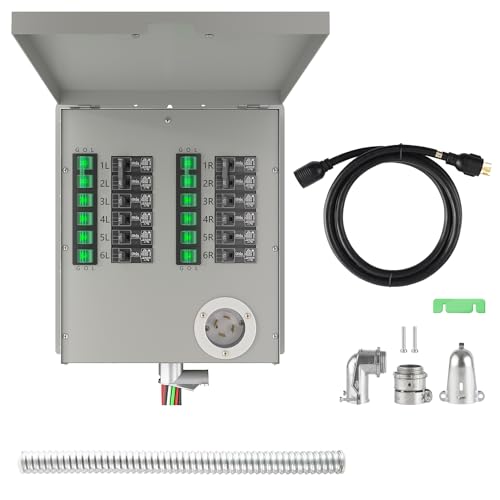
The Nature's Generator 30A Non-Automatic Transfer Switch is a dedicated 12-circuit manual transfer panel designed to bridge portable backup power sources directly to residential branch wiring. This manual transfer switch is specifically built for homeowners, rural property owners, and emergency-preparedness planners who rely on portable gasoline, dual-fuel, or battery-powered generators during utility power outages. Instead of running hazardous extension cords through windows and doors, this system provides a code-compliant, permanent connection point that routes backup electricity safely into existing household circuits.
In terms of electrical capability, the switch is rated for 120/240V split-phase operation at a continuous 30-amp threshold. The provision of 12 distinct circuits offers significant flexibility for load prioritization, allowing users to power essential 120V loads such as refrigerators, freezers, sump pumps, internet routers, and lighting, as well as compatible 240V household equipment within the 30A limit. Because all 12 circuits share the aggregate 30-amp capacity, homeowners must manage simultaneous appliance running watts and motor starting demand to prevent overloading the connected generator or tripping circuit protection.
The build quality centers on a rugged steel enclosure measuring 13 x 9 x 4 inches that meets UL safety standards for residential electrical equipment. A notable operational feature is the inclusion of illuminated rocker switches on the front panel, which clearly indicate when generator power is flowing to each individual branch circuit. Unlike bare-bones transfer panels, this model arrives as a complete installation kit, packaging the pre-wired transfer switch alongside a dedicated exterior L14-30P 30-amp power inlet box and a matching heavy-duty 30-amp generator power cord.
Deployment and electrical setup are optimized for safety and convenience. The pre-wired wire harness reduces installation complexity when a licensed electrician ties the switch into your primary load center. Once installed, an exterior L14-30P power inlet allows fuel-burning portable generators to remain outdoors at a safe distance from living spaces, preventing carbon monoxide intrusion into the home. When an outage occurs, starting the generator, connecting the included 30A cord to the exterior inlet, and manually toggling the rocker switches safely transfers power without risking electrical backfeeding into utility lines.
A realistic limitation of this system is its non-automatic operation, which means it will not start your generator or transfer power automatically when the electrical grid fails. Homeowners must physically operate the panel switches to transfer loads and balance the 30-amp total electrical budget across the 12 available circuits. Additionally, this switch does not provide whole-house backup power, meaning heavy central air conditioning systems or high-draw electric water heaters exceeding 30 amps cannot be run simultaneously without careful load shedding.
The Nature's Generator 30A 12-Circuit Transfer Switch is an exceptional choice for households that already own, or plan to purchase, a 30-amp portable generator or high-capacity solar battery station. It provides a structured, UL-approved method to power essential appliances safely from inside the home. Buyers seeking hands-off, automatic power restoration during storms should consider a permanently installed standby generator with an automatic transfer switch instead.
The Nature's Generator 30A Transfer Switch features broad compatibility across power sources, accommodating standard combustion portable generators running on gasoline, propane, or diesel, as well as modern lithium battery power stations. Any backup power source equipped with a standard 120/240V L14-30R receptacle can directly connect to the included L14-30P power inlet using the supplied 30-amp power cord without requiring specialized adapters.
Because the panel supports split-phase 120/240V power delivery, it can distribute electricity across multi-wire branch circuits or balance multiple 120V circuits across both electrical phases. This flexibility makes it suitable for supporting diverse household loads, such as well pumps, heating system blowers, kitchen refrigeration, and emergency lighting, provided the combined electrical demand remains within the generator's rated continuous output and the switch's 30-amp rating.

Pros
- Eliminates complex indoor subpanel wiring by mounting directly between the electric meter and the meter base.
- Provides electrical access to all household circuits rather than restricting backup power to a preset 6 or 10 circuits.
- Includes a heavy-duty 20-foot GenerLok power cord designed specifically for the switch inlet.
- UL-listed to UL1008M and compliant with the 2020 National Electrical Code for safe utility backfeed prevention.
Cons
- Requires coordination with your local electric utility or a qualified electrician because installation requires pulling the electric meter.
- Non-surge configuration does not provide integrated transient voltage surge suppression for home electronics.
- Requires careful manual breaker load management because total continuous power remains limited to the capacity of your portable generator.
The Hutch Mountain GenerLink 40-Amp Automatic Transfer Switch is an exterior, meter-mounted generator transfer device engineered for residential homeowners seeking a straightforward way to power household loads during utility outages. Designed to install directly between an electric utility meter and the meter base on services up to 200 amps, this transfer switch is specifically rated for portable generators running below 10,000 watts. Homeowners looking to avoid the disruption and expense of installing an indoor multi-circuit subpanel will find this an effective backup power interface that provides access to the entire main breaker panel.
In terms of electrical capacity, the GenerLink handles 40-amp 240V generator inputs and comes supplied with a 20-foot GenerLok power cable fitted with an L14-50 straight connector. Because it delivers power directly to the main service panel, homeowners can energize standard 120V household essentials such as refrigerators, freezers, internet modems, and lighting circuits, as well as compatible 240V appliances within the generator's operating capacity. However, having access to every breaker circuit does not mean a portable generator can run the entire home simultaneously; continuous power delivery remains strictly bound by the output of the connected generator, which must remain under 10,000 continuous watts.
The physical construction of the GenerLink switch features a rugged, UV-resistant housing engineered for year-round exterior exposure in all weather conditions. It meets UL1008M safety standards for transfer switch equipment and complies with the 2020 National Electrical Code, ensuring proper isolation of generator power from utility lines to protect utility lineworkers from backfeed hazards. This specific configuration is a non-surge model, meaning it intentionally allows electrical surges to pass through without tripping an integrated sacrificial surge protector, making it suitable for properties that utilize dedicated whole-house surge protective devices at the panel.
Installation of the GenerLink device differs from conventional manual transfer switches because it mounts externally behind the electric meter rather than inside the home. This requires scheduling with your local power utility or working with a licensed electrician authorized to pull the meter, although the physical mounting process itself takes mere minutes once the meter is unseated. Once installed, transferring power during an emergency is simple: users place their portable generator in an open, well-ventilated outdoor location away from windows, connect the 20-foot GenerLok cable to the switch's underside receptacle, start the generator, and manage desired household loads using the main electrical panel breakers.
Despite its exceptional convenience, prospective buyers must evaluate several technical constraints before purchasing. Utility permission is mandatory, as some local utility companies do not permit customer-owned collar devices behind their revenue meters. Additionally, the non-surge architecture means the switch will not protect sensitive home electronics from voltage spikes on its own, and users must remain vigilant regarding power balance to ensure their portable generator does not overload when large cycling loads turn on.
For homeowners with utility approval whose electrical service does not exceed 200 amps, the GenerLink 40-Amp Transfer Switch provides one of the cleanest, least invasive methods for connecting a portable generator. It delivers robust mechanical durability, clear utility backfeed protection, and full-panel circuit flexibility without running hazardous indoor extension cords.
Installing the GenerLink transfer switch requires coordination with your local electric utility provider because the unit mounts directly between the utility meter and the meter socket. Because the electric meter must be pulled to seat the GenerLink collar, installation is typically performed by utility personnel or a certified electrician depending on local utility regulations.
Before ordering, homeowners should contact their power company to confirm that meter-mounted collar devices are permitted within their service territory. The unit is rated for residential services up to 200 amps and complies with UL1008M and the 2020 National Electrical Code, providing standard safety isolation to prevent hazardous generator backfeeding onto power lines.
While the GenerLink transfer switch connects to the entire electrical panel, total power availability is limited to the running capacity of your portable generator, which must be rated below 10,000 watts. Users must practice deliberate load management by turning off high-draw breakers, such as central air conditioning or electric water heaters, and selectively powering essential lighting, refrigeration, and pump circuits.
Safety practices for portable generator operation remain essential when using the GenerLink system. Any connected gasoline, propane, or dual-fuel generator must always be placed outdoors in an open area at a safe distance from doors, windows, and fresh-air intakes to eliminate carbon monoxide hazards, regardless of weather conditions or transfer switch convenience.
The Mechanics and Operation of Home Generator Transfer Switches
A residential generator transfer switch acts as a dedicated changeover gateway that isolates a household panel from the electrical grid while allowing backup power to feed interior circuits. Without this isolation equipment, auxiliary electricity could flow into neighborhood utility lines or collide violently with restored grid voltage inside the service box. A transfer switch guarantees that home wiring receives power from only one source at any given instant. By directing auxiliary current through isolated mechanical pathways, homeowners can safely run hardwired heating equipment, well pumps, and lighting during unexpected blackouts.
The Break-Before-Make Mechanical Interlock Mechanism
The core operating principle inside every residential transfer switch relies on a break-before-make contact architecture. Before electrical contacts can close to establish a pathway for generator power, they must physically open and break the existing connection to the utility grid. This mechanical separation eliminates any potential overlap between utility lines and auxiliary generator windings. In manual switches, this action occurs via interconnected toggles, heavy double-throw knife levers, or sliding mechanical interlock plates. In automatic models, electro-mechanical contactors snap between utility and generator positions within a fraction of a second.
Internal air gaps and arc suppression chambers extinguish electrical sparks before opposing contacts close. When inductive appliances like air conditioning compressors are running, disconnecting their circuits generates an instantaneous voltage spike. Physical spacing inside the switch housing ensures that this electrical arc dissipates completely before auxiliary contacts make a connection. This design complies with strict National Electrical Code rules that prevent unsynchronized power sources from sharing conductors. Robust mechanical interlocks physically prevent both power sources from contacting household busbars simultaneously.
How Manual Multi-Circuit Transfer Switches Route Power
Manual multi-circuit transfer switches use individual toggle or rocker switches assigned to specific branch circuits within the home. Each toggle features three distinct positions labeled line, off, and generator. In the line position, normal grid electricity flows through the main panel breaker and passes through the transfer switch to household outlets. When grid power fails, flipping a toggle to the generator position disconnects the utility line and routes generator power directly to that dedicated circuit. This gives homeowners direct control over which appliances receive power from a portable machine.
Hardware like the Nature’s Generator 30 Amp Manual Transfer Switch provides six pre-wired 120-volt circuits designed specifically for essential lights, sump pumps, and refrigerators. Other multi-circuit designs, such as the Nature’s Generator 30A Non-Automatic Transfer switch, feature twelve circuits supporting both 120-volt and split-phase 240-volt loads with illuminated rocker switches. Flexible pre-wired harnesses contain color-coded leads that route directly into the main service panel beside existing circuit breakers. Each transfer switch lead splices directly to an existing circuit load wire using heavy wire connectors. This arrangement leaves existing circuit breaker protection intact while providing safe manual switching.
High-Capacity 50-Amp Transfer Kits and Expandable Subpanels
Larger households dependent on 240-volt equipment require transfer switches rated for higher continuous current and surge capacity. Inductive appliances such as deep well pumps and central air conditioning condensers demand high starting current that would quickly overload standard 30-amp transfer panels. A 50-amp transfer setup handles operating loads up to 12,000 watts, providing sufficient capacity to start heavy induction motors without tripping overcurrent protection. These heavy-duty transfer panels utilize larger busbars and heavier terminal lugs to distribute split-phase current safely.
Models like the Generator Transfer Switch,50A Pro/Tran2 10-Circuit accommodate up to ten discrete circuits, enabling simultaneous management of 240-volt double-pole breakers alongside basic household lighting. The Generac HomeLink 50 Amp Portable Generator Manual kit features a versatile indoor subpanel compatible with interchangeable standard breakers from brands like Siemens, Eaton, and Square D. This modularity allows homeowners to expand their backed-up circuits from ten up to sixteen positions as electrical needs grow. Furthermore, the HomeLink platform allows future conversion into an automatic standby system by simply upgrading the internal controller. These heavy-duty subpanels deliver long-term flexibility for expanding home emergency power systems.
Whole-House Double-Throw Service Disconnect Switches
Rather than isolating eight or ten individual branch circuits, a whole-house manual transfer switch controls the entire electrical service entering the residence. These heavy-duty switches install directly between the outdoor utility watt-hour meter base and the indoor main circuit breaker distribution panel. Inside the enclosure, a large double-throw mechanical lever physically throws solid-copper contact blades between two sets of stationary terminal lugs. One set connects to incoming utility lines, while the opposing set connects to the auxiliary generator power cable. The center resting position provides a complete neutral dead zone where the entire home remains de-energized.
Hardware like the Tzechkii 200 Amp Manual Generator Transfer Switch utilizes a rugged NEMA 3R galvanized steel enclosure engineered to resist rain, ice, and harsh weather conditions. With a rated capacity of 48,000 watts and 200-amp service compatibility, this switch safely transfers power to all existing household breakers at once without requiring individual subpanel wiring. When utility failure strikes, moving the external lever disconnects the electrical grid completely and directs auxiliary generator power into the main distribution busbars. Homeowners then manage power demand directly at their main breaker box by manually turning off non-essential high-draw appliances like electric clothes dryers, ovens, or secondary heat pumps.
Automatic Meter-Collar Transfer Switches for Whole-Panel Backup
Meter-collar transfer switches install directly between the utility meter socket and the glass watt-hour meter itself. This configuration eliminates the extensive labor of opening interior wall cavities or splicing dozens of individual branch circuits beside the main service panel. A certified utility technician or licensed electrician simply removes the electric meter, plugs the collar switch into the utility meter jaws, and re-inserts the electric meter onto the collar face. An external weatherproof cord receptacle extends from the bottom of the collar to accept generator power through a heavy-duty auxiliary cable.
The GenerLink Automatic Transfer Switch for Home demonstrates how this meter-mounted engineering functions during a power outage. When utility power drops and an auxiliary generator starts delivering voltage through the specialized cable, internal microswitches and electro-mechanical contactors detect the incoming auxiliary supply. The switch automatically disengages the household from the grid and routes generator power directly into the main service entrance panel. Because this transfer occurs ahead of the main breaker panel, every circuit in the home remains available, leaving load management entirely to the homeowner. Once municipal power lines re-energize, the internal mechanism senses the return of stable grid voltage, automatically disengages the generator connection, and reconnects utility power.
Dedicated Single-Circuit Transfer Switches for Critical Infrastructure
Not every emergency power strategy requires backing up an entire electrical panel or wiring a complex multi-circuit subpanel. Many homes rely entirely on municipal natural gas for heating and hot water, requiring electricity only to run a single furnace blower motor or basement sump pump. In these scenarios, a dedicated single-circuit manual transfer switch provides code-compliant utility isolation at a fraction of the hardware footprint and installation complexity. These compact devices mount directly to a standard electrical junction box adjacent to the targeted mechanical equipment.
The EZ GENERATOR SWITCH – The Original, Patented manual transfer switch exemplifies this focused single-circuit approach. It incorporates a sealed toggle switch that flips power between the house utility circuit breaker and an external standard three-prong electrical power inlet. When utility failure threatens a finished basement with rising groundwater, the homeowner flips the switch and connects a small portable generator or battery station with a standard extension cord. The switch safely isolates the building wiring, preventing backfeeding while keeping the vital sump pump operational without requiring anyone to touch the main panel breakers. This targeted approach offers an accessible, highly dependable backup solution for single high-priority appliances.
Neutral-Ground Bonding and Grounding Topologies
Transfer switches also play a critical role in managing electrical system grounding and neutral bonding paths. The National Electrical Code categorizes residential generator installations as either separately derived systems or non-separately derived systems based on how the neutral conductor is handled. In a standard non-separately derived system, the transfer switch features a solid neutral bar that permanently connects household neutral wires to the incoming utility neutral conductor. Because the utility neutral remains unbroken, the backup generator connected to this switch must feature a floating neutral, meaning its neutral stator wire is not bonded to its metal frame.
If a generator with a bonded neutral is plugged into a solid-neutral transfer switch, it creates multiple parallel neutral-to-ground paths back to the main service panel bonding screw. These parallel paths violate electrical safety codes and can cause ground-fault circuit interrupter (GFCI) breakers on modern generators to trip instantly upon startup. When integrating backup generators with residential power systems, understanding whether the transfer hardware switches the neutral conductor is essential for safety and reliability. A switched-neutral transfer switch disconnects both hot conductors and the neutral conductor simultaneously, requiring a fully bonded generator to maintain proper earth ground fault protection.
Split-Phase Balancing and Motor Surge Capacity
Operating a home generator through a transfer switch requires careful calculation of continuous running wattage and inductive motor starting surge capacity. Inductive loads like refrigerator compressors, air conditioners, and submersible well pumps require heavy inrush current, known as Locked Rotor Amps (LRA), to overcome mechanical inertia at startup. Sizing transfer equipment and selecting generator capacity must account for these instantaneous motor surges to prevent the engine from bogging down or tripping thermal overload breakers. Installing an air conditioning soft starter can significantly mitigate these initial inrush spikes, allowing smaller generators to start heavy cooling compressors smoothly.
Split-phase 120/240-volt transfer panels also require balanced electrical distribution across both incoming hot busbars, designated as Leg A and Leg B. If a homeowner assigns all heavy 120-volt appliances like microwaves and sump pumps to Leg A while placing only modest lighting on Leg B, an electrical imbalance occurs. This uneven loading forces high return current through the shared neutral conductor, generating unnecessary heat and stressing generator voltage regulators. When balancing home loads or utilizing battery power stations for essential home appliances, pairing compatible circuits evenly across both phases ensures stable voltage delivery and protects sensitive electronics.
National Electrical Code Compliance and Utility Backfeed Prevention
The primary regulatory driver behind transfer switch installation is strict compliance with National Electrical Code Article 702, which governs optional standby power systems. The single most dangerous hazard during any regional power outage is electrical backfeeding, which occurs when a generator is improperly connected directly into household wall outlets without a certified isolation switch. When backfeeding occurs, auxiliary electricity travels backward through the home main service panel, passes into the utility drop lines, and enters the neighborhood distribution transformer. That step-up transformer converts 120-volt generator current into thousands of volts of high-tension electricity on exterior power lines, creating deadly conditions for utility linemen attempting to restore service.
A certified transfer switch provides absolute physical protection against backfeeding by mechanically interlocking electrical circuits. Beyond protecting utility workers, the switch also shields the homeowner’s personal generator and appliances from catastrophic phase clashing. When utility power abruptly restores after a blackout, grid electricity surges back with tremendous current capacity that is completely out of phase with an un-synchronized generator. If both sources meet without an isolation barrier, the resulting explosive short circuit can instantly destroy the generator alternator and ignite structural fires. Installing certified transfer equipment completely eliminates these hazards by ensuring absolute physical isolation between competing power supplies.
Step-by-Step Operational Sequence During a Utility Outage
When a blackout occurs, operating a manual transfer switch requires a deliberate, safety-first procedural sequence to protect electrical equipment and home appliances. First, move the generator outdoors to a stable, well-ventilated location at least twenty feet away from all doors, windows, and fresh air intake vents. Inspect engine oil levels, verify that fuel shutoff valves are open, and connect a heavy-duty four-prong generator cord between the machine output receptacle and the exterior power inlet box. Once the cord is securely locked into place, start the generator engine and allow it to idle smoothly for two to three minutes without any electrical load connected.
After the generator engine reaches operating temperature and delivers a steady 60-hertz frequency, approach the indoor transfer switch panel to engage household circuits. Before transferring power, switch off all large inductive household breakers to minimize sudden inrush shock on the generator alternator. Next, move the transfer switch lever or individual circuit toggles from the utility position over to the generator position. Once the transfer switch is engaged, switch on the largest inductive loads first, such as well pumps or refrigerators, allowing each motor to reach operational speed before activating smaller resistive loads like lighting circuits and television outlets.
When municipal utility service is finally restored, the transfer switch simplifies the transition back to grid power without interrupting daily routines. In systems equipped with utility indicator lamps or audible buzzers, the homeowner receives immediate notification that line voltage has stabilized on the street side. To shut down safely, reverse the operating sequence by switching the transfer toggles back to the utility position one by one or throwing the main disconnect lever. Allow the generator to run unloaded for several minutes to cool down internal alternator windings before shutting down the engine and disconnecting the power cord.




Write Your Review
No reviews yet. Be the first to share your experience!