


Quiet Energy Security for Sudden Power Grid Outages
Severe weather and unpredictable grid failures can leave your home in the dark without warning, spoiling refrigerator food and cutting off essential communication. Traditional combustion engines handle heavy electrical loads, but they bring noise, messy refueling, and poisonous exhaust fumes that prevent indoor operation. Investing in the best solar powered back up generator provides clean, silent battery storage that safely keeps medical gear, lights, and modern household electronics running inside your living room during an emergency.
A solar generator pairs a lithium iron phosphate battery pack with a pure sine wave inverter and an integrated charge controller. While continuous running watts determine which appliances can run simultaneously, battery capacity measured in watt-hours defines how long those devices stay powered before solar panels must replenish the cell reserve. Evaluating listed recharge speeds, surge wattage for motor-driven compressor startup, and port versatility ensures you get practical protection rather than empty promises. For remote cabins requiring continuous current, comparing solar units alongside efficient off-grid power solutions clarifies whether portable solar storage or dedicated stationary gear fits your specific energy requirements.

Pros
- Zero emissions and 25dB quiet operation allow safe, silent indoor use during unexpected blackouts
- Rapid AC recharge reaches 80 percent capacity in 50 minutes to quickly top off before incoming storms
- Durable LiFePO4 battery chemistry delivers 3,000 cycles backed by a 5-year manufacturer warranty
- Dual 140W USB-C ports provide high-speed charging for modern laptops without requiring bulky AC adapters
Cons
- Limited 300W continuous output cannot support high-draw appliances like refrigerators, microwaves, or space heaters
- Shoulder strap shown in promotional materials is sold separately and not included in the retail box
- Solar input is restricted to 60W or 100W panels and does not support larger solar arrays like the PS200 or PS400
The Anker SOLIX C300 is an ultra-compact, battery-powered portable power station engineered for personal emergency preparedness, indoor power outages, and outdoor recreation. Unlike traditional fuel-burning portable generators or whole-house standby systems, this 9.1-pound lithium unit operates with zero toxic exhaust and near-silent operation, rated at just 25dB from 3.3 feet away. This makes the power station safe for indoor living areas, bedrooms, apartments, and storm shelters where gasoline or propane combustion equipment is strictly prohibited due to carbon monoxide hazards.
Electrical output is centered around a 288Wh capacity paired with a pure sine wave inverter that delivers 300W of continuous power and a 600W surge capacity. The power station provides power through eight output ports, including three standard AC receptacles (sharing 300W total), a 120W 12V car socket, two high-speed 140W two-way USB-C ports, one 15W USB-C port, and a 12W USB-A port. This configuration makes the unit capable of running communications gear, internet routers, laptops, LED emergency lighting, and small low-draw personal devices during a blackout, though it lacks the wattage necessary for motor-driven appliances like refrigerators, sump pumps, or space heaters.
Hardware reliability is a primary focus of the SOLIX C300 design, which utilizes a Lithium Iron Phosphate (LiFePO4) battery chemistry rated for 3,000 charge cycles before reaching 80 percent original capacity. According to manufacturer specifications, this translates to roughly a decade of regular use, protected by internal smart temperature regulation, drop-resistant exterior housing, and a 5-year warranty. Measuring 4.88 by 4.72 by 7.87 inches, the compact vertical body takes up minimal table space during a storm, making it an organized central charging hub for household family electronics.
Recharging versatility is one of the standout features of this portable power station, helping users maintain emergency readiness when severe weather approaches. Connected to a standard household AC wall outlet, the internal battery can recharge to 80 percent in approximately 50 minutes, allowing swift preparation before a storm hits. Off-grid recharging can be accomplished via compatible 60W or 100W solar panels, a 12V vehicle auxiliary socket, or via compatible USB-C PD 3.1 wall chargers. Buyers should verify solar compatibility, as the manufacturer specifies this model cannot pair with larger panels like the Anker PS200 or PS400, nor 5V/3A USB panels.
Realistic limitations must be considered when incorporating this model into a home backup strategy. With 300 running watts, this device cannot power heavy household appliances, well pumps, or heating elements, and it cannot connect to transfer switches or home breaker panels. Additionally, the unit does not come standard with a shoulder carrying strap, requiring an optional accessory purchase if over-the-shoulder transport is desired.
The Anker SOLIX C300 is best suited for renters, suburban households, and emergency preppers seeking a dependable, indoor-safe power reserve to keep mobile phones, computers, and medical communication devices active during localized grid failures. Shoppers requiring refrigeration support, heating backup, or whole-house power circuits should instead investigate larger multi-kilowatt battery systems or open-frame dual-fuel portable backup generators.
During a utility outage, managing power reserves requires matching device wattage against the 288Wh capacity and 300W continuous output limit of the Anker SOLIX C300. This unit excels at supporting low-draw essentials such as a 10W home Wi-Fi router, smartphones drawing 15W to 20W, and 60W laptops, allowing households to maintain communication and access emergency weather alerts for extended hours. The zero-emission operation ensures that families can safely keep the unit on a nightstand or kitchen counter without the noise, vibration, or exhaust hazards associated with outdoor combustion generators.
Because the unit is capped at 300W, users must avoid connecting heavy household loads such as coffee makers, toasters, microwave ovens, or portable air conditioners, which will promptly trip the internal overload protection. For storm preparedness, the fast 50-minute AC recharge cycle allows users to rapidly replenish the battery from grid power whenever rolling blackouts or temporary power restorations occur.
Replenishing the SOLIX C300 off-grid is supported through dedicated solar input, providing renewable power during prolonged utility outages when the grid remains down. The manufacturer recommends pairing the unit with an Anker 60W or 100W solar panel for steady daytime harvesting under clear sunlight conditions. Buyers should note that larger high-wattage panels, such as the Anker SOLIX PS200 and PS400, as well as 5V/3A USB-C solar chargers, are explicitly incompatible with this model's input architecture.
Beyond solar energy, the power station supports multiple charging paths including standard AC wall charging, 12V vehicle lighter sockets, and bidirectional 140W USB-C ports. This multi-input flexibility ensures that whether you are evacuating in a car, sheltering at home, or managing an extended outdoor campsite, maintaining battery capacity remains straightforward.

Pros
- LiFePO4 battery chemistry delivers over 3,000 charge cycles, providing far greater operational longevity than standard lithium-ion batteries.
- Safe for indoor emergency use during storm outages since it produces zero carbon monoxide, exhaust fumes, or loud mechanical noise.
- Pure sine wave inverter with 1600W continuous output and 3200W surge accommodates the startup demand of compatible motor-driven appliances like refrigerators.
- Dual-charging capability combines AC power and 100W USB-C PD to replenish 80% capacity in about 3 hours.
Cons
- The built-in 40W solar panel charges slowly relative to the 1024Wh battery capacity, making external solar panels necessary for faster off-grid replenishment.
- Continuous 1600W output is limited to 120V household devices and cannot support high-draw 240V appliances like central air conditioners or electric water heaters.
- At 1024Wh of total storage, continuous high-wattage loads will deplete the battery within a few hours unless connected to an active recharge source.
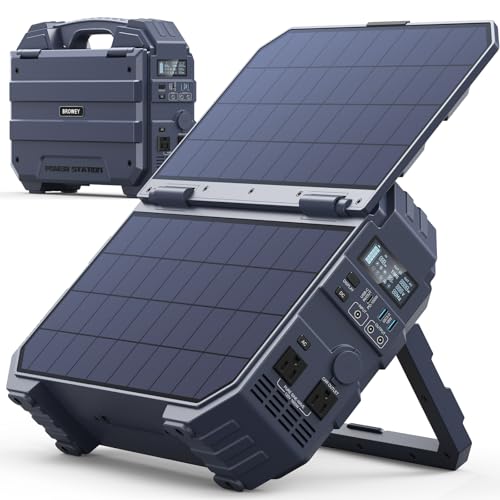
The BROWEY S1600 is an indoor-safe portable power station and solar generator engineered for emergency home backup, RV trips, and off-grid camping. Unlike conventional gasoline-powered or standby generators that produce harmful carbon monoxide and require outdoor installation, this battery-powered unit provides clean 120V power directly inside living spaces. It is positioned primarily for homeowners, apartment renters, and preparedness-minded families who need reliable electricity for essential household loads during utility blackouts without dealing with fuel storage, engine maintenance, or loud exhaust.
Built around a 1024Wh lithium iron phosphate (LiFePO4) battery, the power station supplies 1600 continuous running watts and up to 3200 peak surge watts through a pure sine wave inverter. This surge headroom helps handle the momentary inrush current required by motor-driven appliances, such as residential refrigerators or select power tools, while the pure sine wave output protects sensitive electronics like laptops and CPAP machines. With a 1024Wh total capacity, runtime will vary directly with attached electrical demand; modest loads like LED lights, network routers, and mobile devices can operate for dozens of hours, whereas continuous 500W to 1000W appliances will deplete the reserve in one to two hours.
Recharging versatility is a key operational strength, supporting simultaneous dual-input charging via the supplied AC wall adapter and a 100W USB-C Power Delivery port to reach an 80 percent charge in approximately three hours. For emergency off-grid utility, the unit features an integrated 40W solar panel paired with an internal MPPT charge controller, which also supports pass-through charging so connected devices can draw power while solar energy is gathered. The power station provides eight output connections across AC receptacles, DC barrel ports, and USB options, including the dedicated 100W PD port designed for modern laptops and mobile gear.
At 26 pounds and measuring 13.3 by 17.1 by 5.5 inches, the BROWEY S1600 utilizes a slim, briefcase-inspired form factor that simplifies vehicle packing, closet storage, and emergency staging. The internal LiFePO4 battery cells offer over 3,000 life cycles to 80 percent capacity, equating to roughly a decade of regular use under normal maintenance. Operational safety is managed by an integrated Battery Management System (BMS) that actively guards against overvoltage, thermal overload, and short-circuit conditions, making it safe to operate alongside sleeping quarters or inside emergency shelters where combustion engines are strictly prohibited.
Buyers should recognize that a 1024Wh portable power station cannot replace a whole-house standby generator or a high-capacity dual-fuel portable backup unit. It does not provide 240V service, cannot be directly tied into a home electrical panel via standard generator transfer switches without specialized low-voltage sub-panels, and cannot run heavy heating or cooling equipment such as central air conditioners or clothes dryers. Furthermore, while the built-in 40W solar panel provides a handy emergency trickle charge, fully recharging a depleted 1024Wh battery from 40W of solar input alone requires substantial direct sunlight over multiple days, making optional external solar arrays necessary for serious off-grid replenishment.
The BROWEY 1600W portable power station is best suited for renters, urban households, campers, and storm-conscious families who need quiet, immediate emergency power for communication devices, medical CPAP equipment, and food preservation during short-to-medium utility outages. Those seeking to power hardwired household circuits, heavy well pumps, or whole-house heating systems will need to look toward higher-wattage fuel-burning portable generators or permanent standby systems. For localized, zero-emission essential circuit backup, this unit delivers a practical balance of output, portability, and battery lifespan.
During storm-related power outages or grid failures, the BROWEY S1600 serves as an indoor emergency power hub that can be safely staged in living rooms, kitchens, or bedrooms. Because it operates on an internal battery rather than fossil fuels, it completely eliminates the carbon monoxide risks, refueling hazards, and placement restrictions associated with gasoline or propane generators.
The 1600W rated output is capable of powering standard 120V household essentials such as a refrigerator to preserve food, a CPAP machine for nighttime medical support, home internet modems, and emergency lighting. The 3200W peak rating is particularly valuable during motor startup, allowing compressor-based appliances to cycle without tripping the inverter overload protection. Households should prioritize essential equipment and monitor cumulative wattage to maximize the 1024Wh capacity during multi-day outages.
The power station utilizes premium lithium iron phosphate (LiFePO4) battery chemistry, engineered to deliver over 3,000 charge cycles before dropping to 80 percent of its original capacity. Compared to traditional lithium-ion batteries that often degrade after 500 to 800 cycles, this chemistry provides enhanced thermal stability and a service life exceeding 10 years under typical use.
To accelerate turnaround time between uses, the system supports dual charging by combining the standard AC wall charger with a 100W USB-C PD input, replenishing the battery from empty to 80 percent in approximately three hours. The unit also features an integrated 40W solar panel with an internal MPPT controller, offering emergency trickle-charging in the field, while additional external solar panels can be connected to shorten off-grid charging times.


Pros
- Includes a 40W foldable solar panel, eliminating the need to purchase separate solar charging equipment.
- Pure sine wave 200W inverter ensures clean, safe power delivery for sensitive personal electronics and laptops.
- Extremely lightweight at 3.0 lbs and compact enough to store inside a backpack or emergency supply kit.
- Silent, zero-emission operation makes it completely safe for indoor emergency use during storm outages.
Cons
- Limited 200W maximum AC output cannot power heating elements, refrigerators, sump pumps, or major home appliances.
- Compact 146Wh battery capacity is designed strictly for small devices and communications rather than extended multi-day household backup.
- Lacks higher-voltage 240V support or transfer-switch integration capability found on large home backup units.
The Powkey 200W Solar Powered Generator is an ultra-portable battery-based power station designed for emergency preparedness, outdoor recreation, and small-scale household backup power. Unlike conventional fuel-burning portable generators or permanently installed standby generators, this unit operates as a silent, emission-free power bank combining a 146Wh (39,600mAh) battery pack with a 200W pure sine wave inverter and an included 40W foldable solar panel. It serves American households, apartment renters, and campers who need dependable secondary power to keep vital communications active during storm-induced utility outages without dealing with gasoline, motor oil, or exhaust fumes.
Electrical output centers around dual 110V pure sine wave AC outlets that deliver up to 200W of continuous power. Pure sine wave inversion ensures harmonic distortion remains low enough to run sensitive consumer electronics safely, including laptops, CPAP-style travel accessories within the 200W limit, and camera batteries. Alongside the AC outlets, the front panel features four USB ports sharing a 5V/3.1A maximum output and a 12V/8A DC port, allowing users to run up to seven smaller items at once. The manufacturer indicates the 146Wh capacity can recharge a standard 5W smartphone roughly 24 times, a 15W camera battery around 12 times, or a 50W laptop approximately 2.5 times before the internal storage is exhausted.
Portability and compact engineering represent primary design highlights for this setup. The power station weighs only 3.0 pounds and measures 7.87 by 1.81 by 5.71 inches, while the included 40W foldable solar panel folds down to 13.98 by 7.68 by 1.57 inches. This small footprint allows both pieces to fit into an emergency go-bag, vehicle trunk, or closet shelf without requiring dedicated floor space. Recharging flexibility is supported by three distinct pathways: an AC wall adapter that restores a full charge in 5 to 6 hours, a 12V car cigarette lighter cable, or direct solar input through the bundled 40W solar panel. Four integrated LED lights display remaining battery charge levels so users can gauge energy reserves during extended blackout conditions.
System safety and hardware longevity are managed through an integrated Battery Management System (BMS). The BMS circuitry monitors operation in real time to deliver overload protection, overcurrent protection, overvoltage protection, short-circuit prevention, and automatic shutoff during unsafe conditions. Because this is a self-contained lithium battery generator rather than an internal combustion engine, it produces zero carbon monoxide. Households can operate it safely inside closed living rooms, bedrooms, or emergency shelters where fuel-powered portable generators are strictly forbidden due to toxic emissions and ventilation hazards.
Realistic load limitations define what this generator can and cannot achieve during a home backup scenario. With a 200W maximum continuous threshold and 146Wh storage capacity, this unit cannot run heavy inductive motors, space heaters, microwave ovens, refrigerators, freezers, or household water pumps. It also cannot connect to residential electrical panels via transfer switches or generator inlet boxes. Power planning must focus strictly on low-wattage electronics, LED task lighting, portable radios, and mobile devices, rather than broad household circuit support.
For homeowners, renters, and storm-preparedness planners seeking an affordable, grab-and-go backup power solution for personal electronics, the Powkey 200W solar generator package delivers practical, self-reliant utility. Its bundled 40W solar panel provides renewable off-grid recharging capabilities when grid power remains out for days. Buyers requiring appliance preservation, high-wattage tool operation, or whole-house electrical support should evaluate larger dual-fuel portable generators or dedicated home standby equipment instead.
During severe weather events and extended electrical grid failures, maintaining personal communication and emergency lighting is critical. The Powkey 200W portable power station provides immediate plug-and-play capability to charge smartphones, emergency NOAA weather radios, tablets, and flashlights without creating noise or carbon monoxide. Because it operates silently and cleanly, it can be kept directly on a nightstand or kitchen counter throughout a hurricane, winter freeze, or localized utility outage.
Renewable replenishment via the included 40W foldable solar panel ensures the unit remains functional during multi-day grid disruptions when standard wall outlets remain dead. Positioning the solar panel in clear daylight provides continuous input to slowly replenish the 146Wh cell. This makes the system particularly well suited for emergency kits, apartment dwellers with balcony sun exposure, and rural households prioritizing reliable communication backup over heavy appliance operation.
The power station features seven total output points configured to power a variety of low-draw devices concurrently. Dual 110V pure sine wave AC receptacles support continuous loads up to 200W, four USB ports deliver up to 5V/3.1A for mobile phones and small tech accessories, and a 12V/8A DC barrel port accommodates compatible 12V automotive and camping equipment. An AC output indicator light visually confirms active inverter status to prevent accidental discharge.
Recharging options accommodate home, vehicular, and outdoor environments. The included AC power adapter recharges the internal battery from a standard household outlet in approximately 5 to 6 hours before severe weather strikes. When traveling or evacuating, the included car charging cable replenishes the unit from a 12V vehicle socket, while the 40W folding solar panel connects directly for off-grid daytime power generation.
Pros
- Safe for indoor operation with zero emissions, zero engine noise, and no carbon monoxide hazard.
- Durable LiFePO4 battery chemistry provides 3,000+ cycles to 80% capacity for extended service life.
- Generous 1600W continuous inverter rating handles essential 120V appliances and surge-heavy motor loads up to 3200W.
- Self-contained folding 40W solar panel offers emergency solar harvesting without carrying separate external panels.
Cons
- Integrated 40W solar panel recharges the 1024Wh capacity slowly, requiring external solar panels or wall power for quick turnaround.
- Limited to 120V single-phase plug-in loads, lacking 240V output or direct transfer-switch whole-house utility integration.
- Total weight of 26.46 pounds lacks built-in transport wheels, requiring manual carrying via the integrated handle.
The BROWEY S1600 is a battery-powered portable power station and solar generator designed for indoor emergency backup, RV travel, camping, and off-grid power needs. Unlike conventional fuel-burning portable generators or permanently installed automatic standby generators, this unit operates completely without gasoline, propane, or exhaust emissions. That distinction makes it an attractive choice for apartment residents, renters, suburban households, and emergency planners who need accessible power inside the home during utility blackouts without violating local noise ordinances or creating carbon monoxide risks.
Performance centers on a continuous 1600W pure sine wave inverter backed by a 3200W peak surge rating and a 1024Wh lithium iron phosphate (LiFePO4) battery pack. In practical household backup terms, this output allows the station to support essential 120V equipment including compact or modern efficient refrigerators, CPAP machines, desktop computers, Wi-Fi hardware, and low-draw power tools. The pure sine wave architecture delivers clean AC electricity that protects sensitive microprocessors and variable-speed motors from electrical distortion. Operating runtime is governed directly by total active wattage against the 1024Wh battery reserve, meaning continuous high-wattage loads will deplete the system much faster than intermittent devices like medical equipment or communications gear.
The system design integrates a folding 40W solar array directly into the exterior casing, paired with an internal Maximum Power Point Tracking (MPPT) charge controller for optimized solar energy capture. For standard replenishment, the unit supports multi-source recharging: combining the AC wall adapter and a 100W USB-C Power Delivery source can replenish 80% of the battery in approximately 3 hours. Power distribution is managed across 8 dedicated output ports including AC outlets, DC barrel jacks, and high-speed USB connections. Weighing 26.46 pounds and measuring 17.2 x 13.3 x 5.7 inches, the unit adopts an all-in-one carrying profile that stores neatly in utility closets or vehicle trunks.
Operation and maintenance are straightforward compared to internal combustion generators. The station requires no engine oil changes, spark plug replacements, fuel stabilizers, or outdoor ventilation setbacks. An integrated Battery Management System (BMS) actively monitors internal cell health, safeguarding against overvoltage, overheating, overloading, and short circuits. It also supports pass-through charging, enabling users to feed incoming solar or utility power directly through to critical appliances while continuing to float the internal battery.
Prospective buyers must evaluate realistic capacity boundaries before relying on this unit for extended storm recovery. The 1024Wh capacity cannot sustain high-draw heating elements, central air conditioning, electric water heaters, or large well pumps, nor does it supply 240V split-phase power for whole-panel transfer switch connections. Furthermore, while the built-in 40W solar panel provides a convenient survival-level trickle charge, completely replenishing a depleted 1024Wh battery from 40W of sunlight alone takes multiple days of peak exposure, making auxiliary folding solar panels or vehicle DC charging cables advisable during long-term grid failures.
The BROWEY S1600 is best suited for homeowners and renters who want an immediate, clean-running backup solution for specific critical appliances, CPAP machines, and communications equipment during short-to-medium utility outages. Buyers requiring whole-house coverage, 240V heavy appliance support, or indefinite multi-day continuous runtime on high-draw equipment will need to consider larger modular battery ecosystems, high-output dual-fuel portable generators, or permanently installed automatic standby systems.
The core architecture of the BROWEY S1600 utilizes premium Lithium Iron Phosphate (LiFePO4) cell chemistry, offering significant longevity advantages over older lithium-ion nickel manganese cobalt formulations. The manufacturer rates these internal cells for more than 3,000 full charge-discharge cycles while retaining at least 80% of their original 1024Wh storage capacity. For emergency preparedness buyers who keep the unit on standby for seasonal storm threats, this translates into an expected operational lifespan exceeding 10 years with minimal cell degradation.
Power conversion is driven by a 1600W continuous pure sine wave inverter capable of absorbing brief inductive startup spikes up to 3200W. This transient headroom is essential for motor-driven appliances like small refrigerators, sump pumps within supported amperage limits, and power tools that demand double their rated continuous wattage to turn over. The integrated Battery Management System continuously checks cell temperatures, current draw, and individual cell voltage balance, ensuring rapid shutoff protection if connected loads exceed safe operational thresholds.
Integrating the BROWEY S1600 into a severe-weather preparedness plan requires careful load prioritization. With a 1024Wh energy reservoir, the unit is optimized for targeted circuit replacement using direct plug-in extension cords rather than whole-home panel integration. For medical emergency readiness, a typical 40W to 60W CPAP machine without a heated humidifier can operate for multiple consecutive nights, providing crucial continuity for individuals relying on sleep therapy during extended grid blackouts.
Because the unit emits no carbon monoxide, exhaust fumes, or engine vibration, it can be stationed directly on a nightstand, kitchen counter, or living room floor during severe storms, eliminating the need to run heavy electrical cables through exterior windows or doors in freezing or rainy weather. When managing food preservation during outages, cycling an efficient refrigerator for brief periods rather than leaving it connected continuously will stretch the 1024Wh capacity significantly, maximizing usable run time until utility lines are restored.

Pros
- Zero fumes and silent operation down to 30 dB allow safe indoor emergency use where gasoline generators cannot operate.
- Substantial 2,400W continuous output with 15 ports easily handles multiple household appliances simultaneously.
- Rapid recharge capability reaches 80% in approximately 1.1 hours from an AC wall outlet or 43 minutes with combined solar.
- Durable LiFePO4 battery chemistry provides 3,000 cycles to 80% capacity for long-term daily or seasonal reliability.
- Modular design allows storage expansion from 2,048Wh up to 6,144Wh for extended emergency preparedness.
Cons
- Recharging during an extended power outage requires sunlight or grid access, unlike gas generators that can be refueled instantly with gasoline.
- Substantial 50.7-pound weight without integrated rolling wheels can make manual transport and relocation challenging for a single person.
- Higher initial purchase price per watt-hour compared to traditional open-frame gasoline portable generators.
The EF EcoFlow DELTA 2 Max is an all-electric portable power station featuring a 2,048Wh lithium iron phosphate (LiFePO4) battery and a 2,400W AC inverter, functioning as a zero-emission alternative to conventional portable gasoline generators. Unlike traditional internal combustion generators that burn gasoline and emit toxic carbon monoxide, this battery-powered unit stores electrical energy for immediate use indoors or outdoors. It is primarily engineered for American homeowners, renters, campers, and storm-preparedness buyers who need quiet, fumeless backup electricity during grid disruptions or off-grid excursions where fuel-burning engines are prohibited or impractical.
Electrical performance centers on a robust 2,400W continuous AC output across 15 distribution ports, supplemented by EcoFlow proprietary X-Boost mode that powers selected high-wattage appliances up to 3,400W. Continuous running output is derived entirely from the internal battery reserve rather than mechanical engine generation, meaning runtime is governed directly by total connected load rather than fuel-tank capacity. For emergency household backup, this allows simultaneous operation of vital appliances such as full-size refrigerators, medical devices, lighting circuits, and entertainment electronics without the electrical spikes or harmonic distortions often found on entry-level open-frame gas generators.
The core energy storage system utilizes long-lasting LiFePO4 battery chemistry, which the manufacturer rates for 3,000 charge cycles before dropping to 80% of original capacity, translating to roughly a decade of regular use. Recharging flexibility stands out with dual-charging capabilities that combine up to 1,000W of solar panel input with standard AC utility power to reach an 80% charge in approximately 43 minutes, or 1.1 hours from an AC wall outlet alone. A built-in Battery Management System continuously tracks operating voltage, current flow, and internal temperatures to safeguard against overcharging, deep discharge, and thermal stress during heavy cycles.
Day-to-day usability and physical setup eliminate the mechanical complexities of traditional gas equipment, removing the need for oil changes, carburetor cleaning, spark plug maintenance, and pull cords. Operating sound levels start at a whisper-quiet 30 dB under light charging conditions, enabling safe operation inside occupied living rooms, bedrooms, or enclosed recreational vehicles overnight. At 50.7 pounds and measuring 12.2 by 9.7 by 20 inches, the unit maintains a self-contained footprint with integrated side handles, while companion app connectivity lets users monitor power distribution and adjust charging rates remotely over Wi-Fi or Bluetooth.
Important operational limitations arise when comparing this battery power station to conventional gasoline-powered generators during extended power emergencies. While a gas generator can run indefinitely as long as fresh fuel is physically poured into the tank, the DELTA 2 Max depends entirely on available grid power, automotive 12V sockets, or sunny conditions for solar panels once its 2,048Wh capacity is exhausted. Additionally, at roughly 50.7 pounds without an included rolling wheel kit, single-person mobility requires moderate physical effort, and upfront acquisition costs are noticeably higher than entry-level portable gasoline generators of equivalent wattage.
For homeowners seeking clean emergency backup without the noise, volatile fuel storage, or exhaust hazards of engine-driven generators, the EcoFlow DELTA 2 Max represents an exceptionally capable and low-maintenance investment. It is uniquely suited for urban residences, apartments, RV travel, and nighttime emergency use where gas generators are legally restricted or physically hazardous. Conversely, buyers anticipating multi-day winter outages with prolonged cloud cover or those requiring high-amperage 240V whole-home transfer switch integration will still find a dedicated dual-fuel or conventional gasoline generator better suited to their continuous heavy-demand requirements.
Evaluating a battery power station like the EcoFlow DELTA 2 Max against a traditional portable gasoline generator requires understanding the fundamental differences between energy storage and mechanical energy generation. Gasoline generators use an internal combustion engine to burn liquid fuel, spinning an alternator to produce continuous electrical output as long as gasoline is supplied. In contrast, the DELTA 2 Max stores electrical energy within a 2,048Wh LiFePO4 battery pack and uses an internal inverter to convert direct current into 2,400W of alternating current.
The most significant practical distinction is operational safety and deployment location. Gasoline generators produce lethal carbon monoxide gas and high operating heat, requiring strict outdoor placement at least 20 feet away from doors, windows, and vents. The DELTA 2 Max produces zero emissions and runs with sound levels as low as 30 dB, allowing safe placement directly inside living areas, home offices, or camper interiors during severe weather, storms, or late-night grid outages.
Maintenance and refueling logistics also contrast sharply between the two technologies. Engine-driven generators demand periodic oil changes, fuel stabilizer, carburetor care, and fresh gasoline storage that deteriorates over time. The DELTA 2 Max requires zero fluid maintenance or mechanical upkeep, but it cannot be instantly refueled during an outage without access to daylight solar panels or an energized AC circuit.
Integrating the EcoFlow DELTA 2 Max into a home emergency preparedness plan provides rapid, push-button power restoration without the startup delay, pull cords, or outdoor exposure associated with fuel-based generators during severe weather. With 2,400W of continuous output and a 2,048Wh capacity base, the unit can support crucial residential loads including household refrigeration, CPAP equipment, communication devices, and emergency LED lighting during localized blackouts.
For households facing prolonged utility disruptions, the system features an expandable modular architecture that scales capacity from 2kWh up to 6kWh through up to two optional expansion battery packs. Paired with up to 1,000W of solar panel input, preppers and rural homeowners can create a sustainable off-grid generation loop that replenishes stored reserves daily without relying on disrupted commercial fuel supply chains.

Pros
- Upgraded LiFePO4 battery chemistry provides more than 4,000 charge cycles for extended service life
- Extremely compact and lightweight frame at just over 7 pounds makes transport effortless
- Versatile output selection includes a high-speed 100W USB-C PD port alongside two standard AC receptacles
- Clean, emissions-free battery operation allows safe indoor emergency use where fuel-burning generators cannot operate
Cons
- Continuous 300W AC inverter rating cannot run high-wattage kitchen appliances, space heaters, or heavy power tools
- Solar panels required for off-grid recharging are not included and must be purchased separately
- Manufacturer specifications do not provide numeric total harmonic distortion (THD) or specific waveform ratings
The Jackery Explorer 300 occupies a distinct place in portable power by offering a battery-driven alternative to engine-powered equipment. While categorized under generators in retail listings, the Explorer 300 is an emissions-free portable power station built around a 292Wh lithium iron phosphate (LiFePO4) battery pack and an integrated 300W AC inverter. Unlike gasoline or propane inverter generators that consume fuel and emit exhaust, this unit runs silently and produces no carbon monoxide. That design makes it exceptionally well suited for American campers, road-trippers, CPAP users, and apartment renters who require reliable, quiet electricity for small appliances and personal electronics during outdoor excursions or local power interruptions.
Electrical performance centers on an inverter system that delivers 300 watts of continuous running output with a 600-watt surge ceiling for temporary startup demands. The electrical interface is versatile for its compact size, supplying power to up to six devices at once through two standard AC outlets, a fast-charging 100W USB-C Power Delivery port, two USB-A ports, and a 120W 12V car accessory socket. While the product literature identifies robust support for laptops, cameras, drones, and outdoor CPAP setups, the manufacturer does not document a specific total harmonic distortion (THD) percentage or explicit waveform profile in the supplied specifications. Buyers planning to operate sensitive medical or audio hardware should consider device-specific manufacturer guidance alongside this 300W output envelope.
Build quality and battery longevity represent major strengths of this upgraded model. The internal power source relies on LiFePO4 cell chemistry rated for more than 4,000 charge cycles before degrading to 70 percent of its initial capacity, which translates to over a decade of regular use under typical operating conditions. Jackery encases this system in a compact footprint measuring 9.1 inches long, 5.2 inches wide, and 7.8 inches high, with a total weight listed between 7.1 and 7.5 pounds. The rigid integrated carry handle sits flush within the chassis design, making it simple to stow in a vehicle trunk, pack alongside camping equipment, or carry across a campsite without unnecessary bulk.
Replenishing the internal battery is straightforward across both grid and off-grid scenarios. The power station includes an AC wall adapter and a 12V automotive charging cable, allowing users to restore capacity at home before an outage or while driving between destinations. When used as an off-grid solar generator, the Explorer 300 pairs with Jackery solar panels (available separately), reaching an 80 percent charge in roughly 2.8 hours under optimal conditions with a 100W solar panel, or around 7.5 hours with a compact 40W panel. Because it relies entirely on stored chemical energy rather than fuel combustion, it requires no engine oil, spark plug checks, or carburetor maintenance.
Understanding practical load boundaries is critical when evaluating this unit against conventional portable power options. With a 300W rated AC limit and a 292Wh capacity, the Explorer 300 cannot power energy-intensive household appliances such as full-size refrigerators, microwaves, sump pumps, space heaters, or air conditioners. It does not provide 240V capability, parallel coupling, or transfer switch integration for whole-home electrical circuits. Runtime is finite and directly tied to load draw; continuous operation of medium-draw devices will exhaust the 292Wh reserve within a few hours unless sustained by real-time solar input.
For buyers seeking an ultra-portable, maintenance-free power source for light recreational use, remote work sessions, and basic emergency electronics charging, the Jackery Explorer 300 provides exceptional convenience and durable battery chemistry. Its silent operation and zero-emission profile make it ideal for tents, vehicles, and indoor living rooms during storm blackouts. However, property owners preparing for major grid failures or contractors requiring multi-kilowatt output for jobsite machinery should look past small battery units and consider a high-capacity dual-fuel or gasoline engine-driven inverter generator instead.
The core energy architecture of the Jackery Explorer 300 relies on an upgraded LiFePO4 battery pack providing 292 watt-hours of capacity. Compared to older lithium-ion chemistries that typically offer 500 to 800 cycles, this LiFePO4 configuration is rated for more than 4,000 charge cycles before dropping to 70 percent capacity. This chemical stability significantly improves long-term ownership value, offering sustainable power across years of camping trips, road travel, and storm seasons without rapid battery degradation.
Recharging flexibility allows users to maintain power readiness across diverse environments. When connected to a standard 100W solar panel under clear sky conditions, the system can achieve an 80 percent charge in approximately 2.8 hours, while a smaller 40W portable panel completes the same 80 percent recovery in roughly 7.5 hours. Because solar panels are not included in the standard package, off-grid users must purchase compatible panels separately, while travelers can utilize the included 12V automotive cable or AC wall adapter for routine replenishing.

Pros
- Generous 3,840Wh storage capacity handles long runtime demands for major home essentials like full-size refrigerators.
- Strong 2,600W continuous output (3,900W surge) provides the muscle needed for high-draw appliances and power tools.
- Rapid 15ms switchover delivers seamless emergency transfer for sensitive electronics like network routers and security systems.
- Clean battery architecture allows completely safe indoor operation during severe weather with zero exhaust emissions.
- Integrated trolley handle and wheel system make relocating an 86-pound power station much easier for single individuals.
Cons
- Heavy 86-pound total weight can make lifting the unit into vehicles or carrying it up stairs challenging despite the wheels.
- Solar replenishment using the included 400W array requires 9.5 to 19 hours of peak sun, which can take multiple days in cloudy conditions.
- Solar panels ship separately from the main power station, meaning equipment may arrive on different delivery days.
The BLUETTI Elite 400 is a high-capacity portable solar generator kit designed specifically for emergency home backup, storm readiness, and clean off-grid power. Unlike traditional fuel-burning portable generators or permanently installed whole-house standby systems, this battery-based power station operates with zero engine noise and zero exhaust emissions. That distinction allows American homeowners, apartment dwellers, and suburban families to place the unit directly inside living spaces, basements, or home offices during utility blackouts without carbon monoxide concerns. By packaging a massive 3,840Wh internal battery with two 200W solar panels, the manufacturer delivers an all-in-one emergency preparedness kit aimed at buyers seeking reliable, indoor-friendly power.
Continuous electrical output on the Elite 400 is rated at 2,600W, backed by a 3,900W surge capacity to handle high-demand motor startups. In practical household backup terms, this continuous power envelope is well suited for running a standard household refrigerator, powering emergency lighting, recharging communication gear, and operating home medical or power tools within the unit's wattage limits. A standout operational feature is its rapid 15ms switchover speed. When connected between a wall outlet and critical equipment, the station seamlessly takes over the electrical load during a sudden utility cut, preventing Wi-Fi routers, security cameras, aquarium pumps, or desktop workstations from resetting.
Renewable charging capability is supported directly out of the box through two included 200W solar panels, giving the system a 400W nominal solar array. According to manufacturer specifications, these panels can recharge the 3,840Wh battery from empty to 100 percent in approximately 9.5 to 19 hours, depending on sun intensity, ambient temperature, and panel angle. For routine preparedness, the system also accepts standard grid power via the supplied AC charging cable for fast pre-storm top-offs. Users should note that the solar panels ship separately from the power station itself, so delivery dates for both packages may vary when planning ahead for imminent storm events.
From a hardware and mobility perspective, the Elite 400 measures 17 x 11 x 41 inches and weighs 86 pounds in a dark gray enclosure. Because an 86-pound battery pack is too heavy for casual hand-carrying, BLUETTI engineered an easy-roll upright trolley system directly into the chassis. This design lets users tilt and roll the power station from a garage storage bay into a kitchen or basement with minimal physical strain. Power distribution is managed across 9 versatile ports, allowing simultaneous connection of standard AC cords, DC appliances, and personal electronics without requiring multiple messy splitters or power strips.
While the Elite 400 offers impressive versatility, buyers must recognize its practical limitations when comparing it to traditional combustion generators. With a 2,600W continuous threshold and standard 120V household output, it is not designed to replace a whole-house automatic standby generator or energize 240V heavy appliances like central air conditioning systems, electric clothes dryers, or high-draw water heaters. Additionally, replenishing a 3,840Wh battery strictly with 400W of solar input during dark, overcast storm days can take multiple days. Moving the unit up or down staircases also requires substantial effort due to its 86-pound dry weight, despite the integrated trolley wheels.
Overall, the BLUETTI Elite 400 solar generator bundle is an outstanding choice for homeowners, renters, and emergency-minded households seeking quiet, fume-free backup power for essential appliances. It bridges the gap between small portable power packs and noisy outdoor gasoline generators, giving users dependable runtime and seamless 15ms switchover protection. Buyers who need to energize high-voltage 240V household circuits or entire central HVAC systems will require a permanently installed standby generator or a large tri-fuel portable unit, but for critical indoor circuit preservation, the Elite 400 is an exceptionally well-built option.
The BLUETTI Elite 400 delivers a potent 2,600W continuous AC output with a 3,900W surge rating, making it capable of managing demanding household appliances during severe weather outages. Its 3,840Wh battery reserve provides sufficient watt-hours to support essential motor-driven appliances like full-size food preservation refrigerators and freezers through extended grid failures. The 9 integrated output ports allow users to distribute power across multiple priority devices at once, including communication equipment, portable cooking devices, and emergency lighting.
A critical advantage for storm preparedness is the system's 15ms automatic switchover capability, which functions effectively as an emergency power supply. During an unexpected utility blackout, connected devices such as internet routers, network storage, pet feeders, and security systems transition to battery power without rebooting. While this unit cannot power an entire house or high-voltage 240V appliances, it offers a reliable, zero-emission alternative to gasoline generators for dedicated indoor load preservation.
Physical mobility is a key consideration for heavy battery power stations, and the BLUETTI Elite 400 addresses this with an integrated upright trolley system. Measuring 17 x 11 x 41 inches and weighing 86 pounds, the unit features built-in wheels and an extended frame handle that allows a single user to roll the power station across flat floors, patios, or driveways to where power is needed most.
For extended off-grid sustainability, the included pair of 200W solar panels provides a 400W solar array to replenish the battery without utility access. Under favorable daylight conditions, the manufacturer estimates a full recharge from 0 to 100 percent in 9.5 to 19 hours. The kit includes the dedicated solar charging cable and standard AC charging cord, though buyers should plan ahead since the solar panels ship in a separate container from the main power unit.
Frequently Asked Questions About Solar Backup Generators
Can a solar powered generator run a standard home refrigerator during an outage?
Yes, a portable solar generator can run a standard residential refrigerator if its continuous output exceeds the running wattage and its surge rating accommodates the compressor startup spike. A mid-sized unit like the 1024Wh BROWEY S1600 or the 2048Wh EF ECOFLOW DELTA 2 Max supplies 1600W to 2400W continuous pure sine wave power, comfortably handling typical 100W to 200W refrigerator cycles. However, overall operating runtime depends directly on total battery capacity and ambient temperature, so pairing the unit with compatible solar panels helps maintain sustained cooling.
How do starting watts differ from running watts on a solar generator?
Running watts measure the steady electrical output an inverter provides continuously, while starting or surge watts represent the brief peak output available to start electric motors. Compressor-based appliances like refrigerators, portable air conditioners, and power tools demand a momentary surge that can reach double or triple their continuous wattage. If your appliance draws a 1200W spike at startup, a compact 300W unit like the Jackery Explorer 300 will immediately trigger overload protection and shut down.
Can you connect the %best solar powered back up generator% to a household circuit panel?
Yes, high-capacity solar power stations can supply household circuits, but they require a professionally installed manual transfer switch or generator interlock rather than direct wall outlet backfeeding. Plugging a power station into a standard wall receptacle to energize household wiring is illegal and creates a severe electrical hazard. Large units with fast switchover capabilities or integrated controls, similar to dedicated hardware using a reliable generator power switch, allow isolated subpanel transfer to safely keep critical branch circuits alive.
How long does it take to recharge a solar backup generator using solar panels?
Solar recharge times range from under two hours to nearly twenty hours, depending on maximum solar input limits, panel wattage, and direct sunlight conditions. The BLUETTI Elite 400 features a massive 3840Wh battery that requires approximately 9.5 to 19 hours with two 200W panels, whereas the EF ECOFLOW DELTA 2 Max accepts up to 1000W of solar input to recharge 80% in about 43 minutes when combined with AC wall power. Real-world solar harvesting fluctuates with cloud cover, seasonal sun angles, and panel positioning.
Why do modern solar backup generators use LiFePO4 battery chemistry?
LiFePO4 batteries deliver significantly longer cycle lifespans and greater thermal stability compared to traditional lithium-ion chemistries. Most LiFePO4 power stations, including models from Anker and EcoFlow, offer 3000 to 4000 charge cycles before degrading to 70% or 80% capacity, translating to roughly ten years of regular use. While they are slightly heavier than older lithium alternatives, their resistance to thermal runaway makes them exceptionally safe for indoor emergency backup.
Is a solar generator sufficient to replace a standby fuel generator for 2026 storm prep?
A solar generator serves as an emission-free, silent indoor backup for vital circuits, but it rarely replaces the endless multi-day output of large fuel-driven units. While portable solar generators excel at silently running lights, routers, CPAP machines, and small appliances without toxic exhaust, property owners with massive heating or central air demands often rely on commercial-grade diesel backup generators for sustained whole-house loads. Evaluating your daily energy consumption determines whether renewable solar storage or high-capacity combustion power matches your backup plan.



Write Your Review
No reviews yet. Be the first to share your experience!