


Preparing for seasonal storms and sudden grid failures requires knowing exactly how your backup power equipment operates before an outage hits. Many equipment owners planning home emergency power find themselves asking, does a generator have a battery? The short answer depends entirely on the starting mechanism and the architecture of your specific unit. Conventional portable units with manual pull cords rely purely on mechanical recoil assemblies and magnetos to produce spark, which means they do not contain or require an onboard electrical storage cell. In contrast, models equipped with push-button ignition, wireless remotes, or automatic standby switches depend on a dedicated starter cell to turn the engine over.
Understanding whether your power plant includes a storage cell is critical for maintaining reliable emergency readiness and avoiding sudden no-start headaches. If your equipment relies on an electric starter, a neglected or flat power cell can leave you stranded in the dark without essential lights or refrigeration. In addition to conventional fuel-burning machines, the backup landscape now features battery-powered stations that replace combustion engines entirely with integrated lithium cells. Balancing starting requirements alongside factors like fuel consumption and understanding generator runtime and fuel capacity ensures your household stays powered when severe weather strikes.

Pros
- Direct physical replacement for Generac XG8000E portable generator starter batteries
- Spill-proof, maintenance-free AGM design can be mounted in any orientation
- Engineered to withstand heavy engine vibration, physical shock, and extreme operating temperatures
- UL-certified sealed lead acid construction backed by a manufacturer one-year warranty
Cons
- Supplied as the bare battery only, requiring buyers to reuse existing generator cables and mounting brackets
- Nut-and-bolt terminal format requires verifying compatibility with your specific generator cable lugs
- Requires periodic float charging during prolonged off-season generator storage to prevent natural self-discharge
The Mighty Max ML9-12NB is a 12V 9Ah sealed lead acid replacement battery engineered specifically for electric-start portable generators such as the Generac XG8000E. Heavy open-frame portable generators designed for home emergency backup rely on a healthy starter battery to crank the engine without manual recoil pulling. For homeowners, rural property owners, and contractors who depend on prompt generator starting during sudden severe weather outages, this compact battery serves as an accessible replacement to keep essential emergency power equipment ready for immediate deployment.
In terms of electrical delivery, this unit supplies a 12-volt nominal potential with a 9 amp-hour capacity, providing the high initial discharge rate required by generator starter motors. Lead acid AGM technology allows the battery to deliver consistent cranking current even when ambient outdoor temperatures fluctuate significantly. Whether preparing for freezing winter ice storms or sweltering summer grid failures, the battery maintains reliable starting capability across a broad operating temperature spectrum, eliminating the physical strain of pull-starting high-displacement portable generator engines.
Build quality centers around a completely sealed, maintenance-free Absorbent Glass Mat structure certified by UL. Because open-frame portable generators generate significant mechanical vibration during operation, this battery features shock-resistant casing and internal plate anchoring to prevent internal shorting or structural degradation over time. The unit measures 5.94 inches long, 2.56 inches wide, and 3.94 inches high with a total weight of 5.31 pounds. Its spill-proof internal electrolyte suspension allows it to be mounted in any position without leakage risk, fitting neatly into standard factory generator trays.
Installation and daily handling are straightforward for DIY homeowners and generator maintenance operators. The battery features standard nut-and-bolt terminals that accommodate factory eyelet connectors found on generator wiring harnesses. Because the package includes only the battery itself, owners must retain their original generator mounting straps, battery hold-downs, and positive and negative connection leads. Routine handling requires no fluid checks or acid additions, making seasonal maintenance as simple as keeping the terminals clean and ensuring terminal bolts remain torqued down against generator vibration.
Realistic limitations reflect the nature of standalone replacement batteries and lead-acid chemistry. The listing does not include a wiring harness, terminal covers, or a trickle charger, meaning any damaged original cables must be sourced separately. In addition, like all sealed lead acid batteries, this unit experiences gradual natural self-discharge during long storage periods. If the host generator is stored in an unpowered shed or garage between seasonal storms without an active battery maintainer or periodic charging, the battery may deplete below cranking threshold before the next emergency arrives.
For owners of the Generac XG8000E or compatible portable generator models seeking to restore turnkey electric starting, the Mighty Max ML9-12NB represents a practical, budget-conscious choice. It delivers the exact physical dimensions, terminal arrangement, and cranking capacity necessary to bypass exhausting recoil starts during high-stress emergency power failures. Pairing this battery with an inexpensive float charger during off-season generator storage will provide maximum operational readiness whenever severe weather threatens the primary utility grid.
Maintaining a dedicated 12V starter battery is critical to the overall reliability of any electric-start portable backup power system. Portable generators stored for long stretches between storm seasons often fail to start on the key switch because the starter battery has lost its charge, forcing users into exhausting manual recoil starts during an active power failure. Installing a fresh 12V 9Ah AGM battery restores push-button convenience and ensures the engine starter motor receives adequate cranking amperage the moment backup power is needed.
To achieve the longest service life from this maintenance-free sealed lead acid battery, generator owners should implement regular off-season charging routines. Connecting an external low-amperage 12V smart charger or battery maintainer while the generator sits idle in storage prevents sulfate buildup on the lead plates and counteracts natural self-discharge. Before each storm season, inspecting the nut-and-bolt terminals for corrosion and confirming that electrical connections remain tight will keep your emergency generator ready for immediate service.
Pros
- Ultra-light 4.07-pound weight and compact 8.2-inch body provide exceptional portability for rapid emergency deployment anywhere in the house
- Zero-emission battery design allows safe, quiet indoor operation without the fuel storage, exhaust, or carbon monoxide dangers of combustion generators
- Multiple DC, USB, and 110V AC ports let users charge smartphones, tablets, laptops, and radios simultaneously during severe weather events
- Dedicated AC and DC power switches help conserve stored battery reserves by preventing passive phantom draw when specific ports are not in use
Cons
- The 200W continuous AC ceiling cannot run high-demand household appliances such as full-sized refrigerators, microwaves, space heaters, or sump pumps
- Modest 151Wh capacity requires careful energy management and will deplete quickly if powering continuous medical or heating equipment
- Solar panel is not included with the unit and must be purchased separately if off-grid solar replenishment is desired
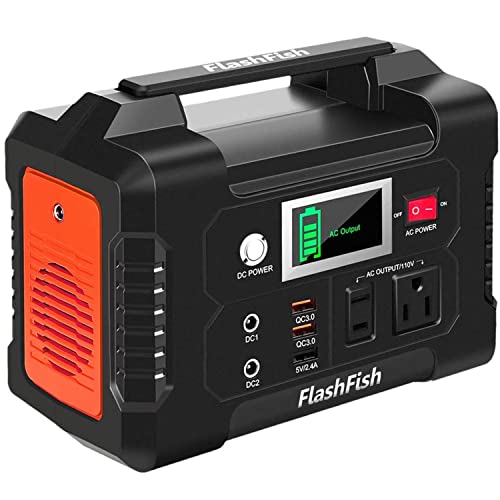
The FF Flashfish 200W portable power station is an ultra-compact, battery-based backup generator designed for lightweight emergency preparedness, outdoor recreation, and immediate storm response. Unlike conventional gasoline, propane, or permanently installed whole-house standby generators, this unit relies on a self-contained 151Wh (40,800mAh) lithium-ion battery. This fundamental design difference means it produces zero exhaust emissions, requires no liquid fuel handling, and operates silently, making it an accessible power solution for apartment residents, renters, and suburban homeowners who need safe indoor electricity during an unexpected utility failure.
In terms of backup electrical capability, the unit features a single 110V AC outlet rated for 200W continuous output, two 12V DC ports, two Quick Charge 3.0 USB ports, and a standard 2.4A auto-sensing USB port. This electrical profile is specifically engineered for low-draw communication and survival electronics. During a storm outage, it can recharge smartphones, tablets, emergency radios, flashlights, and camera gear, while providing continuous power for laptops, compact 12V automotive appliances, or compatible low-wattage CPAP machines. However, households planning emergency power must recognize that 200W cannot support motor-driven loads such as sump pumps, well pumps, air conditioners, or kitchen refrigerators that require significant starting and running wattage.
The build quality emphasizes compact ergonomics and straightforward monitoring for stress-free deployment in dark outage conditions. Measuring just 8.2 by 4.3 by 6.2 inches and weighing only 4.07 pounds, the generator includes a sturdy top handle that allows anyone in the family to grab and carry it effortlessly. A bright multifunction LCD screen clearly presents the remaining battery capacity, charging status, and active AC or DC output levels. Independent AC and DC control buttons permit users to toggle individual circuits on or off, protecting battery life against unnecessary parasitic discharge. Safety is managed internally by an advanced Battery Management System (BMS) that monitors internal cell temperature, regulates operating voltage, prevents short circuits, and initiates automatic shutdown during overload events.
Routine ownership and recharging flexibility make this unit practical for both home readiness and vehicle travel. The Flashfish power station can be recharged from empty to full in approximately 4 to 4.5 hours using the included AC wall charger, or in about 5 hours using the included 12V car charging cable while running errands or driving. For extended off-grid situations where grid power remains down for days, the unit accepts input from an optional 60W solar panel (sold separately) to achieve a full recharge in 5 to 6 hours under optimal sunlight. Because there are no engine spark plugs, motor oil, or carburetor maintenance to manage, storm readiness simply involves keeping the unit plugged in or topped off periodically in a cool, dry storage location.
The most important operational limitation of this power station is its restricted power ceiling and energy reserve. With 151Wh of total storage and a 200W maximum continuous AC limit, it cannot interface with home breaker panels, generator transfer switches, interlock kits, or 240V heavy appliances. Any attempt to plug in common household heat-producing appliances like toasters, coffee makers, or hair dryers will trigger the internal overload protection and shut the unit down. Buyers looking to run heavy refrigeration, water pumps, or essential home heating circuits during severe winter freezes or hurricanes will require a significantly larger dual-fuel or high-output portable combustion generator.
For its intended application, the FF Flashfish 200W portable power station represents a reliable, budget-friendly entry point for baseline emergency power. It is ideally suited for students, apartment dwellers, solo campers, and emergency-minded households that want an indoor-safe battery pack to keep phones charged, medical electronics running, and emergency lighting illuminated when grid power goes dark. Shoppers needing broad appliance coverage or whole-home circuit support should view this unit as a secondary personal power reserve rather than a primary household utility replacement.
During severe weather, hurricanes, or local grid blackouts, maintaining communication and light is a primary safety priority. The FF Flashfish power station excels as an immediate indoor power hub, allowing family members to keep cell phones, weather radios, and rechargeable flashlights operating without stepping outside into dangerous weather. Because it uses sealed battery storage rather than a combustion engine, it generates no toxic carbon monoxide fumes and can safely sit on a kitchen counter, bedside table, or inside a shelter area.
To maximize the 151Wh reserve during a multi-day emergency, users should practice deliberate load prioritization. Powering low-wattage LED lights and charging mobile phones via the high-efficiency USB ports consumes significantly less energy than running the 110V AC inverter. For users supporting small CPAP machines, utilizing compatible DC power cables instead of the 110V AC wall plug bypasses the inverter conversion loss, substantially extending overall runtime through the night.
The Flashfish 200W system provides three independent replenishment options to ensure users are never left without power during travel or long-term outages. The primary method is the included AC wall adapter, which restores the battery pack to full capacity in 4 to 4.5 hours from any standard home wall outlet before a forecasted storm arrives. In transit, the included 12V car adapter plugs directly into a vehicle cigarette lighter socket to deliver a complete charge in roughly 5 hours.
For off-grid camping, overland travel, or extended grid failures, the power station can be paired with a compatible Flashfish 60W solar panel (sold separately). Under direct sunlight, solar replenishment can fully restore the internal 40,800mAh battery in approximately 5 to 6 hours. This solar capability transforms the compact battery pack into a self-sustaining power generator for remote outdoor adventures and extended survival scenarios.

Pros
- Directly matches the compartment dimensions and terminal layout of the Westinghouse iGen4500DFc generator
- Ships fully charged and ready to use, minimizing downtime during emergency storm preparations
- Sealed, non-spillable maintenance-free design eliminates the need to check or add battery acid
- Includes nut and bolt hardware for secure, vibration-resistant cable connections
Cons
- Configured specifically for compatible generator battery compartments and will not fit models requiring right-side positive terminals or different dimensions
- Requires periodic maintenance charging or generator runtime during prolonged off-season storage to prevent natural self-discharge
The UPS Battery Center 12V 6.5Ah replacement battery is a dedicated maintenance component engineered to restore push-button electric start performance on the Westinghouse 4500 Watt iGen4500DFc portable generator. For homeowners relying on portable power during severe weather outages and RV travelers running off-grid appliances, a functioning starter battery is essential for quick, dependable engine starting without having to resort to the manual recoil pull cord.
This battery operates on a 12V 6.5Ah sealed lead-acid (SLA) platform designed to deliver the burst of cranking current needed by the generator starter motor. The manufacturer lists the casing dimensions at 5.39 inches (137 mm) in length, 2.60 inches (66 mm) in width, and 4.02 inches (102 mm) in height, with a total weight of 5 pounds. These dimensions directly match the designated battery tray on the Westinghouse iGen4500DFc, preventing unwanted shifting or mounting issues inside the generator housing.
Terminal configuration is a crucial factor when replacing portable generator starting batteries, and this unit is built with standard nut-and-bolt connections featuring the positive (+) terminal on the left side. This arrangement aligns with the factory wiring harness of the iGen4500DFc, allowing the leads to bolt on cleanly without pulling, bending, or requiring cable extensions. The sealed lead-acid construction keeps the internal electrolyte contained, making the battery safe from acid leakage during transport, storage, and normal generator vibration.
Installation is straightforward because the battery arrives fully assembled and factory charged out of the box. Users simply remove the generator maintenance access panel, disconnect the old battery, secure the positive and negative leads to the new nut-and-bolt terminals, and verify proper starter engagement. For households preparing for hurricane season, winter storms, or extended camping trips, this quick drop-in setup eliminates delays and immediately restores push-button starting readiness.
The primary limitation of this battery is its specific form factor and terminal layout. Because the positive terminal is fixed on the left and the dimensions are tailored for compact generator battery trays, it cannot be used interchangeably with generators requiring reverse polarity or different tray dimensions. Additionally, like all sealed lead-acid batteries, it will experience slow natural self-discharge when left idle, meaning owners must either run their generator periodically or connect a compatible 12V float charger during extended storage periods to maintain peak cranking ability.
Overall, the UPS Battery Center 12V 6.5Ah battery is a reliable, cost-effective replacement for Westinghouse iGen4500DFc owners facing a dead or degraded starter battery. By restoring factory-level electric starting convenience, it provides dependable power reliability for emergency home backup, RV use, and outdoor recreation where fast generator deployment matters most.
Compatibility for portable generator starting batteries depends strictly on physical dimensions, terminal hardware, and terminal polarity. The UPS Battery Center battery measures 5.39 inches long by 2.60 inches wide by 4.02 inches high, which directly matches the factory battery compartment of the Westinghouse 4500W iGen4500DFc portable inverter generator.
This unit features a left-side positive (+) terminal and includes nut-and-bolt hardware to ensure a tight, corrosion-resistant mechanical bond. Buyers should verify their generator model number and terminal orientation prior to ordering, as installing a battery with reversed terminal positions can stretch or misalign the internal wiring harness.
Sealed lead-acid starter batteries require minimal ongoing attention during regular generator operation, as the running engine helps maintain terminal voltage. However, seasonal storage or prolonged standby periods can lead to gradual self-discharge, which reduces cranking capacity when emergency power is needed.
To maximize battery service life, owners should store the generator in a dry, temperature-controlled environment when possible and periodically run the engine according to the manufacturer guidelines. Alternatively, maintaining the battery on an appropriate 12V trickle charger or battery maintainer during off-season months will prevent sulfation and ensure the generator starts on demand during severe weather outages.

Pros
- Direct drop-in fit for popular Champion 7000 and 9000 series generators requiring a CP12180 12V 18Ah battery
- Sealed AGM construction resists heavy engine vibration on portable open-frame generators without spilling fluid
- Eliminates regular fluid maintenance and holds a steady charge during seasonal standby storage
- Supplied with terminal hardware to facilitate straightforward cable connection
Cons
- Functions strictly as a 12V starter battery and does not generate electricity or supply standalone 120V household power
- Requires periodic maintenance charging between storm seasons to prevent self-discharge during long storage periods
- Buyers must locate the included terminal hardware stowed inside the battery casing recess before installation
The Casil 12V 18Ah SLA battery is a dedicated replacement starter battery designed specifically for electric-start portable generators and outdoor power equipment. Rather than an engine-driven electric generator or standalone power station, this product is a specialized maintenance component that powers the electric starter motor on compatible machinery. It is built as a direct replacement for the Champion CP12180 battery model, making it particularly useful for homeowners, rural property owners, and contractors running Champion 7000 and 9000 series open-frame portable generators who need to restore instant push-button or remote starting functionality.
Electrical starting performance depends on immediate, reliable cranking amperage, and this 12-volt, 18-ampere-hour battery provides the necessary reserve to turn over larger displacement generator engines. When severe weather knocks out utility power, a dead starter battery can turn an electric-start backup generator into an exhausting manual recoil pull-start chore. By maintaining 18Ah of nominal capacity, this battery provides ample energy to crank high-output portable generators repeatedly during cold-weather startups or extended power outages.
Physical durability and internal architecture are critical when mounting an electrical component directly to a vibrating generator frame. Casil uses Absorbent Glass Mat (AGM) sealed lead acid (SLA) construction, which suspends the electrolyte in fiberglass mat separators. This design makes the casing entirely spill-proof and leak-proof, allowing safe operation even when moving equipment across uneven terrain or transporting generators in truck beds. The sealed design also provides vital resistance to engine-induced vibration, which is a leading cause of internal plate failure in standard flooded lead-acid batteries.
Installation and routine ownership are straightforward thanks to standardized dimensions of approximately 7.16 inches long, 3.03 inches wide, and 6.53 inches high. The battery incorporates standard nut-and-bolt style terminals, and the necessary extension mounting hardware comes tucked inside a cavity in the casing for safe transport. Because it is completely maintenance-free, generator owners never need to inspect acid levels or top off cells with water. To maintain peak starting readiness throughout hurricane or winter storm seasons, owners should simply attach a compatible 12V floating battery maintainer during off-season storage.
Understanding the operational limitations of this product ensures realistic purchasing decisions. This battery is strictly an engine starting component and small DC backup supply; it does not produce AC wattage, feature 120V or 240V household outlets, or replace an actual fuel-burning generator. Additionally, while it fits standard Champion 7000 and 9000 series battery brackets, buyers must verify their generator model's tray clearance, hold-down strap dimensions, and terminal post orientation before completing an installation.
The Casil 12V 18Ah AGM battery represents a practical, budget-conscious maintenance solution for generator owners whose factory electric-start battery has degraded over time. If your Champion 7000 or 9000 series generator fails to crank electrically despite good fuel and ignition systems, this direct replacement restores dependable, effortless starting. Households preparing for seasonal storm outages and contractors needing reliable jobsite engine starts will find this battery an essential reliability upgrade.
Proper fitment verification is the most important step before replacing a generator starter battery. The Casil 12V 18Ah unit is designed around the standard CP12180 form factor, measuring approximately 7.16 x 3.03 x 6.53 inches. Homeowners should inspect their generator battery tray, hold-down bracket, and terminal lead lengths to ensure these dimensions and the nut-and-bolt post configurations align with their specific generator frame.
To ensure maximum service life during extended storage periods, generator batteries require sensible seasonal care. Lead-acid chemistry naturally experiences slow self-discharge over months of non-use. Connecting a low-amperage 12V trickle charger or float maintainer during the off-season prevents sulfation, keeping the battery primed to crank your generator the moment an unexpected grid outage strikes.

Pros
- Maintenance-free, spill-proof SLA/AGM design can be mounted in any orientation and eliminates fluid maintenance.
- High discharge rate and deep discharge recovery characteristics provide dependable starting power for electric-start engines.
- Resists heavy shocks and engine vibrations, enhancing longevity when mounted directly to generator frames.
- Tolerates wide operating temperatures to ensure reliable starter performance in freezing winter storms and summer heat.
- UL certified and backed by a one-year warranty, with nut and bolt terminal hardware included.
Cons
- Supplied as battery and terminal hardware only, with no wiring harness, cables, or mounting tray accessories included.
- Functions strictly as a 12V DC storage and starting battery, not an engine-driven electric generator or AC power supply.
- Nut and bolt terminal design is not directly compatible with spade, flag, or automotive post connectors without adapters.
The Mighty Max ML18-12 is a 12-volt, 18 amp-hour (Ah) sealed lead acid (SLA) rechargeable battery utilizing Absorbed Glass Mat (AGM) technology, classifying it as a generator accessory and replacement electrical component rather than an engine-driven fuel-burning generator. It is designed to serve as a reliable 12V starter battery for electric-start portable generators, standby generator starter circuits, lawn equipment, and auxiliary emergency backup power systems. For U.S. homeowners preparing for hurricane and severe weather outages, RV owners maintaining generator ignition reliability, and contractors on active jobsites, having a dependable cranking battery is essential to ensure that portable generators start quickly on demand without frustrating manual pull-start delays.
In terms of electrical specifications, the ML18-12 delivers a nominal 12 volts of direct current (DC) with an 18 amp-hour continuous capacity rating. Because this product is an electrochemical storage battery and not an engine-driven generator head or alternator, it does not produce alternating-current (AC) electricity, nor does it feature running watts, starting watts, fuel options, or household outlets. Instead, its electrical performance is defined by a high discharge rate engineered to deliver the rapid burst of current required to crank small engines, coupled with deep discharge recovery capabilities. Furthermore, its chemistry is formulated to maintain effective operating performance across a wide temperature spectrum, which is critical for turning over cold generator engines during winter freeze power outages.
The physical construction of the Mighty Max ML18-12 utilizes an AGM spill-proof casing that completely suspends the liquid electrolyte within fiberglass mat separators. Measuring 7.13 inches in length, 3.01 inches in width, and 6.57 inches in height, with a weight of 6.7 pounds, the battery fits into standardized 12V battery trays and brackets commonly found on medium to large portable generators. The sealed design allows the unit to be mounted in any physical orientation without risk of acid leakage, while providing inherent resistance to shocks and mechanical vibrations created by operating generator engines. Electrical connections are established via Nut and Bolt (NB) terminals, and the manufacturer includes the necessary terminal screws in the box for immediate installation, backed by UL certification and a one-year warranty.
Installing the ML18-12 into an electric-start generator setup requires securing the positive and negative generator leads to the nut-and-bolt terminals using the included screws. Because the listing includes only the battery and hardware, buyers must ensure their generator wiring harness, cable lugs, and hold-down bracket are present and in good condition. Day-to-day ownership is completely maintenance-free, meaning owners never need to inspect fluid levels or add distilled water. However, to maintain peak emergency readiness between storm seasons, owners should periodically verify terminal tightness and connect a compatible 12V smart maintenance charger or rely on the generator's built-in charging circuit, preventing parasitic drain and lead sulfation during extended storage.
The primary operational boundary to understand is that the Mighty Max ML18-12 is an auxiliary 12V DC battery component, not a freestanding generator or AC power station. It cannot directly power 120V or 240V home appliances, tools, refrigerators, or transfer switches, and it produces no continuous alternating current on its own. Additionally, the Nut and Bolt terminal format may require terminal ring lugs or adapters if your equipment expects slide-on spade connectors or quick-disconnect tabs. While its 18Ah capacity is well-suited for turning over electric-start generator motors, buyers must verify their specific equipment manual for tray dimensions, polarity placement, and recommended amp-hour ratings before installation.
The Mighty Max ML18-12 is an excellent, cost-effective replacement battery for homeowners, RVers, and tradespeople who need to restore instant electric-start functionality to their portable generators or maintain dependable 12V auxiliary power systems. Its spill-proof AGM construction, vibration resistance, and solid cranking characteristics provide peace of mind during storm preparedness checks. However, buyers in search of continuous electrical generation to power household appliances, sump pumps, or jobsite tools during utility blackouts must recognize that this product is strictly a starting battery component and must be paired with a functional fuel-burning portable or standby generator.
Maintaining a dependable 12V starter battery is one of the most critical aspects of generator readiness before severe weather strikes. Portable generators equipped with electric start rely on batteries like the Mighty Max ML18-12 to engage the starter motor and turn over the engine effortlessly. If an electric-start battery sits idle for months without maintenance, natural self-discharge can drain its voltage, preventing the starter from cranking during an unexpected blackout. Storing the battery in a clean, dry location and utilizing a dedicated 12V trickle charger or float maintainer during off-season months ensures the unit remains at full charge when an emergency requires immediate power.
When preparing the ML18-12 for installation or routine inspection, always check that the nut-and-bolt terminal connections remain clean, tight, and free of corrosion. Applying a light coat of dielectric grease or terminal protector spray over the connected lugs can help prevent oxidation caused by humidity and outdoor temperature fluctuations. Because this AGM battery is sealed and spill-proof, it does not release corrosive acid fumes under standard operating conditions, making it safe to handle and mount adjacent to sensitive generator electronics and engine components.
Pros
- Durable LiFePO4 battery cells rated for 3,000 cycles offer exceptional lifespan compared to standard lithium-ion batteries.
- Extremely lightweight at 6.4 pounds, making it easy to store in an emergency closet or carry inside a vehicle.
- Pure sine wave inverter provides clean electricity suitable for laptops, medical CPAP devices, and small electronics.
- Pass-through charging and versatile 60W USB-C PD expand everyday utility during indoor utility blackouts.
Cons
- 300W continuous output limit cannot run high-draw heating appliances, coffee makers, full-size refrigerators, or heavy power tools.
- Features only a single standard 120V AC wall outlet, requiring direct device rotation or multi-port USB use.
- Compatible solar panels must be purchased separately to enable off-grid solar recharging.
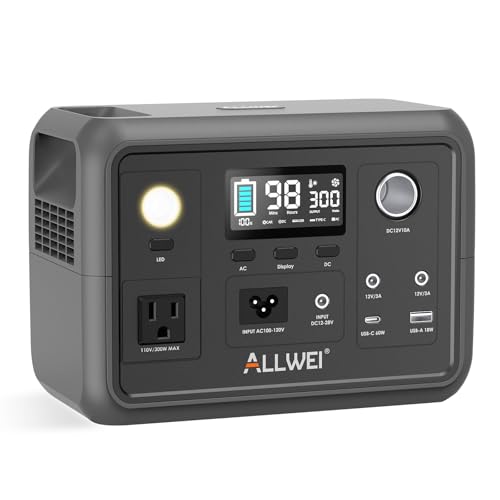
The ALLWEI 300W Portable Power Station is a compact, battery-powered solar generator engineered for emergency home backup, camping, and lightweight off-grid applications. Unlike conventional fuel-burning generators, this portable power station operates silently without gasoline, propane, or exhaust emissions, making it an accessible backup-power solution for apartment renters, suburban homeowners, and emergency-preparedness planners seeking safe indoor operation. With a total weight of 6.4 pounds and compact dimensions of 9.25 by 5 by 6.81 inches, the unit is tailored for users who need dependable portable electricity for personal electronics, communications gear, and low-draw medical devices during sudden utility blackouts.
Power output is driven by a 256Wh lithium iron phosphate (LiFePO4) battery pack paired with an internal pure sine wave inverter rated at 300W continuous running power and 600W peak surge capacity. The pure sine wave architecture delivers clean, stable electrical waveforms suitable for sensitive microprocessors in laptops, tablets, smartphones, and CPAP machines without harmonic interference. LiFePO4 battery chemistry represents a notable durability asset, providing up to 3,000 charge-discharge cycles while retaining optimal storage capability. While 300W of running capacity can sustain essential items such as personal coolers, Wi-Fi routers, LED lamps, and mobile devices, it cannot support high-draw residential equipment like central air conditioning, well pumps, or kitchen microwaves.
The control panel and physical build incorporate six dedicated output interfaces designed to handle multiple devices simultaneously. Users have access to one 120V AC household outlet, two DC5521 barrel ports, one regulated 12V automotive cigarette lighter port, an 18W fast-charging USB-A port, and a high-speed 60W USB-C Power Delivery port capable of directly charging modern laptops. A built-in Battery Management System (BMS) continuously monitors internal cells, providing six layers of hardware protection against short circuits, over-current, over-voltage, and overheating. The front panel also integrates a three-mode emergency LED light with steady and SOS flash patterns, alongside pass-through charging circuitry that allows connected gadgets to draw power while the station itself is actively recharging.
Recharging options provide practical flexibility for both home standby preparation and remote outdoor use. The unit can be recharged from empty to full in approximately 3.5 to 4 hours using a standard AC household wall outlet or a 12V vehicle accessory port. For extended off-grid emergencies, the integrated MPPT solar charge controller accepts up to 100W solar panel input to achieve a full charge in roughly 4 to 5 hours under direct sunlight. Furthermore, dual-source charging combining an AC wall adapter and solar input reduces the total recharge time down to 2 to 2.5 hours. Because this unit relies entirely on battery storage rather than an internal combustion engine, it requires no oil checks, fuel stabilizers, or complex spark-plug maintenance, remaining ready for seasonal storm preparedness with simple periodic top-off charging.
Prospective buyers must recognize the clear boundary between a compact power station and a primary residential backup generator. The ALLWEI 300W unit cannot connect to household transfer switches, interlock kits, or electrical service panels, and its 300W continuous threshold will instantly overload if connected to space heaters, sumps, or heavy refrigeration compressors. Additionally, the unit features only a single AC plug, meaning users must plan their cord connections or utilize the USB and DC ports to power multiple essentials simultaneously. The compatible solar panel is also sold separately, which requires an additional purchase for true off-grid solar replenishment.
The ALLWEI 300W Portable Power Station is best suited for budget-conscious homeowners, renters, campers, and storm-preparedness shoppers seeking an affordable, non-toxic emergency power reserve for vital low-wattage electronics. It provides dependable peace of mind for keeping phones charged, running a CPAP machine through the night, or operating emergency lighting during neighborhood outages. Households that require whole-home electrical coverage, 240V utility integration, or multi-kilowatt output for heavy appliances should consider a dedicated fuel-burning inverter generator or permanently installed standby generator instead.
During severe weather events and utility blackouts, maintaining personal communications and essential medical equipment becomes a critical priority. The ALLWEI 300W Portable Power Station serves as an immediate indoor power reserve that operates safely inside bedrooms, living areas, or storm shelters without producing hazardous carbon monoxide emissions. Its 256Wh capacity can power standard CPAP equipment through the night or provide dozens of smartphone recharges to keep family members connected during emergencies.
Because the unit uses a pure sine wave inverter, it prevents voltage fluctuations that could otherwise harm sensitive medical equipment or high-end electronics. Unlike gasoline generators that require outdoor setup, long extension cords, and fuel storage, this battery station can sit directly on a nightstand or kitchen counter, delivering instant electricity at the push of a button.
The inclusion of premium LiFePO4 (LFP) battery cells sets this power station apart from older lithium-ion units by offering over 3,000 charge cycles before reaching 80 percent remaining capacity. This longevity equates to nearly a decade of regular use, ensuring the internal battery will not quickly degrade while stored in an emergency closet or taken on frequent camping weekends.
Recharging versatility is bolstered by four distinct charging methods, including AC wall charging, 12V vehicle charging, and solar replenishment via an integrated MPPT controller. When time is critical before an approaching storm, dual charging with both AC power and solar input can bring the battery from empty to full in approximately 2 to 2.5 hours, providing rapid turnaround for continuous outage readiness.
Understanding Generator Starting Systems, Battery Roles, and Power Architecture
Determining whether a generator contains an internal battery requires examining its engine starting mechanism and core electrical architecture. Conventional fuel-powered generators only incorporate a battery if they feature an electric starter motor, remote start key fob, or automated standby switching. If a machine relies entirely on a manual pull-cord recoil assembly, it functions without any chemical battery onboard. Understanding these mechanical boundaries helps equipment owners prepare proper maintenance routines and avoid unexpected starting failures during power outages.
Why Some Generators Require Batteries While Others Do Not
The fundamental distinction between battery-equipped and battery-free generators lies in how the engine initiates rotation. Every internal combustion engine must be physically turned over to draw air and fuel into the combustion chamber before spark ignition can take place. Manual recoil units accomplish this rotation through physical arm strength applied to a heavy-duty starter cord wrapped around a spring-loaded pulley. In contrast, electric-start systems substitute human physical effort with an electric starter motor that requires a stored source of direct-current energy.
This requirement for an external electrical energy source makes a dedicated battery necessary on any machine with key-switch or push-button ignition. When an operator triggers the start switch, current flows directly into the starter motor to turn the engine flywheel. Without an active battery connected to the circuit, the electric starter motor cannot engage or rotate the engine components. Consequently, any generator boasting convenient push-button activation contains a battery tucked into its chassis or requires an external battery pack to operate that feature.
How Recoil-Start Generators Produce Spark Without a Battery
Many portable generator owners wonder how an engine can create an electrical spark if there is no battery installed anywhere on the machine. Small utility engines utilize a self-contained magneto ignition system that operates completely independent of any battery or external electrical grid. A permanent magnet is embedded directly into the outer rim of the engine flywheel, which spins whenever the recoil cord is pulled. As this magnet rotates past the ignition coil armature, it induces an electrical current within the coil primary windings.
When the magnetic field collapses, the secondary windings step up this induced current to several thousand volts, which jumps the spark plug gap to ignite the compressed fuel mixture. Because the entire electrical process is generated mechanically through rotational physics, the engine requires zero external electrical charge to start or continue running. Once combustion begins, the spinning crankshaft keeps the flywheel moving, allowing the magneto to generate continuous timed sparks indefinitely. This self-sustaining mechanical design makes manual recoil generators exceptionally dependable during long-term emergency storage.
The Starting Battery Function in Electric-Start Portable Models
Portable generators designed for residential backup and heavy jobsite use frequently incorporate twelve-volt electric starting circuits to eliminate physical pulling fatigue. These machines house a compact twelve-volt rechargeable battery mounted to the lower frame rails or behind a service access door. The primary job of this battery is delivering high cranking current to the electric starter motor for a few seconds until the engine catches. Once the engine reaches operating speed, a small stator coil or onboard alternator generates low-voltage direct current to slowly replenish the energy spent during starting.
Engine size directly dictates the physical volume and electrical storage capacity required of the starter battery. For example, substantial emergency generators like the Generac XG8000E rely on dedicated starter cells such as the Mighty Max Battery 12V 9AH Battery Replacement to supply the momentary amperage required to rotate their overhead-valve engines. Smaller inverter generators, such as the Westinghouse 4500-watt iGen4500DFc, often utilize slightly more compact units like the UPSBatteryCenter Portable Generator Battery 12V to fit tightly within sound-insulated plastic housings. While these starter batteries are essential for turning the engine over, they do not supply household alternating current to the exterior outlets.
Why Home Standby Generators Always Include an Onboard Battery
Whole-house standby generators represent an equipment category where an onboard storage battery is mandatory for basic operation. These permanently installed units connect directly to residential natural gas or propane lines and interface with an automatic transfer switch. When municipal electrical service fails, the transfer switch senses the voltage drop and commands the standby generator controller to start automatically within seconds. Because this emergency transfer occurs without human intervention, the generator must have an active twelve-volt battery ready to spin the starter motor at all times.
To maintain complete readiness, standby generators feature an integrated float charger that continuously draws a small amount of utility power to keep the battery fully charged. This float mechanism prevents the natural chemical self-discharge that otherwise occurs when lead-acid cells sit idle over long periods. Standby installations also run automated weekly exercise cycles to circulate oil, lubricate internal engine seals, and verify that the starting battery maintains proper cranking voltage under load. Keeping this battery in peak condition alongside checks of generator oil requirements and routine service ensures reliable automatic backup when severe weather strikes.
Battery Chemistries in Starter Packs: Sealed Lead-Acid and AGM
The vast majority of combustion generator starter batteries rely on Sealed Lead-Acid (SLA) technology, specifically utilizing Absorbent Glass Mat (AGM) internal construction. In an AGM battery, thin fiberglass mats absorb and immobilize the liquid sulfuric acid electrolyte between the lead plates. This construction makes the battery completely spill-proof and leak-proof, even if the generator vibrates vigorously during operation or tilts during transit across uneven ground. Furthermore, sealed AGM batteries produce minimal outgassing under normal charging conditions, making them safer for enclosed generator compartments.
Larger portable generators frequently demand higher-capacity AGM batteries to deliver dependable starting torque across wide operating temperature ranges. Replacement batteries like the Casil 12V 18Ah SLA Battery and the Mighty Max Battery ML18-12 – 12 Volt 18 AH provide eighteen ampere-hours of capacity designed for heavy-duty starting applications. These high-capacity units feature sturdy nut-and-bolt terminals that withstand continuous vibration without loosening starter cable connections. The dense internal plate architecture also helps these batteries resist physical shock and deep discharge degradation during demanding outdoor use.
The Distinction Between Fuel Generators and Battery-Powered Inverter Stations
Modern backup power discussions increasingly feature portable power stations and solar generators, which represent an entirely different technology from fuel-burning generators. These devices contain no internal combustion engine, burn no gasoline or propane, and produce zero carbon monoxide emissions. Instead of generating electricity on demand through an engine-driven alternator, they store electrical energy inside high-capacity lithium battery packs. Equipment like the Portable Power Station 200W from FF FLASHFISH provides portable power through a 151Wh internal battery pack paired with a built-in pure sine wave inverter.
Advanced portable power stations frequently utilize lithium iron phosphate (LiFePO4) chemistry to achieve extended operational lifespans and superior thermal safety. For instance, the ALLWEI Portable Power Station 300W integrates a 256Wh LiFePO4 battery that delivers thousands of charge-discharge cycles for camping, road trips, and home emergency backup. These power stations can be recharged safely indoors via wall outlets, twelve-volt vehicle ports, or compatible solar panels in the field. When examining these modern units, the battery is not merely an auxiliary starter component; it is the entire power plant itself.
Recognizing the Warning Signs of a Dying Generator Starter Battery
A failing starter battery rarely quits without displaying recognizable early warning signs during starting attempts. The most frequent symptom of battery depletion is a rapid clicking or single sharp click from the starter solenoid when pressing the start button. This clicking indicates that the battery has sufficient voltage to energize the solenoid coil but lacks the amperage required to rotate the heavy engine flywheel. In other situations, the starter motor may turn the engine over very slowly and laboriously before stalling completely.
Testing your generator battery with a digital multimeter provides an accurate assessment of its internal charge and resting state. A healthy twelve-volt AGM battery should display a resting open-circuit voltage between 12.6 and 12.8 volts when fully charged. A voltage reading below 12.2 volts indicates significant state-of-charge depletion, while a reading under 11.8 volts suggests severe discharge or potential cell damage. If the battery voltage plunges below 9.5 volts while the starter motor is actively cranking, internal sulfation has ruined the cell capacity and replacement is necessary.
How to Choose the Correct Replacement Battery for Your Generator
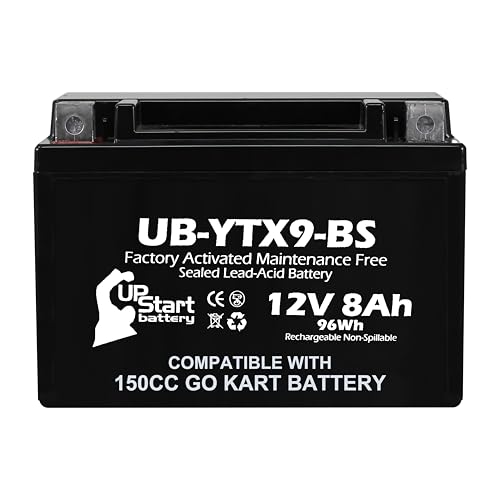
Replacing a dead generator battery requires verifying several critical physical and electrical specifications to guarantee proper installation and function. Physical dimensions are paramount because generator battery trays are built with tight clearances that leave little margin for oversized casings. Terminal orientation must also match your generator wiring harness, as short battery cables often cannot reach across reversed terminal posts. For example, the 12V 8Ah YTX9-BS Battery For Predator 8750 is specifically proportioned to fit Predator generator mounting brackets while offering flexible terminal alignment for easy cable attachment.
Ampere-hour ratings must meet or exceed the original equipment specifications to provide adequate cranking duration during cold weather. Small inverter generators typically operate reliably on 6.5Ah to 9Ah batteries, while open-frame generators with 400cc or larger engines generally require 18Ah units. When installing a replacement battery, securing clean terminal contact and understanding broader electrical safety, including grounding a portable generator safely, protects sensitive electronics from power irregularities. Matching terminal hardware, voltage, and physical envelope ensures your electric starter operates smoothly without electrical strain.
Essential Battery Maintenance and Winter Storage Strategies
Parasitic electrical drain represents one of the primary reasons generator starter batteries die prematurely during seasonal storage. Many modern generators feature digital display panels, low-oil sensors, or remote-control radio receivers that slowly siphon small amounts of current even when turned off. Over several months of idle garage storage, this persistent parasitic draw pulls the battery down into deep discharge. Once a lead-acid battery remains deeply discharged, hard lead sulfate crystals form across the plates, permanently diminishing cranking power.
Preventing seasonal battery failure requires disconnecting the negative battery lead or unplugging the main battery harness connector during extended downtime. Connecting a multi-stage smart trickle charger every few months counteracts natural chemical discharge and keeps plate sulfation from taking hold. Storing the battery in a climate-controlled area during extreme winter freezes also prevents the internal electrolyte from freezing and cracking the plastic case. Periodic inspection for terminal corrosion and applying protective dielectric grease preserves solid electrical pathways for reliable emergency starting.
Selecting the Right Power Equipment Architecture for Your Needs
Choosing between manual recoil units, electric-start machines, and battery-powered stations depends on your physical capabilities, storage habits, and backup priorities. Homeowners who want absolute mechanical simplicity without any battery maintenance responsibilities often prefer compact recoil-start portable generators. Users who require rapid starting convenience or manage high-demand appliances benefit significantly from electric-start units equipped with durable AGM batteries and backup pull cords. Meanwhile, households seeking quiet indoor power for lights, laptops, and medical devices can deploy battery-powered inverter stations as an emission-free companion to combustion equipment.
Evaluating your personal readiness strategy ensures you maintain the right balance between starting ease, maintenance commitments, and long-term durability. If your emergency plan includes an electric-start fuel generator, budgeting routine battery inspections alongside oil and fuel maintenance guarantees immediate operational readiness. For complete backup security, many property owners combine a portable fuel generator for heavy household loads with an indoor battery power station for overnight electronics. Understanding whether your power source relies on an internal battery allows you to protect your investment and maintain continuous power during any unexpected outage.


Write Your Review
No reviews yet. Be the first to share your experience!