


Sudden storm blackouts bring enough stress without worrying about dangerous exhaust fumes creeping into living spaces. Setting up emergency backup equipment outdoors requires strict clearance, yet shifting winds and poorly ventilated setups can trap toxic exhaust near bedroom windows or open patio doors. Anyone preparing a blackout plan needs the best portable generator with carbon monoxide sensor or dedicated companion monitoring to ensure total peace of mind. Reliable safety detectors with electrochemical sensor technology guarantee that toxic gas buildup triggers an instant 85-decibel alarm before hazards reach lethal levels. Careful evaluation of product specifications and manufacturer documentation helps secure essential life-saving protection for your household.
Power outages often force homeowners to run a reliable home backup generator through relentless rain or freezing blizzards. Even a well-placed machine can produce silent, odorless carbon monoxide that threatens indoor air quality if exhaust drafts toward an open vent. Modern safety devices feature electrochemical sensors, digital peak-level displays, and automatic low-battery warnings to keep monitoring active around the clock. Pairing stand-alone detectors with a budget-friendly portable generator keeps your living spaces thoroughly monitored while the engine runs outside. Sound engineering and clear alarm indicators ensure you maintain reliable protection through extended outages.

Pros
- Operates independently on two standard AA batteries, keeping monitoring active throughout extended storm outages
- Tested to rigorous UL 2034 5th Edition safety standards with an ETL listing and an 85 dB audible alarm
- Versatile mounting options allow placement on a wall or direct placement on a nightstand, table, or shelf
- Lightweight and compact profile makes it practical for residential backup safety as well as RV and travel use
- Includes a 10-year limited warranty from an established home safety brand
Cons
- Requires manual replacement of standard AA alkaline batteries rather than using a sealed 10-year internal battery
- Does not include a digital readout screen to display real-time low-level parts-per-million (PPM) CO concentrations
- Operates as a standalone unit without wireless or hardwired interconnection to other household smoke or CO alarms
The Kidde Model COB is a battery-powered carbon monoxide detector engineered to provide reliable indoor life-safety monitoring for homeowners, renters, RVers, and emergency-preparedness households. When storm outages strike and households turn to outdoor portable generators, combustion space heaters, or alternative backup equipment, indoor carbon monoxide risk increases significantly. Because this standalone alarm operates on two included AA batteries without requiring household wiring, it maintains unbroken air-quality surveillance even during complete grid blackouts.
Detection accuracy and rapid hazard warning form the foundation of this unit. The detector continuously monitors ambient air for elevated carbon monoxide concentrations, triggering a loud 85 dB horn and an LED warning light when an emergency occurs. According to the manufacturer specifications, the alarm is rigorously tested to UL 2034 5th Edition residential standards and is ETL Listed. A single, front-mounted Test/Hush button simplifies weekly operational checks and provides the ability to silence temporary non-emergency activations.
Its physical build balances compact durability with installation flexibility. Measuring 1.52 by 5.14 by 2.83 inches and weighing just 0.37 pounds, the detector requires no electrical junction box or wiring tools. Users can screw-mount the base to an interior wall or simply position it upright on a tabletop, desk, or bedside stand. This portable, freestanding capability also makes the unit practical for mobile applications, such as camping trailers, recreational vehicles, and travel rentals where permanent wall modification is impractical.
Proper placement is vital when integrating this detector into a home backup power routine. Fuel-burning portable generators, whether running on gasoline, propane, or natural gas, produce lethal levels of exhaust fumes and must always be operated outdoors far away from windows, doors, and intake vents. A carbon monoxide alarm does not make indoor or garage generator operation safe, but installing battery-operated detectors inside living spaces provides an essential defensive alert in case shifting winds or drafts push outdoor exhaust toward the home.
A few practical limitations are worth noting for prospective buyers. The Model COB relies on conventional replaceable AA batteries rather than a maintenance-free 10-year sealed power cell, requiring homeowners to monitor battery health and replace cells periodically. Additionally, it lacks an illuminated digital PPM display, meaning it alerts occupants when hazardous exposure thresholds are reached rather than displaying trace background levels, and it does not link wirelessly to trigger other alarms throughout a large home.
For homeowners, renters, and outdoor enthusiasts seeking an affordable, certified safety safeguard, the Kidde Model COB offers exceptional practical value. Its compliance with UL 2034 5th Edition standards, versatile tabletop-or-wall setup, loud 85 dB alert, and 10-year limited warranty make it an indispensable life-safety component for any severe-weather or emergency generator preparedness kit.
Maintaining functional carbon monoxide detection is a critical step in storm preparedness whenever backup generators or auxiliary fuel-burning equipment are utilized. Portable generators emit colorless, odorless carbon monoxide gas that can seep indoors through open eaves, cracked windows, or entryways if the equipment is positioned improperly outdoors.
Generators must strictly operate outdoors in open air, placed well clear of windows, doors, crawlspaces, and exterior vents. Running a generator inside a home, garage, basement, shed, or enclosed porch is never safe under any circumstance, even with doors open or a CO alarm nearby. Placing the Kidde Model COB inside living rooms and near sleeping quarters ensures occupants receive an immediate 85 dB warning if exhaust fumes migrate back toward indoor spaces during a blackout.
The wire-free design of the Kidde Model COB allows fast deployment without hiring an electrician or modifying drywall. Because it runs on two standard AA batteries, setup takes only seconds by inserting the included batteries into the rear compartment and verifying operation via the front Test/Hush button.
For optimal coverage, safety standards recommend placing carbon monoxide alarms on every level of the home and immediately outside all dedicated sleeping areas. The unit can be secured to a wall using standard mounting screws or stood vertically on a flat surface such as a nightstand, bookshelf, or RV counter, making it easy to reposition as your household backup configuration changes.
Pros
- Operates independently on AA batteries, maintaining continuous safety monitoring when household electrical power fails
- Loud 85-decibel alarm horn and clear LED lights provide unambiguous alerts for elevated carbon monoxide levels
- Compact and lightweight design allows versatile mounting on walls or freestanding placement on tabletops
- Simple single-button interface combines weekly test verification with a temporary low-battery hush function
- Carries a formal UL listing and a 10-year limited manufacturer warranty on the detector unit
Cons
- Requires regular AA battery replacements rather than using a sealed 10-year internal power cell
- Does not include a digital parts-per-million (PPM) screen for real-time numerical gas readouts
- Operates as a standalone unit without wireless interconnectivity to trigger other alarms across the home
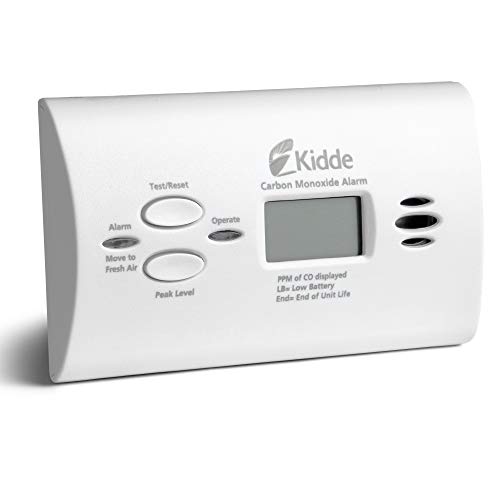
The Kidde battery-powered carbon monoxide alarm is an essential life-safety accessory designed to detect hazardous carbon monoxide gas inside residential living spaces. For homeowners, renters, and RV owners building an emergency preparedness plan, this detector serves as a vital safeguard during power disruptions. Severe weather events frequently prompt the use of fuel-burning equipment such as portable generators and alternative space heaters. Because internal combustion engines emit toxic exhaust, having an independent, battery-powered alarm inside living quarters ensures continuous safety monitoring without relying on grid electricity.
According to the product specifications, the device utilizes electrochemical sensor technology to identify elevated concentrations of carbon monoxide gas. Power is supplied by two included AA batteries, which keeps the detection circuitry active through extended storm blackouts. If carbon monoxide accumulates to dangerous thresholds, the unit activates an 85-decibel alarm horn accompanied by a flashing red LED. Under normal operating conditions, a green LED indicates that the unit is receiving battery power. The integrated Peak Level Memory feature also stores the highest recorded carbon monoxide level since its last reset, assisting users and emergency responders in reviewing previous exposure events.
The physical housing measures 4.5 by 1.5 by 2.75 inches and weighs just 0.6 pounds, resulting in a compact footprint suitable for tight spaces. The manufacturer designed the detector for dual-purpose placement, allowing it to be permanently mounted to an interior drywall surface or placed upright on a nightstand, shelf, or tabletop. Maintenance is straightforward due to the front-facing Test-Hush button. This control allows users to perform routine horn and circuitry checks while also offering a way to silence nuisance low-battery chirps temporarily until fresh batteries are installed. The unit is UL listed and includes a 10-year limited manufacturer warranty on the alarm mechanism.
Installing this detector requires no hardwired electrical connections, which enables rapid deployment when preparing for approaching storms or setting up a seasonal campsite. During generator operation, this device adds a necessary layer of protection inside the home. Fuel-burning portable generators produce deadly exhaust and must always be operated outdoors far away from open doors, windows, and vents. A battery-powered indoor detector monitors for unexpected exhaust migration into living areas, though buyers should recognize that having a detector never justifies operating a generator in garages, porches, or indoor spaces.
Buyers should take note of several practical tradeoffs before purchasing this model. Because the alarm relies on standard replaceable AA batteries, owners must periodically replace cells to ensure continuous coverage, as the 10-year manufacturer warranty applies solely to the alarm unit and not the batteries. In addition, the device does not feature a backlit digital display to show continuous parts-per-million readings, nor does it interconnect wirelessly with other smoke or CO alarms in distant rooms.
The Kidde battery-operated carbon monoxide detector provides dependable, straightforward life-safety protection for emergency outage planning, home backup kits, and mobile RV travel. Its proven electrochemical sensor, audible 85-decibel horn, flexible tabletop mobility, and verified UL listing make it an exceptional value for safety-conscious households. For anyone using an outdoor backup generator or secondary heating source during power outages, pairing that power setup with dedicated indoor carbon monoxide detection is a necessary step in responsible backup-power management.
Operating a portable generator during a utility blackout demands rigorous attention to exhaust ventilation because engine combustion generates lethal carbon monoxide gas. The Kidde battery-powered carbon monoxide detector acts as an essential indoor safety monitor, functioning entirely on two AA batteries to protect household occupants even during comprehensive grid power failures.
According to safety principles, portable generators must always run outdoors at a safe distance from windows, doorways, and soffit vents. Placing this battery-operated alarm in bedrooms and main living zones provides early warning via its 85-decibel horn if changing winds or building layout issues cause outdoor generator exhaust to drift toward open interior spaces.
With dimensions of 4.5 by 1.5 by 2.75 inches and an overall weight of 0.6 pounds, this detector is exceptionally portable and easy to position. The absence of electrical cords allows users to mount the unit onto hallway walls using basic hardware or simply set it freestanding on a desk, nightstand, or RV counter.
The front-mounted Test-Hush button enables quick operational checks to confirm that the sensor and 85-decibel horn function as intended. This button also offers the practical ability to silence low-battery warning chirps temporarily, giving occupants time to replace the AA batteries without sacrificing peace of mind.
Pros
- Continuous operation during grid failures thanks to the included 2-AA battery backup design
- Direct plug-in compatibility with standard 120V residential outlets allows simple room-to-room placement
- Loud 85 dB horn delivers a clear, attention-grabbing audible warning across typical living areas
- Peak level memory feature helps homeowners verify if elevated CO levels occurred while away
Cons
- Dedicated carbon monoxide sensing only, meaning it does not detect smoke, fire, or explosive fuel gases
- Wall-plug orientation consumes a standard 120V outlet receptacle in living or sleeping areas
- Requires routine AA battery replacements to maintain dependable backup power during extended storms
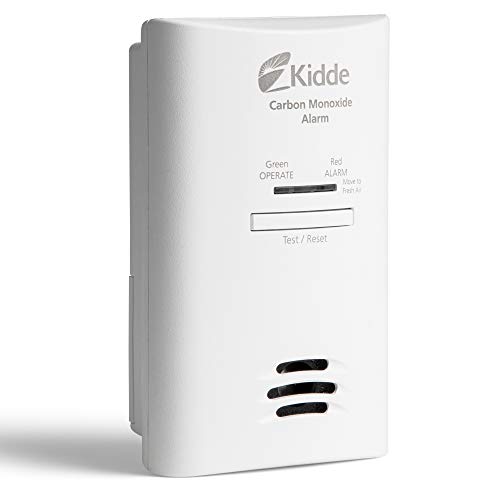
The Kidde Plug-in Carbon Monoxide Detector with AA Battery Backup is a compact, residential life-safety device designed to monitor indoor air quality and alert occupants to hazardous carbon monoxide accumulation. For homeowners, renters, and emergency-preparedness planners who rely on portable gasoline, propane, or dual-fuel generators during power outages, this 3rd Edition alarm serves as an indispensable safety barrier against odorless exhaust infiltration.
Electrical monitoring performance relies on direct 120V alternating current power complemented by a dual-AA battery backup system. This hybrid configuration ensures that the detector remains fully operational during severe weather blackouts when household utility power is down and portable backup power equipment is actively running outside. If elevated carbon monoxide concentrations develop, the unit triggers a piercing 85-decibel alarm to alert sleeping or distracted residents, while an integrated peak level memory records the highest recorded CO event for post-incident troubleshooting.
The physical construction measures 2.32 by 2.83 by 4.72 inches and weighs approximately 0.68 pounds, presenting a clean white profile that mounts directly against standard wall receptacles. Clear LED status lights indicate normal operation, active alarms, and system errors at a glance, eliminating guesswork regarding operational readiness. An easily accessible front-facing test-hush button allows users to verify horn functionality weekly and silence nuisance alarms caused by non-threatening ambient spikes without pulling the unit from the wall.
Installation requires no complex wiring or dedicated mounting brackets, plugging straight into any standard 120-volt grounded or ungrounded household outlet. Homeowners preparing for storm outages should prioritize placement in primary living zones and immediately outside sleeping quarters where generator exhaust could potentially migrate through open windows, vents, or door seals. Because fuel-burning generators must strictly operate outdoors far from home openings, having an independent, battery-supported indoor detector provides an essential layer of continuous protection against exhaust drafting.
While the unit delivers dependable carbon monoxide detection, several practical limitations should be factored into your household emergency plan. The direct plug-in form factor occupies one standard wall outlet receptacle, which may restrict available plug space in rooms with limited power outlets. Additionally, this model is a dedicated carbon monoxide sensor rather than a dual smoke and fire detector, and maintaining protection through extended multi-day power outages requires periodic AA battery checks and fresh replacements.
For households outfitting an emergency storm kit or operating portable generators during seasonal electrical outages, the Kidde Plug-in Carbon Monoxide Detector offers straightforward installation, robust backup power capability, and trustworthy audible alerting at an accessible entry point. It provides practical peace of mind for anyone running temporary backup power, ensuring that family members remain alerted to invisible exhaust hazards even when the municipal electrical grid fails completely.
Operating a portable or standby generator during severe winter storms, hurricanes, or extended grid failures introduces severe carbon monoxide hazards if exhaust fumes drift toward the home. Because carbon monoxide is completely invisible, odorless, and non-irritating, relying on human senses alone is impossible during an emergency. An indoor alarm equipped with battery backup is the only dependable method for identifying dangerous fume concentrations before they reach lethal levels.
Standard plug-in carbon monoxide alarms without battery reserves become completely useless the moment utility power disconnects, leaving households unprotected precisely when generator use begins. The dual-AA battery backup in this Kidde alarm bridges that critical protection gap, maintaining 85 dB audible monitoring whether the house is running on utility electricity, feeding from a portable generator, or experiencing a complete blackout.
To achieve effective defense, position this detector on living levels and near bedroom areas at least 20 feet away from attached garages or exterior doors that face outdoor equipment. Even with an indoor alarm in place, portable generators must always operate outdoors at a safe distance away from windows, doors, soffits, and ventilation intake points to prevent exhaust accumulation at the source.

Pros
- Dual-power design with 120V AC line power and AA battery backup maintains protection during grid blackouts
- Rotating wall plug easily accommodates both vertical and horizontal outlet orientations
- Complies with rigorous UL 2034 5th Edition safety standards and carries an ETL listing
- Loud 85 dB horn and clear LED alert deliver prompt notification in hazardous CO conditions
- Backed by a 10-year limited manufacturer warranty on the alarm unit
Cons
- Monitors exclusively for carbon monoxide and does not detect smoke, fire, or combustible gas leaks
- Requires periodic replacement of the two AA backup batteries to maintain outage functionality
- Lacks a digital parts-per-million display for viewing continuous low-level ambient CO concentrations
The Kidde Model COP is a dedicated plug-in carbon monoxide alarm engineered for residential safety and emergency-preparedness setups. Households operating portable generators outdoors, running gas furnaces, or relying on supplemental fuel-based heat during winter storms require dependable indoor CO detection. This compact unit is specifically positioned for homeowners, renters, and travelers who need immediate, code-compliant CO monitoring without complex hardwired installation.
In terms of functional detection, the unit monitors ambient carbon monoxide levels and activates a piercing 85 dB alarm alongside an LED warning light when dangerous concentrations are detected. Because power outages frequently coincide with severe weather and backup generator usage, the detector runs on standard 120V AC line power but transitions seamlessly to two included AA backup batteries if the grid fails. It also features a front-facing Test/Hush button to enable routine diagnostic checks and prevent disruptive nighttime low-battery chirps.
The detector measures 1.52 by 5.47 by 5.47 inches and weighs a lightweight 0.43 pounds, featuring a durable white housing that blends into standard living spaces. Kidde integrated a rotating electrical plug mechanism that allows the alarm to mount securely into either vertically or horizontally oriented wall receptacles. The internal electronics include built-in power surge immunity to withstand electrical line fluctuations, and the device is ETL Listed to meet stringent UL 2034 5th Edition residential carbon monoxide alarm standards, supported by a 10-year limited manufacturer warranty on the alarm.
Setting up the Kidde COP requires no specialized tools, wiring, or mounting brackets. Users simply insert the two included AA batteries into the rear compartment and plug the device directly into an unobstructed 120V wall outlet located near bedrooms or living areas. Its compact footprint ensures it will not needlessly block nearby receptacles, while its travel-friendly dimensions allow easy transfer between a primary residence, vacation rental, or temporary RV accommodation with shoreline power.
Despite its strong safety credentials, this model is exclusively a carbon monoxide detector and does not detect smoke, flame, or natural gas leaks. It does not include an illuminated digital display for reading low-level parts-per-million concentrations below the alarm threshold. Furthermore, while the detector is crucial for homes using backup power, it serves strictly as a secondary safety monitor; operating any fuel-burning generator indoors, in garages, or near open windows remains hazardous regardless of detector presence.
For emergency-preparedness shoppers, storm-conscious families, and property owners seeking affordable, certified carbon monoxide defense, the Kidde COP offers dependable protection with minimal maintenance. Its seamless battery backup ensures active monitoring throughout utility outages when backup heating or outdoor portable generators are running. Verifying bedroom proximity and replacing backup batteries on schedule will ensure this detector delivers reliable life-safety awareness for years to come.
Carbon monoxide is an invisible, odorless, and colorless gas produced by fuel-burning equipment, including portable generators, home furnaces, space heaters, and gas appliances. During storm-related electrical blackouts, households frequently deploy portable generators or alternative heat sources, significantly elevating the risk of accidental exhaust buildup if equipment is mishandled.
The Kidde Model COP provides critical emergency protection during outages by continuing to monitor air quality via its two AA battery backup even when utility line power drops out. An 85 dB audible alert and visual LED indicator give occupants immediate notice if dangerous CO levels penetrate living spaces, ensuring adequate time to evacuate safely.
Safety guidelines mandate that fuel-burning portable generators must always run outdoors far from windows, doors, and fresh-air intakes, and never inside living quarters, attached garages, basements, or enclosed porches. Installing a battery-backed detector like the Kidde COP inside the home acts as an essential safeguard to verify that hazardous exhaust fumes are not drifting indoors during emergency power generation.
Pros
- Dual-hazard detection tracks both toxic carbon monoxide and combustible fuel leaks (propane and natural gas)
- Included 9-volt battery backup ensures uninterrupted safety monitoring during severe weather power outages
- Loud 85 dB alarm and bright digital readout provide immediate, clear notifications of environmental hazards
- Peak level memory function helps emergency responders and homeowners diagnose past carbon monoxide events
Cons
- Occupies a standard 120V wall outlet that may be needed for household appliances or emergency electronics
- Requires periodic testing and eventual replacement of the 9-volt backup battery to maintain outage readiness
- Indoor detection alerts do not replace the fundamental safety rule that portable generators must always be operated outdoors
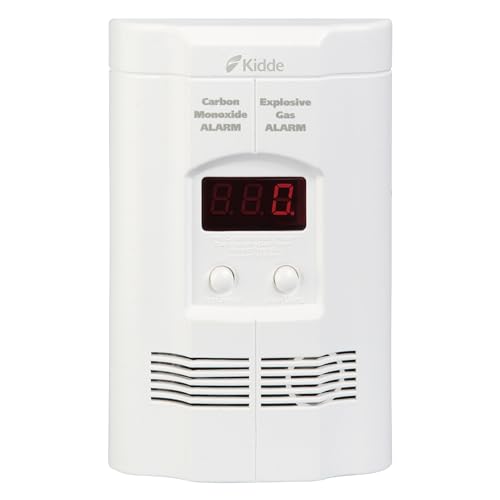
The Kidde Combination Carbon Monoxide and Explosive Gas Alarm is an essential home-safety monitor designed to protect households from silent carbon monoxide poisoning and combustible fuel leaks. While not a power-generating machine itself, this safety device addresses one of the most critical hazards faced by homeowners who deploy portable generators, dual-fuel systems, or gas-fired heaters during severe storm outages. It is ideally positioned for homeowners, emergency-preparedness planners, and rural property owners who utilize propane, natural gas, or gasoline-powered backup equipment.
Real-world safety performance centers on dual-sensing capability and immediate, unmistakable hazard communication. The unit monitors indoor air for elevated levels of carbon monoxide while simultaneously sensing explosive gases, specifically natural gas and propane. When dangerous concentrations are detected, an 85-decibel horn sounds to wake sleeping family members. The front digital LED display offers immediate visual feedback, displaying numerical carbon monoxide readings or flashing the word GAS when explosive vapors are detected, complemented by a peak level memory function that stores the highest recorded CO reading.
The build quality and physical layout emphasize direct, low-profile utility. Measuring 2.48 by 3.82 by 6.1 inches, this compact white enclosure plugs directly into any standard 120V household wall receptacle without requiring mounting screws, conduit, or hardwired electrical connections. LED status indicators provide at-a-glance confirmation of operating status. To safeguard against storm-related blackouts, the unit incorporates an integrated 9-volt battery backup system that keeps the internal sensors and 85 dB siren functioning continuously when municipal electrical service fails.
Everyday handling, installation, and monitoring require minimal effort. Setting up the detector involves placing the 9-volt battery in its compartment and plugging the unit into an accessible wall receptacle near potential hazard areas or sleeping quarters. For households utilizing dual-fuel portable generators, keeping propane tanks or natural gas hookups nearby makes combustible fuel sensing a critical precaution. Routine maintenance is straightforward, relying on the central test and reset button alongside periodic checks to verify battery health.
Realistic limitations should be evaluated before final purchase. Because the detector plugs directly into a wall receptacle, it consumes an outlet space that might otherwise power household essentials during an emergency. The 9-volt backup battery requires regular replacement to maintain outage readiness over several years of use. Most importantly, having an indoor detector does not make indoor generator operation safe under any circumstance; fuel-burning generators produce lethal levels of carbon monoxide and must strictly remain outdoors far away from windows, doors, and vents.
For any household planning emergency backup power or relying on gas-fired utilities, this Kidde combination alarm is a practical, budget-conscious safety investment. The combination of dual-hazard detection, an 85 dB warning horn, digital readout, and storm-ready 9-volt battery backup provides vital defense against fuel leaks and exhaust hazards during severe weather outages.
Using portable backup generators during grid blackouts introduces genuine indoor air quality risks that require active monitoring. Fuel-burning engines generate high volumes of odorless, invisible carbon monoxide, which can draft indoors through eaves, windows, or garage seams if the equipment is positioned improperly. Installing this combination alarm in living areas provides a vital indoor line of defense by warning residents if exhaust fumes migrate toward occupied rooms.
Households utilizing dual-fuel or tri-fuel generators benefit significantly from the unit's combustible gas detection capabilities. Connecting, disconnecting, or storing propane tanks and managing natural gas supply lines can occasionally result in slow fittings leaks or compromised hoses. The detector continuously sniffs for escaped natural gas and propane, sounding its 85 dB alarm and displaying a direct GAS warning before combustible vapors reach dangerous ignition thresholds.
Battery backup architecture is a non-negotiable requirement for outage-related safety gear. Because primary electrical power is lost during major storm events, standard plug-in appliances without internal backup immediately go dark. The 9-volt battery inside this detector ensures that hazard detection continues unabated, providing continuous monitoring whether the home is running on utility power, operating on a generator, or sitting in total darkness.
Pros
- Operates completely independent of the electrical grid using two replaceable AA batteries
- Loud 85-decibel horn and bright red LED provide clear, rapid notification of CO hazards
- Compact and lightweight design allows easy wall mounting or upright tabletop placement
- No hardwiring required, making it ideal for temporary storm backup setups, rentals, and RVs
- Integrated event memory preserves a record of recent alert triggers and test sequences
Cons
- Lacks a digital LCD screen to display real-time parts-per-million (PPM) gas concentrations
- Requires regular battery monitoring and replacement instead of using a sealed 10-year power cell
- Does not support wireless or hardwired interconnection with other household smoke or CO alarms
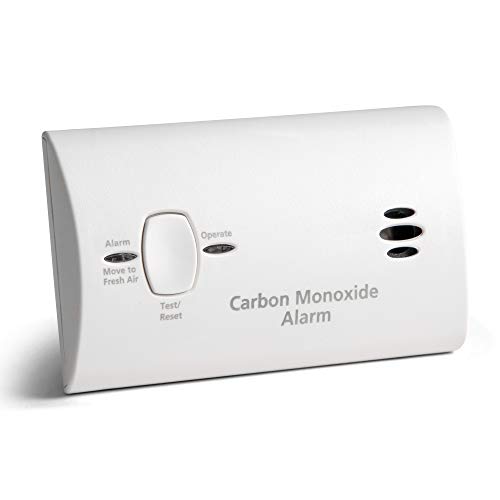
The Kidde 3rd Edition Carbon Monoxide Detector is a standalone, battery-powered safety alarm engineered to protect indoor living spaces against dangerous carbon monoxide accumulation. For homeowners, renters, and campers operating portable generators during utility outages, an independent CO detector is a mandatory line of defense. Fuel-burning generators running on gasoline, propane, or natural gas produce deadly, odorless exhaust fumes that can infiltrate homes through open windows, doors, or soffits if equipment is placed too close to the structure. This compact detector serves as a reliable, affordable safety monitor tailored for household backup scenarios, RV travel, and storm emergency kits.
Core detection performance is driven by electrochemical sensor technology, which specifically monitors the ambient air for elevated concentrations of carbon monoxide gas. When hazardous levels are detected, the device sounds an 85-decibel horn accompanied by an illuminating red LED to alert occupants immediately. Normal operational status is confirmed by an integrated green LED that pulses to indicate the unit is receiving power. Because the detector operates on two included AA batteries rather than household utility power, detection remains active throughout blackout conditions when portable backup generators are actively running.
Weighing just 0.23 pounds and measuring 1.65 by 4.72 by 2.83 inches, the white plastic housing has a minimal physical profile that fits easily into any room. The detector requires no electrical hardwiring, allowing users to mount it to an interior wall using standard mounting hardware or place it upright on a nightstand, shelf, or tabletop. This versatile design makes it exceptionally useful for RVers, campers, and renters who need immediate carbon monoxide monitoring without drilling into walls. The unit also includes an Event Memory feature that records whether carbon monoxide was detected since the device was last reset or tested.
Initial setup is straightforward, requiring only the insertion of the two included AA batteries into the rear compartment to activate the internal circuitry. A front-mounted test button allows homeowners to verify the horn and sensor function as part of routine household safety checks. While this detector provides an indispensable indoor safeguard, it is not a substitute for proper generator placement. Portable generators must always be operated outdoors in open spaces far away from windows, doors, and vents. A carbon monoxide alarm does not make running a generator inside a home, garage, basement, or enclosed porch safe under any circumstances.
The primary limitation of this model is the absence of a digital display, which means users cannot monitor low-level, background parts-per-million (PPM) readings before the 85-decibel threshold sounds. It also lacks interconnected communication, meaning an alarm triggered in a distant hallway will not sound secondary alarms located in bedrooms. Additionally, because the detector relies on standard AA batteries rather than an internal sealed lithium cell, users must regularly test the unit and keep replacement batteries on hand as part of their long-term storm preparedness routine.
For budget-conscious homeowners, RV travelers, and emergency-preparedness shoppers, the Kidde 3rd Edition Carbon Monoxide Detector provides dependable, essential protection at an accessible price. Its battery-operated design ensures that your living space remains protected during severe weather power outages when auxiliary power equipment is running outside. If you need portable, cord-free carbon monoxide detection for backup power safety, seasonal travel, or primary home monitoring, this unit provides practical peace of mind.
Using a fuel-burning portable generator during a power outage introduces significant carbon monoxide risks if equipment is operated incorrectly. Gasoline, propane, and dual-fuel generators produce lethal exhaust fumes that are completely invisible and odorless. Having battery-operated carbon monoxide alarms installed on every level of the home and near sleeping areas provides an essential safety net in the event that exterior exhaust fumes drift toward open windows or ventilation paths.
A carbon monoxide detector does not make indoor generator operation safe under any circumstance. Never operate a portable generator inside a home, garage, basement, crawlspace, shed, or enclosed patio, even if doors and windows are left open or fans are running. Generators should only be operated outdoors on a stable, level surface at a safe distance from all building openings and air intakes, with the engine exhaust pointed away from occupied structures.
Because utility power is down during an emergency outage, hardwired household alarms without battery backups will fail to operate. The battery-powered architecture of this Kidde detector ensures that indoor air quality monitoring remains fully functional throughout the blackout, providing critical warning signals while your generator keeps essential appliances running outside.

Pros
- Fast 0.3-second response DDS sensor accurately detects ambient carbon monoxide levels from 0 up to 1000 PPM
- Simultaneous audible, visual, and tactile vibration alerts provide immediate warning even in noisy outdoor or jobsite environments
- USB-C rechargeable design offers versatile recharging from vehicles, portable power stations, or standard power adapters
- Rugged ABS construction, built-in flashlight, and included protective case make it ideal for mobile RV, camping, and emergency use
Cons
- Configured primarily as a handheld inspection and spot-checking instrument rather than a permanent hardwired household wall alarm
- Internal rechargeable battery requires routine monitoring and recharging prior to scheduled trips or expected weather emergencies
- Does not replace fundamental generator safety rules, as fuel-burning equipment must always remain outdoors away from living spaces
The TOPTES CT-580 is a handheld, rechargeable carbon monoxide detector designed for fast atmospheric spot-checks, personal safety monitoring, and emergency preparedness. It is well-suited for RV travelers, campers, jobsite workers, and homeowners operating portable backup generators during electrical grid outages. Because fuel-burning generators emit dangerous, odorless carbon monoxide exhaust that must always remain outdoors and away from building openings, having a dedicated handheld CO detector provides a reliable way to verify that exhaust gases are not drifting near tents, RV cabin windows, or residential entry doors.
Equipped with a high-sensitivity DDS sensor, the manufacturer lists a rapid 0.3-second response speed and a broad measurement capacity spanning 0 to 1000 parts per million (PPM). The detector includes two configurable alarm thresholds to signal changing environmental conditions quickly. When carbon monoxide concentrations cross these setpoints, the device triggers three alarm modes simultaneously: an audible buzzer, a flashing indicator light, and a built-in vibration motor. This multi-sensory notification ensures users receive an immediate warning whether they are working around loud outdoor equipment, resting inside an RV, or checking air quality near a basement entrance.
The CT-580 is built with a tough ABS engineering plastic shell that provides impact resistance and an ergonomic grip suitable for field use. Its front panel features a clear TFT color display that presents intuitive graphical readouts, adjustable screen brightness, and an auto screen-off mode to preserve battery reserves. In addition to atmospheric monitoring, an integrated LED flashlight offers practical utility during sudden storm blackouts or nighttime campsite inspections. The package includes a custom-fitted protective case, a Type-C USB charging cable, and an instructional user manual.
Power management is straightforward thanks to an internal rechargeable cell charged through a standard USB-C port, allowing replenishment via vehicle 12V adapters, portable power banks, or home wall chargers. For commercial inspectors, facility managers, or advanced users, the CT-580 includes menu options for viewing alarm history and executing zero or standard gas calibrations. Maintaining a regular charging schedule ensures the device remains ready for action whenever severe weather threats arise.
While the TOPTES CT-580 delivers portable precision, it is designed primarily as a mobile inspection tool and personal monitor rather than a substitute for permanent, code-compliant residential CO alarms. It should be used to supplement, not replace, stationary wall-mounted detectors in living and sleeping areas. Furthermore, carrying a portable detector does not permit operating a combustion generator inside a garage, porch, basement, or partially enclosed space, as fuel-burning equipment must always run exclusively outdoors in well-ventilated areas.
For RV enthusiasts, outdoor campers, maintenance crews, and storm-prepared households, the TOPTES CT-580 represents a practical, high-value safety accessory. Its fast 0.3-second detection, multi-mode alerting, rechargeable battery, and rugged build make it an excellent tool for verifying air quality wherever portable power equipment or fuel heaters are in use.
Portable generators produce high levels of carbon monoxide, a colorless and odorless gas that can quickly reach dangerous concentrations in enclosed spaces. A portable carbon monoxide detector like the TOPTES CT-580 serves as a valuable monitoring tool to confirm safe ambient air conditions around outdoor backup power setups.
A handheld detector should never be viewed as a substitute for proper generator placement. Portable generators, whether running on gasoline, propane, or natural gas, must always be positioned outdoors on a stable, level surface far away from doors, windows, and structural vents, with the exhaust pipe directed away from occupied structures.
Operating a generator inside a garage, basement, shed, or covered porch is extremely dangerous even if doors or windows are left open. The TOPTES CT-580 provides an added layer of situational awareness by alerting users if shifting winds or microclimates cause outdoor generator exhaust to drift back toward living areas, open RV vents, or emergency shelter entryways.
The core of the TOPTES CT-580 is its DDS electrochemical sensor, which the manufacturer lists with a 0.3-second response time and an operating range between 0 and 1000 PPM. This rapid sampling speed allows users to detect sudden spikes in ambient carbon monoxide rather than waiting for extended sensor warm-up cycles.
The triple alarm architecture combines a high-visibility indicator light, a loud audio alarm, and internal tactile vibration. When background machinery, wind noise, or portable generator engine noise drowns out audio alerts, the physical vibration and flashing screen ensure the user is still immediately informed of hazardous conditions.
For maintenance and field verification, the CT-580 includes user-accessible menu screens that display alarm logs and enable baseline zero adjustments. This level of control supports both everyday emergency outage preparation and professional utility checks across diverse operating environments.
Frequently Asked Questions
How does a carbon monoxide shutoff sensor operate on a portable generator?
Built-in CO shutoff sensors continuously sample ambient carbon monoxide concentrations in the immediate operating envelope. If accumulated CO gas reaches hazardous thresholds, the module grounds the ignition circuit to trigger an automatic engine shutdown. This safety feature significantly reduces poisoning risks, though outdoor operation away from structures remains mandatory. Routine sensor self-checks and LED warning lights indicate operational readiness before each engine start.
Can you safely run a portable generator inside an open garage with a CO sensor?
No, you must never operate any internal combustion engine inside a garage, breezeway, or enclosed space. Even the best portable generator with carbon monoxide sensor generates dangerous concentrations of toxic exhaust faster than natural ventilation can clear them. Exhaust gases rapidly penetrate drywall seams, interior doorways, and ductwork into living quarters. Always position your generator outdoors on a level surface at least twenty feet away from home openings.
Why are dedicated indoor carbon monoxide alarms needed when running a generator?
Indoor carbon monoxide alarms act as a critical second layer of defense for sleeping household members. Outdoor engine sensors monitor the machine’s immediate perimeter, but changing wind patterns can push stray exhaust toward exterior windows. Battery-backed detectors ensure uninterrupted indoor monitoring during blackouts while you run a gasoline-powered portable generator outdoors. Placing units on every floor guarantees prompt notification if fumes ever drift inside.
How far should a generator be positioned from a home during severe weather?
Industry safety recommendations dictate placing portable generators a minimum of twenty feet away from all exterior walls. Exhaust outlets must point directly away from doors, windows, and roof soffit vents. For setups powering sensitive electronics with a portable generator for TV and delicate gear, heavy-duty outdoor extension cords easily bridge this safety distance. Adequate clearance ensures clean airflow and prevents dangerous gas accumulation near living areas.
Can explosive propane or natural gas leaks trigger a standard carbon monoxide alarm?
Standard electrochemical carbon monoxide detectors cannot register raw propane or natural gas leaks. Detecting combustible fuel requires specialized dual-sensing alarms equipped with dedicated catalytic sensors. Multi-gas alarms provide distinct audible patterns or digital readouts stating gas detection when fuel line connections leak. Installing specialized gas detection devices offers complete protection when storing propane tanks or connecting dual-fuel generators.



Write Your Review
No reviews yet. Be the first to share your experience!